
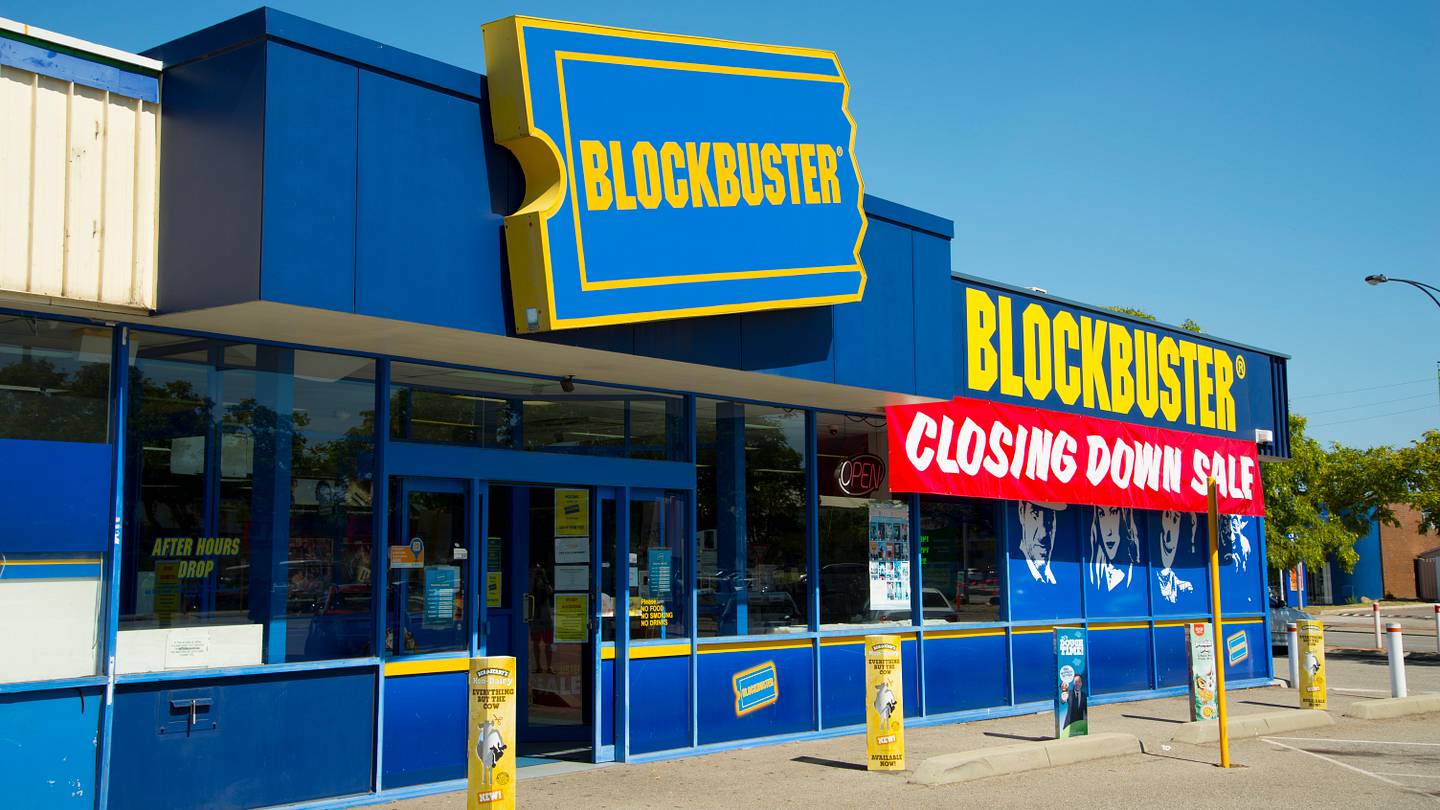
Millennials were born sometime between the early 1980s and the mid 1990s, with 1981 and 1996 often suggested to be the cut-off point. As such, many millennials were kids when the digital age first took hold, teenagers when the internet first became widespread, and are now working adults in the social media, cell phone, and remote working age of the 2020s. Growing up in such a technologically progressive time ultimately means that despite still being only in their 30s or early 40s, a lot of things that were staples in a millennial’s childhood are now already old-fashioned, if not completely obsolete. VIDEO RENTAL STORESFamily Video store | J. Michael Jones/GettyImagesThere’s been a growing trend among Gen Zers in recent years around re-embracing physical media, but Millennials got there first. Back in the 90s and early 2000s, you could browse hundreds of titles in your local Blockbuster, pick one or two to keep you entertained over the weekend, and then do the whole thing again the following week. VIDEO CASSETTE RECORDERKodak 8MM VCR | Bettmann/GettyImagesDigitization and streaming not only did away with video rental stores, but also the VCR video cassette players on which you watched the films themselves. There was something pleasingly tactile about pushing the cassette tape into the VCR and pressing play that the streaming age just isn’t able to match. GLASS-FRONTED TELEVISIONSRetro TV in a vintage living room | luza studios/GettyImagesNot only have VCRs disappeared, but so too have those clunky, solid glass-fronted television sets they were connected with. Yes, they were hazy. Yes, they were all but impossible to move. Yes, they took an age to warm up. And no, you couldn’t hang them on the wall. But there must have been some positives, surely? 'APPOINTMENT' TV – MTVMTV Logo | Michael Ochs Archives/GettyImagesOn the subject of television, long before catch-up services and streaming platforms became the standard, catching your favorite television program meant catching it there and then, at the time and date that it was scheduled; otherwise you’d be hard pressed to catch it at all. Digital recording services made us less reliable on so-called “appointment” TV in the early 2000s, but these days you can pretty much watch whatever you want whenever you want it (and catch up with clips and behind-the-scenes footage on YouTube besides).FLOPPY DISKSBlue Floppy Disk front and back | EricFerguson/GettyImagesNot only have floppy disks become a thing of the past, but so too have the CD-ROMs that replaced them. Long before USBs, wireless downloads, and Cloud services massively changed the way we use our computers, actual disks—kept in a handy clear-plastic covered storage box—was the only way to access your files and play games on the computers of the past. WALKMAN A portable CD player with headphones | studo58/GettyImagesReleased by Sony in 1979 before becoming the must-have gadget for music lovers in the 1980s, the Walkman personal cassette player made being out and about, yet still able to listen to your favorite music, a reality for people for the very first time. A decade later, handier (and more easily skippable) portable CD players followed, but both have now been usurped by streaming services and smartphones. MP3 PLAYERS Yuriy Turetskiy/GettyImagesThe stepping stone between the physical and portable cassette and CD players of the 80s and 90s and the Wi-Fi powered smartphones of today were the MP3 players of the 2000s. Chief among them, arguably, was Apple’s iPod, introduced in 2001, with its sleek design, scrollable screen and ergonomic controls. PHOTOGRAPHIC FILMAnalog point and shoot film camera | delihayat/GettyImagesFilm cameras are one of a handful of Millennial-friendly gadgets that are making something of a comeback in the 2020s, but their heyday has sadly long gone. Gen Zers and Alphas will never know the feeling of taking a spool of pictures, and then having to wait a few days for them all to be developed in order to see if any of them were any good. CAMCORDERSRetro handheld camcorder video | Tomasz Śmigla/GettyImagesAnother once-cutting-edge piece of photographic tech that has long since been downsized and usurped by smartphones was the camcorder. Although the first handheld home video cameras emerged way back in the 60s, it was in the 80s and 90s that they became staples at school plays, graduations, weddings, and other family events—providing comedy clip shows with hours of footage whenever anything went wrong. ANSWERING MACHINESYou've got mail | paulw11/GettyImagesCell phones, smartphones, text messages, and voice notes have all transformed how we keep in touch with one another in the 21st century, with the result being that even telephones calls are said to be all but going extinct. Another bit of telephone tech that we’ve lost along the way, though, was the humble answering machine—along with its mini cassette tape full of people’s messages. PAGERSA black pager with green screen | dlewis33/GettyImagesThe advent of text messages has also rendered pagers a thing of the past too. At one point in the mid 90s, there were more than 60 million pagers in use around the world; today, you’d be hard pressed to find anyone who still uses one outside of a handful of increasingly niche industries. LANDLINE TELEPHONES (AND DIAL-UP INTERNET)An old cordless telephone on its charging cradle | rarrarorro/GettyImagesNo texting or Facetime-ing your friends in the 90s. If you wanted to arrange a meeting or check what homework you’d missed, you had to call the family landline—which inevitably meant a brief catch-up chat with one of your friend’s parents too. In the early days of dial-up internet, moreover, having a landline in the house meant no one could reach you while you were online, like some kind of dial-up version of airplane mode. PAYPHONESPublic Pay Phone | Neal McNeil/GettyImagesUnless your battery goes or your stuck somewhere in a signal black hole, chances are you’ll never need to use a public telephone booth any time soon too. Back in the day, being out and about and needing to call home or book a taxi inevitably meant finding some loose change and waiting for the coin to drop. MEMORIZED TELEPHONE NUMBERS Unknown Numbers | asbe/GettyImagesHaving a built-in address book in your smartphone has not only made the likes of paper address books and telephone books a thing of the past, but has made it entirely unnecessary to remember all of your friends and family members’ phone numbers, addresses, and zip codes. Doubtless, much to the surprise of anyone Gen Z and beyond, there was a time when your average mom could reel off two dozen of her most-used telephone numbers off the top of her head with no problem at all. OVERHEAD PROJECTORS vintage overhead projectors indoors on a table in a classroom next to the windows | poco_bw/GettyImagesFrom backpacks to lunch queues, there’s much about the average school day that has barely changed since the 80s and 90s, but some of the surrounding school and classroom technology definitely has. In the days of electronic tablets, laptops, digital projectors, and touchscreen smart boards, there’s sadly no need for the classic overhead projector, along with its handwritten and hand-drawn transparent sheets of classroom notes and homework exercises. CHALKBOARDSChalk and blackboard | Connect Images/GettyImagesWhiteboards and smartboards have also done away with the classic chalkboard in many school classrooms—which has the knock-on effect of ridding the school of that musky chalk dust smell that used to fill the halls, and the teacher’s punishment of cleaning the chalkboard erasers after class. GLOBES AND ATLASESHands holding a globe | Paul Bradbury/GettyImagesOnce a fixture of geography classrooms as well as school kids’ bedrooms, spinning plastic or wooden globes have likewise become increasingly obsolete in a world now more suited to scrolling Google Earth or Wikipedia to find out more about the world. You’re equally unlikely to find a paper atlas being much used today too—not least while driving, with glovebox road maps long replaced by satnav systems of Google Maps. DICTIONARIES Megnifying glass on page of dictionary. Concept, Word searching. Education | Atitaya Pimpa/GettyImagesWe’re all far more likely to scroll a website or ask a search engine for the spelling or meaning of a word these days too, rather than haul a dusty old tome off the shelf and check a definition or a typo by hand. Multi-volume encyclopedias too are becoming ever more old-fashioned in a world where you’re more likely to carry the sum of all human knowledge in an entirely searchable mobile telephone kept in your pocket than on a groaning bookshelf at home. CARD CATALOGSArchive | Nikada/GettyImagesHead down to your local library (if that too hasn’t already gone by the wayside), and its catalog of books will likely no longer be kept in banks of card-filled A-to-Z drawers, either. Instead, you’ll likely have to search the catalog database online—saving time, certainly, but doing away with another far more tactile Millennial experience. MCDONALDS PARTIESRonald Mc Donald | Criben/GettyImagesYou can still book a party in many McDonalds branches and franchises these days, of course, but back in the 80s and 90s there was something far more special about it—right down to the indoor carousels, effigies of the characters, and (if you were lucky) live-action Ronald McDonald. Read More:
20 Things Millennials Grew Up With That Are Already Obsolete
Full Article
Original Source
Read the full article at Mentalfloss →KhanList aggregates and links to publicly available news content. We do not host full articles from third-party sources. Always verify important information with original sources.