
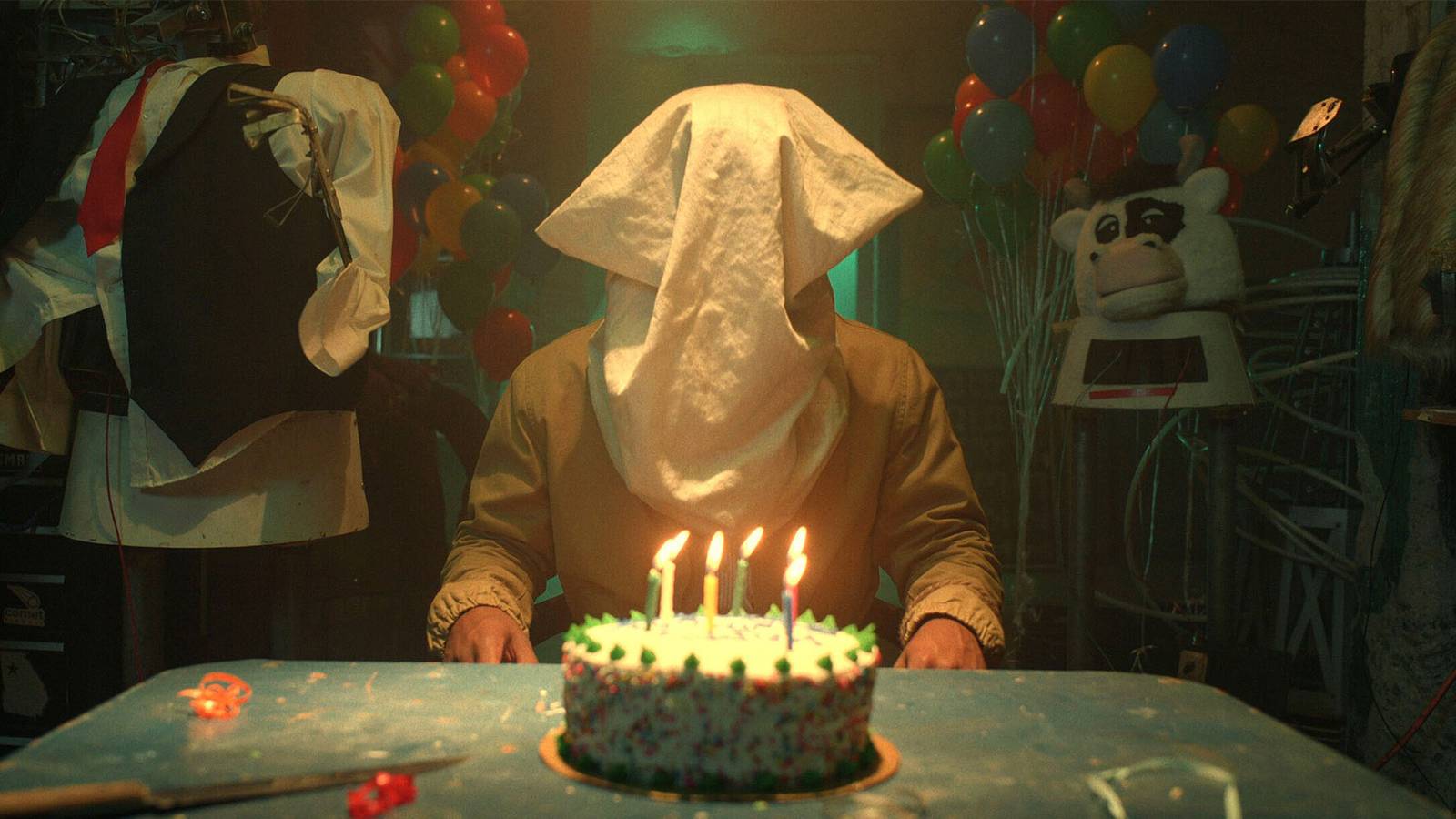
Image via Amazon, Everett Collection Published Sep 3, 2026, 5:25 PM EDT Joel Medina spent his life devouring all things pop culture - for better and worse (he watched Final Destination way too young). Born and raised in LA County, he spent his summers watching every movie he could find for free online and his school years reading books instead of paying attention in class. Joel has been proud to flex his skills across a variety of mediums. He’s returned his alumnus to speak on panels about pop culture for the LGBTQ+ community andcan be heard on podcasts like Block Talk and The Cup Pod chatting about his favorite TV shows (and very divisive takes). He’s been proud to interview some of today’s most influential stars, from legendary Drag Queens to performers who are making history with their stellar careers. Learn about all of that and more by clicking the articles below and learning just what Joel has to say about…well, everything! Sign in to your Collider account Horror anthologies have always been a popular subgenre, with television giving creators room to tell different stories and find new ways to petrify audiences from season to season. More than two years after its April 2024 release, Them: The Scare remains one of Prime Video's most unsettling horror offerings. Created by Little Marvin, the second chapter continues the themes of racism and supernatural terror he began exploring in 2021's Them: Covenant. It also still holds a 100% critics' score on Rotten Tomatoes, making it a horror season worth revisiting: this is unlike almost anything else on television. The second season is scary, yes, but what has helped it endure is how the show utilizes every aspect of the viewing experience to unnerve audiences, turning its horror into a disturbing dissection of discrimination in society. Whether it be showing paranormal happenings or the uneasy feelings that come from being the only "different" one in a space, by painting in vivid detail the fears that accompany living as a marginalized person, the program uses a horror lens to stress the real-world terrors that (sadly) so many in the audience are familiar with. This series may not be the only horror anthology out there, but with its dreadful method of showcasing the complex themes at its center, Them: The Scare excels in ways that no other show has. 'Them: The Scare' Pushes Horror Where Other Shows Won't Them: The Scare sits within a thriving tradition of TV anthologies that reinvent their scares from season to season. From Slasher to Channel Zero, the format gives creators room to experiment with new fears, new characters, and different blends of gore and psychological horror every time the story resets. The most obvious modern giant is American Horror Story, a cultural mainstay that has spent well over a decade using a new premise to frighten audiences with each installment. This is one of the most prominent anthologies, and with the large impact it's had on society, it makes sense that many of its seasons have drawn on social issues to scare viewers — to mixed results. Collider Exclusive · Horror Survival Quiz Which Horror Villain Do You Have the Best Chance of Surviving? Jason Voorhees · Michael Myers · Freddy Krueger · Pennywise · Chucky Five killers. Five completely different ways to die — if you're not smart enough, fast enough, or self-aware enough to avoid it. Only one of them is the villain your particular set of instincts gives you a fighting chance against. Eight questions will figure out which one. 🏕️Jason 🔪Michael 💤Freddy 🎈Pennywise 🪆Chucky TEST YOUR SURVIVAL → 01 Something feels wrong. You can't explain it — you just know. What do you do? First instincts are the difference between the survivor and the first act casualty. ALeave immediately. I don't need to understand a threat to respect it. BStay quiet and observe. If I can see it, I can understand it. If I can understand it, I can avoid it. CStay awake. Whatever this is, I am not going to sleep until I feel safe again. DConfront it directly. Fear grows in the dark — I'd rather know what I'm dealing with. ECheck everything, trust nothing. The threat might be closer than I think — and smaller. NEXT QUESTION → 02 Where are you most likely to find yourself when things go wrong? Setting is everything in horror. Where you are determines which rules apply. ASomewhere remote — a cabin, a campsite, off the grid and away from people. BA quiet suburban neighbourhood where nothing ever happens. Except tonight. CIn my own head — the most dangerous place of all, depending on what's already in there. DWherever children are — because something about this place attracts the worst things. ESomewhere ordinary — a house, a toy store, a place where the last thing you'd expect is a threat. NEXT QUESTION → 03 What is your most reliable survival asset? Every survivor has a quality the villain didn't account for. What's yours? APhysical fitness — I can run, I can swim, I can outlast something that relies on brute persistence. BSpatial awareness — I always know the exits, the hiding spots, the fastest route out. CPsychological resilience — I've faced my worst fears before. They don't have the same power over me. DEmotional steadiness — I don't panic. Panic is what gets you caught. EScepticism — I don't underestimate threats because of how they look. Size is irrelevant. NEXT QUESTION → 04 What kind of fear is hardest for you to fight through? Knowing your weakness is the first step to not dying because of it. AThe unstoppable — something that will not stop, cannot be reasoned with, and is always getting closer. BThe invisible — a threat I can feel but can't locate, watching from somewhere I can't see. CThe psychological — something that uses my own mind and memories against me. DThe unknowable — something ancient, shapeless, that feeds on the fear itself. EThe mundane — a threat so ordinary-looking that no one will believe me until it's too late. NEXT QUESTION → 05 You're with a group when things start going wrong. What's your role? Horror movies are brutally clear about who survives group situations and who doesn't. AThe one who says "we need to leave" first — and means it, even when no one listens. BThe one who stays quiet, watches the others, and figures out the pattern before anyone else does. CThe one who holds the group together when panic sets in — because someone has to. DThe one who asks the questions nobody wants to ask — because ignoring them gets people killed. EThe one who takes the threat seriously when everyone else is laughing it off. NEXT QUESTION → 06 What's the horror movie mistake you're most likely to make? Honest self-assessment is a survival skill. Denial is not. AGoing back for someone — I know I shouldn't, but I can't leave them behind. BAssuming I'm safe once I've found a hiding spot. That's when it finds me. CFalling asleep when I absolutely cannot afford to. Exhaustion is its own enemy. DLetting my curiosity override my instincts — I always need to understand what I'm dealing with. EDismissing the threat because of how it looks. That's exactly what it wants. NEXT QUESTION → 07 What's your best weapon against something that can't be stopped by conventional means? Every horror villain has a weakness. The survivors are always the ones who find it. AThe environment itself — I use the terrain, the water, the geography against it. BPatience — I wait, I watch, and I strike at the one moment it doesn't expect. CLucidity — if I can stay in control of my own mind, it loses its primary weapon. DCourage — facing it directly, refusing to run, taking away the fear it feeds on. EImprovisation — I use whatever's at hand, however unconventional. Creativity over brute force. NEXT QUESTION → 08 It's the final scene. You're the last one standing. How did you make it? The final survivor always has a reason. What's yours? AI kept moving. I never stopped, never hid for too long, never let it corner me. BI figured out the pattern before anyone else did — and I used it against the thing following it. CI stayed awake, stayed lucid, and refused to give it the one thing it needed most. DI stopped being afraid of it. And the moment I did, everything changed. EI took it seriously from the start — and I never once made the mistake of underestimating it. REVEAL MY VILLAIN → Your Survival Odds Have Been Calculated Your Best Chance Is Against…Your instincts, your strengths, and your particular way of thinking under pressure point to one villain you actually have a fighting chance against. Everyone else — good luck. Jason VoorheesJason is relentless, but he is also predictable — and that is the gap you would exploit. He moves in straight lines toward his target. He doesn't strategise, doesn't adapt, doesn't outsmart. He simply pursues. Your ability to keep moving, use the environment, and resist the panic that freezes most victims gives you a genuine edge. The Crystal Lake survivors were always the ones who stopped running in circles and started thinking about terrain, water, and distance. You think like that. Which means Jason, for all his indestructibility, would face someone who simply refused to be where he expected. Michael MyersMichael watches before he moves. He is patient, methodical, and almost impossible to detect — until it's too late for anyone who isn't paying close enough attention. But you are paying attention. You notice the shape in the window, the car parked slightly wrong, the silence where there should be sound. Michael's power lies in the invisibility of ordinary suburbia — the fact that nothing ever looks wrong until it already is. Your spatial awareness and instinct to map every room, every exit, and every shadow before you need them is precisely the quality Laurie Strode had. You are not a victim waiting to happen. You are someone who already suspects something is wrong — and acts on it. Freddy KruegerFreddy wins by getting inside your head — using your own fears, your own memories, your own subconscious as weapons against you. That strategy requires a target who can be destabilised. You are harder to destabilise than most. You've faced uncomfortable truths about yourself and you haven't looked away. The survivors on Elm Street were always the ones who understood what was happening and chose to face it rather than flee from it. Freddy's greatest weakness is that his power evaporates in the presence of someone who refuses to give him the fear he feeds on. Your psychological resilience — the ability to stay grounded when reality itself becomes unreliable — is exactly the quality that keeps you alive here. PennywisePennywise is ancient, shapeshifting, and feeds on terror — but it has one critical vulnerability: it cannot function against someone who genuinely stops being afraid of it. The Losers Club didn't survive because they were braver than everyone else. They survived because they faced their fears together, and faced them honestly. You ask the questions others avoid. You look directly at what frightens you rather than turning away. That directness — the refusal to let fear fester in the dark — is Pennywise's worst nightmare. It chose the wrong target when it chose you. You are exactly the kind of person whose fear tastes like nothing at all. ChuckyChucky's greatest advantage is that nobody takes him seriously until it's already too late. He exploits the gap between how something looks and what it actually is. You don't have that gap. You take threats seriously regardless of how they present — and you never make the mistake of underestimating something because of its size or appearance. Chucky relies on surprise, on the delay between recognition and response. You close that delay faster than almost anyone. Your instinct to treat every unfamiliar thing with appropriate scepticism — rather than dismissing it because it seems absurd — is the exact quality that keeps you breathing. Against Chucky, not laughing is already winning. You are very good at not laughing. ↻ RETAKE THE QUIZ Many iterations have attempted to portray the fright of having your rights constantly attacked, but they refuse to truly spotlight how scary it can be to exist in a space that has historically targeted those with your identities. Even in seasons like Cult or NYC that ground themselves in the terror of hatred, this show — like so many others — focuses on characters who have historically avoided the worst aspects of unjust authority, with most television series like it missing the consciousness required to use horror as a conduit for real social issues affecting the most underserved parts of their audience. Enter Them, a series whose first season focused on a Black family moving into an all-White 1950s neighborhood, having to face off against the cruel racism of their neighbors and the monstrosities haunting their new home. It arrived amid a renaissance of socially conscious horror projects such as Get Out or Blood Quantum, with modern audiences of marginalized identities finally seeing stories that resonate with their own experiences (while still featuring the terrifying elements they yearn for). This freshman outing featured themes of racism and human wickedness, ones that are expanded on in Them: The Scare. This second season shifts focus to Dawn (played by a returning Deborah Ayorinde), an LAPD detective who struggles not only with tracking down a serial killer — who may be more supernatural than she could ever suspect — but also with trying to use her role in the police department to prevent unjust policing against her community. The story pairs her plot with that of Edmund (Luke James), a wannabe actor whose 'method acting' takes him to some disturbing places, with both stories featuring heavy scares while still reiterating the real fears of corrupt authority and blatant bigotry that still exist today. It tries to provide viewers with a hauntingly visceral, understandable representation of the terrors of society like no series has ever tried before — and it is devastatingly perfect. 'Them: The Scare' Knows Exactly What Its Audience Fears Image via Amazon MGM Studios When it comes to purely superficial frights, Them: The Scare is filled with nonstop moments of body horror that most cable networks would never be allowed to air. As Dawn struggles to track down her serial killer, audiences learn quickly that this unseen assailant stalks each victim for days beforehand, breaking down their sanity with his mental torture before brutally breaking every bone in their body — and keeping them awake for every second of it. Horror has imagined countless ways for villains to destroy their victims, but few lean into body horror with the same sickening intensity as Them’s ‘The Man With the Red Hair.’ Dawn approaches each murder with the clinical knowledge that makes her a great detective, but that precision also gives viewers a horrifying understanding of how each victim was mangled by their supernatural stalker. The camera does not need to linger on every wound; brief glimpses of the pain and terror left on each victim's face are enough to make this villain feel genuinely petrifying. And the man has no qualms about who he terrorizes; from a struggling father to a pair of adolescent twins, he’s willing to hurt anyone who aligns with the twisted past that turned him into the unnatural figure he’s become. All of these are horrible, but shockingly enough, the most brutal death of the series is one free of ghostly abilities or unnatural strength. Back before he became a ghastly figure, viewers see the man alive, torturing someone who would dare slight him, teasing him mentally before torturing him through brutally realistic attacks. It leads to one of the most visceral, gut-wrenching deaths of modern horror, with this gruesome evil being constantly bolstered by the psychological terror that almost every scene with Edmund carries. Other shows have tried to paint the steady degradation of a person's psyche before, but the way this show depicts Edmund's steady turn from mild-mannered arcade mascot into a killer out-of-touch with reality makes every scene with the man thoroughly uncomfortable. Seeing him commit to becoming a monster like the movie villains he admires is a truly unnerving journey, one that draws from a rabid love for horror that shows what happens when people forget that movies are not reality. Spiraling from feeling lost in a world that seems intent on hurting him, the failed actor pours all of his energy into the prospect of starring as a villain in a schlocky scary movie. It’s heartbreaking to see him grasp at this potential for success; he shirks any real chance at growth because he thinks this possible role is the answer to all his problems. Yet “studying” for the part — watching hours of scary movies for days on end — gives shape to Edmund’s already warped ideas, with each episode seeing the once kindly character work hard to inhabit the image of a hulking, homicidal monster he's come to worship. It leads to some deeply disturbing scenes that are completely free of bloodshed, with the way that Edmund begins to not only terrorize those around him but forcefully plunge himself deeper into the mind of a true villain, creeping out watchers more than any scene of blood ever could. This transformation culminates in a disgusting, shockingly saddening climax for the man which, when paired with the rampant terrors of Dawn's storyline, is an astoundingly effective approach to fear. Though each pales in comparison to the true terror at the core of this series: the effects of unjust policing. 'Them: The Scare's Most Terrifying Villain Isn't a Monster Image via Amazon MGM Studios The season's plot is shaped by its timeline: the first episode takes place shortly after the March 1991 beating of Rodney King, a Black man who was brutally beaten by Los Angeles police officers — which gives viewers an instant understanding of what Dawn hopes to fight against in her role as a detective. Through her uniquely intimate view of this kind of trauma as a Black woman and a member of the police, the show emphasizes how interactions with authority can be just as frightening as facing a demon in communities that have long been abused by those in power. This is epitomized in the many scenes where Dawn watches her fellow cops interact with suspects and victims, with both the woman and audience seeing how these characters relish the clear power disparity and pick on every racist stereotype to try and pin crimes on innocents. The series uses ingenious camera techniques to paint how horrific these interactions are for the people forced to endure them. It, sadly, captures the feelings of so many real people watching, using methods that other creators use to stress the scares of things like monsters and undead killers to spotlight the real fear so many people experience when interacting with the police daily. It becomes worse and worse, with the more ingrained Dawn becomes in the investigation, revealing just how much visceral hatred she is actively fighting against her attempted reform of the justice system. Eventually, she is punished for her mission, finding herself on the receiving end of this treatment and learning how, even with the intelligence, resources, and blatant morality she brings, there's no way for her to fix those who so thoroughly enjoy being broken. It’s a poignant, devastating recognition, the show excelling at placing its real-life horrors next to its supernatural ones and stressing how equally terrifying they are for people today. Yet it doesn't reduce Dawn's experience to one of pure hardship; through heartwarming scenes with her mother, Athena (the legendary Pam Grier), and son, Kelvin (Joshua J. Williams), audiences learn of the love at the heart of all Dawn's choices and why she is so desperate to craft a world where those closest to her don't have to be scared. Unlike so many series that reduce people of color to their pain, the series takes large amounts of time to flesh out each character, with subtle intricacies like Athena's strength at work or Kelvin's struggles with OCD creating well-rounded characters who are in no way defined by the discrimination they face. And, of course, the moments these three are all together are the pinnacles of the season, with the love on display not only offering heartwarming moments of family but reminding viewers of how dire the issues this series calls out need to be addressed. Plenty of horror shows use fear as a platform for social commentary, but few TV anthologies capture the emotions of living in a country where the people meant to protect you may instead become a source of fear as effectively as this one. That intersection gives viewers an unsettling perspective they may not otherwise encounter, allowing the supernatural horror to sharpen a subject television still struggles to confront with this much force. 'Them: The Scare' Still Feels Unlike Anything Else on Television Television has always been an excellent platform for horror creators, and more than two years after its release, Them: The Scare still stands out among series that use the episodic format to disturb viewers. While it shares plenty of DNA with other horror anthologies, the series' story captures a realistic, disturbing aspect of the human experience that too many shows still shirk in their scares. This is not at the expense of blatant acts of fear — it still imbues each episode with gut-wrenching imagery and suspense. Instead, it uses this more visible terror to embody the everyday fears that communities facing discrimination experience constantly. Yet it doesn't simplify these communities to this horror either. Through Dawn's relationships, the show provides a broad understanding of not only the experiences of people fighting against discrimination, but also of the joy that can be found even as bigots spew hatred in the hopes of making these communities lose their nerve to fight back. That balance is why The Scare has aged so well since 2024. It's an expansive, hauntingly effective series that uses its terror to educate its audience, and remains one of Prime Video's most distinctive contributions to the genre. Them: The Scare is available to stream on Prime Video in the U.S. Release Date April 9, 2021 Anthology horror series with varying characters and locations by season, featuring different aspects of the horror genre.
2 Years Later, Prime Video’s Most Disturbing Masterpiece Is Unlike Anything Else on TV
Full Article
Original Source
Read the full article at Collider →KhanList aggregates and links to publicly available news content. We do not host full articles from third-party sources. Always verify important information with original sources.