
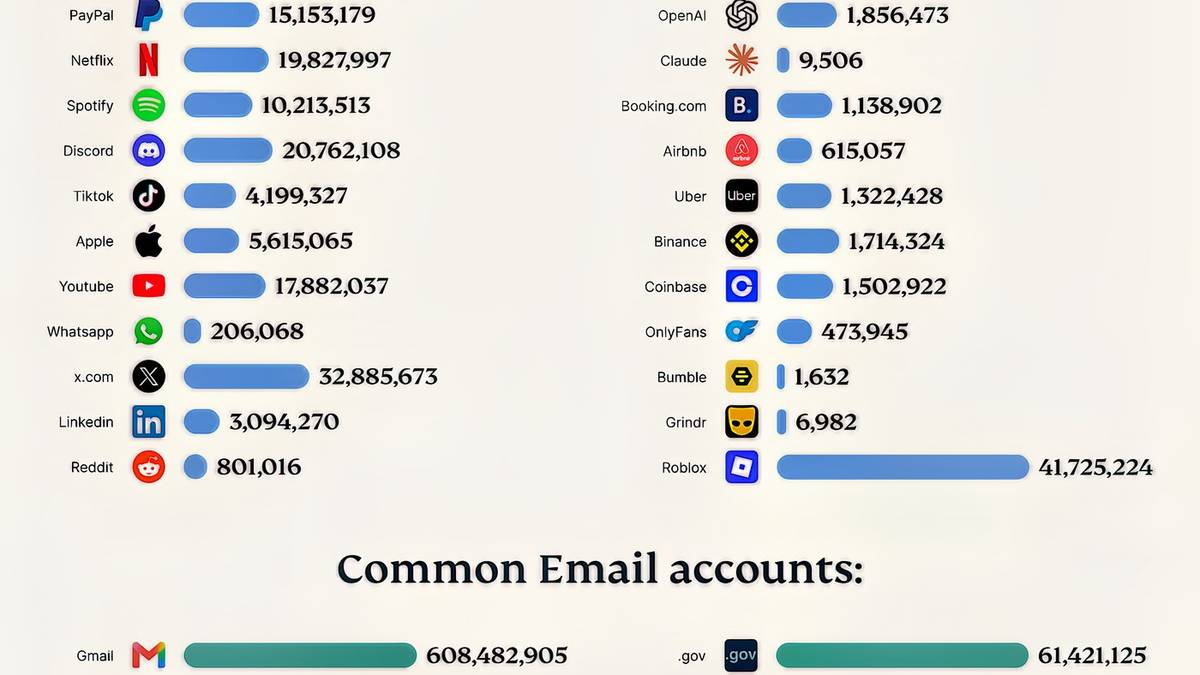
Published Nov 24, 2026, 11:36 AM EST Tyler Cross is an author for How-To Geek who reports on a wide range of cybersecurity stories. Before this, he spent 5 years creating cybersecurity articles under the Kape brand, including both short- and long-form blog posts. He also has 2+ years of experience creating news articles, YouTube scripts, and product reviews for a wide range of VPNs, antivirus software, password managers, and more. Outside of work, I am an avid tabletop gamer and enjoy writing my own TTRPG systems and campaign modules. Jeremiah Fowler, a cybersecurity researcher who shared his findings with ExpressVPN, recently discovered a publicly accessible database that had no password protection or encryption. The breached data included 8,471 folders containing an estimated 2 billion credential records. Fowler also estimated that roughly 400,000 documents appeared to come from malware that created separate folders for individual victims. The documents included applications, operating system details, cookies, Edge files, important files, and .txt documents the attackers labeled clipboard, process, brute force, passwords, and more. Fowler posted his findings today; he reviewed a limited sample of the stolen data to analyze it and estimate how many files were captured without downloading them. The scale of the theft is "the largest collection of credentials I have discovered in my years as a security researcher," he writes. What happened? And how to tell if you were affected Credit: Jeremiah Fowler, ExpressVPN Fowler found a public database that may have been part of an illicit marketplace, but ExpressVPN notes it may have been a legitimate research database, presumably left unsafe after the data was no longer in use or exposed by a threat actor. The data didn't contain any information about who owned or managed the database, but Fowler detected thousands of .Tor onion addresses associated with breached credentials. While .Tor addresses alone don't prove any illegal activities, they highlight potentially dangerous activity. Fowler commented that it was his first time seeing this many dark web accounts in a data breach. The breaches came from a wide variety of popular apps and services, including tech giants like Microsoft and Google, social media accounts including Snapchat and Discord, video sharing apps such as TikTok, and cryptocurrency platforms like Binance. A large number of customers across a wide range of services may have been affected. It's worth noting that many of the folders contained duplicate information, so the real number of breached credentials may be much lower. He also detected what appeared to be logs that were linked to malware, including infostealer malware. Still, the source of the data is unknown. "One possibility is that the repository served as part of a criminal marketplace or aggregation operation where stolen credentials were collected from different malware-log providers," Fowler writes. "There are also possible legitimate explanations for why such a large collection of credentials was stored in one place. Cybersecurity researchers, threat-intelligence companies, anti-fraud organizations, academic researchers, and even some law enforcement agencies may collect compromised credentials to identify infostealer activity, notify victims, study criminal infrastructure, or monitor suspected criminal marketplaces." What makes an infostealer so dangerous is that obtaining a password is only part of the problem. The research showed session tokens; a password lets you sign in, while a session token lets a website remember that you’re already signed in. If someone steals a token that’s still valid, they might be able to access the account without entering your password. Changing your password doesn’t always end existing sessions either, so it's wise to use a clean device to close your active sessions. Fowler doesn't provide a public lookup. If you want to check if your data was affected, use a clean device you trust to check your email account’s recent sign-ins and active sessions first, then check your other important accounts. Look for unexpected sign-ins, active sessions that you didn't create, requests to change your passwords, log-in alerts, and changes to recovery info. If anything looks out of place, change your account passwords and recovery options, and close any active sessions. Source: ExpressVPN
2 billion passwords are exposed, and multiple malware strains are behind the leak
Full Article
Original Source
Read the full article at Howtogeek →KhanList aggregates and links to publicly available news content. We do not host full articles from third-party sources. Always verify important information with original sources.