
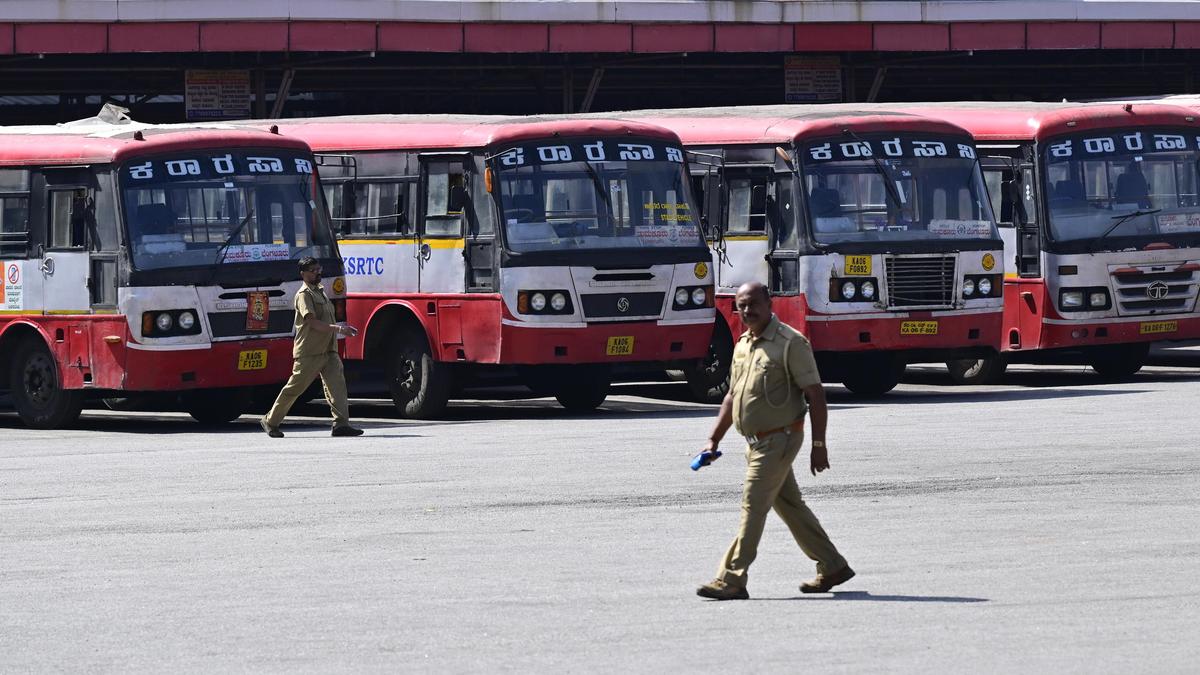
KSRTC buses. The four State-run transport corporations are expected to collectively cover 32,977 villages across Karnataka. | Photo Credit: Murali Kumar K As many as 1,749 villages in Karnataka remain without bus services operated by the State-run transport corporations, according to Transport Department data. Of these, 325 villages do not have roads suitable for bus services, or the movement of heavy vehicles, posing a major challenge to extending public transport connectivity.The four State-run transport corporations — Karnataka State Road Transport Corporation (KSRTC), Bengaluru Metropolitan Transport Corporation (BMTC), North Western Karnataka Road Transport Corporation (NWKRTC), and Kalyana Karnataka Road Transport Corporation (KKRTC) — are expected to collectively cover 32,977 villages across Karnataka.Transport facilities are currently available in 31,228 villages, while 1,749 villages remain without State-run bus connectivity.“The current action plan for the 2026–27 financial year proposes measures to arrange new schedules and provide the required bus facilities,” an official said.The RTCs are facing a shortage of new vehicles, drivers, and other operational staff. According to officials, steps are being taken to procure additional vehicles and recruit the required personnel so that bus services can be extended in a phased manner to villages that lack connectivity.An official said, “The RTCs are assessing demands from villages that currently lack public transport. We are working to provide the necessary basic infrastructure and facilities. Requirements are being reviewed continuously to identify villages where services can be introduced, with the aim of expanding connectivity.”Obstacle to socio-economic developmentTransport expert Professor M.N. Srihari said that the lack of reliable public transport in remote villages remains a major obstacle to socio-economic development, particularly at a time when welfare initiatives, such as the Shakti scheme, have increased the importance of affordable mobility.“The absence of consistent bus connectivity does not simply mean the lack of a vehicle. It can cut rural students off from educational opportunities, restrict access to primary healthcare, and limit women’s economic mobility. Expanding the rural bus fleet and ensuring motorable roads are not optional expenditures; they are fundamental to bridging the urban-rural divide,” Prof. Srihari added. Published - August 31, 2026 02:27 pm IST
1,749 villages lack State-run bus connectivity in Karnataka
Full Article
Original Source
Read the full article at Thehindu →KhanList aggregates and links to publicly available news content. We do not host full articles from third-party sources. Always verify important information with original sources.