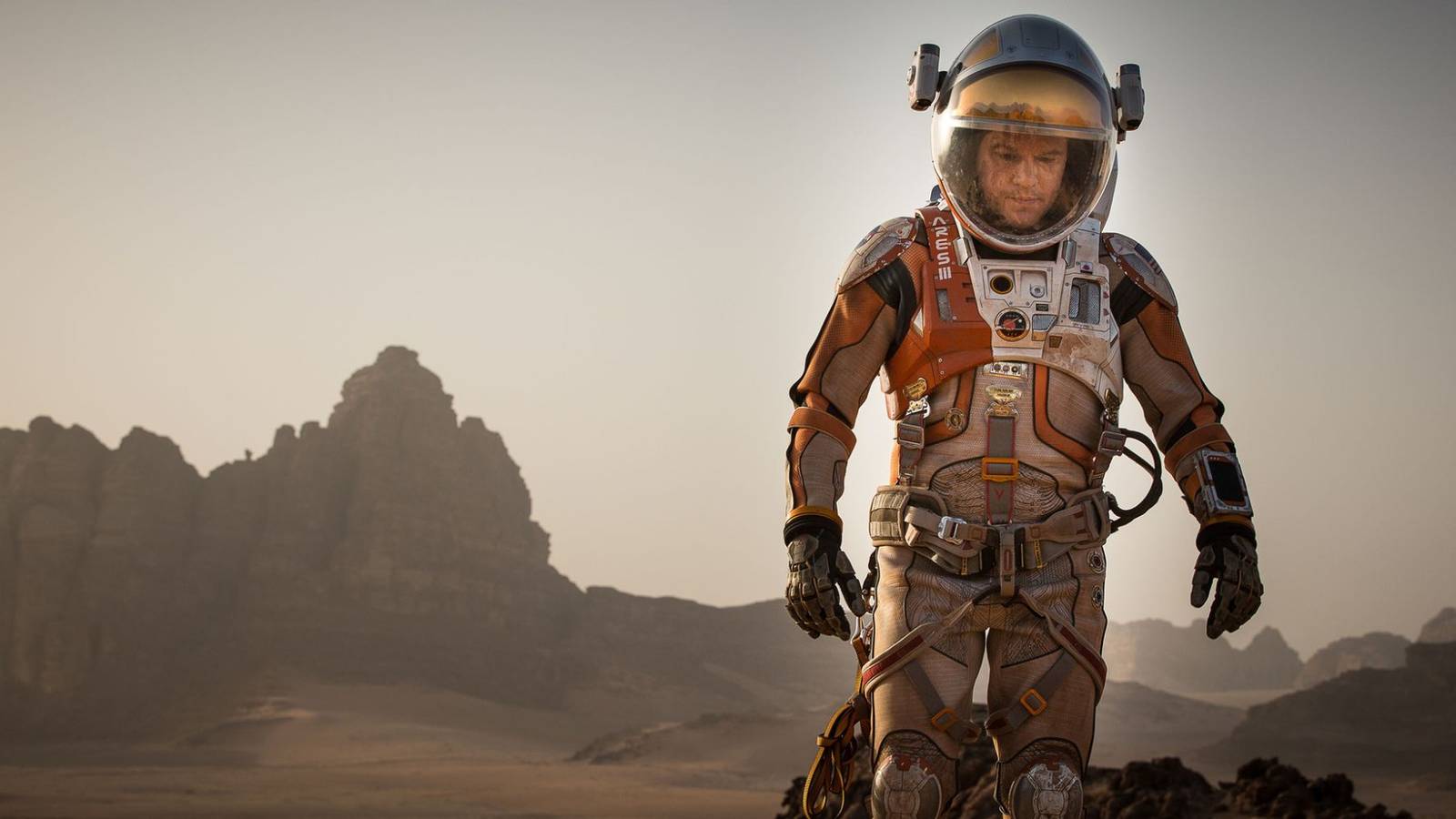
Image via 20th Century Studios Updated Aug 3, 2026, 5:11 AM EDT Sign in to your Collider account Following humanity's desperate attempt to find a new home as Earth succumbs to environmental disaster that ravages mankind's food sources, Interstellar is an epic film of space exploration, survival and hope that is awe-inspiring, deeply profound, and incredibly philosophical with its meditations on society and family. The Christopher Nolan epic was immediately regarded as a sci-fi classic and one of the most moving and magnificent films ever made, one that has lost none of its impact in the 10 years since its release. Naturally, such is the captivating power of the film, many fans have eagerly sought out other contemplative and insightful science-fiction films that can deliver a similar experience that juggles meditative poignancy with a divine sense of spectacle. From the surreal to the scientifically accurate, and from space exploration to the subconscious, these 10 movies are sure to twist the mind while snatching viewers away on epic adventures far beyond their wildest dreams. So strap yourself in and prepare for take-off! 15 'Project Hail Mary' (2026) Image via Amazon MGM Studios Interstellar was released as an epic, visually astonishing space adventure that captured the amazement and imagination of the masses with its intricate, cerebral sci-fi plotting. For 12 years, the mind-bending Christopher Nolan masterpiece was somewhat alone in this regard, but not anymore. Marking a defining triumph of 2026 cinema, Project Hail Mary left millions of moviegoers transfixed with its cosmic brilliance, stunning special effects, and its high-stakes save-the-world story. Admittedly, its unabashedly charming tone may have played a significant part in its cultural impact as well, with the movie following the friendship that blossoms between lone astronaut Ryland Grace (Ryan Gosling) and Rocky (James Ortiz), an alien lifeform on a similar mission to save his own homeworld. Project Hail Mary may revel in a warm and gentle air of heroic optimism and fun-loving quirkiness, whereas Interstellar delivers a more urgent and fiercely dramatic experience, but both films stand as two of science-fiction cinema’s most visually gorgeous and epic pictures of the 21st century so far. 14 'Primer' (2004) Image via THINKFilm True to form for Christopher Nolan, Interstellar immerses itself in mind-breaking concepts of time manipulation and non-linear storytelling. While the entirety of its $7,000 budget probably didn’t even amount to a fraction of what Interstellar spent on just catering alone, Primer delivers a similar cerebral experience of confounding high-concept science-fiction as it follows two ambitious college graduates who accidentally invent a time travel device and find themselves at a philosophical impasse concerning whether to exploit it for self-gain or treat it with caution. Written, directed by, and starring Shane Carruth, himself a college graduate with a degree in mathematics and experience as an engineer, the dialogue is unapologetically dense and technical, but it imbues the 77-minute thriller with an engrossing sense of tension and complexity that remains scintillating even on repeat viewings. A defining gem of indie cinema and low-budget sci-fi in the 21st century, Primer is perfect for those who love the challenging and thought-provoking scientific detail of Interstellar. 13 'Armageddon' (1998) Image via Walt Disney Studios Motion Pictures Billed as a sci-fi action movie, Armageddon is blatant disaster blockbuster bombast at its popcorn-chugging best. Directed by Michael Bay, it unfolds as NASA discovers a large asteroid on a trajectory to hit Earth in 18 days’ time and wipe out all life on the planet. In a desperate bid to save the world, the space organization recruits a team of deep-sea oil drillers led by Harry Stamper (Bruce Willis) who are to land on the asteroid, dig to its core, and ignite a bomb that will see it shatter before striking Earth. It is utterly ridiculous, and those who enjoy the scientific intensity of Interstellar probably won’t be too amused by Armageddon’s storytelling, tone, or premise. However, those who enjoy Interstellar as a visually magnificent picture with save-the-world stakes could find the guilty pleasure indulgence Armageddon has to offer. Buoyed by its outstanding ensemble cast, impressive and surprisingly ageless visuals, and its sweeping tone of all-American heroism, Armageddon is an easily digested epic about saving the world that, in its broad strokes, runs a little like Interstellar for dummies, and there is nothing wrong with that. 12 'Event Horizon' (1997) Image via Paramount Pictures One of Interstellar’s most pressing and thought-provoking ideas is the notion of what exists beyond the event horizon of a black hole. In the film, Cooper (Matthew McConaughey) discovers a hyper-dimensional physical representation of a timeline created by humans from a more advanced future when he ventures into “Gargantua” to unearth the essential facts that will save humanity. Event Horizon depicts something a little different with its exploration of black holes as it follows Captain Miller (Laurence Fishburne) and his crew as they are tasked with investigating the mysterious re-appearance of the Event Horizon after it vanished on its maiden voyage seven years prior. A recommendation for those who can stomach graphic visual horror, the crux of Event Horizon’s premise is that the titular ship’s venture beyond the known universe steered the crew to Hell, where they suffered all manner of agony and evil before the ship returned unmanned. It is certainly a unique theory about where black holes may lead, but propped up by an assembly of great performances—particularly from Sam Neill in a frightfully villainous role—and an unrelenting sense of atmospheric unease, Event Horizon earns its stripes as a niche gem of horror sci-fi cinema. Image via Warner Bros. Almost immediately after its release, many were quick to compare Interstellar to the likes of 2001: A Space Odyssey on account of its visual mastery, thematic depth, and its complex yet grounded focus on the nature of space travel. The similarities are certainly clear, but it is arguably 1997’s underrated sci-fi epic Contact that stands as the film most like Interstellar that audiences have seen, not only because of its spectacle and sci-fi themes, but because of its intimate focus on familial connection, the intersection of science and love, and the way it explores humanity’s standing in the universe. Based on the novel by Carl Sagan—whose work was a foundational inspiration for Interstellar—Contact follows SETI scientist Dr. Ellie Arroway (Jodie Foster) as she discovers irrefutable evidence of intelligent alien life and becomes obsessed with being the first to make direct contact, a desire that may be thwarted by suspicious government figures and religious fanatics. Also featuring Interstellar star Matthew McConaughey in a major role, and leaning heavily on the work of theoretical physicist Kip Thorne—the leading scientific consultant on Interstellar—Contact is perhaps the closest movie to Interstellar that exists. 10 'The Fountain' (2006) Image via Warner Bros. Pictures While it has attracted criticism for being incredibly difficult to grasp, The Fountain has developed a cult following courtesy of its arresting aura and its philosophically charged clashing of three distinct and different stories. In the modern day, Dr. Tommy Creo (Hugh Jackman) searches desperately for a cure for his wife’s terminal illness. The film also explores the manuscript she writes about a 16th-century Spanish conquistador on a mission to find the Tree of Life, while in the distant future, a space traveler nurtures the dying Tree of Life as he travels to the heart of a dying star. With themes of loss, obsession, and yearning permeating across all three stories – all of which feature Hugh Jackman in the prominent role – The Fountain excels as a powerful depiction of grief. Its balancing of arthouse adventure, drama, sci-fi, fantasy and mythos, and heartbreaking romance makes for an emotionally overwhelming film that, regardless of whether viewers love it or hate it, is difficult to forget. Its enormity and thematic weight make it an intriguing watch for fans of Interstellar. 9 'Gravity' (2013) Image via Warner Bros. Pictures One of many testaments to the notion that Alfonso Cuarón stands among the greatest directors of the 21st century, Gravity thrives as a relentlessly scintillating sci-fi thriller that depicts a desperate fight for survival while frying the nerves of audience members. It follows astronauts Ryan Stone (Sandra Bullock) and Matt Kowalsky (George Clooney) as their routine spacewalk becomes a deadly affair when they are struck by space debris. A ceaselessly pulsating story wrapped in grief and dread that plays on common fears surrounding the vast vacuum of outer space, Gravity realizes its heart-stopping story with breathtaking visuals and searing performances to be a riveting yet exhausting viewing experience. The sci-fi film was nominated for 10 Academy Awards and went on to win seven, with Best Director, Best Cinematography, and Best Visual Effects among its most defining achievements. Collider Exclusive · Sci-Fi Survival Quiz Which Sci-Fi World Would You Survive? The Matrix · Mad Max · Blade Runner · Dune · Star Wars Five universes. Five completely different ways the future went wrong — or sideways, or up in flames. Only one of them is the world your instincts were built for. Eight questions will figure out which dystopia, galaxy, or desert wasteland you'd actually make it out of alive. 💊The Matrix 🔥Mad Max 🌧️Blade Runner 🏜️Dune 🚀Star Wars TEST YOUR SURVIVAL → 01 You sense something is deeply wrong with the world around you. What do you do? The first instinct is often the truest one. APull on every thread until I understand the system — then figure out how to break it. BStop asking questions and start stockpiling — food, fuel, weapons. Questions don't keep you alive. CKeep my head down, observe carefully, and trust no one until I know who's pulling the strings. DStudy the patterns. Every system has a rhythm — learn it, and you learn how to survive it. EFind the people fighting back and join them. You can't fix a broken galaxy alone. NEXT QUESTION → 02 In a world of scarcity, what resource do you guard most fiercely? What we protect reveals what we believe survival actually requires. AKnowledge. If you understand the system, you don't need resources — you can generate them. BFuel. Everything else — movement, power, escape — runs on it. CTrust. In a world of fakes and informants, a truly reliable ally is rarer than any commodity. DWater. And after water, information — the two things empires are truly built on. EShips and credits. The galaxy is big — you survive it by being able to move through it freely. NEXT QUESTION → 03 What kind of threat keeps you up at night? Fear is useful data — if you're honest about what you're actually afraid of. AThat reality itself is a lie — that everything I experience has been constructed to keep me compliant. BA raid. No warning, no mercy — just the roar of engines and then nothing left. CBeing identified. Once someone with power decides you're a problem, you're already out of time. DBeing outmanoeuvred — losing a political game I didn't even know I was playing. EThe Empire tightening its grip until there's nowhere left to run. NEXT QUESTION → 04 How do you deal with authority you don't trust? Every dystopia has a power structure. Your approach to it determines everything. ASubvert it from the inside — learn its rules well enough to weaponise them against it. BIgnore it and stay out of its reach. The further from any power structure, the better. CAppear to comply while doing exactly what I need to do. Visibility is the enemy. DManoeuvre within it carefully. You can't beat a system you refuse to understand. EResist openly when I have to. Some things are worth the risk of being seen. NEXT QUESTION → 05 Which environment could you actually endure long-term? Survival isn't just tactical — it's physical, psychological, and very much about where you are. AUnderground bunkers and server rooms — cramped, artificial, but with access to everything that matters. BOpen wasteland — brutal sun, no shelter, constant movement. At least the threat is honest. CA dense, rain-soaked city where you can disappear into the crowd and nobody asks questions. DMerciless desert — extreme heat, no water, and something enormous living beneath the sand. EThe fringe — backwater planets and busy spaceports where the Empire's attention rarely reaches. NEXT QUESTION → 06 Who do you want in your corner when things fall apart? The company you keep is the clearest signal of who you actually are. AA tight crew of believers who've seen behind the curtain and have nothing left to lose. BOne or two people I'd trust with my life. Any more than that and someone talks. CNobody, ideally. Alliances are liabilities. I work alone unless I have no choice. DA community bound by shared hardship and mutual survival — people who need each other to last. EA ragtag team with wildly different skills and total commitment when it counts. NEXT QUESTION → 07 Where do you draw the line — if you draw one at all? Every survivor eventually faces a moment that tests what they're actually made of. AI won't harm the innocent — even the ones who'd report me without hesitation. BI do what I have to to protect the people I've chosen. Everything else is negotiable. CThe line shifts depending on who's asking and what's at stake. DI draw a long-term line — nothing that compromises my people's future, even if it'd help now. ESome lines, once crossed, can't be uncrossed. I know which ones they are. NEXT QUESTION → 08 What would actually make survival worth it? Staying alive is one thing. Having a reason to is another. AWaking others up — dismantling the illusion so no one else has to live inside it. BFinding somewhere — or someone — worth protecting. A reason to keep moving. CAnswers. Understanding what I am, what any of this means, before time runs out. DLegacy — shaping the future in a way that outlasts me by generations. EFreedom — for myself, for others, for every world still living under someone else's boot. REVEAL MY WORLD → Your Fate Has Been Calculated You'd Survive In…Your answers point to the world your instincts were built for. This is the universe your temperament, your survival instincts, and your particular brand of stubbornness were made for. The MatrixYou took the red pill a long time ago — probably before anyone offered it to you. You're a systems thinker who can't help but notice the seams in things. You're drawn to understanding how the system works before figuring out how to break it. You'd find the Resistance, or it would find you — your instinct for spotting constructed realities is the machines' worst nightmare. You function best when you have access to information and the freedom to act on it. The Matrix built an airtight prison. You'd be the one probing the walls for the door. Mad MaxThe wasteland doesn't reward the clever or the well-connected — it rewards those who are hard to kill and harder to break. That's you. You don't need comfort, community, or a cause larger than the next horizon. You need a vehicle, a clear threat, and enough fuel to outrun it — and you're good at all three. You are unsentimental enough to survive that world, and decent enough — just barely — to be something more than another raider. In the wasteland, that distinction is everything. Blade RunnerYou'd survive here because you know how to exist in moral grey areas without losing yourself completely. You read people accurately, keep your circle small, and ask the questions others prefer not to answer. In a city where humanity is a legal designation rather than a feeling, you hold onto something that keeps you functional. You're not a hero. But you're not lost, either. In Blade Runner's world, that distinction is everything. DuneArrakis is the most hostile environment in the known universe — and you are precisely the kind of person it rewards. Patience, discipline, and political awareness are your core strengths — and on Arrakis, they're survival tools. You understand that the long game matters more than any single victory. Others come to Dune and are consumed by it. You'd learn its logic and earn its respect. In time, you wouldn't just survive Arrakis — you'd begin to reshape it. Star WarsThe galaxy far, far away is vast, loud, and in a constant state of violent political upheaval — and you wouldn't have it any other way. You find meaning in being part of something larger than yourself — a cause, a crew, a rebellion. You'd gravitate toward the Rebellion, or the fringes, or whatever pocket of the galaxy still believes the Empire's grip can be broken. You fight — not because you have to, but because standing aside isn't something you're capable of. In Star Wars, that willingness is what makes all the difference. ↻ RETAKE THE QUIZ 8 'The Martian' (2015) Image via 20th Century Fox A cerebral sci-fi thriller that was celebrated for its commitment to scientific accuracy while delivering a great spectacle, The Martian is perhaps the most logical next viewing experience for lovers of Interstellar. It also, quite funnily, stars Matt Damon as an astronaut abandoned on a distant planet (in this case, Mars), just to really appeal to fans of Nolan's sci-fi classic. Desperate to survive, Mark Watney (Damon) uses his resourcefulness to survive the inhospitable conditions of Mars as the greatest scientific minds on Earth try to figure out a way to rescue him. The Martian is a brilliant feat of intelligence, both in terms of its scientific basis and its narrative prowess. The manner in which it blends such information-heavy plotting with a lively and energetic story of survival is quite ingenious. Complemented by its awe-inspiring visual display and great performances from all involved, including another Interstellar star in Jessica Chastain, The Martian is arguably the most perfect film for sci-fi lovers to immerse themselves in. Image via 20th Century Studios Directed, co-written, and co-produced by James Gray, Ad Astra is a meditative sci-fi journey that explores father-son relationships with a delightfully restrained and distant lens that imbues the film with a somber melancholy from start to finish. Brad Pitt stars as Roy McBride, an American astronaut sent on a mission to Neptune to investigate a series of devastating power surges that might be tied to the fate of his father, who went missing on a space mission years prior. Methodical in its pacing and hinging on a wonderfully taut performance from Pitt while also featuring some sublime cinematography courtesy of the brilliant Hoyte van Hoytema, Ad Astra is an enrapturing sci-fi drama that tends to have a hypnotizing impact on viewers. Even though it does have some flaws, Ad Astra is an underrated little gem of sci-fi cinema defined by its atmospheric intrigue as well as its existential questions that are sure to linger on the mind. 6 'Sunshine' (2007) Image via Fox Searchlight With an entrancing screenplay from Alex Garland and the ever-brilliant direction of Danny Boyle, Sunshine is a fascinating sci-fi adventure, especially when viewed in conjunction with the writer-director duo's previous film, 28 Days Later. Whereas that was a dramatic and socially aware zombie flick, Sunshine almost runs more like a monster horror movie, especially in the second half. Its basic premise focuses on a crew sent into space to reignite the dying sun with a nuclear warhead, a mission that turns deadly when an accident occurs, and a long-lost ship that once had the same mission encountered. The movie features an all-star cast of international actors, which includes Cillian Murphy (another 28 Days Later alumnus), Chris Evans, Michelle Yeoh, Rose Byrne, Benedict Wong, and Cliff Curtis. Every single one of them excels as the spiraling story explores horror aesthetics as well as rich and contemplative issues of survival, sacrifice, and humanity. It is a thoroughly entertaining film that functions as both a hard-core sci-fi thinkpiece and an engaging, action-packed thriller with intense stakes.
15 Sci-Fi Movies Like 'Interstellar'
Full Article
Original Source
Read the full article at Collider →KhanList aggregates and links to publicly available news content. We do not host full articles from third-party sources. Always verify important information with original sources.