
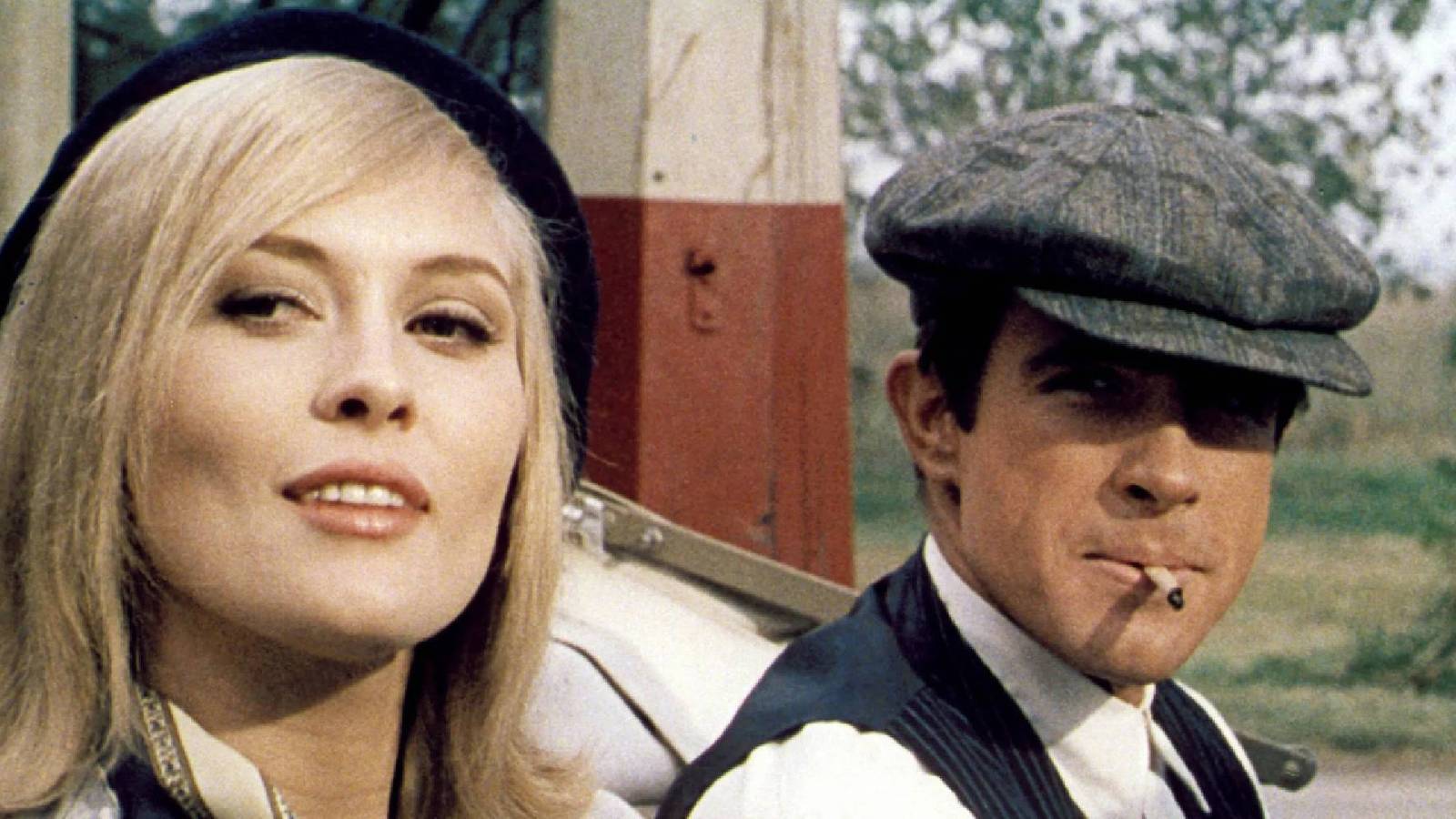
Image via Warner Bros. Updated Aug 27, 2026, 6:03 AM EDT Daniela is a freelance writer with two years of experience covering entertainment. She is a senior writer on Collider’s freelance team and has also been published in other platforms, such as Elite Daily. When she’s not writing, she's diving into thought-provoking, existentialist films and classic literature. Sign in to your Collider account Although crime and romance are separate genres, combining them can yield compelling and unforgettable results. This is due to the contrasting nature of the two genres, both of which are rooted in complex human emotions. The combination of endearing and violent elements can create intriguing films, especially for audiences who aren't into lovey-dovey stories and would rather watch something more mature and less cliché. Proof of how great this blend can be is these incredible features, which range from illustrating passionate partners in crime (often inspired by real-life people) to other twisted and questionable relationships. From Prizzi's Honor to older, timeless film noir classics such as In a Lonely Place, these are the best romantic crime movies of all time. 15 'Hit Man' (2023) Image via Netflix Hit Man greatly succeeds thanks to an overwhelming amount of charm in its execution, largely attributed to the exceptional direction of Richard Linklater and the electrifying chemistry and star power of Glen Powell and Adria Arjona. The film sees Powell as a mild-mannered professor who works on the side as a fake hit man in police sting operations, where he gets deep into character for each operation. However, after he begins falling for a potential client, he begins to take things too far, even breaking the law in the name of love. While it's certainly more rom-com than it is an outright crime film, the romance is absolutely electrifying on screen, and once the characters are up to criminal activities, it makes for a really entertaining fun time. The chemistry between the two leads really goes a long way in terms of making the film such a great watch, as they're both deeply memorable and entertaining characters to watch on-screen whose performances are exactly what you want out of a crime rom-com. —Robert Lee 14 'What's Up Doc' (1972) Image via Warner Bros. While crime is all over the place within the story of What's Up Doc, it's the mixture of these overarching criminal schemes with wild, unrestrained characters and a massive accidental mix-up that makes the film an unpredictable wild ride and an all-time icon of screwball comedies. However, no matter how mad and chaotic the film gets, the central dynamic and forbidden romance between Judy (Barbra Streisand) and Howard (Ryan O'Neal) give the film enough charm to give it a real emotional throughline. The film does a great job of setting up sequences that utilize criminal impersonation and overly extroverted charisma that makes the romance and central connection feel both hilarious and highly scandalous in nature. Thanks to the top-notch dynamic and back and forth between these characters as they find themselves intertwined in a crime, it becomes one of the most rewatchable and invigorating crime comedies ever made. —Robert Lee 13 'Queen and Slim' (2019) Image via Universal Pictures Setting itself up to be a modern-day, more haunting take on a story like Bonnie and Clyde, Queen and Slim's story of criminal lovebirds on the run comes from a place of accidental circumstances and being at the absolute worst place at the wrong time. The film sees the titular duo on a forgettable first date taking a wrong turn after they are pulled over for a minor traffic infraction. When the situation escalates and leaves the police officer dead, the duo find themselves on the run in a countrywide manhunt. The film dances around a lot of heavy themes with its relation to both crime and romance, as both of these core tenets are thrust upon these characters and become their defining identities, stripping them of whatever lives they had before this painful moment. They prove to develop a relationship and romance with one another from a place of survival, sticking by one another with a mutual understanding of the gravitas of their crime. It does a great job of getting the audience to root for this couple, even all the while knowing that things will surely end poorly. —Robert Lee 12 'On the Waterfront' (1954) Image via Columbia Pictures Corporation On the Waterfront is an interesting piece of larger film history in its relation to director Elia Kazan, yet the quality of the film has stood the test of time even despite its reading of attempting to justify Kazan's divisive actions. The brilliance of its balance between romance and crime comes from the genius of its story, further amplified by striking cinematography and some of the best performances of the '50s. The film sees Terry Malloy (Marlon Brando) growing sick and tired of the corruption surrounding union ranks, all the while fostering a relationship with the grieving sister (Edie Doyle) of a whistleblower. The slow-burning romance is exceptionally explored on-screen, amplifying the raw anger on display in its story and the madness that begins to ensue in the face of death and betrayal. Its story of self-reflection and pain in the handling of crime has made it age exceptionally well into the modern age, even if Kazan's actions haven't. —Robert Lee 11 'West Side Story' (1961) Image via United Artists Arguably the most iconic and widely revered adaptation and spin on Romeo & Juliet ever made, West Side Story is a legendary crime romance musical that has lived in the hearts of audiences ever since its release, often celebrated as one of the greatest musicals ever made. It translates the classic story of forbidden love in the Upper West Side of Manhattan, with the young love blooming from opposite sides of an impending gang war between the Polish-American gang The Jets and the Puerto Rican gang The Sharks. It features a lot of the timeless romantic elements that have made the Shakespeare original one of the greatest love tragedies ever told, only further amplified by layers of gang warfare and city crime, raising the stakes and adding powerful themes of racial prejudice. This legendary Best Picture-winning adaptation of the beloved musical ups the ante and provides a cinematic scale to the emotion and weight of the story, all the while delivering greatly in terms of performances and music. —Robert Lee 10 'Prizzi's Honor' (1985) Image via 20th Century Studios This witty black comedy by John Huston (in one of his last filmmaking efforts) stars the iconic Jack Nicholson and Kathleen Turner as two skilled mob assassins with impeccable results. Charley Partanna is a hitman from a New York mafia who first notices the beautiful and charming Irene at a family wedding. The two fall in love and marry, only to realize that their relationship is put to the test by inescapable circumstances. Although it does not rank high on this list, there is no doubt that Prizzi's Honor is a must-see crime melodrama and possibly one of the best films of the 1980s, also thanks to its romantic storyline that makes it even more interesting and entertaining. It understandably received an impressive number of eight nominations at the 58th Academy Awards, with Huston winning for Best Supporting Actress. 9 'Bonnie and Clyde' (1967) Image via Warner Bros. Based on the real-life story of the pair of notorious American criminals who were known for their bank robberies, this Oscar-winning Arthur Penn biographical feature and neo-noir crime centers on ex-convict Clyde Barrow (Warren Beatty) and Bonnie Parker's (Faye Dunaway) life and crimes, from the beginning of their relationship to their shocking fate. Considering the story's popularity and how well-executed Penn's biopic is, it is pretty clear why New Hollywood Era's Bonnie and Clyde is essential in the romance crime genre. Given how explicit it was, Penn's film broke ground not only in terms of execution (the usage of synthetic blood capsules) but also by dismantling cinematic taboos, prompting other directors to be more open in showcasing sex and violence — talk about that iconic final scene — in their own work. Furthermore, this progressive, beautifully shot film sheds light on dysfunctional relationships through its protagonists' unusual bond. Collider Exclusive · Oscar Best Picture Quiz Which Oscar Best PictureIs Your Perfect Movie? Parasite · Everything Everywhere · Oppenheimer · Birdman · No Country Five Oscar Best Picture winners. Five completely different visions of what cinema can be — and what it can do to you. One of them is the film that was made for the way your mind works. Ten questions will figure out which one. 🪜Parasite 🌀Everything Everywhere ☢️Oppenheimer 🐦Birdman 🪙No Country for Old Men FIND YOUR FILM → 01 What kind of film experience do you actually want? The best movies don't just entertain — they leave something behind. ASomething that pulls the rug out — that makes me think I'm watching one kind of film and then reveals I'm watching another entirely. BSomething overwhelming — funny, sad, absurd, and genuinely moving, all at once. CSomething grand and weighty — a film that makes me feel the full scale of what I'm watching. DSomething formally daring — a film that pushes what cinema can even do. ESomething lean and relentless — pure tension with no wasted frame. NEXT QUESTION → 02 Which idea grabs you most in a film? Great films are driven by a central obsession. What's yours? AClass, inequality, and what people are willing to do when desperation meets opportunity. BIdentity, family, and the chaos of trying to hold your life together when everything is falling apart. CGenius, moral responsibility, and the catastrophic weight of a decision you can never take back. DEgo, legacy, and the terror of becoming irrelevant while you're still alive to watch it happen. EEvil, chance, and whether moral order actually exists or if we just tell ourselves it does. NEXT QUESTION → 03 How do you like your story told? Form is content. The way a story is shaped changes what it means. AGenre-twisting — I want it to start in one lane and migrate into something completely different. BMaximalist and genre-blending — comedy, action, drama, sci-fi, all in one ride. CEpic and non-linear — cutting between timelines, building a mosaic of cause and consequence. DA single unbroken flow — I want to feel like I'm living it in real time, no cuts to safety. ESpare and precise — every scene doing exactly what it needs to do and nothing more. NEXT QUESTION → 04 What makes a truly great antagonist? The opposition defines the protagonist. What kind of opposition fascinates you? AA system — invisible, structural, and almost impossible to fight because it has no single face. BThe self — the ways we sabotage, abandon, and fail the people we love most. CHistory — the unstoppable momentum of events that no single person can stop or redirect. DThe industry — the machinery of culture that chews up talent and spits out irrelevance. EPure, implacable evil — a force so certain of itself it becomes almost philosophical. NEXT QUESTION → 05 What do you want from a film's ending? The final note is the one that lingers. What do you want it to sound like? AShock and inevitability — a conclusion that recontextualises everything that came before it. BEarned emotion — I want to cry, laugh, and feel genuinely hopeful, even if the world is a mess. CDevastation and grandeur — an ending that makes me sit in silence for a few minutes after. DAmbiguity — something that leaves enough open that I'm still thinking about it days later. EBleakness — an honest refusal to pretend the world is tidier than it actually is. NEXT QUESTION → 06 Which setting pulls you in most? Where a film takes place shapes everything — mood, stakes, what's even possible. AA gleaming modern city with a hidden underside — beauty masking rot, wealth masking desperation. BA collapsing suburban life that opens onto something infinite — the multiverse of a single ordinary person. CThe corridors of power and science at a world-historical turning point — where decisions echo for decades. DThe grimy, alive chaos of New York and Hollywood — fame as both destination and trap. EVast, indifferent landscape — desert and highway where violence arrives without warning or reason. NEXT QUESTION → 07 What cinematic craft impresses you most? Every great film has a signature — a technical or artistic element that makes it unmistakable. AProduction design and mise-en-scène — every frame composed to carry meaning beneath the surface. BEditing and tonal control — the ability to move between registers without losing the audience. CScore and sound design — music that becomes inseparable from the dread and awe of what you're watching. DCinematography as performance — the camera not recording events but participating in them. ESilence and restraint — what's left unsaid and unshown doing more work than any dialogue could. NEXT QUESTION → 08 What kind of main character do you root for? The protagonist is the lens. Who you choose to follow says something about you. ASomeone smart and resourceful who makes increasingly dangerous decisions under pressure. BSomeone overwhelmed and ordinary who turns out to be capable of something extraordinary. CA brilliant, tortured figure whose gifts and flaws are inseparable from each other. DA self-destructive artist whose ego is both their superpower and their undoing. EA quiet, principled person trying to make sense of a world that has stopped making sense. NEXT QUESTION → 09 How do you feel about a film that takes its time? Pace is a choice. Some films sprint; others let tension accumulate slowly, deliberately. AI love a slow build when I know the payoff is going to be seismic — patience for a devastating reveal. BGive me relentless momentum — I want to feel breathless and emotionally spent by the end. CEpic runtime doesn't scare me — if the material demands three hours, give me three hours. DI want it to feel propulsive even when nothing is technically happening — restless energy throughout. EDeliberate and unhurried — I want dread to accumulate in the spaces between the action. NEXT QUESTION → 10 What do you want to feel walking out of the cinema? The best films leave a mark. What kind of mark do you want? AUnsettled — like I've just seen something I can't fully explain but can't stop thinking about. BMoved and energised — like the film reminded me what actually matters and gave me something to hold onto. CHumbled — like I've been in the presence of something genuinely important and overwhelming. DExhilarated — like I've just seen cinema doing something it's never quite done before. EHaunted — like a cold, quiet dread that stays with me for days. REVEAL MY FILM → The Academy Has Decided Your Perfect Film Is…Your answers have pointed to one Oscar Best Picture winner above all others. This is the film that was made for the way your mind works. ParasiteYou are drawn to films that operate on multiple levels simultaneously — that begin in one genre and quietly, brilliantly migrate into another. Bong Joon-ho's Parasite is a film about class, desire, and the architecture of inequality that manages to be darkly funny, deeply suspenseful, and genuinely shocking across a single extraordinary running time. Your instinct is for cinema that hides its true intentions until the moment it's ready to reveal them. Parasite is exactly that — a film that rewards close attention and punishes assumptions, right up to its devastating final image. Everything Everywhere All at OnceYou want it all — and this film gives you all of it. The Daniels' Everything Everywhere All at Once is one of the most maximalist films ever made: action comedy, multiverse sci-fi, family drama, existential crisis, and a genuinely earned emotional core that sneaks up on you amid the chaos. You are someone who responds to ambition, who doesn't want cinema to choose between being entertaining and being meaningful. This film refuses that choice entirely. It is overwhelming by design, and its overwhelming nature is precisely the point — because the feeling of being crushed by infinite possibility is exactly what it's about. OppenheimerYou are drawn to cinema on a grand scale — films that understand history not as a backdrop but as a force, and that place their characters inside that force and watch what happens. Christopher Nolan's Oppenheimer is a film about the terrifying gap between what we can do and what we should do, told with the full weight of one of the most consequential moments in human history behind it. You want your films to feel important without feeling self-important — to earn their ambition through sheer craft and the gravity of their subject. Oppenheimer does exactly that. It is enormous, complicated, and refuses easy comfort. BirdmanYou are drawn to films that foreground their own construction — that make the how of the filmmaking part of the what it's about. Alejandro González Iñárritu's Birdman, shot to appear as a single continuous take, is cinema examining itself through the cracked mirror of a fading actor's ego. You respond to formal daring, to the feeling that a film is doing something that probably shouldn't be possible. Michael Keaton's performance and Emmanuel Lubezki's restless camera create something genuinely unlike anything else — a film that is simultaneously about creativity, relevance, self-destruction, and the impossibility of ever truly knowing if your work means anything at all. No Country for Old MenYou are drawn to cinema that trusts silence, that refuses to explain itself, and that treats dread as a form of meaning. The Coen Brothers' No Country for Old Men is a film about the arrival of a new kind of evil — implacable, arbitrary, and utterly indifferent to the moral frameworks we use to make sense of the world. It is one of the most formally controlled films ever made, and its controlled restraint is what makes it so terrifying. You want your films to haunt you, not comfort you. You are not interested in resolution if resolution would be dishonest. No Country for Old Men is honest in a way that most cinema never dares to be. ↻ RETAKE THE QUIZ 8 'Decision to Leave' (2022) Image via CJ Entertainment This critically acclaimed 2022 film, selected as an entry for Best International Feature Film at the Oscars, is likely to appeal to those who enjoy Alfred Hitchcock's quintessential psychological thriller Vertigo. It follows a detective (Park Hae-il) investigating a man's death in the mountains. When he meets the late man's mysterious, charming wife (Tang Wei) during his investigation, he finds himself irresistibly drawn to her. Decision to Leave explores a man's tendency to long for what he can not get. It is a tale of desire, deception, and restraint. The film's superb acting helps heighten it to higher levels. However, Park Chan-wook's — director of the fan-favorite Vengeance Trilogy and The Handmaiden — well-crafted screenplay is undoubtedly top-notch. It is a hundred percent a film worth checking out, especially for fans of romantic crime movies. 7 'Fallen Angels' (1995) Image via Kino Lorber Brought to you from the mind behind the passionate In the Mood for Love, the visually stunning Fallen Angels introduces audiences to a Hong Kong-based assassin (Leon Lai) who is in hopes of getting a way out of his current lifestyle, unaware that his female partner-in-crime (Michelle Reis) is truly in love with him. Like its predecessor Chungking Express, which also showcases contemporary Hong Kong, Fallen Angels' mood and atmosphere alone make it worth the look. Although it features wide lens shots, it also pays attention to detail, often favoring looks over structure. Wong Kar-Wai's incredible film has a massive cult following, which is not to wonder considering the universal themes it tackles, including loneliness and alienation. 6 'Badlands' (1973) Image via Warner Bros. Martin Sheen is a James Dean-ish mid-twenty-something named Kit in Terrence Malick's debut movie. By contrast, Holly, played by Carrie's Sissy Spacek, is a fifteen-year-old girl from a dead-end town with a strained relationship with her parents. When the two meet and get together, Kit's violent nature is slowly unearthed, and the two embark on a killing spree in the South Dakota Badlands. With an unconventional couple at its center (especially when you think about their age difference, which is one of the most concerning bits about the film), Malick's romance crime Badlands is among the best works by the filmmaker. Inspired by the real-life 1958 killing spree by Charles Starkweather and girlfriend Caril Ann Fugat, it is an intriguing mix of crime and love, with an enticing narrative and visually stunning wide shots.
15 Best Romance Crime Movies of All Time, Ranked
Full Article
Original Source
Read the full article at Collider →KhanList aggregates and links to publicly available news content. We do not host full articles from third-party sources. Always verify important information with original sources.