
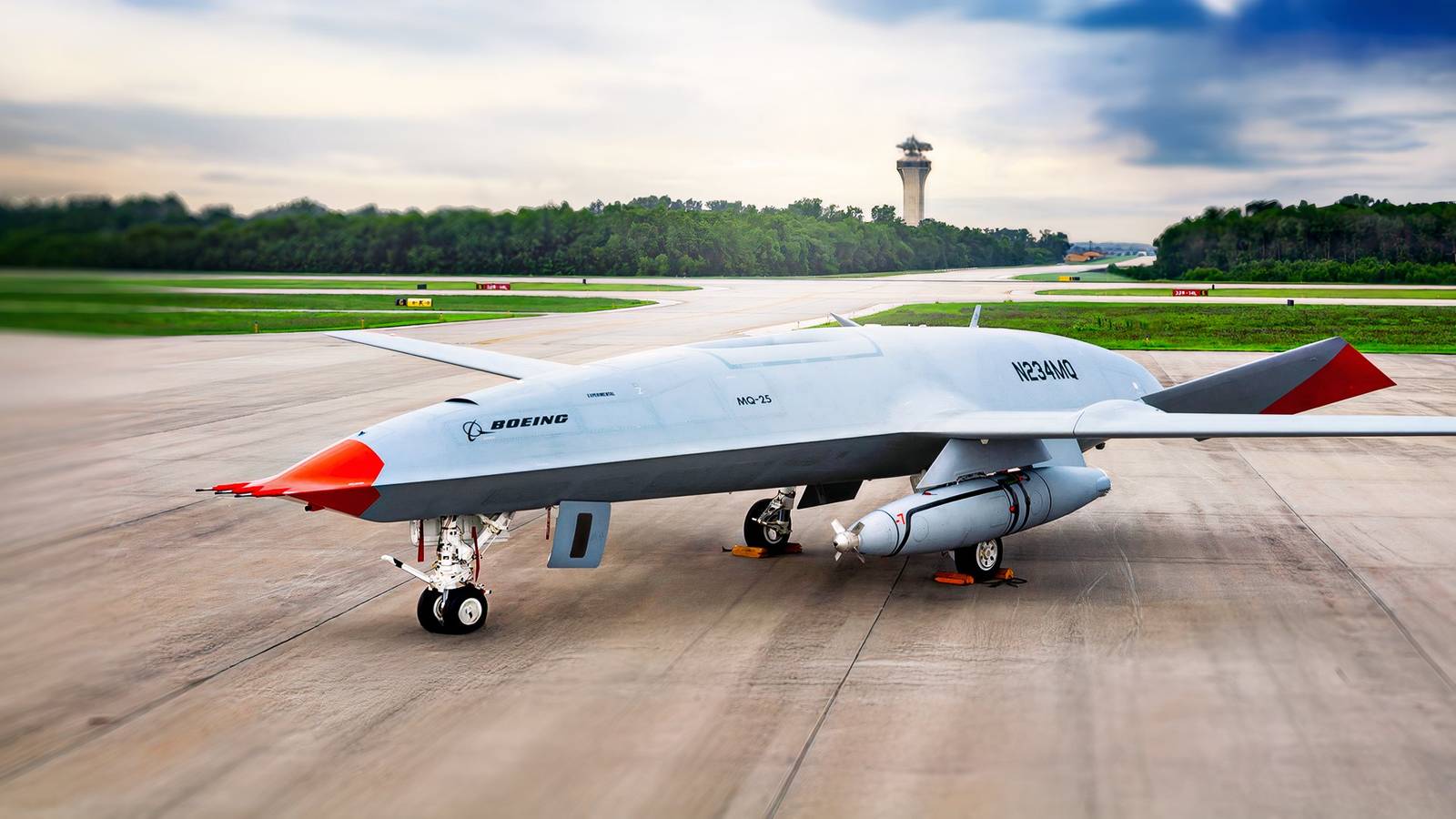
Published Oct 2, 2026, 4:00 PM EDT Chris earned a Master’s degree in Defense and Strategic Studies (Highest Honors) from the University of Texas at El Paso. His graduate work concentrated on Global and National Security, Low-Intensity Conflict, Modern Warfare, and US grand strategy. He also undertook extensive regional studies, analyzing how key regions integrate into the broader US security architecture. This rigorous program provided him with a comprehensive understanding of U.S. military operations, global strategy, and weapons systems. Additionally, he gained a strong appreciation for great power competition.—an increasingly central force shaping international relations and conflict for the foreseeable future. Aerial refueling is both a demanding and essential operation for the airborne assets of the United States military. The US Navy routinely uses this organic fleet capability to extend operations and provide fuel to its aviators in emergency situations. For many years, the role of tactical fleet refueler has been assigned to multirole fighters, allowing carrier air wings to maintain greater endurance during extended operations. Following the recent successful flight test of the Boeing MQ-25A refueling drone, the Navy has awarded the company a multimillion-dollar contract to begin manufacturing the aircraft over the course of three lots, with deliveries scheduled through the end of the decade. Once assigned to the fleet, the drone will provide numerous capabilities, take on risks that would otherwise have been borne by naval aviators, and fundamentally change how the Navy conducts carrier-based aviation operations, particularly during demanding carrier strike missions. Following Successful Flight Testing, The Stingray Moves Into Production Credit: US Navy Drones are quickly becoming an operational reality within the military, and these uncrewed aircraft are deepening their presence with each passing year. For the Navy specifically, the Stingray refueling platform is edging closer to operational service, marking another major step toward unmanned carrier aviation and expanding the role of drones aboard America's aircraft carriers. The MQ-25 began its journey with the sea service as a test drone under the Unmanned Carrier Launched Surveillance and Strike (UCLASS) program, for which the DoD initially approved requirements in 2011. By 2016, the Navy shifted its developmental focus from observation and strike to carrier-based autonomous refueling missions, establishing the foundation for the aircraft's current role and eventual introduction into fleet service. According to the Navy Times, the Stingray program—under development by Boeing—has proven its viability to the point that the Navy has awarded the company a $562 million (£421 million) fixed-price incentive contract to initiate Lot 1 Low Rate Initial Production of three aircraft. These first-in-class refuelers are set for delivery to the fleet by 2029, bringing the Navy closer to introducing the capability into operational carrier aviation and reducing reliance on manned aircraft for refueling. Following the initial batch, Lot 2 will cover an additional three MQ-25s, in addition to advanced procurement funding for long-lead components, and the Navy has stated that Lot 3 will see the delivery of five units. The awarding of the initial Lot funding followed the Stingray's first successful test flight earlier this April. The flight was made from the MidAmerica St. Louis Airport in Mascoutah, Illinois. During the nearly two-hour flight, Naval News reports that the drone demonstrated "...flawless autonomous taxi, takeoff, flight, and landing capabilities, while validating basic flight controls, engine performance, and handling characteristics under ground control station commands." This successful demonstration of its capabilities opened the door to Milestone C approval, which is the formal transition of the program from the Engineering and Manufacturing Development phase into manufacturing. Rolls-Royce Is The Power Behind the Fleet's New Refueler Credit: Rolls-Royce In order to provide the necessary thrust and range to engage in demanding air-to-air refueling operations, the Navy and Boeing made the decision to partner with Rolls-Royce. The company is a leader in propulsion systems for US military transport, patrol, and combat aircraft, providing engines for a range of platforms that operate in some of the most demanding environments. For the MQ-25, reliability and an established service history were important considerations for a drone expected to operate from aircraft carriers. According to Rolls-Royce, its engines and technology have supported the US military for more than 80 years. This heritage dates back to the Allison Engine Company, whose Indianapolis facilities produced engines for US military aircraft during World War II. Rolls-Royce acquired Allison's aerospace business in 1995, bringing that longstanding US military propulsion experience into the company's operations. The acquisition also gave Rolls-Royce an established US industrial presence and decades of experience supporting American military aviation programs. This experience is precisely why each Stingray will be equipped with a single AE 3007N engine, which falls firmly within the 8,000 lbf thrust class. The powerplant itself has a distinguished record, having been equipped on such aircraft as the US Air Force RQ-4 Global Hawk and US Navy MQ-4C Triton. Using an engine with an established operational history also provides the Stingray with a propulsion system that has already accumulated significant experience across other unmanned aircraft programs. In the commercial world, this engine has proven itself, with more than 13,000 AE 3007 engines installed on commercial aircraft. Cumulatively, they have completed more than 72 million flight hours across all platforms and have achieved a dispatch rate of more than 99%, according to Rolls-Royce. This extensive operating history is particularly relevant to the MQ-25, as the Navy will depend on the Stingray to provide a reliable refueling capability while operating alongside manned aircraft from the carrier deck. The Future Stingray Fleet By The Numbers Credit: US Air Force Once production of the Stingray is well underway, the aircraft will not have a small footprint within the Navy. The service intends to procure 76 drones total, 67 for operational use, with an additional nine for testing and development, demonstrating the scale of the Navy's planned investment. As stated by the Congressional Research Service, the Navy has made a FY2027 budget request of "...$1.75 billion in discretionary procurement and research, for the development, test, and evaluation (RDT&E) funding for the MQ-25." If approved, this funding would support not only the LRIP for the three planned aircraft of Lot 2, but the program as a whole. The report further states that the estimated total acquisition cost for the program—including Research, Development, Testing and Evaluation and military construction—would have an estimated price tag of $19.4 billion (£14.54 billion). The latter, covering the manufacturing of the 76 proposed aircraft, would give each a unit cost of $255.8 million (£192 million), a 4% increase from the GAO's 2025 estimate. The Navy's decision to begin LRIP before completing developmental testing does carry some risk, however, particularly given the significant cost of the program. The Government Accountability Office (GAO) has warned that conducting testing and production concurrently could lead to additional costs and delays if testing identifies changes that need to be incorporated into aircraft already entering production. The Navy currently plans to acquire three LRIP aircraft before developmental testing is completed in 2028. Fleet Refueling Before And After The Introduction Of The MQ-25 Credit: US Navy Presently, the Navy relies heavily on its Boeing F/A-18E/F Super Hornets, with a maximum take-off gross weight of 66,000 lbs (29,932 kg), as the go-to aircraft for carrier-based “buddy” or tactical refueling missions. Before this arrangement, the sea service assigned the fleet refueling task to the KA-6D Intruder and S-3B Viking, both of which served important roles in extending carrier air wing operations. When the Stingray becomes operational with the fleet, the drone is supposed to deliver at least 14,000 lbs (6,350 kilograms) of fuel to tactical aircraft such as the Navy's Lockheed Martin F-35Cs and F/A-18s at a maximum range of 500 nautical miles (~926 km). This new arrangement will allow the Hornets of a carrier air wing to shift their focus to their primary task as multirole strike fighters, given that they are not available for combat operations while undertaking refueling duties. MQ-25 Stingray General Characteristics Related Data Primary function Aerial refueling Contractor Boeing Propulsion Rolls-Royce AE3700N Length 51 feet (15.5 meters) Wingspan (wings spread) 75 feet (22.9 meters) Wingspan (wings folded) 31 feet, 3 inches (9.5 meters) Height (wings spread) 9 feet, 8 inches (2.95 meters) Height (wings folded) 15 feet, 7 inches (4.75 meters) In addition to freeing up more aircraft for combat, the Stingray will take on the inherent risks of refueling, particularly if that is occurring in a contested environment. While refueling is underway, the Hornet is particularly vulnerable; the fuel weight adds drag, reducing its flight efficiency, and it must maintain close proximity to the receiving aircraft while it takes on fuel via its connection to the drogue. In a hostile environment, this operation complicates maneuvering and defensive reactions compared to a fighter operating independently. Finally, aside from its ability to provide on-demand fuel for operating strike aircraft, the Navy states that the Stingray will provide " . . .intelligence, surveillance and reconnaissance...capabilities that enhance capability and versatility for the Carrier Air Wing... and Carrier Strike Group . . ." Serving in this capacity as a force multiplier, the drone will enhance and further the information-gathering capability of the carrier and attending vessels, expand their sensor network, and distance naval aviators from unnecessary risk. The MQ-25 Stingray's Growing Role in Naval Aviation Credit: US Navy The MQ-25A Stingray represents a significant shift in how the US Navy will conduct carrier-based aviation operations. By assuming the demanding task of aerial refueling, the unmanned aircraft will allow F/A-18E/F Super Hornets to spend more time performing their primary combat roles while extending the range and endurance of other aircraft within the carrier air wing. Its ability to provide intelligence, surveillance, and reconnaissance capabilities will further expand its usefulness beyond simply serving as an airborne tanker. With production now moving toward the fleet, the Stingray is transitioning from an ambitious development program into a tangible operational capability. The Navy's planned acquisition of 76 aircraft demonstrates the scale at which it intends to incorporate unmanned systems into carrier operations. As the MQ-25 enters service, it could provide the Navy with a new way to distribute risk, extend the reach of its aircraft, and increase the capabilities available to a carrier strike group without placing additional pilots in harm's way.
14,000 Pounds Of Fuel: What The MQ-25A Stingray Takes Off The Super Hornet
Full Article
Original Source
Read the full article at Simpleflying →KhanList aggregates and links to publicly available news content. We do not host full articles from third-party sources. Always verify important information with original sources.