
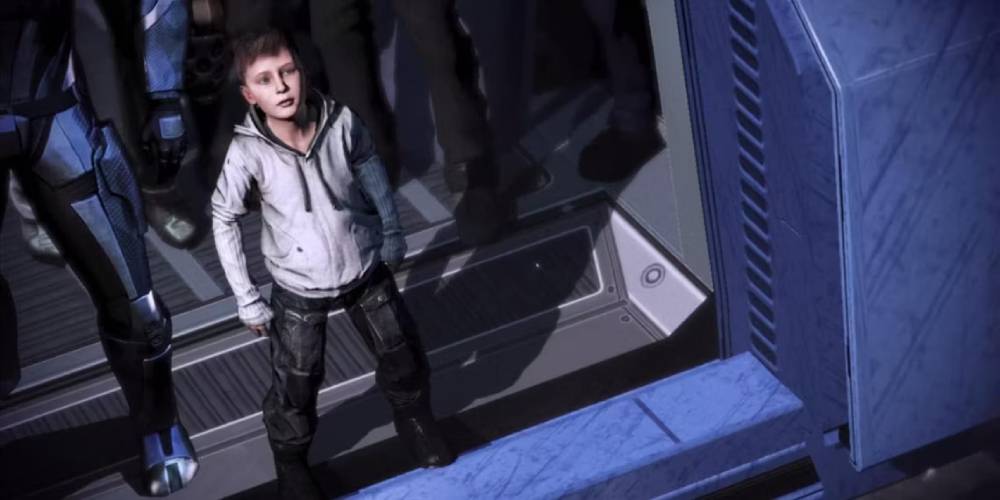
14 Years Later, This Sci-Fi Game Masterpiece's 25-Minute Opener Hits Harder Than Ever Published Oct 23, 2026, 12:08 AM EDT David is a Senior Editor at Collider focused primarily on Lists. His professional journey began in the mid-2010s as a Marketing specialist before embarking on his writing career in the 2020s. At Collider, David started as a Senior Writer in late 2022 and has been a Senior Editor since mid-2023. He is in charge of ideating compelling and engaging List articles by working closely with writers, both Senior and Junior, as well as other editors. Occasionally, David also reviews movies and TV shows and writes episode recaps. Currently, David is also writing his second novel, a psychological horror satire that will, hopefully, be picked up for publication sometime next year. Sign in to your Collider account The news that many gaming fans had been anticipating for years finally became official on October 21: BioWare is shutting down as part of a series of layoffs at EA. The studio behind some of the 21st century's biggest titles, including Star Wars: Knights of the Old Republic, Mass Effect, and Dragon Age, will be closing its gates after over 30 years. Many will mourn this loss, while many others will perhaps celebrate it, considering the decline in quality the studio experienced over the last decade. However, it's undeniable that the news is a harsh blow for the industry. The news also confirms that the announced fifth Mass Effect game is officially cancelled. Although it might seem disappointing, it's not particularly surprising either. Moreover, and unlike some of BioWare's other banner franchises, Mass Effect had a pretty perfect ending with Mass Effect 3, the 2012 sci-fi masterpiece that brought Commander Shepard's story to a satisfying close. The game's prologue has long been one of its most celebrated aspects, and it has aged beautifully. However, after the news of BioWare's fate, the prologue becomes all the more bittersweet and powerful. What Is 'Mass Effect 3' About? Image via BioWare Mass Effect 3 continues the story of Commander Shepard (Mark Meer/Jennifer Hale) as they gather a party of allies new and old to fight the Reapers, an ancient race of organic starships that launch extinction-level events every 50,000 years, eradicating all life. After plans for an ancient Prothean weapon are discovered, a last coalition of alien races unites to build it, with Shepard traveling the Milky Way to resolve long-standing conflicts and gather as many allies as possible to aid in the last battle against the Reapers. Many familiar characters return from the previous games, most of whom can be recruited as Shepard's companions aboard the Normandy. Similarly, long-standing conflicts, some of which were first introduced all the way back in the first game, finally reach a long-awaited resolution, including the Krogan genophage and the conflict between the Geth and the Quarians. The game ultimately leads to a confrontation at the Citadel, where Shepard confronts a childlike AI and the original creator of the Reapers. The now-iconic ending is highly dependent on the choices made throughout the trilogy. What Happens in the 'Mass Effect 3' Prologue? Image via BioWare Mass Effect 3 is well remembered because of its iconic, 25-minute prologue sequence. In it, Shepard awakens on Earth and reunites with old friends, including Admiral Anderson (Keith Davis) and either Kaidan Alenko (Raphael Sbarge) or Ashley Williams (Kimberly Brooks), depending on who survives the effects of the original game. The Prologue is very much a tutorial level, and it's a perfectly constructed one at that. However, on a storytelling level, it's perhaps one of the most important and harrowing in the history of modern sci-fi. See, the Reapers are invading Earth fast, and so the prologue soon becomes a survival mission. Like most reality-shattering events in real life, the invasion happens quickly and without warning; suddenly, reality shatters, and the world as we know it changes forever. At several points throughout the level, you meet a scared child attempting to survive. Eventually, after you battle hordes of husks, Cannibals, and even a Harvester, you'll make your way to an open space where you'll be rescued by the Normandy. Shepard and Anderson say their goodbyes, as the latter decides to remain on Earth to prepare the defenses against the Reapers, while the former needs to go on a mission to save the entire galaxy. As the Normandy leaves, Shepard's sees the boy again aboard an evacuation ship. Then, the ship is targeted by the laser of a Destroyer, effectively a Reaper, and it explodes, killing everyone on board. That's right, the scared little boy dies right as he's being evacuated, while Shepard can do nothing but watch in horror. The haunting score plays as one final shot of the Earth completely overtaken by the Reapers appears before the title card drops. Collider Exclusive · Sci-Fi Survival Quiz Which Sci-Fi World Would You Survive? The Matrix · Mad Max · Blade Runner · Dune · Star Wars Five universes. Five completely different ways the future went wrong — or sideways, or up in flames. Only one of them is the world your instincts were built for. Eight questions will figure out which dystopia, galaxy, or desert wasteland you'd actually make it out of alive. 💊The Matrix 🔥Mad Max 🌧️Blade Runner 🏜️Dune 🚀Star Wars TEST YOUR SURVIVAL → 01 You sense something is deeply wrong with the world around you. What do you do? The first instinct is often the truest one. APull on every thread until I understand the system — then figure out how to break it. BStop asking questions and start stockpiling — food, fuel, weapons. Questions don't keep you alive. CKeep my head down, observe carefully, and trust no one until I know who's pulling the strings. DStudy the patterns. Every system has a rhythm — learn it, and you learn how to survive it. EFind the people fighting back and join them. You can't fix a broken galaxy alone. NEXT QUESTION → 02 In a world of scarcity, what resource do you guard most fiercely? What we protect reveals what we believe survival actually requires. AKnowledge. If you understand the system, you don't need resources — you can generate them. BFuel. Everything else — movement, power, escape — runs on it. CTrust. In a world of fakes and informants, a truly reliable ally is rarer than any commodity. DWater. And after water, information — the two things empires are truly built on. EShips and credits. The galaxy is big — you survive it by being able to move through it freely. NEXT QUESTION → 03 What kind of threat keeps you up at night? Fear is useful data — if you're honest about what you're actually afraid of. AThat reality itself is a lie — that everything I experience has been constructed to keep me compliant. BA raid. No warning, no mercy — just the roar of engines and then nothing left. CBeing identified. Once someone with power decides you're a problem, you're already out of time. DBeing outmanoeuvred — losing a political game I didn't even know I was playing. EThe Empire tightening its grip until there's nowhere left to run. NEXT QUESTION → 04 How do you deal with authority you don't trust? Every dystopia has a power structure. Your approach to it determines everything. ASubvert it from the inside — learn its rules well enough to weaponise them against it. BIgnore it and stay out of its reach. The further from any power structure, the better. CAppear to comply while doing exactly what I need to do. Visibility is the enemy. DManoeuvre within it carefully. You can't beat a system you refuse to understand. EResist openly when I have to. Some things are worth the risk of being seen. NEXT QUESTION → 05 Which environment could you actually endure long-term? Survival isn't just tactical — it's physical, psychological, and very much about where you are. AUnderground bunkers and server rooms — cramped, artificial, but with access to everything that matters. BOpen wasteland — brutal sun, no shelter, constant movement. At least the threat is honest. CA dense, rain-soaked city where you can disappear into the crowd and nobody asks questions. DMerciless desert — extreme heat, no water, and something enormous living beneath the sand. EThe fringe — backwater planets and busy spaceports where the Empire's attention rarely reaches. NEXT QUESTION → 06 Who do you want in your corner when things fall apart? The company you keep is the clearest signal of who you actually are. AA tight crew of believers who've seen behind the curtain and have nothing left to lose. BOne or two people I'd trust with my life. Any more than that and someone talks. CNobody, ideally. Alliances are liabilities. I work alone unless I have no choice. DA community bound by shared hardship and mutual survival — people who need each other to last. EA ragtag team with wildly different skills and total commitment when it counts. NEXT QUESTION → 07 Where do you draw the line — if you draw one at all? Every survivor eventually faces a moment that tests what they're actually made of. AI won't harm the innocent — even the ones who'd report me without hesitation. BI do what I have to to protect the people I've chosen. Everything else is negotiable. CThe line shifts depending on who's asking and what's at stake. DI draw a long-term line — nothing that compromises my people's future, even if it'd help now. ESome lines, once crossed, can't be uncrossed. I know which ones they are. NEXT QUESTION → 08 What would actually make survival worth it? Staying alive is one thing. Having a reason to is another. AWaking others up — dismantling the illusion so no one else has to live inside it. BFinding somewhere — or someone — worth protecting. A reason to keep moving. CAnswers. Understanding what I am, what any of this means, before time runs out. DLegacy — shaping the future in a way that outlasts me by generations. EFreedom — for myself, for others, for every world still living under someone else's boot. REVEAL MY WORLD → Your Fate Has Been Calculated You'd Survive In…Your answers point to the world your instincts were built for. This is the universe your temperament, your survival instincts, and your particular brand of stubbornness were made for. The MatrixYou took the red pill a long time ago — probably before anyone offered it to you. You're a systems thinker who can't help but notice the seams in things. You're drawn to understanding how the system works before figuring out how to break it. You'd find the Resistance, or it would find you — your instinct for spotting constructed realities is the machines' worst nightmare. You function best when you have access to information and the freedom to act on it. The Matrix built an airtight prison. You'd be the one probing the walls for the door. Mad MaxThe wasteland doesn't reward the clever or the well-connected — it rewards those who are hard to kill and harder to break. That's you. You don't need comfort, community, or a cause larger than the next horizon. You need a vehicle, a clear threat, and enough fuel to outrun it — and you're good at all three. You are unsentimental enough to survive that world, and decent enough — just barely — to be something more than another raider. In the wasteland, that distinction is everything. Blade RunnerYou'd survive here because you know how to exist in moral grey areas without losing yourself completely. You read people accurately, keep your circle small, and ask the questions others prefer not to answer. In a city where humanity is a legal designation rather than a feeling, you hold onto something that keeps you functional. You're not a hero. But you're not lost, either. In Blade Runner's world, that distinction is everything. DuneArrakis is the most hostile environment in the known universe — and you are precisely the kind of person it rewards. Patience, discipline, and political awareness are your core strengths — and on Arrakis, they're survival tools. You understand that the long game matters more than any single victory. Others come to Dune and are consumed by it. You'd learn its logic and earn its respect. In time, you wouldn't just survive Arrakis — you'd begin to reshape it. Star WarsThe galaxy far, far away is vast, loud, and in a constant state of violent political upheaval — and you wouldn't have it any other way. You find meaning in being part of something larger than yourself — a cause, a crew, a rebellion. You'd gravitate toward the Rebellion, or the fringes, or whatever pocket of the galaxy still believes the Empire's grip can be broken. You fight — not because you have to, but because standing aside isn't something you're capable of. In Star Wars, that willingness is what makes all the difference. ↻ RETAKE THE QUIZ Why Is the 'Mass Effect 3' Prologue Even More Powerful Now? Image via BioWare In most alien invasion stories, the plot centers on the efforts to either stop the invasion altogether or fight against it; in any case, Earth is always the center of the story. In Mass Effect 3, Earth is the first planet lost to the invaders. There is no way to stop them, much less repel them, and all Shepard can do is literally run away to fight the good fight elsewhere, hoping that there will still be enough of Earth to rescue once the weapon to fight the Reapers is finally ready. That approach is already bold and refreshing, subverting our expectations and adding a sense of urgency and dread to the entire narrative. On a deeper level, surrendering Earth to the Reapers is such a powerful way to get us emotionally invested in the narrative. Sure, if we've played the two previous games, we already have a connection to Shepard and their companions; however, having Earth be overrun by the Reapers also makes us instinctively connected to the game's stakes. Killing the boy also makes us experience a sense of profound loss: the innocent are always the ones who suffer the most in any conflict, and seeing this desperate child who fought against so many obstacles to stay alive, only to die when the promise of safety was about to be fulfilled, is a true emotional gut-punch. Following the news of the studio's closure, the prologue has received yet another layer of complexity. For years, it seemed like BioWare could cheat the death that so many had been predicting for it. For years, it did, until it didn't. Now, all that's left of BioWare is ruins and the fond memories that its best titles brought to an entire generation of gamers. In a way, BioWare lost the invasion against its metaphorical Reapers. Many of its most loyal fans will feel like Shepard, moving on to grander things while the ruins of what once was burn under the scorching fire. Many others might feel like the child, having their hopes for future titles shattered in a matter of seconds. Yet, it's important to remember there's always something to look forward to. In the game, Shepard eventually defeats the Reapers; Earth endures and survives, because of course it does, and a new dawn begins for everyone. It's the same in real life, albeit far less dramatically. Mass Effect 3's prologue is devastating, and from now on, experiencing it will undoubtedly provoke mixed feelings in all those who once felt something for BioWare. But there's always hope. Perhaps these IPs will find their way back to the public if someone purchases them from EA. Perhaps we haven't seen the last of Mass Effect or Dragon Age. We can only hope and wait — luckily, waiting is what gamers do best.
14 Years Later, This 25-Minute Opener Is Still the Best in Modern Sci-Fi Gaming
Full Article
Original Source
Read the full article at Collider →KhanList aggregates and links to publicly available news content. We do not host full articles from third-party sources. Always verify important information with original sources.