
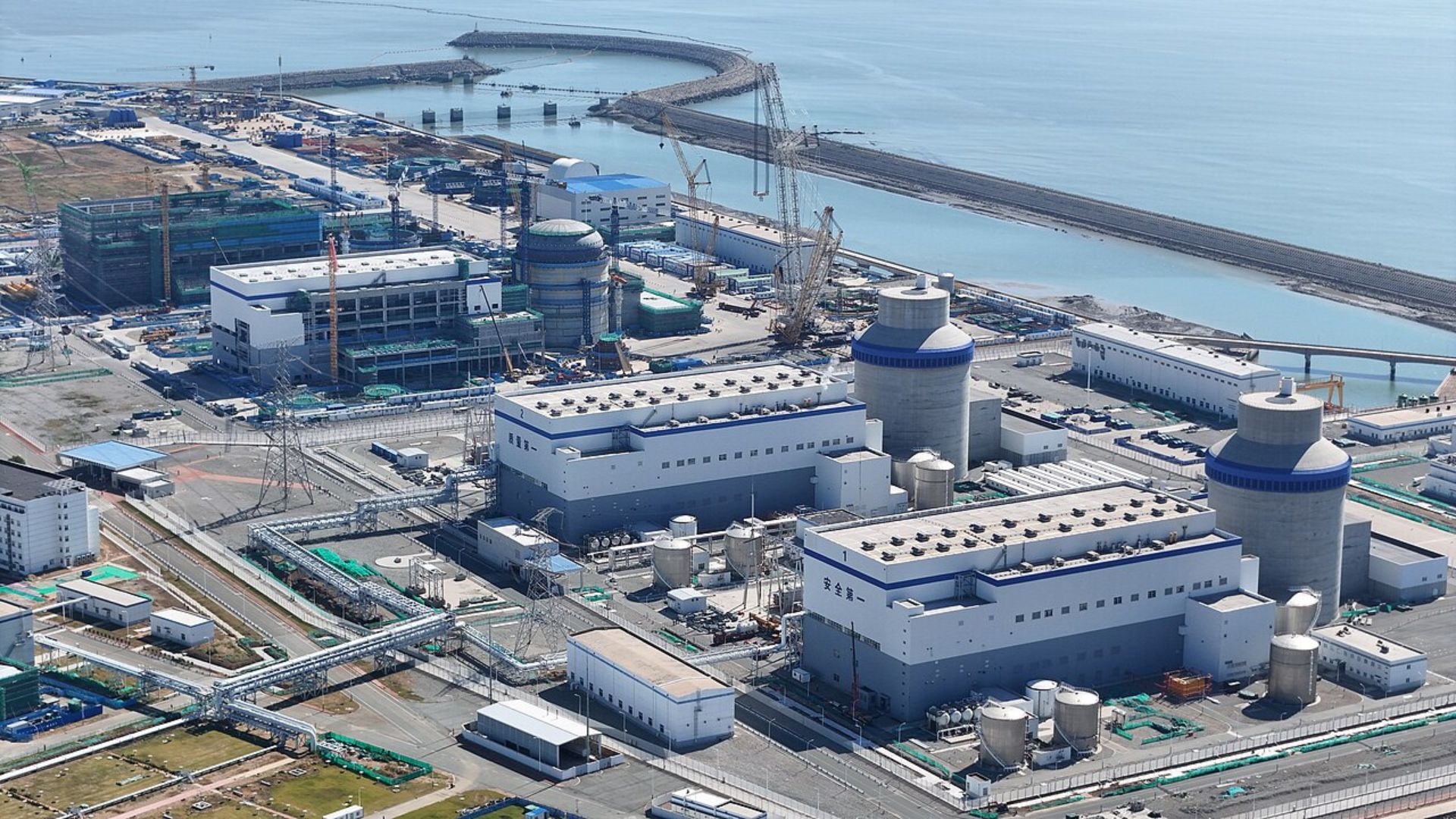
Before a single grain of uranium goes inside a nuclear reactor, engineers have to make the core feel like it is already splitting atoms. On August 13, engineers performed this initial test at unit 3 of the Haiyang nuclear power plant on China’s eastern coast. Reportedly, the State Power Investment Corporation (SPIC) announced the successful completion of “hot functional testing” at the newly constructed reactor. The milestone moves the unit one step closer to powering homes across Shandong province before the year is out. Unit 3 is a pressurized water reactor with a gross capacity of 1253 MWe. Standard checks prove the hardware works; hot functional tests prove the whole system can handle the heat under real-world pressures. Initial testing of Haiyang 3 SPIC said CNNC Fifth Construction Company, a subsidiary of China National Nuclear Corporation, executed the hot functional tests at Haiyang 3. The testing process utilized 11 distinct temperature rise and fall test platforms to simulate real operational conditions and verify system stability systematically. The experts cranked the reactor coolant system to maximum operational temperatures and pressures without using nuclear fuel. The testing phase comprised 53 separate commissioning procedures broken into 308 individual chapters. Most impressively, complex transient checks passed on the first try only. These critical tests included the non-nuclear start-up of the massive steam turbine and main pump coastdown evaluations. The heat was fake, but the performance was real. The successful run follows cold testing completed earlier this spring, where crews pressurized the primary circuit to scrub pipes and test for micro-leaks. Now validated, Haiyang 3 enters its final stretch: nuclear fuel loading and first grid connection, both slated for later this year ahead of full commercial operation in 2027. Haiyang 3 is a CAP1000 reactor. It is said to be China’s localized adaptation of the American Westinghouse AP1000 passive-safety design. First concrete was poured in July 2022, while work on twin unit Haiyang 4 kicked off last year. Once all four existing and under-construction units are operational, the plant will churn out 40 billion kilowatt-hours of electricity every year. That single facility will generate enough juice to power half of Shandong’s roughly 100 million residents. With plans to eventually host six 1,000-megawatt reactors, the Haiyang base stands as a centerpiece in China’s rapid, systematic push toward clean energy dominance. Emission-free alternative Six years ago, the city of Haiyang shifted from coal-fired heating to a zero-emission alternative powered by this nuclear power plant. The facility currently operates two modern pressurized water reactors equipped with advanced safety features. It generates approximately 20 billion kWh of carbon-free electricity annually to supply regional industries while delivering clean thermal heat to surrounding homes. Aside from generating electricity, Haiyang made history by turning its namesake city into China’s carbon-free district heating zone. Surplus steam from the reactors heats water via heat exchangers (with zero radiation contact), replacing 12 local coal-fired boilers and providing energy to over 200,000 homes. Furthermore, the district heating grid has expanded beyond Haiyang to neighboring cities like Rushan and Qingdao. Once all units are live, the heating network aims to cover 200 million square meters (about 2.15 billion square feet), benefiting up to 5 million people. Get the latest in engineering, tech, space & science - delivered daily to your inbox.Mrigakshi is a science journalist who enjoys writing about space exploration, biology, and technological innovations. Her work has been featured in well-known publications including Nature India, Supercluster, The Weather Channel and Astronomy magazine. If you have pitches in mind, please do not hesitate to email her.
1,253 MW China nuclear reactor passes hot test, set to power homes by 2027
Full Article
Original Source
Read the full article at Interestingengineering →KhanList aggregates and links to publicly available news content. We do not host full articles from third-party sources. Always verify important information with original sources.