
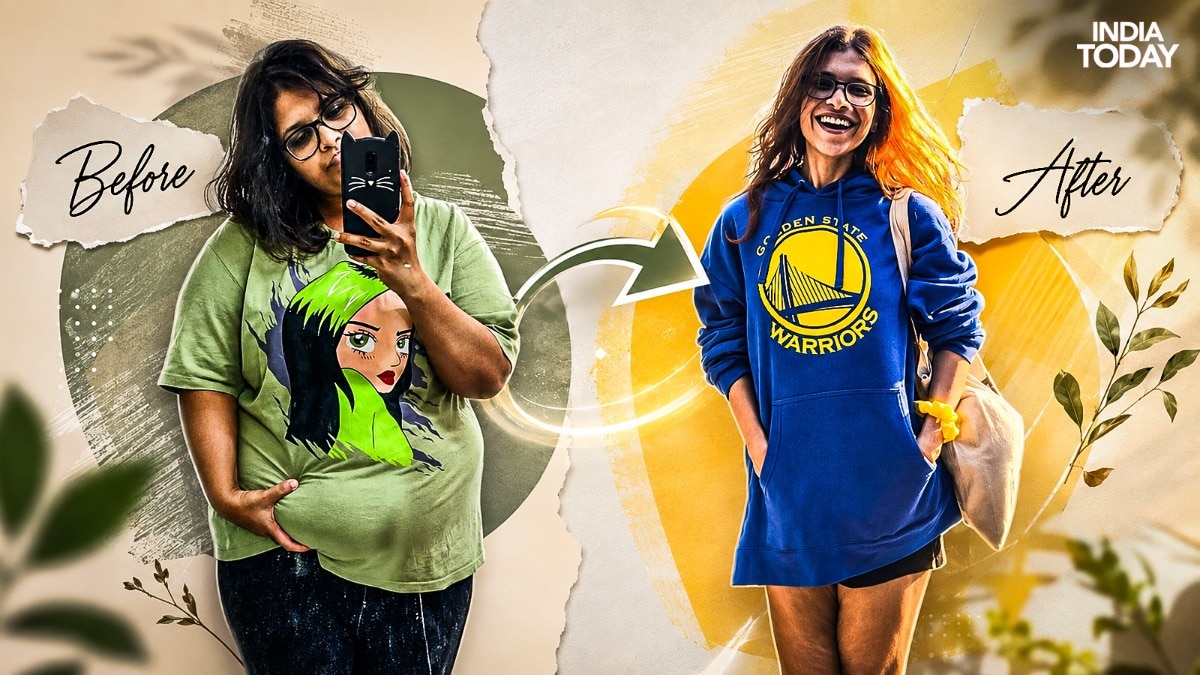
At 120 kg, I thought changing my body would finally make me worthy of love, acceptance and a life of my own. At 50 kg, I discovered that losing weight could change my body without necessarily healing the pain I carried inside it.70 kg lost. A much longer journey to healing. (Nidhi Agrawal)I lost 70 kg, but it took me much longer to find myself.Born in 1996, I remember being made to feel from as young as three that there was something wrong with being bigger than everyone around me. Years of bullying, harassment and comments about my appearance became so loud that eventually they drowned out almost everything else I thought or felt.My body became the first thing people saw and, eventually, the first thing I saw in myself too.By 2022, I weighed 120 kg, and I had become convinced that my body was responsible for everything that was going wrong in my life. If I became thinner, I believed, I would finally be accepted, loved, able to build a career and move forward. My friends called me “lazy”, but they did not see the complicated story underneath my weight. I had developed disordered eating patterns as a coping mechanism while living through years of physical and emotional abuse, severe depression, anxiety and an untreated mental health condition.Food became one of the ways I coped with an environment I did not know how to escape. This is how I looked in 2022. Photo: Nidhi Agarwal/India Today | Exclusive I had once been very different. As a teenager, I was a first-ranker, confident in my opinions and culturally active. Somewhere along the way, I lost that girl. In between 2018 and 2019, with the help of a clinical nutritionist, I lost around 35 kg. But when I returned to my hometown and the same environment, I slipped back into the patterns I had used to cope with and regained all the weight.My nutritionist had recognised that I needed mental health support. Between 2020 and 2022, I was severely depressed and anxious. I eventually went to a psychiatrist in my hometown, and was diagnosed with Borderline Personality Disorder.I was on medication for two years. At the time, I was unemployed, struggling with my family environment and watching my sense of self slowly disappear. When the emotional pain became overwhelming, I would run away, numb myself with food, or hurt myself.I finished college in 2019 and tried to build a business, but eventually had to shut it down. I wanted to pursue a master’s degree and leave my hometown, yet I kept delaying it because I believed I should lose weight first. I did not realise that the environment I wanted to escape was also contributing to my relationship with food.WHY I SAID YES TO BARIATRIC SURGERYI was 26, from a conservative Marwari family, and felt that my body had become a barrier to marriage, acceptance and independence. My family wanted my body to change, I just wanted the shame I associated with my body to disappear. I wanted to become thin enough to feel lovable.A cousin had undergone bariatric surgery and became engaged six months later. To me, the message seemed a simple one... change the body, and life will change too.Eventually, exhausted by the pressure, I impulsively went to a surgeon’s clinic. When I decided to go for the surgery! Photo: Nidhi Agarwal/India Today | Exclusive Inside the clinic, my questions were about loose skin and whether I would be able to conceive and give birth. I worried about my psychiatric medication and whether it might affect my weight. I was not asking enough about my long-term health, nutritional needs, psychological readiness or what life after surgery would actually require.I had already lost 35 kg through nutrition support, so part of me knew that the story that “diets don’t work” was not quite that simple. But I was desperate, and desperation can make you vulnerable. I told the surgeon about my Borderline Personality Disorder, but I did not understand how important my mental health history was to the decision.I heard what I wanted to hear. Surgery would make eating easier because my stomach would be smaller. My family told me that once my body changed, life would become happier.I believed them. I remember thinking: “Let’s do it.”I was tired of the comments, the shame and feeling as though my body was the explanation for every failure in my life. I walked into surgery hoping that changing my body would finally allow me to start living.THE MOMENT I REALISED I COULD NOT GO BACKThe first days after surgery were physically painful. I felt completely unprepared for the recovery, but the physical pain was only the beginning.In my desperation to remove anything I believed could interfere with weight loss, I stopped taking my psychiatric medication abruptly. Looking back, I recognise how reckless that was. I should have had proper medical guidance and much stronger psychological support.When I came out of the ICU and reached the ward, I could not stop crying. Part of it was pain, another part of it was fear. And part of it was the sudden realisation that I had undergone an irreversible procedure. I remember thinking... “What did I just do?”After discharge came another burden. I was reminded of how expensive the surgery, medicines, supplements and protein powders had been and warned not to “mess it up”. I was also told not to tell people I had undergone surgery. If anyone asked how I had lost weight, I was supposed to say it was through diet and exercise.I had spent years ashamed of my body. Now I felt ashamed of the surgery too.Watch the before-surgery video here:THE SIX MONTHS I BARELY REMEMBERFor the first few days, I was on a completely liquid diet. Food had been one of my coping mechanisms, my psychiatric medication was gone, and now food was restricted too. I would wake up crying and cry while trying to eat. Sometimes, I vomited, sometimes I was force-fed.My mental health deteriorated significantly during those months. I also struggled to take my prescribed supplements and protein consistently. If I disliked something, I simply stopped consuming it.My body was changing rapidly, but I did not know how to care for it. I lost roughly three-quarters of my hair. I became afraid to bathe because seeing so much hair fall terrified me. I felt dizzy when I stood up and spent much of my time in bed. The question that kept repeating in my mind was: What did you do to yourself?I had wanted to erase the body I hated, now I was living inside a body I did not recognise.Eventually, I went from 120 kg to around 50 kg. People looking at photographs might see an incredible transformation. For me, it was only the beginning of another story. Before and after transformation photo: Nidhi Agarwal/India Today | Exclusive DESPITE THE CHALLENGES, SURGERY GAVE ME A NEW LIFEDespite the difficulties I faced after bariatric surgery, I do believe the journey brought some positive changes. My relationship with food is the healthiest it has been by far. I have become more aware and more in control of my eating habits, and I now make more mindful food choices.I focus more on being consistent with my eating habits rather than simply restricting what I eat.I have also noticed a significant improvement in my physical mobility after losing weight. I can now climb up to three floors of stairs without feeling breathless, something I could not do when I weighed around 120 kg. That is a significant change for me.At the same time, I do not want to suggest that losing weight made my overall health perfect.I experienced muscle loss, stomach problems and other physical challenges after surgery. I developed chronic stomach pain, dumping syndrome and ulcers, and eventually underwent gallbladder removal surgery in 2025. Rebuilding my strength and understanding my body’s nutritional needs are still part of my journey.WHEN THE WEIGHT CAME OFF, SOMETHING ELSE HAD TO BE FOUNDThe real transformation began in 2023, when I started working with my therapist. I learnt to acknowledge my feelings, speak my mind and understand my relationship with food.At around 50 kg, I can do things I could not do at 120 kg, such as climbing three flights of stairs without becoming breathless. But the weight loss also came with consequences, including significant muscle loss and ongoing physical problems.Things began improving in 2026 when I returned to my nutritionist and started focusing on what my body actually needed. I am still rebuilding my strength. For the first time, however, I am trying to look at my body not as something that needs to be punished or fixed, but as something I need to care for.Watch the after-surgery video here:FINAL WORDWhen I look back at my story, I wish I had worked on my emotional health, my relationship with food and my physical strength. So surgery is never the first and the easiest option. It should be the last resort, but still a safe bet.Bariatric surgery can be life-changing for some people. It certainly changed my life. But it cannot automatically change emotions, coping mechanisms, self-worth or mental health.Today, at around 50 kg, I am still rebuilding my strength and learning to care for myself. If I could speak to my younger self, I would tell her that her worth was never really measured by her weight in the first place. Changing your body can be part of recovery, but healing your mind and learning to care for yourself matter just as much.You do not have to become smaller to be worthy of a life.- EndsPublished By: Smarica PantPublished On: Aug 22, 2026 08:00 IST
120 kg to 50 kg: The bariatric surgery that changed my life
Full Article
Original Source
Read the full article at Indiatoday →KhanList aggregates and links to publicly available news content. We do not host full articles from third-party sources. Always verify important information with original sources.