
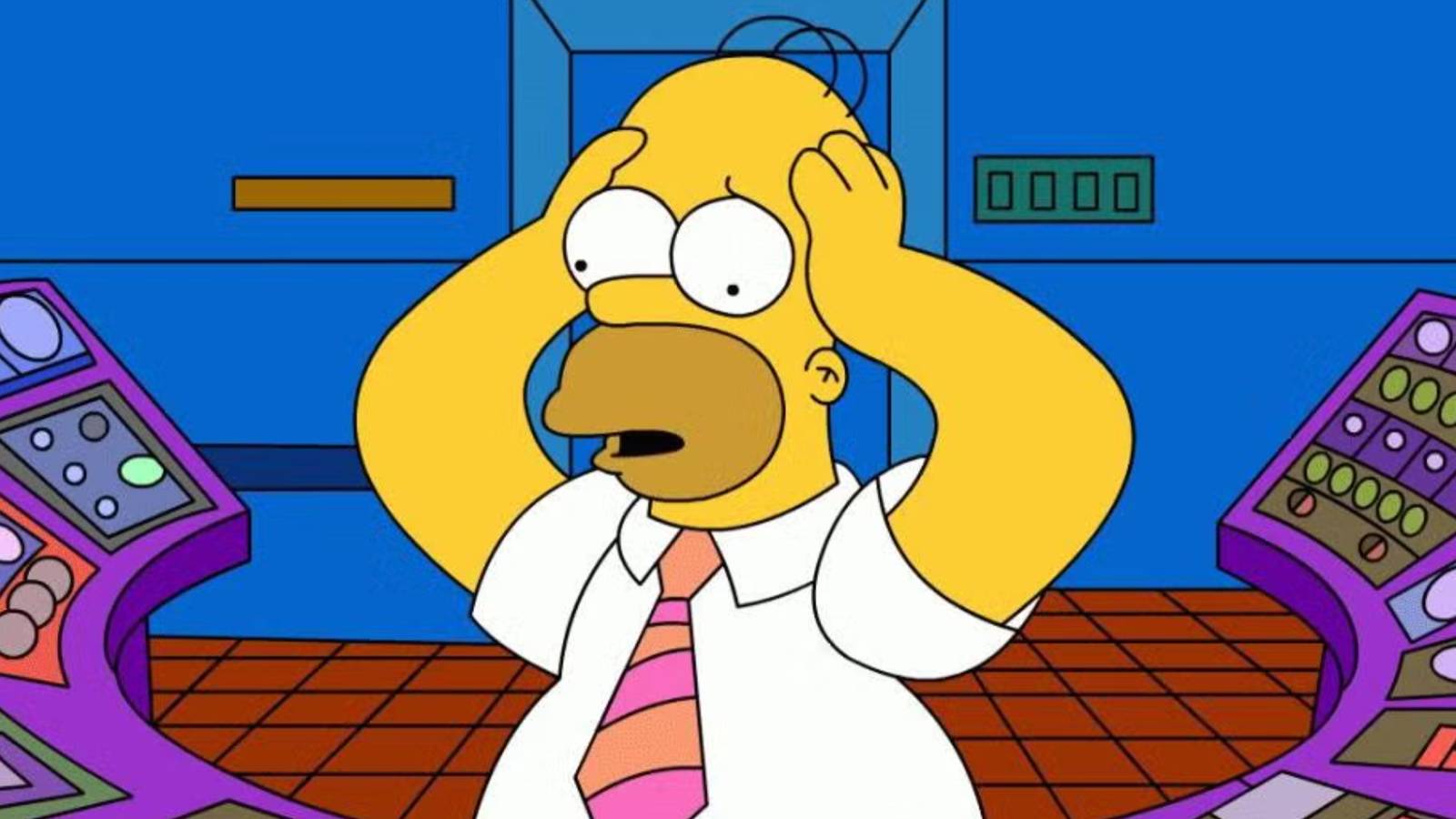
Image via FOX Published Sep 4, 2026, 10:22 PM EDT Lloyd 'Happy Trails' Farley: the man, the myth, the legend. What can be said about this amazing - and humble - man that hasn't been said before? Or, more accurately, what can be said in public? Born in Calgary, Alberta, Canada, Lloyd is a master of puns and a humorist, who has authored one pun book to date - Pun and Grimeish Mint - and is working on a second. His time with Collider has allowed Lloyd's passion for writing to explode, with nearly 1,000 articles to his name that have been published on the site, with his favorite articles being the ones that allow for his sense of humor to shine. Lloyd also holds fast to the belief that all of life's problems can be answered by The Simpsons, Star Wars, and/or The Lion King. You can read more about Lloyd on his website, or follow his Facebook page and join the Llama Llegion. Happy trails! Sign in to your Collider account As a network television institution that has been on the air for nearly 40 years, The Simpsons has more than earned its reputation as one of television’s greatest all-time sitcoms. There have been episodes that aren’t especially good (I still contend “Moe’s Bar Rag” is the worst), even entire seasons, but few shows could possibly maintain a perfect track record across that much television. Still, one storyline stands out as a rare instance where The Simpsons doesn’t simply miss the mark — it completely botches what should have been one of the show’s most reliable formats. That episode is Season 25’s “Days of Future Future.” 'The Simpsons' "Days of Future Future" Starts by Killing Homer Over and Over Again Marge (Julie Kavner) wakes up to find pizza boxes all over the living room, and, despite hoping that it was a bear and not Homer (Dan Castellaneta)... it's Homer, sprawled out on top of the kitchen table in nothing but his tighty-whities. She implores Homer to take his health more seriously, which he vows to do, only to succumb to a fatal heart attack. Homer's funeral is interrupted by Jonathan Frink Jr. (Hank Azaria), who announces he's made a clone of Homer, a simpler subject to experiment with than his original plan to use a sheep. An overjoyed Marge pleads with Homer to take this second chance seriously, which lasts for mere moments after he eats all the potato salad, prompting a second funeral. Each successive Homer clone succeeds in dying in idiotic ways: by toaster electrocution, pulling the plug on himself after hearing he can't have solid food for two weeks, and falling off a pile of dead clones while reaching for something on a high shelf, among others. Collider Exclusive · Sci-Fi Survival Quiz Which Sci-Fi World Would You Survive? The Matrix · Mad Max · Blade Runner · Dune · Star Wars Five universes. Five completely different ways the future went wrong — or sideways, or up in flames. Only one of them is the world your instincts were built for. Eight questions will figure out which dystopia, galaxy, or desert wasteland you'd actually make it out of alive. 💊The Matrix 🔥Mad Max 🌧️Blade Runner 🏜️Dune 🚀Star Wars TEST YOUR SURVIVAL → 01 You sense something is deeply wrong with the world around you. What do you do? The first instinct is often the truest one. APull on every thread until I understand the system — then figure out how to break it. BStop asking questions and start stockpiling — food, fuel, weapons. Questions don't keep you alive. CKeep my head down, observe carefully, and trust no one until I know who's pulling the strings. DStudy the patterns. Every system has a rhythm — learn it, and you learn how to survive it. EFind the people fighting back and join them. You can't fix a broken galaxy alone. NEXT QUESTION → 02 In a world of scarcity, what resource do you guard most fiercely? What we protect reveals what we believe survival actually requires. AKnowledge. If you understand the system, you don't need resources — you can generate them. BFuel. Everything else — movement, power, escape — runs on it. CTrust. In a world of fakes and informants, a truly reliable ally is rarer than any commodity. DWater. And after water, information — the two things empires are truly built on. EShips and credits. The galaxy is big — you survive it by being able to move through it freely. NEXT QUESTION → 03 What kind of threat keeps you up at night? Fear is useful data — if you're honest about what you're actually afraid of. AThat reality itself is a lie — that everything I experience has been constructed to keep me compliant. BA raid. No warning, no mercy — just the roar of engines and then nothing left. CBeing identified. Once someone with power decides you're a problem, you're already out of time. DBeing outmanoeuvred — losing a political game I didn't even know I was playing. EThe Empire tightening its grip until there's nowhere left to run. NEXT QUESTION → 04 How do you deal with authority you don't trust? Every dystopia has a power structure. Your approach to it determines everything. ASubvert it from the inside — learn its rules well enough to weaponise them against it. BIgnore it and stay out of its reach. The further from any power structure, the better. CAppear to comply while doing exactly what I need to do. Visibility is the enemy. DManoeuvre within it carefully. You can't beat a system you refuse to understand. EResist openly when I have to. Some things are worth the risk of being seen. NEXT QUESTION → 05 Which environment could you actually endure long-term? Survival isn't just tactical — it's physical, psychological, and very much about where you are. AUnderground bunkers and server rooms — cramped, artificial, but with access to everything that matters. BOpen wasteland — brutal sun, no shelter, constant movement. At least the threat is honest. CA dense, rain-soaked city where you can disappear into the crowd and nobody asks questions. DMerciless desert — extreme heat, no water, and something enormous living beneath the sand. EThe fringe — backwater planets and busy spaceports where the Empire's attention rarely reaches. NEXT QUESTION → 06 Who do you want in your corner when things fall apart? The company you keep is the clearest signal of who you actually are. AA tight crew of believers who've seen behind the curtain and have nothing left to lose. BOne or two people I'd trust with my life. Any more than that and someone talks. CNobody, ideally. Alliances are liabilities. I work alone unless I have no choice. DA community bound by shared hardship and mutual survival — people who need each other to last. EA ragtag team with wildly different skills and total commitment when it counts. NEXT QUESTION → 07 Where do you draw the line — if you draw one at all? Every survivor eventually faces a moment that tests what they're actually made of. AI won't harm the innocent — even the ones who'd report me without hesitation. BI do what I have to to protect the people I've chosen. Everything else is negotiable. CThe line shifts depending on who's asking and what's at stake. DI draw a long-term line — nothing that compromises my people's future, even if it'd help now. ESome lines, once crossed, can't be uncrossed. I know which ones they are. NEXT QUESTION → 08 What would actually make survival worth it? Staying alive is one thing. Having a reason to is another. AWaking others up — dismantling the illusion so no one else has to live inside it. BFinding somewhere — or someone — worth protecting. A reason to keep moving. CAnswers. Understanding what I am, what any of this means, before time runs out. DLegacy — shaping the future in a way that outlasts me by generations. EFreedom — for myself, for others, for every world still living under someone else's boot. REVEAL MY WORLD → Your Fate Has Been Calculated You'd Survive In…Your answers point to the world your instincts were built for. This is the universe your temperament, your survival instincts, and your particular brand of stubbornness were made for. The MatrixYou took the red pill a long time ago — probably before anyone offered it to you. You're a systems thinker who can't help but notice the seams in things. You're drawn to understanding how the system works before figuring out how to break it. You'd find the Resistance, or it would find you — your instinct for spotting constructed realities is the machines' worst nightmare. You function best when you have access to information and the freedom to act on it. The Matrix built an airtight prison. You'd be the one probing the walls for the door. Mad MaxThe wasteland doesn't reward the clever or the well-connected — it rewards those who are hard to kill and harder to break. That's you. You don't need comfort, community, or a cause larger than the next horizon. You need a vehicle, a clear threat, and enough fuel to outrun it — and you're good at all three. You are unsentimental enough to survive that world, and decent enough — just barely — to be something more than another raider. In the wasteland, that distinction is everything. Blade RunnerYou'd survive here because you know how to exist in moral grey areas without losing yourself completely. You read people accurately, keep your circle small, and ask the questions others prefer not to answer. In a city where humanity is a legal designation rather than a feeling, you hold onto something that keeps you functional. You're not a hero. But you're not lost, either. In Blade Runner's world, that distinction is everything. DuneArrakis is the most hostile environment in the known universe — and you are precisely the kind of person it rewards. Patience, discipline, and political awareness are your core strengths — and on Arrakis, they're survival tools. You understand that the long game matters more than any single victory. Others come to Dune and are consumed by it. You'd learn its logic and earn its respect. In time, you wouldn't just survive Arrakis — you'd begin to reshape it. Star WarsThe galaxy far, far away is vast, loud, and in a constant state of violent political upheaval — and you wouldn't have it any other way. You find meaning in being part of something larger than yourself — a cause, a crew, a rebellion. You'd gravitate toward the Rebellion, or the fringes, or whatever pocket of the galaxy still believes the Empire's grip can be broken. You fight — not because you have to, but because standing aside isn't something you're capable of. In Star Wars, that willingness is what makes all the difference. ↻ RETAKE THE QUIZ Thirty years later, the Simpsons mourn the death of yet another Homer clone, only this time Frink is unable to create any more, with Homer having used up all his clones. He does, however, have Homer's memory on a flash drive, which he plugs into a TV screen. The TV screen lights up, and there's Homer, a face on the screen with his voice coming through the speakers. Back at the house, Marge asks Milhouse (Pamela Hayden), now married to Lisa (Yeardley Smith), how he is, to which he replies that he and Lisa have nothing to talk about. Lisa interjects, reminding Milhouse that during their last conversation a month ago, she told him about her time devoted to charity work for the undead. Marge, having left the room, visits with Homer, who asks her to reboot the screen yet again. Tired of repeatedly rebooting, Marge ejects the flash drive and gives it to Bart (Nancy Cartwright), who brings him back to his home, an abandoned classroom at Springfield Elementary. Bart could certainly use his advice, given he still has feelings for his ex-wife, Jenda (Amy Poehler), stirred up after sending their two sons to her home via a teleporting door, only Homer's frozen up again. Zombie Milhouse Is Where "Days of Future Future" Starts To Fall Apart Meanwhile, Milhouse comes looking for Lisa at a zombie soup kitchen, where she's doling out synthetic vegan "brain" food to the undead. As he tries to explain why he's there to an annoyed Lisa, he inadvertently insults a nearby zombie, who bites him on the arm, turning him into a zombie. It's at this point that "Days of Future Future" ventures into "Treehouse of Horror" territory. For Lisa, Milhouse's turn is "coming up Milhouse" for her, attracted to Milhouse in a way she hasn't been in ages. Dr. Hibbert (Harry Shearer) can bring Milhouse back to normal (and is hilariously relentless about suggesting it), but Lisa's not sure that she wants him changed back (spoiler: she relents and he's turned back). It's the perfect setup for a "Treehouse" segment, and, had they sat on the idea for a few more years, it would have been ideal for a Santa Clarita Diet parody (or eerily predicted it). Instead, the zombie plot pulls the episode away from the future-story formula that had been holding its various ideas together. Bart undergoes a procedure at MovingOn that will help him forget about Jenda, only for his feelings to be reignited after the boys tell him that her alien boyfriend ditched her. Jenda confirms it's true, crying in front of Bart for having been a fool, but his efforts at comforting her reignite her feelings for him, and they make a dinner date. After that date, they decide to give their marriage another shot, but the effort fails after they fall back into their old routine, splitting them up once more. As such, Bart's storyline just seems pointless, like they just needed something for him to be doing in the episode. He meets up with Lisa at Moe's, each airing their relationship woes before Marge appears, telling them that the secret to keeping a relationship is to stick with whatever decisions you make. With that, she electrocutes herself to join Homer once again on the TV screen. Had the writers ended it here, committing to it, the episode may have fared better. Instead, it turns out that most of it was all a dream, experienced by Bart during the MovingOn procedure. Homer is now in a C-3PO-like robot body doing multiple chores, endearing him more to Marge. Lisa reminds Bart that there is no cure for zombieism, and everything is wonderful because Milhouse is still a zombie. It's like a second ending was tacked on because no one was satisfied with the first potential ending. 'The Simpsons' "Days of Future Future" Doesn't Know What It Wants To Be Image via Fox The biggest problem with "Days of Future Future" is that it never commits to what kind of episode it actually wants to be. It's either a half-baked episode set in the future, or it's a half-baked "Treehouse of Horror" episode. Some elements satisfy both: the future sees Homer in a robot body, a cutaway scene reveals driverless cars hacked by unknown hackers, hoverboards and the like, while the zombie Milhouse plot, the MovingOn Eternal Sunshine of the Spotless Mind-like element, and even Bart's job at Cretaceous Park, a clever dig at Jurassic Park, would be more at home in a "Treehouse" setting. Heck, the Homer clone device had already been used by the time "Days of Future Future" aired, back in Season 14 in the "Send in the Clones" segment of "Treehouse of Horror XIII," lending the episode a "been there, done that" feel. Really, Lisa having married Milhouse is the only plot device in the episode that would seemingly be at home in either camp (if the thought of Lisa marrying Milhouse doesn't send a chill down your spine, you are made of stronger stuff than I). The disparate feel of the episode supersedes whatever satirical jabs the writers were hoping to hit, with only the shot at the driverless cars delivering a particularly pointed barb. More importantly, it just isn't all that funny. Seeing Homer as nothing more than a scrolling icon wears thin quickly, and the one element that consistently works — the repeated clone deaths — had already been done. That lack of commitment is ultimately what sinks "Days of Future Future." The Simpsons has repeatedly proved how much fun it can have imagining its characters decades from now, but this episode tries to combine a future story, a supernatural parody, a relationship drama, and a fake-out ending without giving any of them enough room to work. Splitting those ideas apart might have produced two memorable stories. Cramming them together produced one of the show's messiest. The Simpsons Release Date December 17, 1989 Network FOX Cast Homer Simpson / Abe Simpson / Barney Gumble / Krusty (voice) Julie Kavner Marge Simpson / Patty Bouvier / Selma Bouvier (voice)
12 Years Later, ‘The Simpsons’ Biggest Sci-Fi Mistake Still Makes No Sense
Full Article
Original Source
Read the full article at Collider →KhanList aggregates and links to publicly available news content. We do not host full articles from third-party sources. Always verify important information with original sources.