
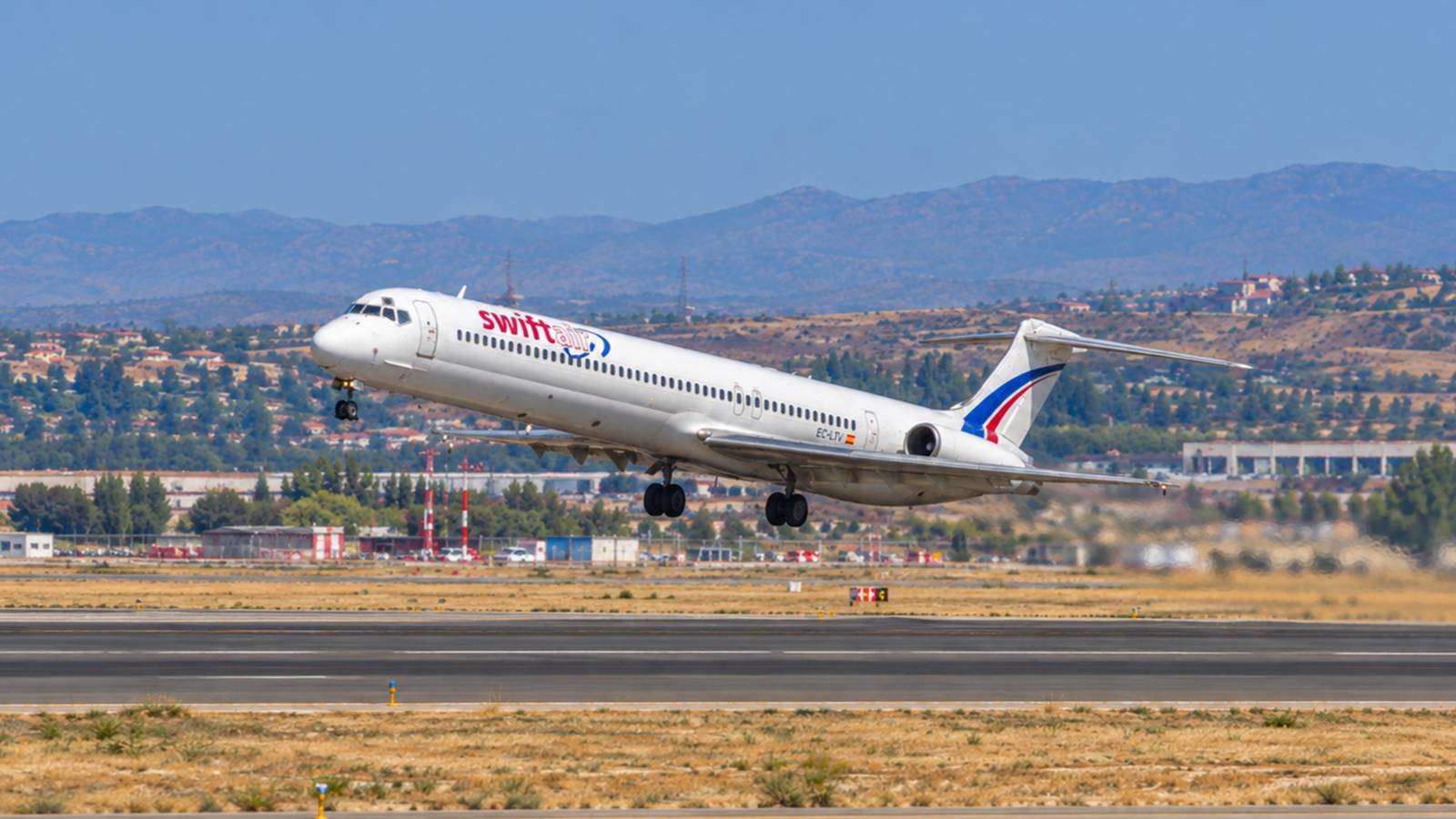
Published Sep 28, 2026, 5:34 PM EDT Paul has had a career of 25+ years focused on the international technology sector, which has taken him to over 100 countries. Along the way, he developed a deep love for aviation, with a travel bucket list measured by aircraft types flown rather than destinations reached. Now he brings that avgeek passion, along with the journalism experience he accumulated early in his career, to write insightful pieces for Simple Flying. A French court has found Spanish airline Swiftair guilty of corporate manslaughter over the 2014 crash of Air Algerie Flight AH5017, which killed all 116 people onboard. Reuters reports that the Paris Criminal Court handed the carrier the maximum fine of €225,000 ($256,000) on Monday, following a three-week trial earlier this year. Swiftair operated the McDonnell Douglas MD-83 involved in the accident on behalf of Air Algérie under a wet-lease arrangement. Flight AH5017 crashed in northern Mali on July 24, 2014, less than an hour after leaving Ouagadougou's Thomas Sankara International Airport (OUA) in Burkina Faso, bound for Algiers' Houari Boumediene Airport (ALG). Investigators concluded that the MD-83 slowed and entered an unrecovered stall after ice crystals obstructed pressure sensors on its engines while the engine anti-icing system remained switched off. The accident destroyed the aircraft, EC-LTV, and killed 110 passengers and six crew members. The Court Found Problems With Swiftair's Crew Checks Credit: Swiftair Swiftair had denied criminal responsibility, and initially sought to halt the French proceedings because a Spanish court had previously dropped the case. During the trial, prosecutors alleged deficiencies in how Swiftair trained pilots to deal with icing and abnormal engine indications. The court did not accept all of those arguments, but found that the captain had not received an adequate proficiency check and that the flight crew had not completed the required number of refresher flights following a period of inactivity. Swiftair has maintained that its pilots were appropriately trained and that applicable safety regulations had been followed, while its defense attributed parts of the accident sequence to shortcomings in regulations and operating manuals. The company now has 10 days to appeal Monday's verdict and said it would examine the ruling with its legal advisers before deciding its next steps. Court Finding Detail Charge Corporate manslaughter / involuntary homicide Defendant Swiftair Verdict Guilty Fine €225,000 ($256,000) Aircraft McDonnell Douglas MD-83, EC-LTV Fatalities 116 Captain Court found proper proficiency check had not been completed Crew Required number of refresher flights had not been completed after inactivity Appeal window 10 days Swiftair is primarily a charter, cargo and wet-lease operator, and has also supplied aircraft for organizations including the United Nations. This is also not the only deadly accident for the operator. In 2024, a Boeing 737-400 converted freighter that it was operating on behalf of a DHL subsidiary crashed on approach to Vilnius International Airport (VNO), with the accident report also pointing towards pilot error. BBC News reported that the families of the Flight AH5017 victims welcomed the news of the ruling, quoting Sebastien Busy, a lawyer representing a group of relatives: "This ruling comes as a relief to families who have been fighting for more than twelve years for justice to be done. The families now expect Swiftair to assume its responsibilities and accept this decision." Ice Crystals Caused The MD-83 To Lose Speed And Stall Credit: BEA Flight AH5017 made headlines back in 2014 when it disappeared from radar after departing Ouagadougou in the early hours of July 24, before wreckage was eventually discovered the following day just across the border in Mali. The aircraft had a normal climb toward its cruising altitude of 31,000 feet, although the crew had made several heading changes while avoiding storm activity in the area. The aircraft leveled off at FL310 about 20 minutes after takeoff, with the autopilot maintaining altitude while the autothrottle controlled the aircraft's speed. Within minutes, the engine pressure ratio readings began becoming erroneous, which was attributed to ice crystals that had obstructed pressure sensors on the engines. Investigators found that the engine anti-icing system had not been switched on; had it been operating, hot air would have heated the sensors. The autothrottle consequently commanded too little thrust, while the autopilot progressively raised the aircraft's nose to maintain altitude as its airspeed fell. Approximate Time/Stage What Happened 01:15 AH5017 departed Ouagadougou Climb Crew altered course several times to avoid storm activity 01:37 Aircraft leveled at 31,000 ft Shortly afterward Engine pressure readings began becoming erroneous Cruise Thrust became insufficient and airspeed progressively fell Around 01:45 Aircraft entered the stall sequence 01:47 MD-83 struck the ground around 50 miles (80 km) south-east of Gossi The situation worsened until the aircraft eventually stalled. Its stick shaker and stall warning activated, but investigators found no apparent crew control input between the stall warning and the autopilot disconnecting around 22 seconds later. The MD-83 subsequently reached extreme pitch and bank angles before striking the ground approximately 50 miles (80 km) south-east of Gossi, Mali, at high speed. Another Swiftair MD-83 Had Suffered A Similar Incident Weeks Earlier Credit: Simple Flying Perhaps the most striking part of the subsequent investigation was that Swiftair had experienced a very similar event just weeks before Flight AH5017. On June 8, 2014, another MD-83, registered EC-JUG, was cruising at FL330 with its autothrottle engaged when its speed began dropping. That crew recognized the developing problem, descended, and activated the engine anti-icing systems before the aircraft stalled, allowing the flight to continue safely. Investigators examined that earlier incident alongside the AH5017 accident and shared their findings with the European Aviation Safety Agency (EASA) and, through it, the Federal Aviation Administration (FAA). The information helped support corrective measures intended to improve crews' ability to recognize and respond to the unusual engine-pressure and icing scenario. The investigation also examined Swiftair's crew training and monitoring arrangements, although Monday's criminal judgment reached its own conclusions under a separate legal process. The verdict therefore arrives more than 12 years after the crash, and more than a decade after the final safety report was published in April 2016. Relatives of the victims have pursued the case through years of judicial proceedings, while Swiftair has continued to deny that it should be held criminally liable. The carrier's possible appeal means Monday's ruling may still not be the final step in the legal process.
12 Years Later: Swiftair Found Guilty Over Deadly Air Algérie MD-83 Crash That Killed 116
Full Article
Original Source
Read the full article at Simpleflying →KhanList aggregates and links to publicly available news content. We do not host full articles from third-party sources. Always verify important information with original sources.