
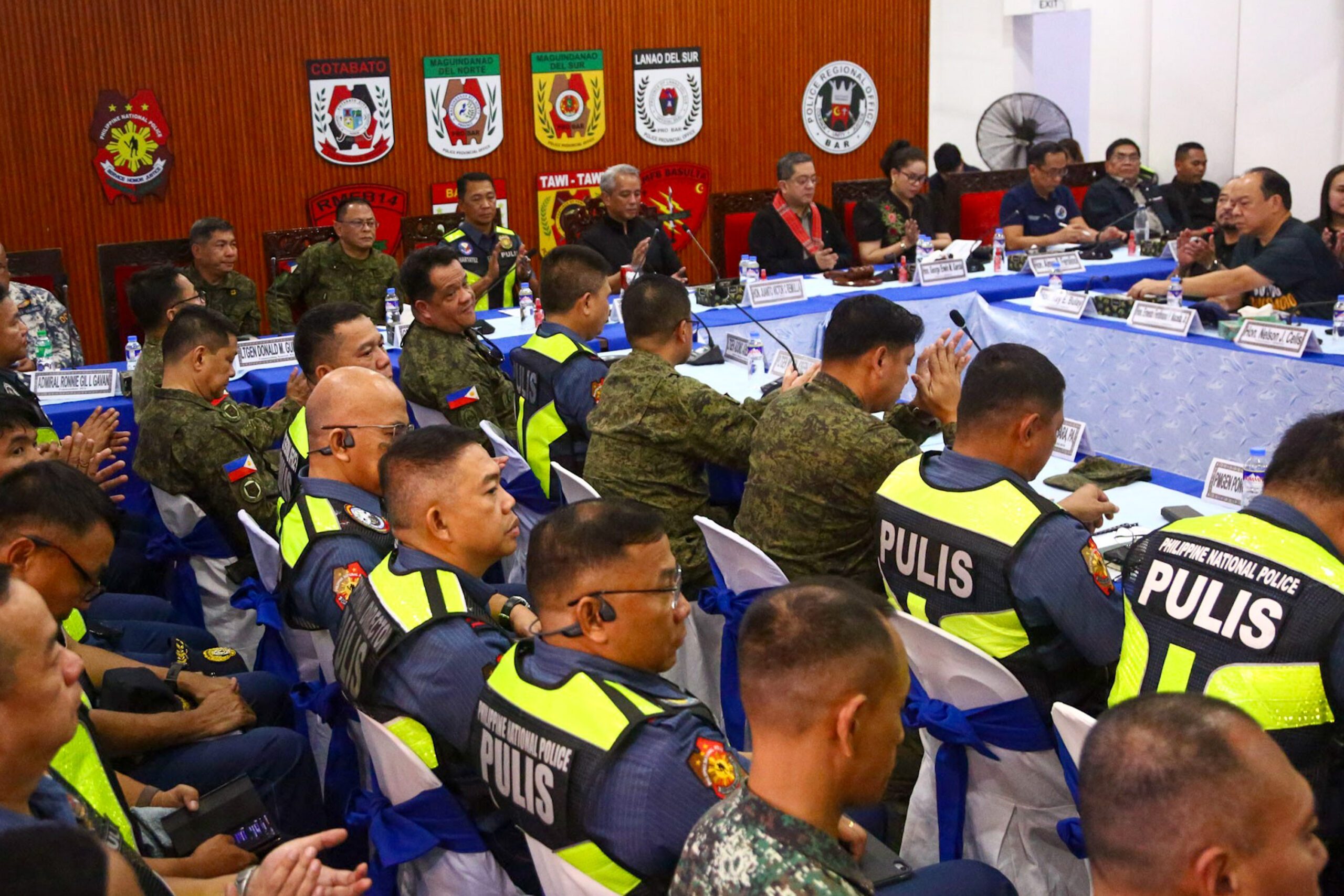
CAGAYAN DE ORO, Philippines – The war that once consumed parts of Mindanao has long ended, but the machineries that sustained violence have proved far more difficult to dismantle. In the Bangsamoro region, the old conflict has given way to a more diffused and persistent disorder, with clan feuds, political rivalries and criminal networks continuing to flourish where the institutions meant to keep the peace remain weak. Twelve years after a landmark peace agreement, the International Crisis Group said in a report released on Thursday, September 3, that the region’s fragile security system remains heavily dependent on the military. Weak policing and justice institutions have left soldiers carrying much of the burden of maintaining order in the seven-year-old Bangsamoro Autonomous Region in Muslim Mindanao, even as the government seeks to move the military away from counterinsurgency and toward external defense. The International Crisis Group report was released barely two weeks ahead of the Muslim-majority region’s first regional parliamentary elections since it replaced the now-defunct Autonomous Region in Muslim Mindanao. The 2014 peace agreement between the government during the presidency of the late Benigno “Noynoy” Aquino III and the Moro Islamic Liberation Front (MILF) ended years of fighting, while the BARMM was established in 2019 as part of the transition to peace. On Tuesday, September 1, Presidential Adviser on Peace, Reconciliation and Unity Mel Senen Sarmiento said the country’s focus had “decisively shifted” from navigating the challenges of internal conflict toward peacebuilding, adding that “the dividends of peace are now upon us.” Sarmiento said a just and lasting peace required more than “silencing the instruments of war and signing peace accords,” adding that efforts should also focus on nurturing communities where “positive peace can firmly take root and flourish.” He said the success of the September 14 election would not be measured by who wins or loses, but by whether the Bangsamoro people were able to vote freely, peace was preserved, and the result reflected the genuine choice of the electorate. The government and MILF peace implementing panels, led by Sarmiento and his counterpart, Mohagher Iqbal, also signed a pledge of commitment for the peaceful, orderly and credible conduct of the Bangsamoro elections. (LIVE UPDATES: First BARMM parliamentary elections) Uneven curbing of violence The International Crisis Group report said progress in curbing violence in the BARMM has been uneven, with clan feuds, electoral rivalries, and criminal activities still posing a greater threat than fighting between the state and militant groups. It said over a third of young people in the region have experienced armed conflict in or near their homes since 2019, based on a 2024 youth assessment. A local conflict watchdog, using data from community networks, recorded hundreds of incidents since January. Militant groups and local conflicts The think tank said jihadist groups that stayed outside the peace process remain a security threat, although it noted that attacks on state forces have declined. It also noted that remnants of the communist New People’s Army operate in parts of Lanao del Sur and Maguindanao del Norte. Land disputes, rido (clan feuds) and political rivalries remain major sources of violence, with local disputes sometimes escalating into large-scale clashes, the group said. Easy access to firearms has fueled recurring cycles of violence, it said, while key provisions of the peace agreement, including the disarmament of former rebels and private militias and the redeployment of troops, remain incomplete. Guns and unfinished disarmament The proliferation of firearms, it said, remains a major source of insecurity, with the police estimating in late 2024 that the region had more than 27,000 unregistered firearms, while a source interviewed by Crisis Group estimated that about 20,000 were legally registered. Based on the 2014 peace agreement, the MILF has gradually decommissioned its forces. About 14,000 fighters and 2,450 weapons remained to be decommissioned in 2026, underscoring the unfinished nature of the process. The MILF, however, suspended its formal engagement with the government earlier this year over what it saw as Manila’s failure to fulfill promises of socioeconomic benefits before resuming talks in August. Demobilization, however, appeared to remain on hold. Criminal economy The region’s illicit economy has changed since the 2014 peace deal. Kidnapping for ransom, once a major problem in Mindanao, has almost disappeared, but smuggling has proliferated, including weapons. Human trafficking and drug trafficking also remain concerns. Crisis Group recorded at least 10 anti-drug operations across the predominantly Muslim region since the start of the year. In August, a clash between security forces and an armed drug-trafficking outfit in Tawi-Tawi killed one person and wounded three others, including a naval officer. Policing and justice The report, “Policing the Bangsamoro: Peace in the Southern Philippines,” said the Philippine National Police had struggled to establish a credible role in parts of the autonomous region affected by violence, while the integration of former Moro rebels into the force had moved slowly. BARMM communities often view the police as weaker, more politicized, and less dependable than the military, the report said. The Bangsamoro regional government’s institutions for dispute resolution and justice have also faced challenges, including political infighting, limited resources, and poor access to courts, it added. Long distances, case backlogs, and high costs have made formal courts difficult to access for many of the region’s poorest residents, while disputes between rival clans can trigger further retaliation even after cases are brought before the justice system. Elections and recommendations With the region’s parliamentary elections approaching, rival political blocs and local elites may enlist armed groups to intimidate voters or disrupt the ballot, potentially aggravating tensions in areas where land, political, and clan disputes remain unresolved. Sarmiento said the government-MILF ceasefire mechanisms must “protect the peace, prevent armed confrontation, address tensions before they escalate, and ensure that our ceasefire mechanisms remain responsive and effective.” He said the mechanisms “must never be used to favor any candidate, party, or political group,” adding that their “role is not to influence the political choice of the people, but to help create an environment where that choice can be made without fear, coercion, intimidation, or violence.” Sarmiento urged the Coordinating Committees on the Cessation of Hostilities and the Ad Hoc Joint Action Group to exercise “vigilance and close coordination on the ground” and to “keep communication lines open. Immediately address incidents that may threaten the ceasefire.” The Crisis Group, meanwhile, called for reforms to professionalize the police, strengthen community policing and improve coordination between the police and military. It said the military should gradually reduce its role in maintaining public order in areas where security conditions allow, enabling the police to take on more responsibility. The report also urged tighter controls on firearms, stronger courts, and peacebuilding efforts to address the roots of local conflicts. “Much as it was a singular achievement to end decades of insurgency, communities will not feel safe until the peace gets the policing it needs,” the report said. – Rappler.com
12 years after peace deal, violence still stalks Bangsamoro
Full Article
Original Source
Read the full article at Rappler →KhanList aggregates and links to publicly available news content. We do not host full articles from third-party sources. Always verify important information with original sources.