
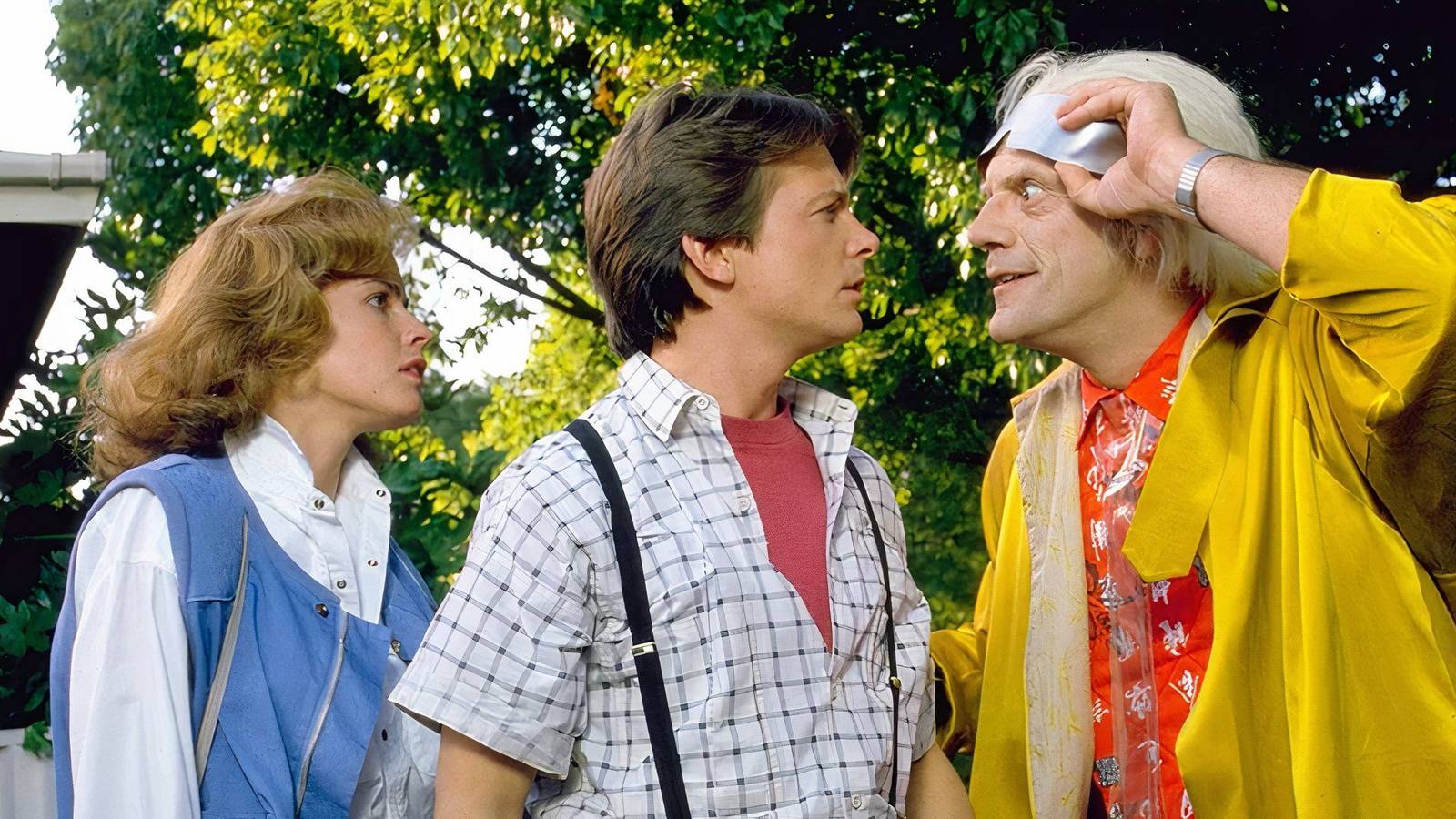
A movie's final line can make an audience laugh, break its heart, or leave it questioning everything it has just watched. Sometimes, a story needs an elaborate final sequence to deliver a satisfying payoff. Other times, a handful of carefully chosen words can do the job. Like the most iconic movie opening lines, the most memorable closing lines are inseparable from their context. They might expose a character's delusions, crystallize a film's central themes, or deliver one last joke just before the credits roll. The best can even escape their original stories, becoming part of everyday conversation decades after their first appearance on screen. There is no objective formula for ranking cinema's greatest final lines, but these 12 demonstrate how much a great screenplay and a perfectly judged performance can accomplish. From devastating observations to gloriously unresolved punchlines, each leaves its audience with something worth remembering. “Forget It, Jake. It’s Chinatown.” Chinatown (1974) Roman Polanski's neo-noir Chinatown ends in defeat. Private investigator J.J. Gittes (Jack Nicholson) uncovers a conspiracy involving wealthy businessman Noah Cross (John Huston), but his investigation cannot save Evelyn Mulwray (Faye Dunaway). She is killed, Cross escapes justice, and Gittes is left helpless. As Gittes is led away from the scene, an associate tells him to forget it because “it’s Chinatown.” Chinatown's final line is devastating because it offers no consolation or promise of justice. The investigation has exposed terrible wrongdoing without changing anything. Screenwriter Robert Towne described Chinatown as a metaphor for the futility of good intentions in a complicated world. The final words distill that bleak outlook into a shorthand for corruption and situations where the truth cannot save anyone. “Oh, No, It Wasn’t The Airplanes. It Was Beauty Killed The Beast.” King Kong (1933) After Kong falls from the Empire State Building in King Kong, filmmaker Carl Denham (Robert Armstrong) initially blames the planes that attacked the giant ape. A police officer offers a different explanation: beauty killed the beast, referring to Kong's affection for Ann Darrow (Fay Wray). The line gives Kong's death a tragic, fairy-tale quality, but its romantic explanation obscures the humans' responsibility. Kong was captured, transported to New York, and exhibited for profit. The planes are merely the final instruments of his destruction. Beauty did not literally kill Kong; human greed and exploitation did. It gives King Kong’s ending a mythic grandeur while leaving audiences to recognize the uglier truth beneath it. “You Met Me At A Very Strange Time In My Life.” Fight Club (1999) After discovering that Tyler Durden (Brad Pitt) is an alternate identity in Fight Club, the Narrator (Edward Norton) attempts to stop the destructive plan he helped set in motion. In the final scene, he holds hands with Marla Singer (Helena Bonham Carter) as buildings collapse outside. His closing admission is an extraordinary understatement. The Narrator has confronted his own fractured identity and participated in a coordinated act of destruction, yet he describes the experience as merely a strange time. It reverts Fight Club back to its awkward romance. The Narrator and Marla have built a relationship around loneliness, dishonesty, and mutual dysfunction. His words are funny and strangely comforting, even as the skyline collapses around them. “The Greatest Trick The Devil Ever Pulled Was Convincing The World He Didn't Exist. And Like That… He's Gone.” The Usual Suspects (1995) Roger “Verbal” Kint (Kevin Spacey) leaves the police station in The Usual Suspects after recounting an elaborate crimina conspiracy to customs agent Dave Kujan (Chazz Palminteri). As Kujan realizes that Verbal has constructed parts of his story from objects in the interrogation room, Verbal's limp disappears and he vanishes into the street. Verbal’s narration turns The Usual Suspects’ central deception into a chilling boast. Verbal has encouraged the audience to see him as a frightened survivor, but the revelation forces viewers to reconsider the story they have just heard. The Devil comparison makes the deception sound almost supernatural, while “And like that” supplies a wonderfully casual flourish. “Ernest Hemingway Once Wrote, ‘The World Is A Fine Place And Worth Fighting For.’ I Agree With The Second Part.” Se7en (1995) David Fincher's Seven concludes after John Doe (Kevin Spacey) completes his horrifying plan, murdering Detective Mills' (Brad Pitt) pregnant wife and provoking Mills into killing him. As Mills is taken away, veteran detective William Somerset (Morgan Freeman) reflects on the world he has spent the film investigating. Somerset's response to Hemingway is bleak but not entirely hopeless. He no longer seems able to believe that the world is a fine place, yet he still believes it is worth fighting for. Doe has achieved his immediate goal, and the detectives cannot undo the damage, but Somerset refuses to abandon the world altogether. It's hardly a cheerful ending, but it offers a fragile counterpoint to Seven's overwhelming cruelty. “Nobody's Perfect.” Some Like It Hot (1959) Billy Wilder's legendary comedy Some Like It Hot ends with millionaire Osgood Fielding III (Joe E. Brown) pursuing Jerry (Jack Lemmon), a musician who has spent much of the film disguised as a woman named Daphne. Jerry tries to lie as to why they cannot marry, but Osgood remains undeterred. When Jerry reveals that he is a man, Osgood responds with the immortal punchline. After a film full of disguises and mistaken identities, the revelation that Jerry is a man barely registers as an obstacle. Osgood's breezy acceptance punctures conventional expectations and delivers one final laugh. The Criterion Collection recounts how the line was a placeholder, but audience laughter convinced them it was the right ending. “I Do Wish We Could Chat A Little Longer, But… I'm Having An Old Friend For Dinner. Bye.” The Silence Of The Lambs (1991) Having escaped custody in The Silence of the Lambs, Hannibal Lecter (Anthony Hopkins) telephones Clarice Starling (Jodie Foster) to congratulate her on graduating from the FBI Academy. He then explains that he has plans for dinner. In the background, his former jailer, Dr. Frederick Chilton appears, unaware that Lecter is watching him. The line's polite delivery makes its meaning all the more horrifying. Lecter sounds like a gracious host, but the audience understands that “having a friend for dinner” is a cannibalistic pun. The double meaning captures The Silence of the Lamb character's cultivated manners and monstrous appetite. It’s chilling, funny, and delightfully camp. “Roads? Where We're Going, We Don't Need Roads.” Back To The Future (1985) In Back to the Future, Marty McFly (Michael J. Fox) has returned to 1985 and discovers that his journey through time has improved his family's fortunes. Doc Brown (Christopher Lloyd) arrives in the DeLorean and announces that Marty's future children need help. Marty points out that they cannot take off without a road, prompting Doc's famous reply. Doc’s line delivers an ideal payoff to the film. Immediately declaring that the sequel will insert even more futuristic sci-fi, the DeLorean is revealed to be able to fly. Doc’s cool and calm delivery is truly iconic, bolstered by the futuristic sunglasses. Doc's infectious enthusiasm captures the movie's blend of science-fiction ingenuity and comic wonder, while the abrupt ending leaves audiences eager to follow the characters into the future. “All Right, Mr. Demille, I'm Ready For My Close-up.” Sunset Boulevard (1950) At the end of Sunset Boulevard, silent-film star Norma Desmond (Gloria Swanson) has murdered screenwriter Joe Gillis (William Holden) and descended into delusion. Surrounded by police and reporters, she mistakes the commotion for a film production and imagines that director Cecil B. DeMille is ready to film her comeback. As the cameras roll, she delivers her famous final line. Norma has finally received the attention she craves, but she cannot understand what it means. Her career faded as Hollywood moved into sound, and she has refused to accept that her stardom is over. Now the cameras really are trained on her, but she mistakes a criminal spectacle for artistic triumph. Swanson's performance makes the moment both frightening and heartbreaking. “I'll Think Of Something To Get Him Back. After All, Tomorrow Is Another Day.” Gone With The Wind (1939) In Gone with the Wind, after Rhett Butler (Clark Gable) leaves her, Scarlett O'Hara (Vivien Leigh) returns to Tara, her family home, determined to rebuild her life. She has survived war, hunger, and financial ruin through sheer stubbornness, and she refuses to accept that losing Rhett must mean defeat. Scarlett's parting line captures her greatest strength and her greatest weakness. Her resilience allows her to endure extraordinary hardship, but her determination to win Rhett back shows that she still struggles to recognize the consequences of her own behavior. Yet the final words retain their power as an expression of perseverance. Scarlett may be wrong about her romantic future, but she refuses to let despair have the final say.
12 Greatest Closing Lines In Movie History, Ranked
Full Article
Original Source
Read the full article at Screenrant →KhanList aggregates and links to publicly available news content. We do not host full articles from third-party sources. Always verify important information with original sources.