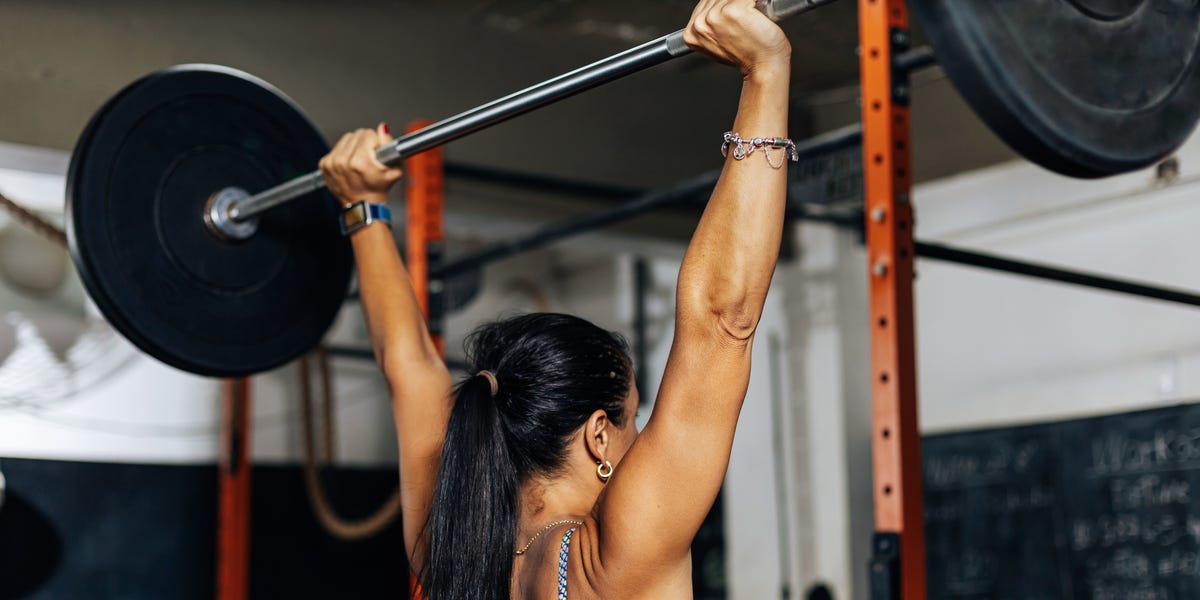
5 min readAging gracefully isn't just about staying active; it’s about choosing the right kind of activity to support your health.The best exercises for women in midlife (particularly over 50) are weight-bearing and promote strength, posture, and/or balance (and sometimes all at once). There’s also some evidence that including some plyometrics and high-impact exercises can help improve bone density.Resistance training (including bodyweight, free weight, and resistance band exercises), in particular, is one of the best ways to counter the physical effects of aging, helping you build up muscle to support daily activities and prevent conditions like osteopenia and osteoporosis that can lead to bone fractures. And even if you've never lifted a weight before, it's never too late to start.While the best exercises for each individual depend on factors including medical history, bone density, fitness level, and personal preference (a personal trainer or physical therapist can help you design a more personalized plan!), it’s always great to start with fundamental exercises that incorporate movements used in daily life.To help get you started, here are a few exercises (and for a more comprehensive routine, try our Strong After 50 four-week plan!).Instructions: Select six to seven of the exercises below, mixing two to three upper body exercises, two to three lower body, and one or two core. Start with two to three sets of 10 reps of each. If you’re new to strength training, begin by doing the routine once a week and gradually work up to three times per week. Choose a weight that feels heavy enough to make the last two to three reps of each set feel tough, yet achievable.Time: 15-20 minutes | Equipment: Dumbbells, kettlebells, stair or step-up platform | Good for: Full-body1. Air SquatKey Benefits: Strength and mobilityHow to:Start standing with feet hip-distance apart, toes pointed out slightly.Keeping head in line with tailbone, shift hips back and bend at knees.Lower down until thighs are parallel with floor.Drive up through heels to return to standing. That's 1 rep.Pro tip: If getting down low enough or balancing feels too challenging, try doing this with a chair or couch behind you. At the bottom of the move, tap your bum to the seat or briefly pause there before standing back up.2. Step-UpKey Benefits: Balance and strengthHow to:Stand in front of a sturdy low step or step-up box holding dumbbells at sides. (This can also be done with body weight only.)Step right foot up onto bench, driving through right heel to bring left foot up to meet it.Step down one foot at a time. Repeat on other side. That’s 1 rep.3. Alternating Reverse LungeKey benefits: Balance and strengthHow to:Stand with feet hip-width, hands on hips if using body weight, or holding weights down by sides.Step one foot back, bending both knees to 90-degrees to lower into a lunge.Push through the heel of the front foot and toes of the back foot to return to standing. That’s 1 rep. Repeat on other side.4. DeadliftKey benefits: StrengthHow to:Stand with feet hip-width apart. Hold dumbbells out in front of you, near thighs (optional).Keeping back and legs straight, hinge at the hips and focus on sending your hips and butt back as you lower the barbell/dumbbells toward the ground. Make sure your weight is in your heels and inhale, McParland adds.Maintain that position and lower yourself as far as your flexibility allows, ideally with the weight(s) landing at least in the middle of your shins.Engage your glutes, contract your hips, and drive back to the starting position, locking your hips out at the top. Exhale. You should feel a squeeze in your hips and quads as you lock them out. That's 1 rep.5. Overhead Shoulder PressKey Benefits: Strength and mobilityHow to:In any standing or seated position that you feel comfortable in, maintain good posture (shoulders over hips, spine neutral, navel drawn in) and bring dumbbells to shoulders, framing your face. Forearms should be parallel to one another.Press both weights directly overhead until arms are completely straight. Pause, then slowly lower back to the starting position. That’s 1 rep.Pro tip: If this is too challenging with weights, start by trying it without weights. Doing the move seated as opposed to sitting can also help. Focus on slow, controlled movements to protect the shoulder joint and get the most muscle engagement out of this move.6. Seated Biceps CurlKey benefits: StrengthHow to:Sit tall on a chair with feet flat holding dumbbells at sides, palms facing forward.Bend elbows and lift weights up toward shoulders, keeping elbows close to body.Slowly lower the weights back to the starting position. That’s 1 rep.Pro tip: If moving both arms at once feels too challenging, do one at a time. Once the seated version of this exercise feels easy, try doing it standing up.7. Farmer's CarryKey benefits: Strength and balanceHow to:Holding a weight in one hand, stand up tall and pull your shoulders back and down to prevent them from rolling forward. Keep your core tight and spine neutral.Walk forward for 30 to 60 seconds while maintaining a strong grip and upright posture.Set the weight down. That's 1 rep.8. Bent-Over RowKey benefits: StrengthHow to:Stand with feet hip-width, knees slightly bent, and your arms just in front of your legs.Hinge at your hips with your torso parallel to the floor or at a 45-degree angle. Focus on keeping your back flat.Drive your elbows back toward your hips with weights in hand, feeling your shoulder blades squeeze together.Lower slowly to the starting position. That’s 1 rep.Pro tip: Rows can be done in an upright or bent-over standing position. The angle at which you hinge forward will impact the workload: the more forward you lean, the more intense the exercise will feel. Modify this angle or try a more upright position to find a variation that works for you.9. Incline PushupKey benefits: Strength and mobilityHow to:Place hands on a stable and fixed elevated surface (like the bottom step of a staircase) with feet extended back.Keep body straight and shoulders engaged as you lower chest toward the surface by bending elbows, then push back up to plank. That’s 1 rep.10. Jumping JacksKey benefits: High-impact and mobilityHow to:Start standing, feet together.Jump feet out wider than shoulder-width and simultaneously sweep arms overhead.Return arms and legs back to starting position. That’s 1 rep.11. Jump RopeKey benefits: High-impact and cardioHow to:Start with feet together and arms by sides.Bend at elbows (but keep them close to body) to bring forearms wide and up to hip height.Begin making small circles with both forearms in a forward motion while simultaneously taking quick hops with feet. (If you're using a jump rope, the goal is to revolve the cord around body and clear it under feet with every hop.)One jump equals 1 rep.12. Jump SquatKey benefits: High-impact and strengthHow to:Start in a squat (feet under shoulders, toes facing forward, thighs parallel to floor) with torso upright and hands clasped in front of chest.Press through feet to straighten legs and jump up off the floor while swinging straight arms behind body.Land back in a squat position. That's 1 rep.For more, try our Strong After 50 Workout PlanFind the Perfect Women’s Health Training Program for YouJustin SteeleRona Ahdout//Hearst OwnedRachel Tavel is a doctor of physical therapy, strength and conditioning specialist certified by the National Strength and Conditioning Association, and writer. Her writing has been published in Forbes, Fortune, Men’s Health, Women’s Health, Runner’s World, SELF, Bicycling Magazine, The Huffington Post, and more. She co-authored the book “Stretch Yourself Healthy Guide: Easy Routines to Relieve Pain, Boost Energy, and Feel Refreshed” (Prevention, 2020) and is a Forbes Health Advisory Board Member. Prior to becoming a physical therapist, Rachel was a travel writer living and traveling throughout South America. Connect: www.racheltavel.com, @racheltaveldpt, Email: hello@racheltavel.com.
12 Exercises Every Woman Should Master In Midlife
Full Article
Original Source
Read the full article at Womenshealthmag →KhanList aggregates and links to publicly available news content. We do not host full articles from third-party sources. Always verify important information with original sources.