
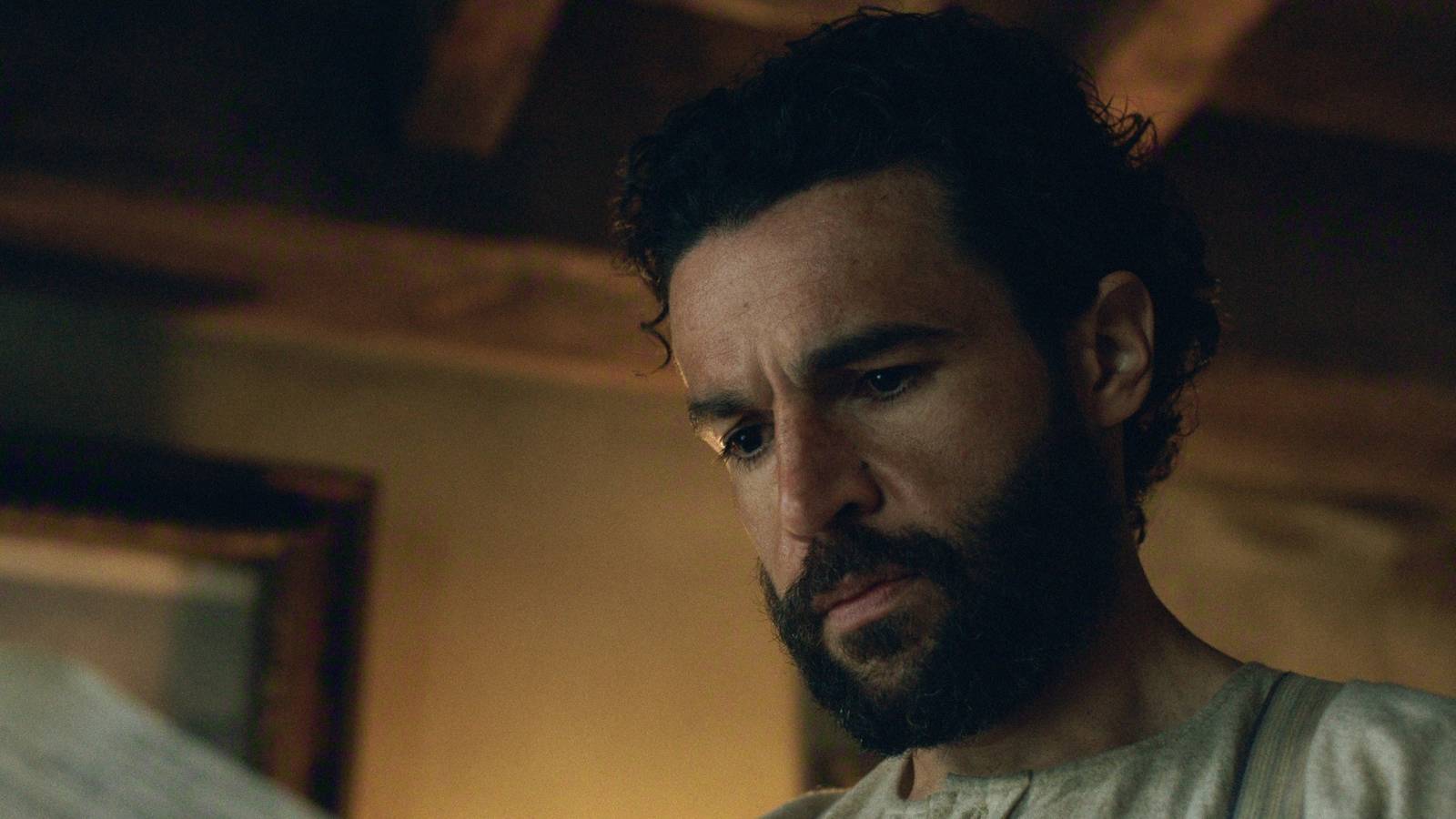
Published Oct 9, 2026, 3:31 PM EDT Mary Kassel is a Senior Writer & Critic who joined the Screen Rant team in 2023. After graduating from Emerson College with a degree in Media Arts Production, Kassel started at Screen Rant with a focus on the critical analysis side of movies and television while continuing to work on set in film production. At Screen Rant, Kassel primarily writes for the Classic TV section, mining their encyclopedic knowledge of television history for content. However, they also contribute to the Books team and review both film and television as a critic. Published in 1952, John Steinbeck's East of Eden is as relevant today as it was then thanks to the breadth and complexity of the text. The sweeping epic follows the Trask family from the late 1800s through the U.S.'s involvement in World War I. Though East of Eden can't be boiled down to one moment, Steinbeck's language and enduring quotes communicate why we're still reading East of Eden after all these years, and that the struggle of being human transcends generations. Recently adapted for the screen, the Netflix East of Eden makes changes. While fans of Steinbeck might find them unexpected, the new limited series does a great job of updating the text while staying true to the author's vision. For audiences who haven't read East of Eden, the TV show is a great introduction and incorporates many of the most important quotes and themes from the book. There are many moments in East of Eden that will stay with readers forever. 12 “Sometimes A Man Wants To Be Stupid If It Lets Him Do A Thing His Cleverness Forbids.” ©Netflix / Courtesy Everett Collection East of Eden sees its characters act against their better judgment and make choices they know they will regret despite the evidence in front of them. Essentially about the power of choice and the way this defines the act of being human, East of Eden explores the aftermath of decisions of all kinds. However, this quote touches upon the concept of willful ignorance and going against the wise option in favor of self-interest. 11 “Perhaps The Best Conversationalist In The World Is The Man Who Helps Others To Talk.” ©Netflix / Courtesy Everett Collection Characters like Lee and Samuel Hamilton serve as foils to Adam Trask, often pointing out his folly and failings in the wake of Cathy's disappearance. Steinbeck uses Lee and Samuel as mouthpieces for some of his most important themes and lessons in East of Eden. Many people talk a lot without saying anything, but real empathy and encouragement to get others to open up, as Lee and Samuel do with Adam, is a better example of someone who understands how conversation can heal. 10 “It Would Be Absurd If We Did Not Understand Both Angels And Devils, Since We Invented Them.” Credit: Kirsty Griffin/Netflix © 2026 The characters in East of Eden, especially Cal Trask in the final part of the book, often torture themselves over what it means to be good and punish themselves for what they perceive as being evil. However, Steinbeck takes pains to demonstrate that people have equal capacity for good and evil, and that there will always be a balance between them inside someone. The rules and standards of goodness that cause so much pain were created by humans in the first place. 9 “'I Think I Love You, Cal.' 'I'm Not Good.' 'Because You're Not Good.'" As Cal and Aron Trask grow up, the reader witnesses the way the generational pain that comes from Adam and his father before him affects the boys into adulthood. Cal suffers, being compared to Aron's goodness and always feeling that he can't live up to Adam's expectations. As Cal's relationship with Abra progresses, the pair find relief in each other, as neither wants or needs the other to be perfect. Instead, they can be themselves and love the complexities they share. 8 “But The Hebrew Word, The Word Timshel—‘Thou Mayest’— That Gives A Choice. It Might Be The Most Important Word In The World. That Says The Way Is Open. That Throws It Right Back On A Man. For If ‘Thou Mayest’—It Is Also True That ‘Thou Mayest Not.” ©Netflix / Courtesy Everett Collection This quote, the explanation of Timshel, is the beating heart of East of Eden. The East of Eden Netflix series succeeds because it tells the entire saga of the Trask family, beginning with Adam and Charles' youth, focusing on Timshel, and its impact on the Trasks. It is the choice of the characters to take their lives into their own control. There is nothing divine or written that dooms Cal or Aron to be their mother or father. Their actions and decisions are their own, for better or worse. 7 “No One Who Is Young Is Ever Going To Be Old.” ©Netflix / Courtesy Everett Collection It's frequently stated that youth is wasted on the young, because they have no conception of what it will be like to be older. The reader sees this is true throughout East of Eden. Thanks to the scale of the novel, the audience witnesses characters like Adam and Cathy experience enormous shifts in perspectives as they get older. In turn, they watch their children experience their youth and first steps into adulthood. While it's impossible to gain the understanding that only time can provide, there's a beauty to the vibrancy and immediacy of youth. 6 “People Like You To Be Something, Preferably What They Are.” ©Netflix / Courtesy Everett Collection Adam's arc in East of Eden sees him come to terms with his own father's expectations of who he should have been, as well as his impact on his sons. Though Adam felt molded into something he wasn't by his father against his will, he can't help making the same mistakes with Cal and Aron. Others will always have beliefs about who you should be, especially parents, but no one can be anyone but themselves. Letting go of the belief that he can ever be his father is what ultimately sets both Cal and Adam free. 5 “There's More Beauty In Truth, Even If It Is Dreadful Beauty.” ©Netflix / Courtesy Everett Collection When Adam decides to lie to his sons and tell them their mother died, instead of revealing that she left them, it sets off a chain of events that can't be undone. It's this deception that eventually leads to Aron's death and Cal's feelings of betrayal after discovering Cathy. Though Adam believes he's sparing his sons by lying about Cathy, it ultimately does more harm than good. Truth can hurt at first, but in the end, it will be better. 4 “Well, Every Little Boy Thinks He Invented Sin. Virtue We Think We Learn, Because We Are Told About It. But Sin Is Our Own Designing.” Cal and Aron strain against the roles set for them by Adam throughout their lives, as each feels penned in by the definitions of good and bad set by their father and the world. Through them, Steinbeck explores how children can grow up believing their faults and missteps are theirs alone, and that being righteous and true isn't inherent to the human soul. However, this isn't the case, as everyone, like Cal and Aron, has equal capacity for both and is not doomed to be one thing. 3 “We Only Have One Story. All Novels, All Poetry Are Built On The Never-Ending Contest In Ourselves Of Good And Evil.” ©Netflix / Courtesy Everett Collection It's clear throughout East of Eden that Steinbeck believes that in every family and every story, the same lessons are learned, and have been since the beginning of time. For Steinbeck, the struggle between good and evil is the most essential to being human, and the reader sees this throughout the novel. He argues that everything people write, do, and act out on each other comes down to their coming to terms with the ability to be good and bad and accepting both.
12 Best Quotes From East Of Eden
Full Article
Original Source
Read the full article at Screenrant →KhanList aggregates and links to publicly available news content. We do not host full articles from third-party sources. Always verify important information with original sources.