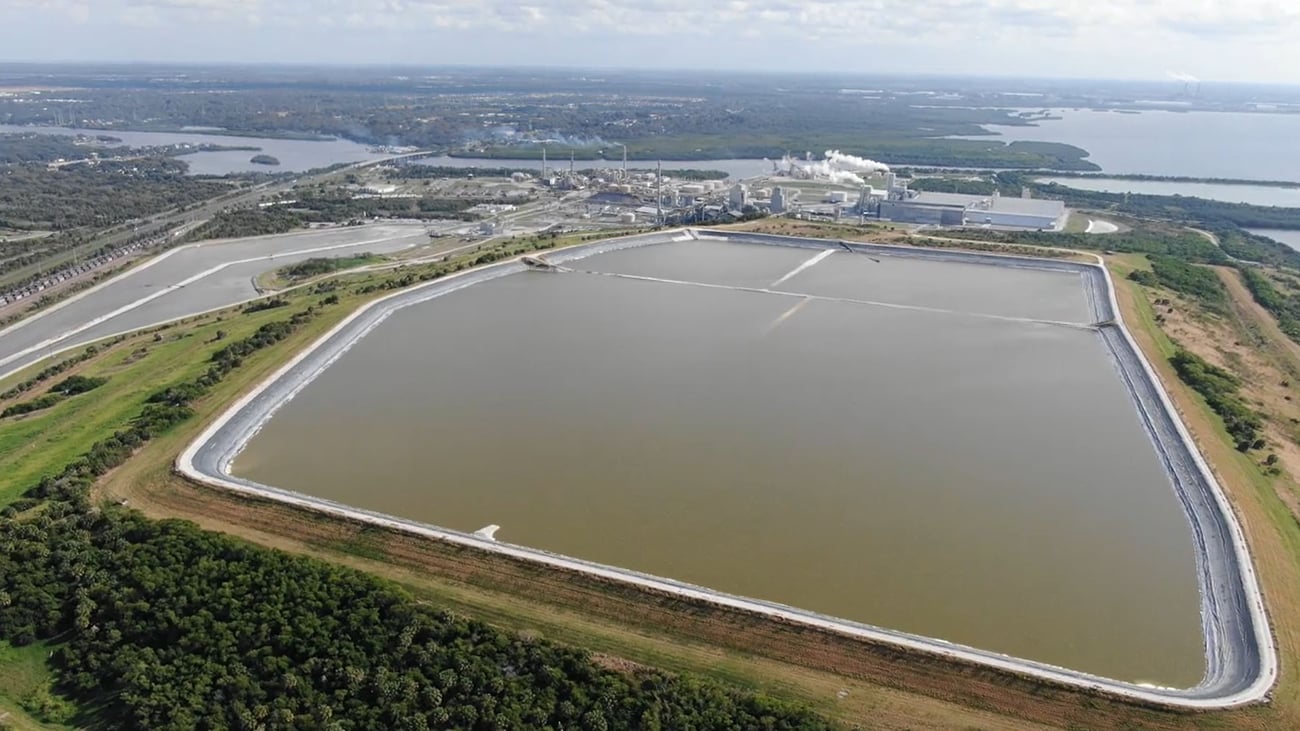
Environmentalist watchdogs argued the government ignored its own findings that a toxic fertilizer was unsafe for road construction.ATLANTA (CN) — An 11th Circuit panel turned down a petition from environmentalists Wednesday that sought review of the Environmental Protection Agency’s approval of a “radioactive road” in Florida.In an unanimous opinion, the three-judge panel held the EPA did not violate any regulations in approving the road and that its reasonings were well supported and appropriately tailored.The ruling comes after the Center for Biological Diversity argued that the one-mile test road made from phosphogypsum — a radioactive byproduct of fertilizer manufacturing — poses an unacceptable risk to public health.“In short, the EPA’s risk assessment articulated a coherent rationale for its approach. The agency explained its methodology, identified the specific exposure pathways it evaluated, described its reasonable assumptions, and concluded that the road project fell within acceptable risk parameters,” Senior U.S. Circuit Judge Stanley Marcus wrote.“The center may disagree with the EPA’s methodological choices and its ultimate conclusion, but disagreement about technical methodology does not render an agency’s reasoned determination arbitrary and capricious,” the Bill Clinton appointee added.During oral arguments in April, attorneys for the U.S. Department of Justice’s Environment and Natural Resources Division, argued the EPA conducted a three-year risk assessment before approving the project.The panel concluded that the agency was justified in its determination that building a private road at a facility that already stored phosphogypsum, was no less safe than leaving the material in stacks. It concluded the risk to workers and the public is extremely low and the road is subject to ongoing monitoring.“The agency’s approval would be justified even if it had used the center’s preferred risk threshold,” Marcus wrote.“Here, vacatur or remand would require the agency to repeat its Review of the Road Project only to reach the same result — a significant and unnecessary use of administrative resources. The law does not support ordering so empty an exercise,” he added.He added that the EPA’s decision does not violate Clean Water Act regulations, because the agency may approve applications for other uses of phosphogypsum and does not categorically prohibit the use of phosphogypsum in road construction.The Mosaic Fertilizer company mines and processes phosphate ore into phosphoric acid, which is subsequently used in the production of agricultural fertilizer. During this conversion process, approximately five tons of phosphogypsum are produced for each ton of phosphate fertilizer.Pursuant to federal regulations, Mosaic then stores phosphogypsum in large, open-air pyramidic stacks, which naturally decay and emit dangerous radon gas that is associated with cancer, genetic abnormalities and serious illness.The fertilizer industry has argued using phosphogypsum in road construction would reduce the risk posed by the stacks.The Delaware-based Mosaic Company constructed the road at its facility in New Wales, about an hour southwest of Tampa, to research the effectiveness of using the material for road construction.But environmentalists warn the pilot project, which was approved by the EPA in 2024, represents a dangerous step toward using toxic waste in road construction nationwide — a longtime goal of the fertilizer industry.Phosphogypsum stacks have long been a headache for the state.In 2016, a sinkhole opened beneath Mosaic’s phosphogypsum stack in New Wales — the same site where it built the test road — sending millions of gallons of contaminated water into Florida’s main drinking water aquifer. The company determined there were no offsite impacts from the spill.In 2021, a reservoir breach at the troubled Piney Point, a former phosphate-processing facility in Manatee County, forced officials to discharge 215 million gallons of wastewater into Tampa Bay, causing massive fish kills. A second leak the following year released an additional 4.5 million gallons of wastewater.The Center for Biological Diversity did not immediately respond to a request for comment on the ruling.U.S. Circuit Judge Barbara Lagoa, a Donald Trump appointee, and U.S. Circuit Judge Robin S. Rosenbaum, a Barack Obama appointee, also served on the panel.Subscribe to our free newslettersOur weekly newsletter Closing Arguments offers the latest about ongoing trials, major litigation and rulings in courthouses around the U.S. and the world, while the monthly Under the Lights dishes the legal dirt from Hollywood, sports, Big Tech and the arts.Additional Reads
11th Circuit refuses to scrap ‘radioactive’ road in Florida
Full Article
Original Source
Read the full article at Courthousenews →KhanList aggregates and links to publicly available news content. We do not host full articles from third-party sources. Always verify important information with original sources.