
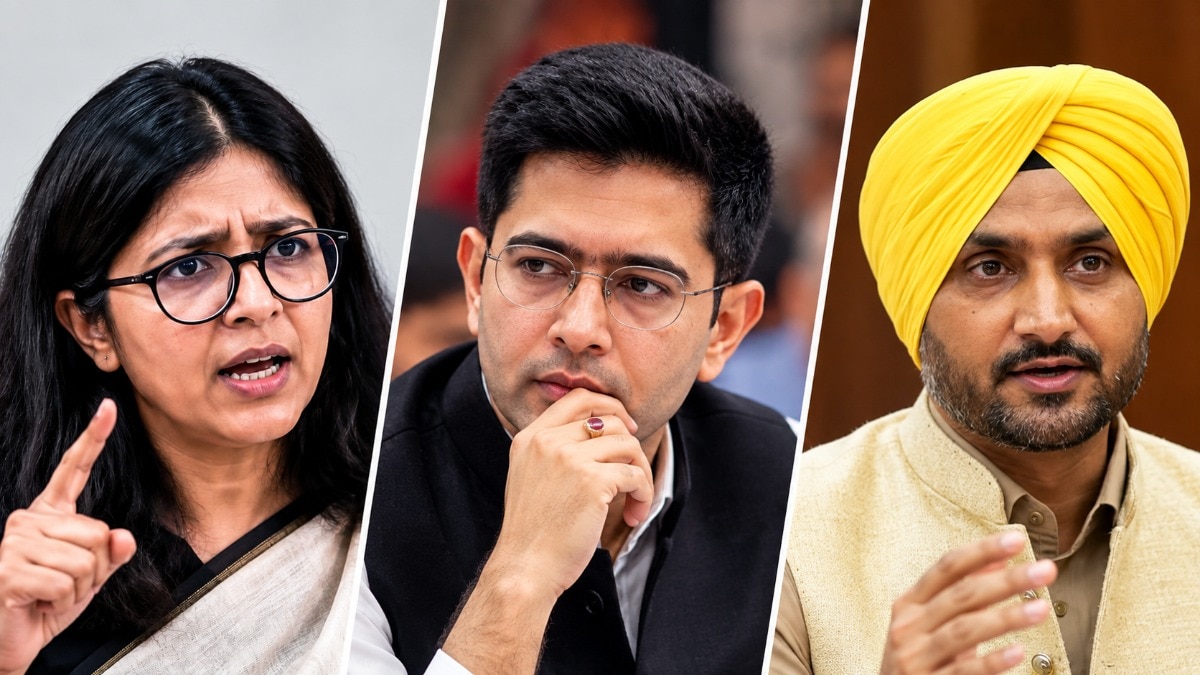
At least 111 sitting MPs and MLAs changed political parties after being elected, according to a new analysis by the Association for Democratic Reforms (ADR) and National Election Watch. The study covers elections and by-elections held between 2022 and 2026 and includes 26 Lok Sabha MPs, seven Rajya Sabha MPs and 78 MLAs. Of these 111 lawmakers, 29, (which is 26% of the 111), moved to the BJP, making it the second-largest recipient of lawmakers who changed parties.The Naga People's Front (NPF) received the most, with 32 lawmakers, which is 29% of the total turnout. However, that was the result of a merger in 2025, and not of individual MLAs switching sides.The report, released on September 24, shows that switching of parties occurred across 17 states and Union Territories. At 32, Nagaland accounted for the largest number, followed by West Bengal with 20, Telangana with nine, and Goa and Punjab with eight each.Importantly, the 111 cases were not all simple defections. ADR also counted party mergers, lawmakers who resigned and switched parties before winning by-elections, and those who were disqualified and later won on another party's ticket. ADR said the list might not cover every case because of the "lack of systematically maintained and readily accessible official [Election Commission of India] data." The ADR, according to its website, is a non-partisan electoral-reform group founded by IIM Ahmedabad professors in 1999. It is best known for a legal battle that led to Supreme Court rulings making it mandatory for candidates to disclose their criminal cases, finances and educational qualifications. The 111 lawmakers covered by ADR's analysis were spread across 17 states and Union Territories. (Graphic card: Author/India Today) WHO WERE THE 29 WHO JOINED BJP?Of the 29 lawmakers ADR lists as having joined the BJP, seven were Rajya Sabha MPs and 22 were MLAs. No Lok Sabha MP, according to the ADR report's dataset, moved to the BJP. The seven Rajya Sabha members listed by ADR had been elected from the Aam Aadmi Party (AAP). The seven are Swati Maliwal, Ashok Mittal, Harbhajan Singh, Raghav Chadha, Sandeep Kumar Pathak, Vikramjit Singh Sahney and Rajinder Gupta, all elected from AAP.Among the MLAs were eight Congress legislators from Goa, four Congress legislators from Gujarat and two from Himachal Pradesh. The report also lists five JD(U) MLAs from Manipur as moving to the BJP.The remaining BJP entrants included Samajwadi Party MLA Manoj Kumar Pandey from Uttar Pradesh, Congress MLA Nirmala Sapre in Madhya Pradesh and Karnataka MLA G Janardhan Reddy, whose Kalyana Rajya Pragathi Paksha (KRPP) merged with the BJP, according to ADR.Gujarat Congress MLAs CJ Chavda, Arjun Modhwadia, Arvind Ladani and Chirag Patel resigned, joined the BJP and subsequently contested by-elections, the report says. India's anti-defection law allows party switches through the two-thirds merger exception, while some lawmakers resign and seek re-election on another party's ticket. (Graphic card: Author/India Today) HOW 2-MLA NPF GOT 32 MLAs FROM NAGALAND CM's PARTYThe BJP, however, wasn't the biggest destination for lawmakers in the dataset.The Naga People's Front (NPF) received 32 of the 111, or 29%, largely because of political realignment in Nagaland.ADR records that lawmakers originally elected on Nationalist Democratic Progressive Party (NDPP) tickets joined the NPF after a merger.The NDPP MLAs joining the NDPP in October 2025 is an interesting story in itself. More so because the NDPP, led by Chief Minister Neiphiu Rio, had 32 MLAs and the PPF just two.The Nagaland Assembly has 60 members.Rio, an NPF leader, formed the NDPP in 2017 and MLAs loyal to him joined the party.The NDPP and the BJP, with its 12 MLAs, were running the government in Nagaland. It was an opposition-less Assembly as all other parties had pledged support to the ruling coalition.After the NDPP merged with the NPF, Rio was elected Leader of the NPF Legislature Party. Rio said it was aimed at creating "one strong regional party" to represent Naga aspirations and address the long-pending Naga political issue more effectively.While in the BJP's case, MPs and MLAs joined the party, in the NPF's case, it was a merger that made it the top destination of switching lawmakers.26 LOK SABHA MPs AMONG PARTY SWITCHERSAfter the NPF's 32 and BJP's 29, the Nationalist Citizens Party of India (NCPI) received 20 lawmakers, or 18%. After the Trinamool Congress lost power in the 2026 West Bengal Assembly election, 20 of its Lok Sabha MPs rebelled and on June 14 announced their merger with the little-known NCPI, while extending support to the BJP-led NDA in the House of the People.The NCPI had virtually no national footprint before the switch. It had made its electoral debut in the 2023 Tripura Assembly election, where it failed to win a seat, but the TMC rebels reportedly chose the merger route amid legal complications over forming a separate parliamentary bloc.The Congress received nine, Shiv Sena eight, NPP six and the People's Party of Arunachal four.On the other side of the ledger, the largest group came from the NDPP, with 25 lawmakers, followed by the Trinamool Congress with 20 and the Congress with 19. Together, these three accounted for 64 of the 111 cases, or 58%.ADR found that 26 of the 543 Lok Sabha MPs covered by its analysis had changed parties, equivalent to about 5%. Seven of 233 Rajya Sabha MPs, or 3%, changed parties, while 78 of 4,100 MLAs, around 2%, were included in the list.The organisation describes itself as working on electoral and political reforms and voter awareness. Its September 24 report analyses sitting lawmakers who changed parties after winning elections, using MPs' and MLAs' election affidavits as a key source.ADR CALLS FOR TIGHTER ANTI-DEFECTION RULESADR used the findings to renew its call for changes to India's anti-defection framework. Among other measures, it recommended amending the Tenth Schedule of the Constitution so that disqualification decisions are made by the President in the case of MPs and governors in the case of MLAs, acting on the Election Commission's advice, rather than by the presiding officer of the House.It also called for restrictions on defectors holding public office and fixed timelines for deciding disqualification petitions.Calling for an end to what it described as the "politics of convenience and self-gain", ADR said parties and legislators should instead practise the "politics of conviction, courage and consensus". It remains to be seen how far political parties heed ADR's recommendations, particularly when governments of different parties have themselves benefited from lawmakers switching sides.- Ends
111 sitting MPs, MLAs switched parties in 4 years, 26% of them joined BJP: ADR
Full Article
Original Source
Read the full article at Indiatoday →KhanList aggregates and links to publicly available news content. We do not host full articles from third-party sources. Always verify important information with original sources.