
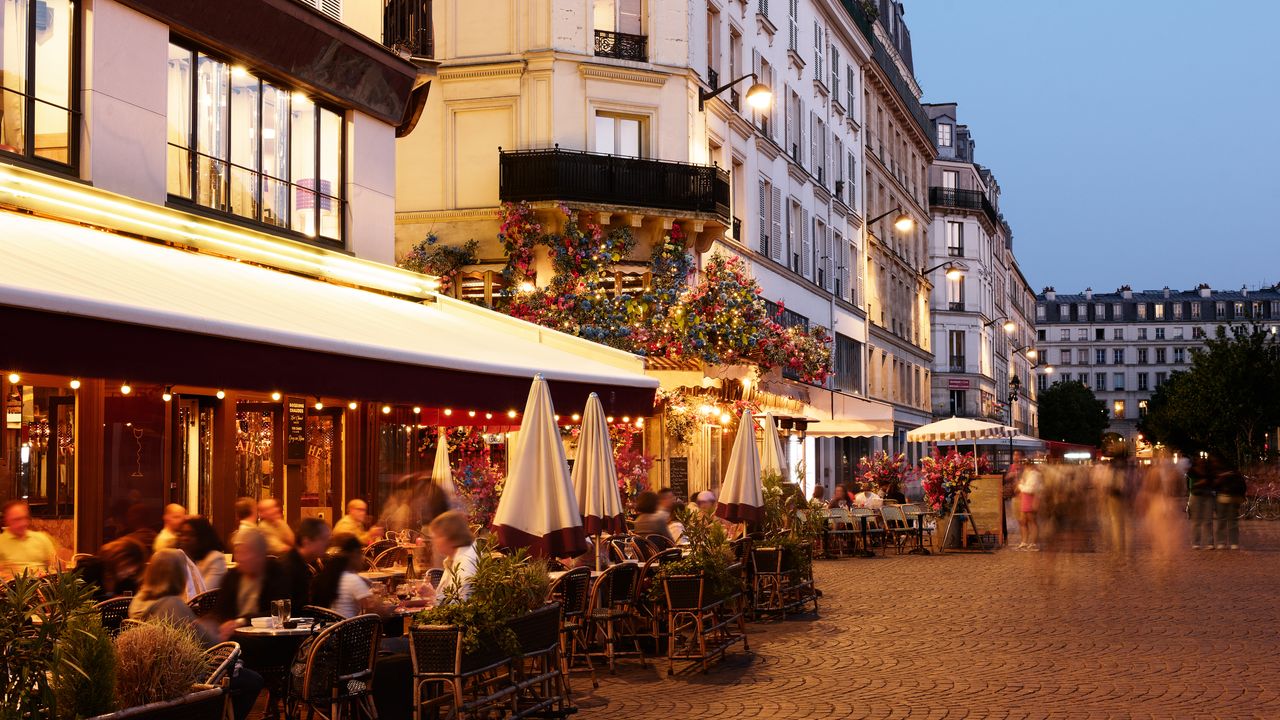
Everything Parisians want you to know before you visit, from how to navigate public transit to when to eat and apéro.GettyAs with traveling to any country outside of your own, there are a few unwritten rules for visiting Paris with which savvy tourists should get familiar. Understanding of and respect for local customs—always saying “bonjour” when you start a conversation, for example—go a long way when interacting with Parisians. For decades, they have had an unfairly earned reputation for being rude and snooty; cold shoulders from the city’s denizens can often be traced to the negligence of a visitor to follow a social script, ignorant of them or otherwise. True, to be punished for not following the rules you didn’t know is also unfair. So here are 11 best practices for navigating French culture while traveling in the City of Light to illuminate it all.These are the most useful tips for tourists I can give as an American living in Paris—ugh, I know, another one. I’ve picked up on these rules over 16 pre-resident visits to the French capital, and my appreciation for them has only grown since I’ve come to live here full-time. Proud and principled Parisians adhere to so many customs that it’s hard to know them all by heart, especially if you’re someone just passing through for a few days. (For example: Shaking the hand of a friend, or a friend of a friend, is weirdly formal and distancing, but don’t hug someone unless you’re really close and intimate; just give them la bise—a “kiss,” but really just, you might say, a cheek bump—on both cheeks, leaning first to the left then going for the right.) To whittle it all down, these 11 rules are the essential basics, though some you can take with a grain of salt. Ultimately, if you look like a tourist, don’t worry—you are a tourist. To unlock the rare Parisian smile, or at the very least some baseline politeness, the most important thing is to move humbly and with respect, the way you should as any good human. And I mean it, always say bonjour.Read our complete Paris travel guide here, which includes:The 52 Best Hotels in ParisThe 29 Best Restaurants in ParisThe Best Day Trips From ParisThis article has been updated since its original publish date.Do as the locals do and picnic on the banks of the Seine during the warmer months. Getty Images1. Always say ‘bonjour’ wherever you goPractice that soft j sound and the French r—you’ll be using them a lot when you say “bonjour” to everyone you meet in Paris. In French culture, it is absolutely essential to greet people with a hello when you’re going into any café, restaurant, shop, or even small enclosed spaces like elevators and cars. It’s a piece of social punctuation. At businesses, “bonjour” is especially key because it’s a way to tell the proprietors that you see them as actual people, rather than service-oriented robots. You should also thank proprietors and owners with a quick “merci” and “au revoir” when you exit. This rule applies when asking someone for help or directions, as Parisians will still expect you to open the conversation with a “bonjour” or “bonsoir.” And don’t worry if your French accent isn’t perfect. What’s important is that you acknowledge the humanity of those around you.2. Tip when you mean itYes, it’s true: Tips are not expected in Paris. In many establishments in France, from coffee shops to Michelin-starred restaurants to cocktail bars, service charges are already included in the final bill. On top of that, Europe broadly does not have a tipping culture because hospitality workers receive a guaranteed living or minimum wage directly from their employers. This is in contrast to the United States, where federal and state labor laws allow employers to pay service workers a lower base wage and rely on customer tips to make up the rest.If you’ve visited France multiple times in the past, you may notice that more and more places are including options for tipping on credit card terminals. This is more of an automated function, a result of how the payment systems work on a technological level, rather than a social one. That said, service professionals such as taxi drivers, servers, hairdressers, and hotel valets will always appreciate it when a bill is rounded up or when you offer a couple of extra euros to express your gratitude—and try to do so with actual cash.The various exits of one Metro station can take you to wildly different places. Getty Images3. Speaking of which: remember to carry some cashContactless payments are now common in Paris, but many places—especially hole-in-the-wall spots away from the touristy areas—can be a bit old-school. While you can pay by card nearly everywhere (“Par carte, s’il vous plait”), many smaller businesses still have a minimum amount for card payments. Carry a little cash around with you in a travel wallet, something that can hold all the loose euro coins that you’ll end up getting as change—the French love them.4. Check your Métro exitA majority of Paris Métro stations have multiple exits, though sometimes they’re so far apart that taking the wrong one can mean the difference between making a dinner reservation and adding 10 minutes to your walking time. Pay attention to the blue signs that say “Sortie” (that means ‘exit’), the exit number, and the street names where it spits you out. If you’re using Google Maps, pay attention to which exit it tells you to take, so you emerge above ground as close as possible to your destination.Consider cycling over the metro—Paris is a cycling city, and it's a great way to see streets you otherwise might not. UnsplashTourists gather en masse outside the Louvre, a classic stop on any Paris itinerary. Unsplash5. Embrace cyclingNow more than ever, Paris is a cycling city. Bicycles now account for about 11% of all commutes taken in town, compared to 4% for cars; bike traffic in Paris rose by 240% between 2018 and 2023. Getting around on two wheels above ground has its obvious draws—you don’t get to see the beauty of the city while you’re underground on a train looking at your phone and scrolling on TikTok (there’s cell service down there, which is nice). Hopping on a borrowed bike is possible even as a tourist: You can sign up for an account with Vélib, the city’s public bicycle-sharing system, and get one- to three-day passes using the Vélib app or the Île-de-France Mobilités app (you mostly use the latter for the Métro). There are classic and e-bike options, but note that helmets are not included. Cycle safely!6. Don’t discount the busesSpeaking of traveling above ground, the Paris bus network is quite nifty as well. Very often, a bus will drop you off closer to your intended destination than a train might, so be sure to check what bus itinerary, if any, Google Maps recommends you take. And much like getting around by bike, a bus offers views of the city as you roll on by. For example, the west-east 69 bus takes you from the Eiffel Tower, past Les Invalides (home of the gold-domed tomb of Napoleon), the Musée d’Orsay, the Tuileries gardens, the Louvre, and the Place de la Bastille, to the famous Père Lachaise Cemetery, where many famed artists are buried. And honestly, if you’re a fan of sightseeing by bus, the hop-on-hop-off bus tours are still a good deal, corny as they are, and a great way of getting around.Parisian food culture is very ritualized—and eating on the go is frowned upon. Getty7. Get French meal times straightMany an American has arrived in Paris after a red-eye, sought a meal in those awkward hours between lunch and dinner, and found that no restaurant on their must-try list, recommended by savvy francophile friends, is actually open. Many establishments, from brasseries to groceries, close up shop after serving a lunchtime rush to take their own pauses and prepare for evening service. If you want to have lunch, go between 12 p.m. and 2:30 pm. Dinner kicks up between 6 p.m. and 8 p.m., and can go on past midnight. (Kind of chic to close down Caboulot while savoring a dessert of peaches and whipped cream.)The solution for that awkward timing between meals? Look for restaurants that say “service continu” on the window. It means that the place doesn’t close the kitchen between lunch and dinner, and you can sit down for something to eat at any time they’re open. If you’re in a touristy area like, say, anywhere near Notre Dame, a lot of restaurants will have service continu. If you insist on an Instagram-worthy meal at 3:45 p.m., head to a Bouillon, either in Pigalle or République—they get so popular at actual meal times that your best bet for getting a table is going for linner (you know, lunch-dinner).8. Apéro is a way of lifeDo you get too hungry for dinner at eight? Worry not. France’s apéro culture has got you covered. An abbreviation of “apéritif,” apéro hour is a pre-dinner drink with some nibbles, best enjoyed en terrasse (on typical Parisian outdoor seating, facing the street). It could look like sharing a bottle of wine and a board of meats and cheeses (“Une planche mixte, s’il vous plait.”), or a glass of Lillet on ice with some chips and a smoke, all by yourself. Referring to apéro, one of the cutest things that the French do is use the English phrase “happy hour”—go on, try it in a French accent. ‘Appee our’ can last from 5 p.m. to 8 p.m., at which point you and your gang can roll over to another restaurant for a proper meal. DIY apéro is just as—if not more—chic, put together with what’s available at a supermarket; try a Franprix, a Monoprix, or a Carrefour City. Get some snacks, cups, and a chilled bottle of something you like. Have the person at the register open the bottle; they often have an opener at the ready. Then find a spot along the Seine or Canal Saint-Martin. Munch and sip away.The streets of Paris are something of a runway given the custom of sitting en terrasse to watch the world and its inhabitants go by. Getty9. Understand Parisian street styleIt’s true that Parisians care about what their city looks like, and that extends to what people wear on the street. Given the custom of sitting en terrasse to watch the world and its inhabitants go by, it makes sense that Paris dwellers see the sidewalk as a sort of stage. To truly blend in, try to look put-together whenever you leave your hotel or Airbnb. I find that tourists who love Emily in Paris or grew up on Sex and the City tend to dress to the nines when they visit Paris anyway, rendering this rule a moot point (thanks, Darren Star). On the other hand, this education leads some to overdress—that hyper-graphic maxi dress paired with a neon pink beret is going to clash with the more subdued, elegant looks that stylish Parisians tend to sport. Common are the tales of American tourists suddenly feeling self-conscious about what they’re wearing after catching a skeptical or snide look from some effortlessly chic Parisienne.But here’s the thing: Who the hell cares? You’re here to have a good time, look good in your selfies, and be a tourist. Unless you’re moving here, you don’t have to worry about this finicky local custom. As long as you say “bonjour” and eat lunch within the appropriate hours, most Parisians will care little for the clothes you put on your back. Side note: Athleisure is currently in this weird middle ground. There’s a massive culture of running and run clubs in Paris these days, so if you plausibly look like you’ve just trained for a marathon, no one will bat an eye at the pharmacy. But please do change out of the Lululemon and Alo gear before sitting down for dinner.A view of the Louvre Pyramid as it begins to light up at dusk. GettyThe Louvre is just one of the sites passed by on the west-east 69 bus. Unsplash10. Tune in to the volume of the localsAs with any major city, the soundscape of Paris can be cacophonous: sirens, motorbikes, church bells, the clattering of cutlery, the clanging of trucks, the slamming of doors, and the laughter and shouts of people living their quotidian lives. It can be tempting to speak loudly to be heard over the din, as in New York. But in Paris, I invite you to do as the locals do and speak at a low but clear volume, bringing yourself closer to your conversation partner so that they might hear you better. Lean into the intimacy of it, the sensuality—very French. All this is to say that the baseline decibels of conversations in Paris are lower than in the United States. We Americans are notorious for our above-average volume, chatting so loudly that an entire 18-seat bistro in Montmartre can hear us. (Recall how it sounds whenever you get on a return flight from Europe, surrounded by folks heading back to the good ol’ USA. How it grates the ears!) As with the principles about style, you can take this guidance or leave it. But for what it’s worth, adjusting your volume may earn you more grace when you forget all the other essential rules.11. Be kind and relaxAt the end of the day, it really just takes two rules to do Paris right: treat everyone you meet with respect and take it easy. The French are a proud people and expect much of themselves and others when it comes to decorum and politeness. Saying hello and thank you, and matching the volume of others are simply ways of meeting the locals where they are. Strict meal times and long happy hours tell us that the French are sticklers about having a break and leaning into leisure, which doesn’t sound half bad at all. There’s a different way of life here, it’s true. But try it for yourself, understand where it all comes from, and you’ll be apéro-ing with the best of them in no time.Matt Ortile is an associate editor at Condé Nast Traveler. He covers, among many topics: wine and spirits, LGBTQ+ travel, and—as a co-lead editor of the Bright Ideas in Travel franchise—sustainable and ethical tourism. As a writer, Ortile has reported from destinations like France, Saudi Arabia; Palau; Panama; and the ... Read More
11 Unwritten Rules for Visiting Paris, From Etiquette to Attitude
Full Article
Original Source
Read the full article at Cntraveler →KhanList aggregates and links to publicly available news content. We do not host full articles from third-party sources. Always verify important information with original sources.