
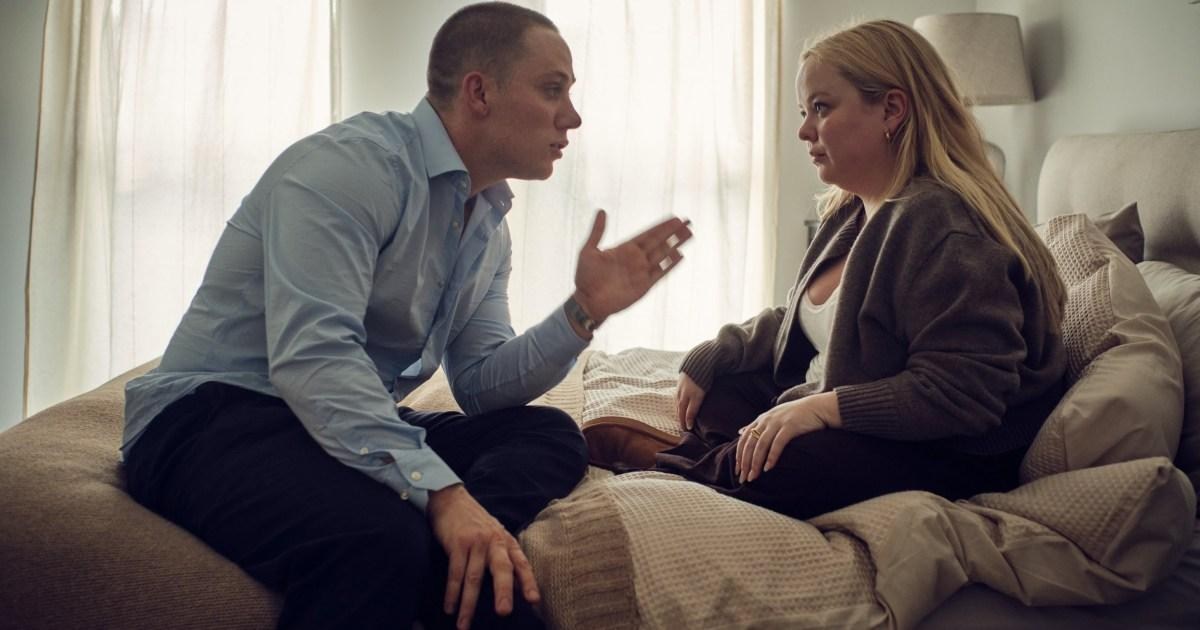
I Am Helen details an increasingly toxic relationship (Picture: Me and You Productions/Joss Barratt) New Channel 4 drama I Am Helen shines a spotlight on the ‘gut-punching’ effects of emotional abuse, as a seemingly loving relationship takes a dark turn. Starring Nicola Coughlan as Helen and Joe Cole as her partner Steve, it details how Steve’s growing obsession with misogynistic pornography and online manosphere content begins to seep into their relationship. With his behaviour becoming increasingly controlling and coercive, Helen is left questioning the relationship she’s built her life around – and trying to make sense of the person she’s fallen in love with. As the show highlights, emotional abuse can be insidious, with psychological techniques used to make you feel like it’s your fault or it’s not happening. But finding out more about abuse can help you get clarity on your situation and decide what to do if things have turned toxic. Here, experts share the key warning signs to look out for, signalling you may be in an emotionally abusive relationship. Your partner constantly criticises you ‘An abuser will point out everything they consider to be a mistake,’ Sam Nabil, licensed psychotherapist and creator of the Positive Existential Therapy (PET) method and Naya Clinics, tells Metro. ‘Even things that cannot be fixed as they are part of physical attributes of the partner. They are relentless and unthoughtful of the other person’s feelings in their criticism.’ An abusive partner may be be highly critical of your actions, personality or looks (Picture: Getty Images) Madeleine Gauffin, licensed psychologist and psychotherapist at digital healthcare platform Livi, continues: ‘Constant negative remarks about you or the things that you do can be really damaging to your mental health and make you feel that you’re never good enough. Ask Metro Use AI to go deeper into the stories you care about – powered by Metro and trusted publications. ‘Similarly, while arguments are common in relationships, the blame shouldn’t always be put on you, so watch for your partner repeatedly saying things are your fault.’ Your partner humiliates you in public ‘Another sign is your partner shaming you in front of other people, whether that’s family, friends or even members of the public,’ says Dr Rhianna McClymont, Livi lead GP. ‘Such humiliation is undermining and can destroy your self-esteem.’ Sam adds: ‘A common form is often using jokes or “subtle“ comments that make you feel embarrassed, and then claiming you are too sensitive. ‘Giving hurtful nicknames that instead of showing love bring you down is also a form of abuse (called your partner fat or pointing an insecurity of them out in public).’ You’re made the subject of cruel jokes Jokes are part of any normal relationship, but there is a line between playful and cruel — especially when this extreme form of teasing is part of a pattern. Madeleine says: ‘It’s not okay if you are constantly the butt of the jokes and they are hurtful or cruel. Your partner may tell you that you’re over-sensitive if you get upset, but that’s just another form of abuse.’ One joke that comes off wrong might be nothing to worry about, but being picked on an bullied under the guise of ‘joking’ is much more worrying. Your partner gaslights you ‘Gaslighting is where a person makes you doubt yourself – your memories, your judgement, your perception of things, for example,’ Madeleine explains. ‘Your partner might insist that you said or did something when you didn’t or deny saying things that you know they said.’ On a smaller scale this may include blaming you for things you’re sure they did but it can escalate to acts like hiding your things to highlight that you’re ‘going mad’ and can’t be trusted. Your partner denies any accusations of wrongdoing ‘If your partner keeps denying that they’re abusing you or downplays what is happening, that often means that the opposite is true,’ says Dr Rhianna. ‘They may try to justify their actions with excuses and even apologies, but nothing vindicates abuse.’ You’re isolated from friends and family ‘Emotional abuse is often about control and your partner will have more of it if they keep you away from your support network,’ says Madeleine. ‘They may try to isolate you from your family and friends, making you lose perspective and grow more dependent on your abuser.’ According to Sam, this is because ‘abusers tend to place their own emotional needs above the partner‘s,’ and ‘will try to come between the people who are supportive of their partner to make them more dependent on them.’ ‘They want to control everything they do,’ he continues. ‘Abusers often monitor their partner’s activities, including their phone, computer, and internet use and intent to limit their partners contact to other people.’ You’ve become codependent Codependence is another issue brought up by Sam, who defines it as ‘when everything you do is in reaction to your abuser’s behaviour.’ He explains: ‘One of the biggest signs of codependency is sacrificing for others while ignoring your own needs. You may feel unable to leave (Picture: Getty Images) ‘Another is that you’re afraid to leave the relationship, which could stem from a fear of failure. You may feel that you’re “abandoning” your partner and they won’t survive without you.’ There’s an important distinction between a relationship where you compliment and fulfil each other and a codependent one where you’re staying through fear or a sense of duty. Your partner controls your finances Financial abuse is a separate form of abuse, but often ties into emotional abuse and is part of a sustained effort for control. ‘Another form of abuse concerns money, with your partner restricting your finances or closely monitoring everything you buy,’ says Madeleine. ‘They might give you insufficient money to live, so that you are once again in their control.’ Your partner threatens you Types of abuse can often overlap, and the threat of physical harm may also be part of emotional abuse. ‘Sometimes abuse can be more explicit, in the form of verbal threats,’ says Dr Rhianna. ‘Your partner might threaten to hurt you physically, leave you or make you suffer in some way.’ Your partner damages your things Madeleine shares: ‘To punish you or simply to establish control, your partner may destroy your personal items or things that you care about. ‘They might also invade your personal space to make you feel uncomfortable in your own home.’ If they destroy items like your phone or computer, that may also be an effort to further isolate you by making it harder to contact others about what’s going on. You’re emotionally blackmailed Dr Rhianna warns that emotional blackmail can also be used by abusive partners in an effort to ‘get you to do things that you don’t want to do.’ ‘They might play on your fear, guilt or compassion to force you to do something, perhaps making you feel that you are indebted to them in some way,’ she adds. Sometimes it may feel like you’re the one to blame for all your problems, as Sam says: ‘Abusers will blame their partner for everything that goes wrong in their life, even when it is not within the partners control. The abuser may also blame the partner for their abusive behavior. ‘They want to create a clear hierarchy in which they’re at the top.’ What to do if you think you’re in an abusive relationship Dr Elena Touroni, consultant psychologist and co-founder of The Chelsea Psychology Clinic tells Metro: ‘If there has been any physical violence at all, leave the relationship as soon as possible. It often signals the start of a dangerous and damaging pattern. ‘If the relationship is emotionally abusive, it can leave equally damaging (invisible) scars so it’s important to take action too. Make sure you tell someone — whether it’s a friend, family member or even your GP.’ For anyone looking for specialist support to help them leave safely, charities like Refuge will be able to help. Madeleine says: ‘The first thing is to recognise that things aren’t right – emotional abuse is complex, and it can take a while for someone to realise what’s going on. ‘The longer the situation continues, the greater the risks to your mental and physical health, so you should really reach out to someone as soon as possible. If you’re in an abusive relationship and don’t know where to turn, you can talk to a doctor and they will be able to help. ‘During lockdown, partners are at home together a lot more, which can create more opportunities for abuse to occur. But don’t let the pandemic put you off if you need to escape the situation. The longer you stay, the worse it can get.’ A version of this article was first published on March 17, 2021. Arrow MORE: Inside Robert Pattinson and Suki Waterhouse’s ‘beautiful’ low-key relationship Arrow MORE: It’s 2026, and your dad’s mate can still have sex with you the minute you turn 16 Arrow MORE: From spontaneous erections to vaginal dryness: How celibacy impacts your body
11 signs you’re in an emotionally abusive relationship
Full Article
Original Source
Read the full article at Metro →KhanList aggregates and links to publicly available news content. We do not host full articles from third-party sources. Always verify important information with original sources.