
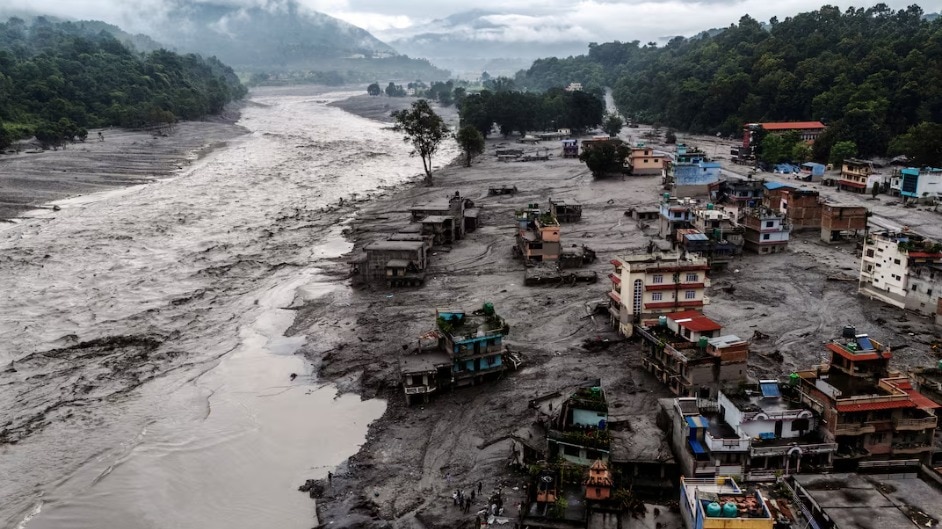
Nepal is battling the aftermath of catastrophic flash floods that have killed more than 1,000 people, left thousands missing and caused widespread destruction across the country.The disaster was triggered after a collapse or avalanche of ice and rock near the Nepal-Tibet border sent a massive surge of water down the Bhotekoshi River, sweeping through settlements and damaging roads, bridges and hydropower projects.Rescue operations are continuing on a massive scale, but intermittent rainfall and warnings of fresh floods have complicated efforts to reach affected areas.DEATH TOLL CROSSES 1,000, THOUSANDS MISSINGThe death toll has risen to 1,003 as security forces recover more bodies across eight affected districts. Chitwan has reported the highest toll at 321, followed by Nawalparasi East with 216 deaths.Around 4,000 people, including 583 foreign nationals, remain missing, raising fears that the toll could climb further. Nearly 12,000 people have been rescued so far. The Nepalese government has deployed more than 21,300 security personnel for search, rescue and relief operations.Helicopters are making repeated sorties to evacuate people stranded in inaccessible areas and deliver food and other essential supplies to communities cut off by the floods.FRESH FLOOD THREAT KEEPS NEPAL ON ALERTEven as rescue teams search for survivors, Nepal faces the threat of further flooding.Authorities have issued fresh warnings across parts of eastern, central and western Nepal amid intermittent rainfall and rising river levels.Rasuwa and Nuwakot are among the areas facing heightened risks, while alerts have been issued for several other districts.Energy Minister Biraj Bhakta Shrestha on Tuesday held discussions with officials from the energy and meteorology departments and other experts to assess weather conditions and possible flood risks in Rasuwa, Nuwakot and other affected areas.The government is now focusing on continuous river monitoring, improving early warning systems and speeding up measures to reduce the risk of another disaster.Authorities are also working to install monitoring cameras and satellite-based communication systems in vulnerable areas.The system will transmit information from remote locations to forecasting centres and feed it into Nepal's 24-hour flood warning service, allowing authorities to track river conditions and detect signs of flooding earlier.FLOODS WASH AWAY BRIDGES, DISRUPT KEY HIGHWAYSThe floods have caused extensive damage to Nepal's transport network, cutting off communities and disrupting movement between Kathmandu and other parts of the country.At least 19 motorable bridges have been washed away, while highways and arterial roads have been damaged or blocked.Sections of the highway at Krishnabhir in Dhading district were washed away, forcing authorities to introduce one-way traffic arrangements on the Prithvi and Tribhuvan highways.Traffic between Kathmandu and Hetauda has been diverted through different routes depending on the direction of travel and the size of vehicles.Smaller passenger vehicles travelling from Kathmandu to Hetauda have been directed through the Farping-Fakhel-Kulekhani-Bhimfedi route, while those travelling towards Kathmandu have been asked to take the Bhimfedi-Kulekhani-Sisneri-Dakshinkali route.Separate routes have been designated for larger passenger and cargo vehicles to ease congestion on the damaged road network.NEPAL-CHINA TRADE LINK TAKES A HITThe destruction has also affected Nepal's key overland trade connection with China through the Rasuwagadhi border crossing.Damage to roads and bridges in the northern districts has disrupted movement along the route, which is an important gateway for trade between the two countries.Hydropower projects and other infrastructure along affected river systems have also suffered damage, adding to the economic cost of the floods.NEPAL RAISES CLIMATE COMPENSATION QUESTIONThe scale of the catastrophe has also renewed Nepal's push for greater climate compensation from the world's major greenhouse-gas emitters.Kathmandu argues that Nepal contributes only a tiny share of global emissions but is disproportionately exposed to the consequences of rising temperatures.The Himalayan country is particularly vulnerable to glacier and snow melt, glacial lake outburst floods, landslides, avalanches and extreme rainfall.The latest disaster has strengthened calls for wealthier and high-emitting countries to provide greater financial support to vulnerable nations for climate adaptation, disaster preparedness and reconstruction.FAKE, RECYCLED AND AI VIDEOS FLOOD SOCIAL MEDIAAs Nepal battles the disaster on the ground, authorities are also dealing with a flood of misinformation online.Fake, recycled and AI-generated videos and photographs claiming to show the devastation have circulated widely on social media.Nepal's Press Council has received 101 complaints over online content and directed 72 users to remove material found to be misleading, inappropriate or excessively graphic.Authorities have urged people to rely on verified sources for information as rescue and relief operations continue.INDIA STEPS UP VIGIL ALONG NEPAL BORDERThe disaster has also brought renewed attention to India's long and largely open border with Nepal.India's Sashastra Seema Bal has been asked to strengthen engagement with communities along the unfenced Nepal and Bhutan borders and improve local intelligence networks.The government is working on a four-pillar border-security system bringing together central border forces, state authorities, law-enforcement agencies and local communities.The aim is to improve coordination and information gathering along sensitive stretches of the border, particularly during emergencies that can trigger large-scale displacement and disrupt normal movement across the frontier.- EndsPublished By: Aprameya RaoPublished On: Sep 1, 2026 17:11 IST
1,003 bodies recovered in Nepal floods; 4,000 still missing as rescue ops continue
Full Article
Original Source
Read the full article at Indiatoday →KhanList aggregates and links to publicly available news content. We do not host full articles from third-party sources. Always verify important information with original sources.