
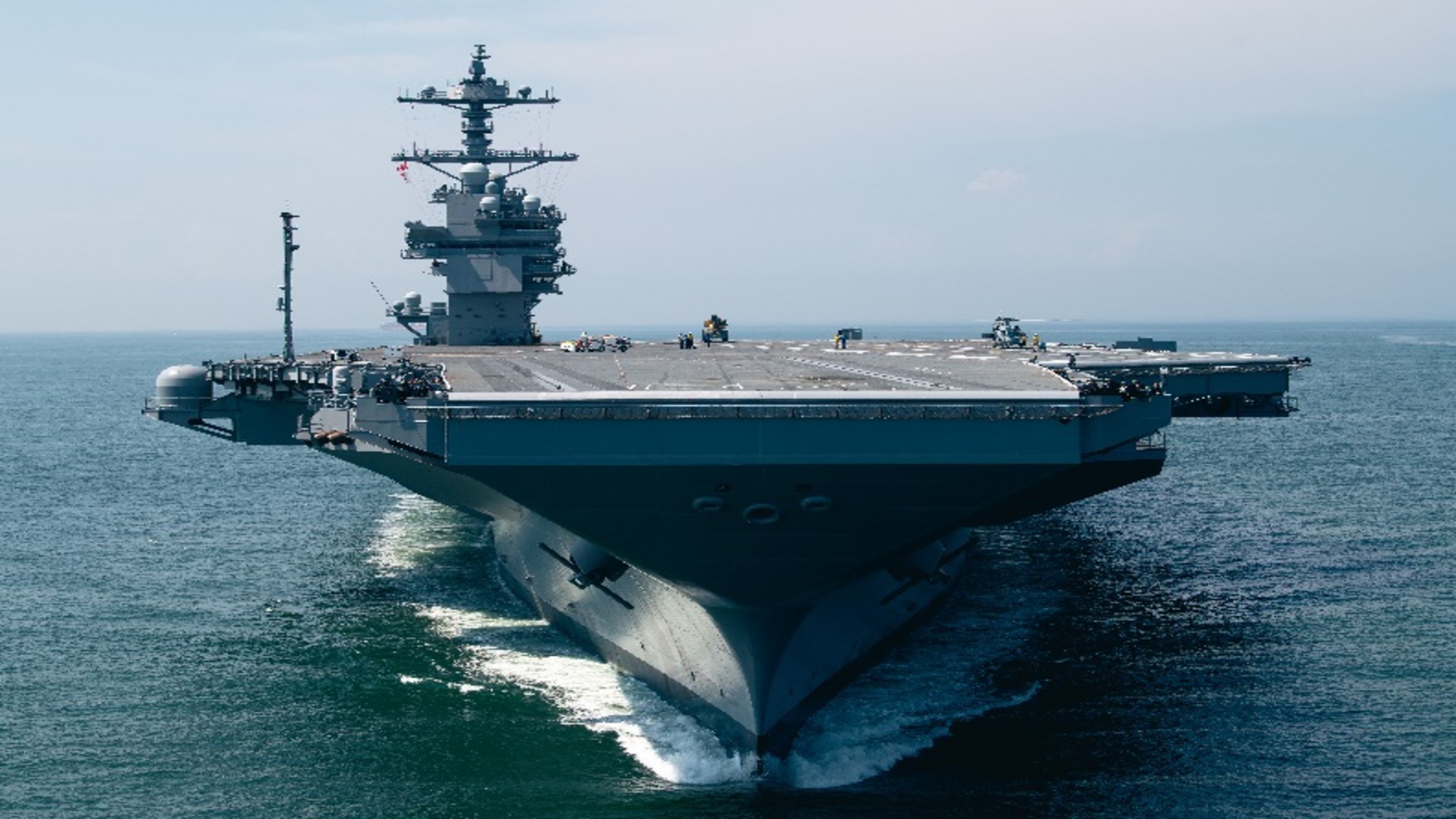
The Newport News Shipbuilding (NNS) division has successfully completed acceptance sea trials of the highly anticipated John F. Kennedy (CVN 79), the second Gerald R. Ford-class nuclear-powered aircraft carrier, with a total displacement of 100,000 tons. HII, America’s largest shipbuilder, delivers the world’s most powerful ships and all-domain mission technologies to U.S. and allied defense customers. Boasting a 140-year history and a workforce of 45,000, the Newport News division is one arm of the company that produces the most unmanned underwater vehicles for the U.S. Navy and the world. Earlier this year, NNS put the Kennedy to the test when it underwent builder’s sea trials. The NNS vice president of new construction aircraft carrier programs, Derek Murphy, called the “set of sea trials” “critical” for evaluating how well a vessel moves, steers, and works. Shipbuilders and buyers use this phase to ensure the ship is safe and ready for use. “It is an honor to take Kennedy to sea to demonstrate the quality work and commitment by our shipbuilders,” said Derek Murphy, NNS vice president of new construction aircraft carrier programs. “This critical set of sea trials is a testament to the entire nuclear shipbuilding enterprise and the work of thousands across our country to prepare CVN 79 to join the fleet.” The USS John Kennedy almost ready Christened in December 2019, CVN 79, or the USS John F. Kennedy, is the second Gerald R. Ford-class nuclear-powered supercarrier currently being built for the United States Navy. Measuring 1,106 feet—over three football fields in length—the Kennedy is one of the largest warships ever constructed. The advanced warship features next-generation technologies such as electromagnetic systems and dual nuclear reactors, with delivery anticipated in 2027. It integrates cutting-edge radar systems such as the Enterprise Air Surveillance Radar and upgraded weapons elevators designed to increase daily sortie rates. The total program investment exceeds $13 billion. It represents a leap in naval architecture, designed to launch aircraft faster with EMALS (set to replace traditional steam catapults), operate with fewer crew members, and support future laser weapons. The USS Nimitz is set to retire Accomplishing the sea trials was a joint effort. They brought NNS shipbuilders, USS John F. Kennedy sailors, and Navy personnel together to execute the testing and evaluation of ship operations. CVN 79 continues “the legacy of highly capable nuclear-powered aircraft carrier platforms,” according to a news release. With the successful completion of acceptance trials, the next step is preliminary acceptance, which will enable it to undergo Navy testing. The Navy will now evaluate the Kennedy’s unique systems. Major upgrades include electromagnetic systems, such as arresting gear to catch landing aircraft safely and smoothly (replacing old hydraulic recovery systems) and electromagnetic linear motors rather than cables to move munitions. The delivery of CVN-79 is crucial for U.S. global defense. As the Navy prepares to retire the USS Nimitz, the arrival of CVN 79 will address this gap and update the Navy’s fleet with modern technologies needed to meet a rapidly evolving world. Get the latest in engineering, tech, space & science - delivered daily to your inbox.Originally from LA, Maria Mocerino has been published in Business Insider, The Irish Examiner, The Rogue Mag, Chacruna Institute for Psychedelic Plant Medicines, and now Interesting Engineering.
100,000-ton nuclear-powered aircraft carrier of US Navy passes acceptance sea trials
Full Article
Original Source
Read the full article at Interestingengineering →KhanList aggregates and links to publicly available news content. We do not host full articles from third-party sources. Always verify important information with original sources.