
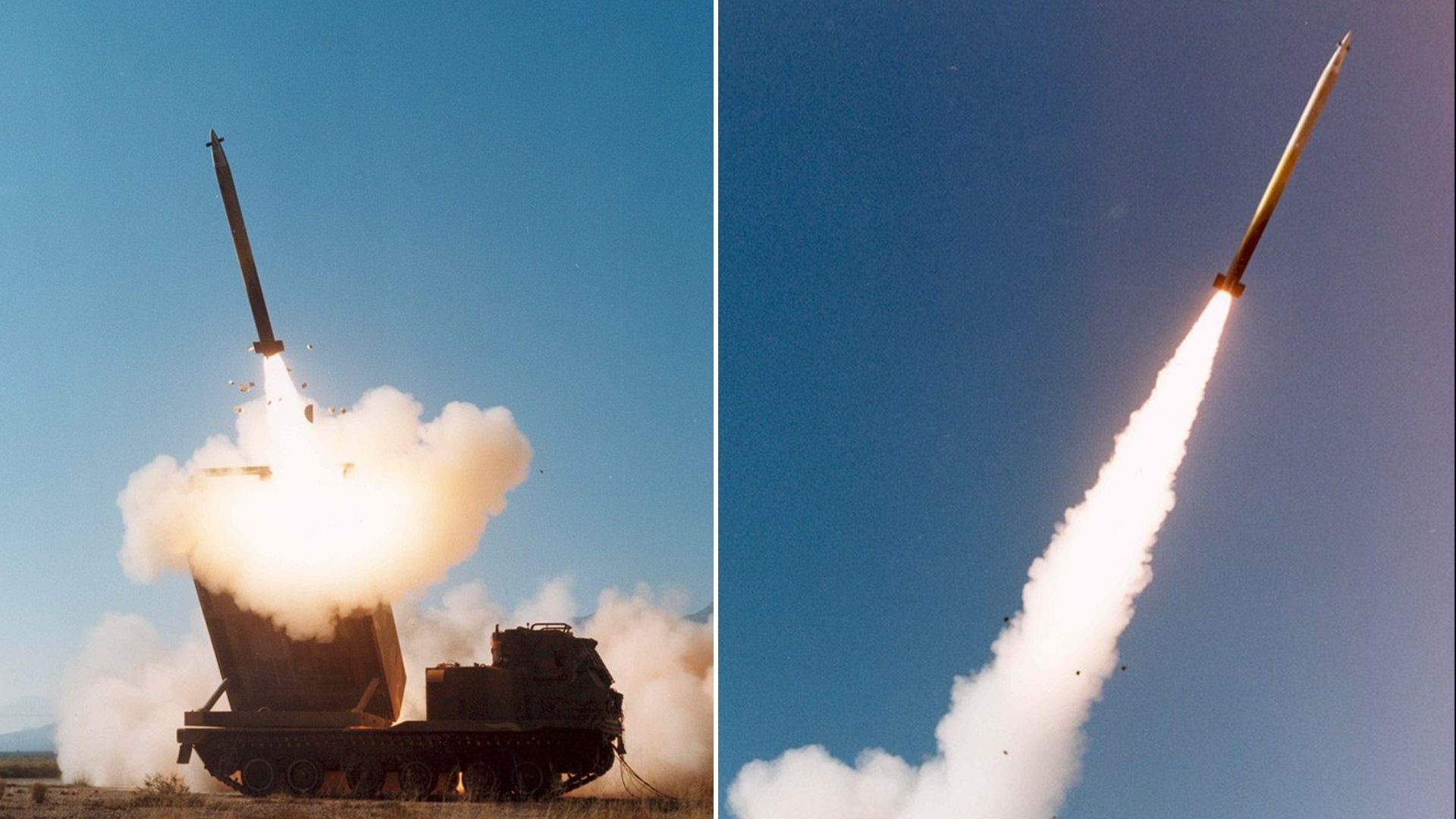
Lockheed Martin has delivered its 100,000th Guided Multiple Launch Rocket System (GMLRS) rocket and reached an annual production rate of nearly 14,000 rounds ahead of schedule, as the US defense industry works to expand precision-guided munitions supplies. The company announced the milestones on November 10 at its manufacturing facility in Camden, Arkansas. It also confirmed that a new solid rocket motor developed with General Dynamics Ordnance and Tactical Systems (GDOTS) had completed its first test, advancing efforts to establish an additional domestic source for a key GMLRS component. Lockheed Martin said the new motor will undergo further testing, with qualification targeted for 2027. If successful, it would provide a third domestic source for the propulsion component and add flexibility to the program’s supply chain. The developments come as the US military and allied forces seek to replenish ammunition stocks and increase access to precision fires. GMLRS rockets are used by the M270 Multiple Launch Rocket System and the M142 High Mobility Artillery Rocket System (HIMARS), both of which are operated by the US and international customers. Production boost of precision rockets GMLRS is a GPS-aided, inertial-guided surface-to-surface rocket designed to strike targets at extended ranges. Its standard variants have a range exceeding 70 kilometers (43 miles) and use either a unitary warhead for point targets or an alternative warhead designed to engage area targets. The rockets are carried in launch pods, with six rounds in a HIMARS pod and 12 across the two pods carried by an M270 launcher. The system’s compatibility with both platforms allows armies to use the same ammunition across different mobile artillery systems. Lockheed Martin is also developing the Extended-Range GMLRS, which is designed to reach approximately 150 kilometers (93 miles). The extended-range variant uses a larger motor and an updated control system while retaining compatibility with HIMARS and M270 launchers. In October 2026, the company said the variant had advanced toward production and fielding after completing soldier-led operational tests. The latest production milestone reflects the scale of the manufacturing effort behind the weapon. Lockheed Martin said the GMLRS program involves more than 200 suppliers across 35 US states, including more than 50 small businesses. More than 200 employees support GMLRS production at the Camden facility. The company said it is increasing the site’s overall workforce by 50 percent to support several munitions programs, including the Patriot Advanced Capability-3 Missile Segment Enhancement (PAC-3 MSE) and Precision Strike Missile (PrSM). New source of solid rocket motor The collaboration with GDOTS is intended to address another part of the production challenge: securing a reliable supply of rocket motors. GDOTS already supplies GMLRS components, including warheads, rocket motor cases, and launch pod containers. The newly tested motor represents an additional step in its work with Lockheed Martin to expand domestic solid rocket motor manufacturing. The first test does not mean the motor is ready for use in delivered rockets. Further testing and qualification remain necessary, with 2027 set as the target for that process. Lockheed Martin has not disclosed the test results, the planned production capacity of the new motor line, or how much additional annual output it could support once qualified. The company marked the milestones with a ceremony in Camden, where it is also investing in workforce development. Its initiatives include supporting an industrial automation and robotics laboratory at the new Defense Manufacturing Center of Excellence at Southern Arkansas University Tech. Lockheed Martin said more than 40 graduating high school students joined its manufacturing workforce this year. Together, the 100,000th delivery, higher annual output, and additional motor testing point to an effort to expand not just final rocket assembly but also the industrial supply chain behind one of the US military’s most widely used precision artillery weapons. Get the latest in engineering, tech, space & science - delivered daily to your inbox.Kaif Shaikh is a journalist and writer passionate about turning complex information into clear, impactful stories. His writing covers technology, sustainability, geopolitics, and occasionally fiction. A graduate in Journalism and Mass Communication, his work has appeared in the Times of India and beyond. After a near-fatal experience, Kaif began seeing both stories and silences differently. Outside work, he juggles far too many projects and passions, but always makes time to read, reflect, and hold onto the thread of wonder.
100,000 rockets delivered: Lockheed boosts guided rocket output to nearly 14,000 a year
Full Article
Original Source
Read the full article at Interestingengineering →KhanList aggregates and links to publicly available news content. We do not host full articles from third-party sources. Always verify important information with original sources.