
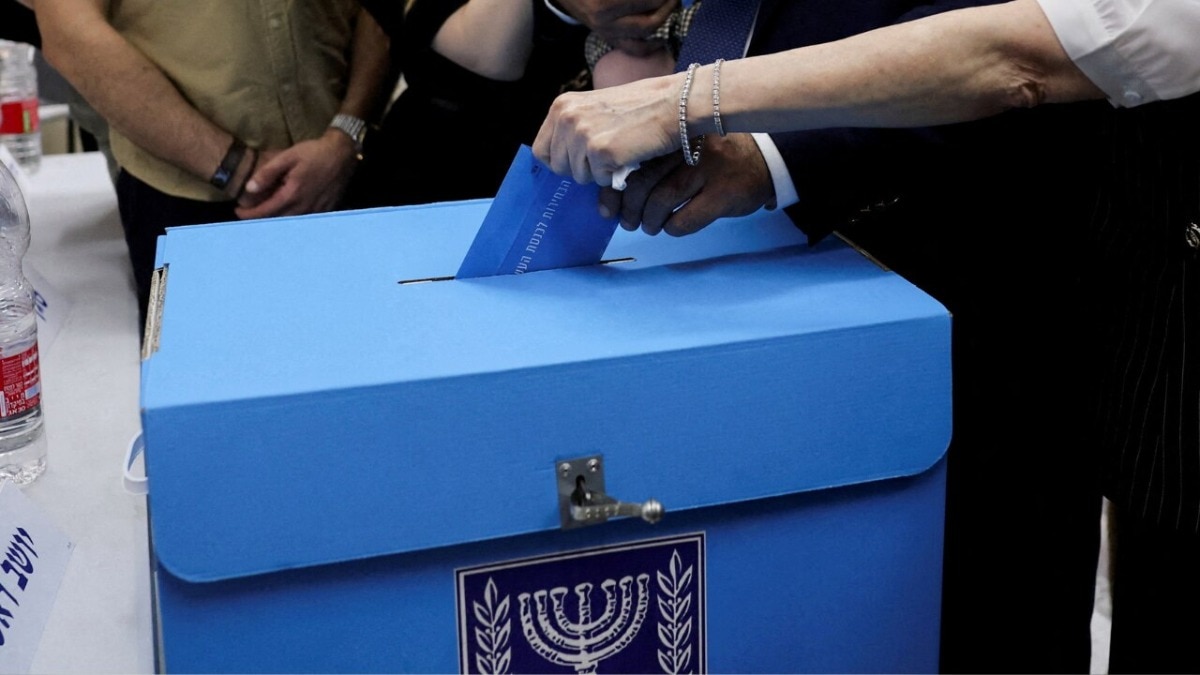
Israel has completed counting votes in its October 27 parliamentary election, but the results leave Prime Minister Benjamin Netanyahu's bloc short of a majority in the 120-member Knesset. With all votes counted, Netanyahu's bloc secured 53 seats, compared with 48 for the opposition and 19 for Arab parties, Israeli media reported on Thursday.The outcome leaves no political bloc with the 61 seats needed for a parliamentary majority, setting the stage for potentially difficult coalition negotiations. Netanyahu's Likud emerged as the largest party, winning 27 seats, but its position does not guarantee that he can form the next government.LIKUD EMERGES AS LARGEST PARTYThe final count followed the counting of special ballots, known as double-envelope votes, by Israel's Central Elections Committee. These ballots include votes cast by soldiers, prisoners, diplomats stationed abroad and hospitalised voters who could not vote at their regular polling stations.Among other parties, Gadi Eisenkot's Yashar won 21 seats, while B'Yachad secured 12 and the Joint List took 11. The Democrats and Ra'am won eight seats each. United Torah Judaism, Yisrael Beiteinu and Otzma Yehudit secured seven seats apiece, while Shas and Religious Zionism won six each. The committee said it had completed counting the special ballots but would release the final official results later. The distribution of seats among the main political blocs remained unchanged after the count.ELECTION ROW OVER ALLEGED FOREIGN INTERFERENCEThe vote has also triggered a political row over allegations of foreign interference and the high turnout among Arab citizens of Israel. Netanyahu's Likud party has claimed that Arab-led parties benefited from alleged vote-buying and illegal voter mobilisation, and described the election as having been "stolen".The Shin Bet, Israel's domestic security agency, is investigating suspicions that foreign funding, reportedly linked to Qatar and Turkey, was used to illegally influence Arab voter turnout. Separately, Israel Police's Lahav 433 unit is investigating suspected election bribery.The allegations remain unproven. Central Elections Committee chairman Noam Sohlberg asked the Shin Bet to investigate suspicions of improper foreign influence. However, the committee's acting director general said there was no basis for allegations of systematic violations of election integrity. Qatar has denied interfering in the election.The dispute has sharpened tensions over the role of Arab parties, which secured a combined 19 seats and could influence efforts to form a government. Opposition figures have warned against using unverified allegations to undermine the election result or Arab voters' participation.WHAT HAPPENS NEXT?The final seat tally leaves Netanyahu and his opponents facing a difficult path to forming a government. The opposition bloc also falls short of the 61 seats required for a majority, meaning any alternative government could depend on support or cooperation from Arab parties, which is a politically contentious prospect for several Jewish-led parties.Israel's president will oversee the process of selecting a lawmaker to attempt to form a coalition after the results are certified. If no viable coalition emerges, the country could face another election.- Ends
100% of votes counted in Israel polls, Netanyahu's bloc is short of majority
Full Article
Original Source
Read the full article at Indiatoday →KhanList aggregates and links to publicly available news content. We do not host full articles from third-party sources. Always verify important information with original sources.