
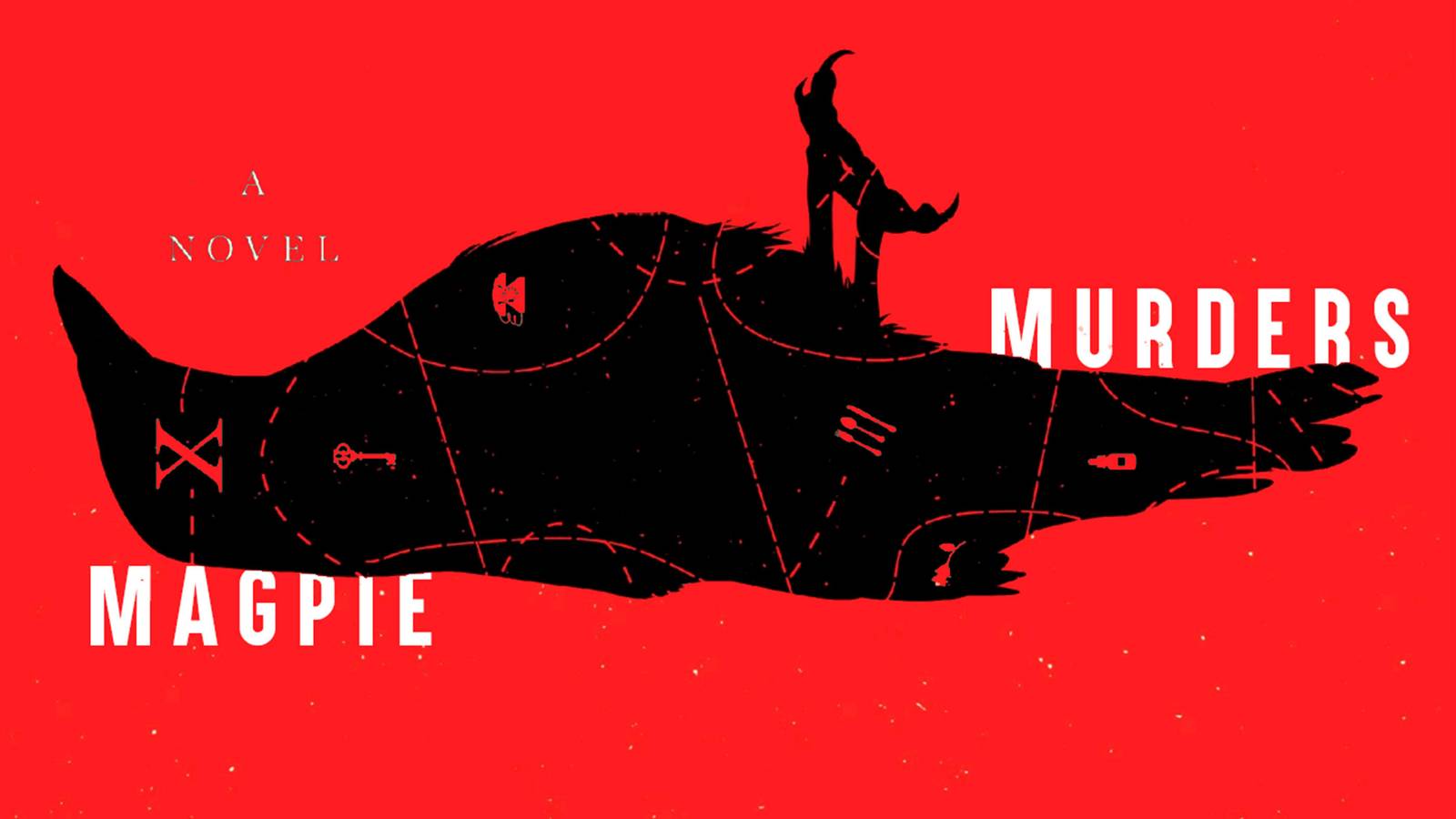
Published Sep 19, 2026, 8:02 AM EDT At any given moment, Scott Simone has at least three books jockeying for his attention. He’ll never turn down a campus novel with a literary bent, nor will he hesitate to add yet another mystery to his Leaning Tower of Pisa-inspired to-be-read pile — which is built upon the bedrocks of too many short story collections, how-are-these-real true crime books, and classics waiting to be cracked open again. Topics that have him ripping through pages the fastest include closed-circle murders, unhappy professors, life-questioning philosophical deep dives, so long as they feature sharp sentences, a dark sense of humor, and at least a little malice. He’s spent so much time in book shops over the years he is, to his wife’s chagrin, continuing to build a library that doesn’t quite respect the dimensions of the apartment meant to contain it. Your phone lights up on your nightstand, revealing the time: 12:48 a.m. You’d planned to sleep hours earlier, but you can’t. The sliding of one page over another is the only sound stabbing through the night’s silence. Adrenaline is pulsing in your ears. Just a few more pages, a recycled lie you tell yourself as you glance at the time. When you hit the end of the chapter, the airtight alibi that’s driven the last 50 pages is now singing with the wind. And you realize the writer has manipulated you once again to continue on. That’s the peculiar hold of a great whodunit. Clues seem to gleam like LEDs in a dark alley but then shown to be candles quickly snuffed out; layers of lies continue to pile, walling off any sense of truth. You become emotionally attached to characters despite their cheating and snooping, their bevy of bad decisions. But the best authors know when to loosen one thread and when to pull another; they know when to let an overlooked detail pop up again to send you down another 150-page rabbithole. ‘The Murder of Roger Ackroyd’ by Agatha Christie Image via William Collins, Sons Few characters lie quite like Agatha Christie’s characters. And The Murder of Roger Ackroyd is exhibit A of just how masterfully the matron Saint of mystery builds suspense from half truths and innuendo. The novel begins with Mrs. Ferrars dead. She’d been rumored to have killed her husband, and it’s discovered that someone had been blackmailing her over it. When Roger Ackroyd learns the blackmailer’s identity, he’s dead before he can do anything with the information. Then the true lying begins: Flora Ackroyd lies about seeing her uncle the night he died; Ursula Bourne hides her marriage to Ralph Paton, who’s the earliest of main suspects. All the while the housekeeper asks suspicious questions about cocaine. Each secret feels, for a few pages, to answer the main question. Then Christie adds another hidden truth to the mix that’ll keep you guessing a bit longer. So it’s no secret why the novel has such staying power: The Observer called it “breathless reading” in 1926, and in 2013 the Crime Writers’ Association voted it the best crime novel ever written. ‘Sharp Objects’ by Gillian Flynn Image via Crown HBO made the town of Wind Gap feel claustrophobic. Gillian Flynn’s novel makes it suffocating. Camille Preaker heads into her Missouri hometown to report on the murders of two young girls. While doing so, she sinks back under the family turmoil caused by her mother, Adora, and half sister, Amma — two people who can make a family dinner feel more threatening than a crime scene. The killings give the book its whodunit, but unease of never knowing which form of cruelty matters most is what gives each page so much pull. Camille’s reporting turns up town gossip and buried resentments. It’s a place in which compliments read as insults, where every kindness plays as suspicious. The town drowns in so much drama and ugly behavior that the murderer wades beneath it all. The novel nabbed both the Ian Fleming Steel Dagger and John Creasey New Blood Dagger in 2007; its 2018 HBO adaptation starring Amy Adams earned eight Emmy nominations, while Patricia Clarkson won a Golden Globe for playing Adora. Image via Harper ‘Magpie Murders’ by Anthony Horowitz Magpie Murders has the gall to end halfway through. Well, at least the book inside the book does. In the novel, editor Susan Ryeland is reading the latest manuscript from bestselling crime writer Alan Conway, starring his Poirot-like detective Atticus Pünd. But the final chapters vanish. There’s no solution; Ryeland is left with no big reveal, the literary equivalent of someone switching off the television five minutes before the killer is unmasked. Then Conway dies. Ryeland turns sleuth, creeping through Conway’s life. She learns that he’s peppered the manuscript with real people, exposed true grudges, and aimed cruelties at those around him. The missing pages stop being the mystery. What matters more is which details in Conway’s manuscript belong to fictional Atticus Pünd’s case, and which were smuggled in from Conway’s own life and how they may have led to such a dire conclusion. It’s the way each mystery bleeds into the other that makes Magpie Murders so hard to put down, and why The Washington Post called it “sleek, fun, cunning,” while TIME dubbed it “catnip for classic mystery lovers.” Image via George Newnes Ltd ‘The Hound of the Baskervilles’ by Arthur Conan Doyle Long before the hound appears, Dartmoor is a sinister place. And that’s not simply because Sir Charles Baskerville is found dead on the moor, terror fixed upon his face. Nor is it giant pawprints of a dog etched into the ground near the body, the discovery of which digs up an old family legend: that a demonic hound has stalked the Baskervilles through generations. It’s because Arthur Conan Doyle never lets up. He builds a dense fog over everything. He cues strange cries in the night after letting an escaped convict loose to roam about. Sherlock Holmes insists there’s a rational explanation for it all, but Doyle gives his readers no such confidence. He sends Watson to Baskerville Hall largely without Holmes. With the detective largely off stage, no clues come in bows and nothing is wrapped up quickly — or easily. Each distant figure is a menace, each unexplained sound a dog whistle for lingering trouble. Sure, Watson keeps gathering clues. But instead of the fog clearing, it only seems to get thicker as each one is uncovered. And that formula worked immediately: when the story began serialization in 1901, The Strand Magazine’s circulation jumped by around 30,000. More than a century later, The Hound of the Baskervilles is still considered Conan Doyle’s best Holmes novel. ‘The Man Who Died Twice’ by Richard Osman Image via Penguin Books Sad as it is, the topic of death isn’t particularly exciting at an old-folks home. That is, unless Richard Osman is writing it. The Man Who Died Twice, the sequel to his bestselling The Thursday Murder Club, starts with Elizabeth, Joyce, Ibrahim, and Ron back at Coopers Chase, proving the aforementioned notion true. Douglas, Elizabeth’s ex-husband, upends the humdrum when he resurrects with millions of stolen diamonds in tow. When he and his M15 handler are then shot dead, the club hits out on the hunt for the killer and the fortune. What makes the read unlike others is that Osman lets the mundane intrude on the murderous: Elizabeth can have someone threatening her one moment with Joyce worrying about cake the next. The danger inevitably continues creeping closer to Coopers Chase. But as it does so, finding the diamonds feels much less important than getting everyone home alive. And if you need more convincing, Netflix’s 2025 adaptation of the first book starred Helen Mirren, Pierce Brosnan, Ben Kingsley, and Celia Imrie; the sequel sold more than 100,000 copies in its first three days, making it one of Britain’s fastest-selling novels. ‘The Chestnut Man’ by Søren Sveistrup Image via Penguin Books Limited Kirkus called The Chestnut Man “un-put-down-able.”It’s also one of the most atmospheric novels in this genre, withSøren Sveistrup snatching the reader and dragging them through Copenhagen. You’re shoulder-to-shoulder with detectives Naia Thulin and Mark Hess walking the wet pavement as dark descends too early; your feet crunch the rotting leaves as they trounce through backyards; you hold the season’s chestnuts-turned-little-stick-figures in your hand. And then the mystery comes, as Sveistrup takes that innocent tradition and poisons it: One of those dolls appears beside the mutilated body of a woman. Detectives find a fingerprint on it which complicates the case further — it belongs to the missing daughter of a government minister. And she was presumed dead a year earlier. The novel is awash in the sinisterness of old cases, missing children, broken families, and people who’ve lied for years. The result is a twisted 500-plus-page thriller that somehow races, and which Netflix adapted into a series in 2021. ‘The Poet’ by Michael Connelly Image via Hachette Book Group At the outset, Denver homicide detective Sean McEvoy’s apparent suicide looks like a private tragedy — a cop overcome by grief after investigating a brutal case. But something doesn’t sit right with his twin brother, crime reporter Jack McEvoy: His suicide note is poetry. Literally, lines taken from Edgar Allan Poe. So Jack digs and he comes across a similar case: Another detective dead by his own hand, a suicide note compiled from Poe’s prose. A third case emerges, followed by a fourth. That’s when the poetic suicide notes start feeling more like a killer’s signature. At that point The Poet shifts form, a cross-country hunt emerging from a singular tragedy. McEvoy continues to do what reporters do — he calls strangers and digs through old stories, all the while bothering several police departments. But Michael Connelly, himself a former police reporter, is able to add a reality to those routine acts that gives them a tinge of danger, especially as the pattern widens and the FBI gets involved. The Los Angeles Times called the book “compulsively readable” and said Connelly “puts his foot on the gas and doesn’t let up.” ‘The Dry’ by Jane Harper The Dry starts with three bodies: Luke Hadler, his wife, and their young son are dead in what appears to be a murder-suicide. The incident brings federal agent Aaron Falk back to Kiewarra for the first time in 20 years. He plans to attend the funeral and leave, but Luke’s parents tap him to look into the deaths. Uncomfortable in its own right, sure. But it becomes increasingly so as there’s another body lurking in the town’s memory: that of Ellie Deacon, a teenage girl found dead years earlier. A death for which Aaron and Luke gave false alibis for one another. Adding to the combustibility is the fact Kiewarra has been stripped raw by drought, full of brittle paddocks, swarming flies, and simmering tempers. The two cases intertwine so tightly the line between Falk asking questions and being questioned fades away, almost completely. And Harper keeps increasing the pressure until it feels as if one wrong word might set the whole town ablaze. The Dry won the CWA Gold Dagger and Australian Indie Book of the Year, then became a film starring Eric Bana.
10 Whodunit Books That Are Page-Turners From Start to Finish
Full Article
Original Source
Read the full article at Collider →KhanList aggregates and links to publicly available news content. We do not host full articles from third-party sources. Always verify important information with original sources.