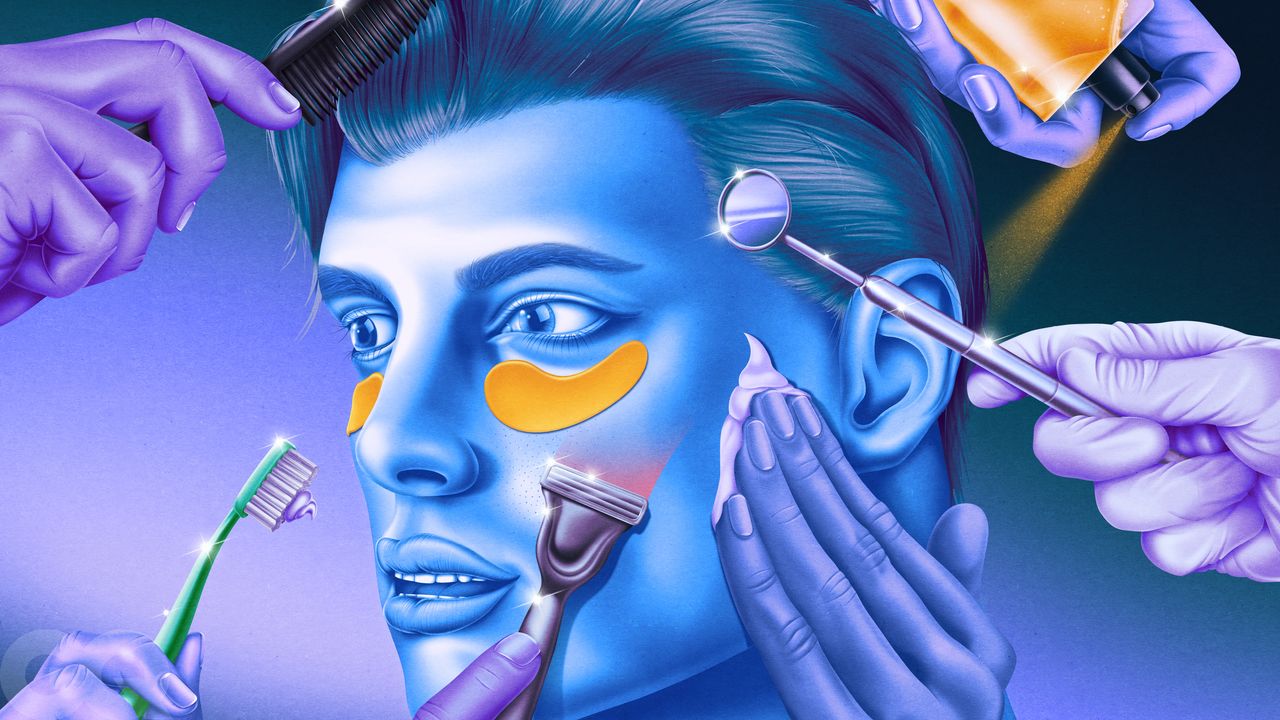
In a bid to boost your confidence and turn your inner glow to full beam, one writer has assembled a fellowship of experts to offer advice that actually works.Perfecting a grooming routine is like tailoring a suit: to see results, it takes one small alteration at a time. You have to hem the trousers, take in the waist, shorten the sleeves, let out the chest—the list goes on. None of these mean anything alone. Together, they make something elegant and personalized.None of us need every little product that the grooming marketplace has to offer. Instead, consider addressing what catches your eye in the mirror, in photos, or halfway through a long day. Those could be a shiny forehead, stubborn breath, lingering acne scars, thinning hair at the temples. Each is hardly anything on its own, but more difficult to ignore when taken together.And it takes a village. That’s why we consulted a dozen sages, from the worlds of dermatology, dentistry, hair restoration and more, to answer some of the most common questions in the realms of hair, skin, and hygiene.“My face is shiny by midday no matter which cleanser or moisturizer I use. How do I actually manage oily skin without drying it out?”Many men treat oil as if it’s the enemy, scrubbing it away with harsh cleansers or skipping moisturizer altogether. London plastic surgeon Dr. Yannis Alexandrides, founder of 111 Harley Street and luxe skincare label 111Skin, says this tactic can make things worse. “Shiny skin by midday usually means your skin is overproducing oil to compensate for dehydration or ineffective cleansing,” he explains.In other words, your skin might actually be thirsty, despite the excess oil. Aggressive cleansing can trigger more oil production, so Dr. Alexandrides urges you to be conservative: “The goal isn’t to strip the skin,” he says.When skin is properly hydrated and the pores are unobstructed, oil production tends to regulate itself. The shine fades not because you’ve stripped it away, but because your skin no longer needs to overcompensate.Alexandrides recommends salicylic acid–based products to dissolve excess sebum and keep pores clear. Specifically, a gentle cleanser can remove build-up without damaging the skin’s barrier, followed by a lightweight moisturiser that delivers hydration without heaviness.“I only want to shower once a day. Is it better to do that in the morning or at night—and why?”There is no universal “correct” time to shower. It comes down to what you do with your days and nights. New York–based cosmetic dermatologist Michele Green reminds us of the straightforward purpose of a shower: “It is essential to hygiene, as it removes dead skin cells, dirt, sweat, oil, pollutants and other impurities,” she says.From a skin-health perspective, a nighttime shower has a clear advantage. “Showering at night removes the impurities accumulated throughout the day and prevents them from being transferred to sheets and pillowcases,” she says. It can also reduce microbial growth while you sleep, since bacteria and yeast feed on skin oils.But she acknowledges the counterpoint. “Most people sweat at night,” she says, which makes a morning shower useful for rinsing away overnight build-up and starting the day fresh. For many men, the right answer depends on when they work out, commute, or sweat the most.What matters just as much is cleansing. Green recommends soothing ingredients such as hyaluronic acid, colloidal oat or aloe for dry or sensitive skin, and exfoliating acids such as glycolic or salicylic for oilier, acne-prone skin.“I want one fragrance that feels like me, and not like everyone else.”The idea of a single signature scent is romantic, but it can be limiting. You contain multitudes. Clayton Ilolahia, evaluation and communications manager at Fragrances of the World, suggests a more flexible approach: “Instead of buying a fragrance under the illusion that you are the only one who has purchased a bottle, build a library of scents to communicate your emotions and unique life experiences.”He recommends thinking in moods rather than labels. A bright citrus or fresh floral might suit moments when you want energy and clarity. Woody or soft musks can create a calmer, more grounded presence. Ambers and leathers often present as warmer and more confident.“We all express ourselves differently,” says Ilolahia, “and exploring our own unique ways of expressing how we feel through scent is part of the fun.”“I prefer a clean-shaven face, but I always get razor burn. What am I doing wrong?”Many guys blame razor burn on sensitive skin. But more often it’s because of poor shaving habits. Barber Miguel Gutierrez, founder of the Nomad Barber shops and grooming line, says most men just don’t know the right technique.For starters, don’t rush. “Prep is everything,” he says, especially for coarse facial hair. He notes that a quick splash of water isn’t enough: “You need warmth and hydration to soften the hair and open the pores.” Warm water softens stubble and helps the blade glide instead of dragging. Skipping that step means irritation is almost guaranteed.The second issue is direction. “The biggest mistake I see is shaving against the grain of hair growth,” particularly from the jawline down, says Gutierrez, adding that this area is especially vulnerable because “that’s where most in-growns and razor bumps tend to form.” Mapping your beard growth can make a noticeable difference. (That is, understand the direction your facial hair grows, which can change from one part of your face to the next.) Study first, and then shave in the same direction that your hairs tend to grow.Also, show restraint: “Aim for a comfortable shave rather than the closest shave possible,” he says. “Most men chase that baby-smooth finish and end up irritating their skin instead.”It’s worth noting that the skin usually improves as soon as your shaving technique does.“I’m constantly sweating—from my body and… er… crotch, especially at the office when I’m sitting down all day. Is there an easy way to fix this?”Many guys try to solve sweat with powders, looser underwear, or even by getting a different desk chair. New York dermatologist Dr. Robert Finney, founder of Soho Skin and Hair Restoration, says that these are cosmetic fixes at best. The actual issue is mechanical: “We need to block the sweat duct,” he says. “By far the most effective over the counter option is aluminium chloride 12%.”It’s important to use such products correctly, though: “They need to be applied when the area is dry,” he says. Start once or twice a week, then increase frequency until the sweating stops. After that, you can taper back down.Irritation can occur, so Dr. Finney suggests planning for it. “After the application is fully dry, apply a thicker moisturizing cream,” he says. “This will cushion and buffer the skin. Once you find your maintenance rhythm, you might only need an application every week or two.”“I’m in my 30s, and I’m still embarrassed by my teenage acne scars. Is there any way to make them go away once and for all?”Acne scars are not one single thing, which is why ‘miracle scar erasers’ keep letting you down. They’re also usually below the surface, so no cream can correct the problem. First, it’s important to understand the two most common types of acne scars, says London aesthetic doctor David Jack, founder of the Dr. David Jack clinic and skincare line. And remember, this is going to be a clinical-grade fix.Rolling scars are the shallow, wave-like depressions that come from fibrous bands pulling the skin downwards. Dr. Jack says they respond best to subcision (subcutaneous incisionless surgery), a technique that releases those bands beneath the surface. “Boxcar” scars, by contrast, are broader, more defined indentations caused by lost collagen. These may respond to resurfacing treatments such as fractional laser or medical microneedling, both of which stimulate collagen production.And here’s the slow-burn truth: “These approaches work gradually, over months, and usually as a course rather than a one-off session.” At home, a nightly retinoid cream can help support collagen turnover and gradually smooth texture, but the heavy lifting occurs in the treatment chair.Dr. Jack is also blunt about what to skip. “What is largely a waste of time and money are scar creams, harsh scrubs and endlessly rotating your products,” he says.“I’m nervous about hair loss, since it runs in my family. I don’t know if I have lost much yet, so is it too early to start treatments?”“While most men will experience some degree of hair thinning over their lifetime, it usually happens slowly. In your 20s, the goals are awareness and prevention,” says New York facial cosmetic surgeon Dr. Gary Linkov, founder of hair restoration practice Linkov Hair and the grooming line Feel Confident.Dr. Linkov’s first instruction is basic surveillance: “Take photos of your hairline, mid-scalp, and crown every few months and look for change over time.” That gives you a reference point, instead of relying on memory or bad bathroom lighting. Family history also matters, since the age and pattern of loss in close relatives often hints at what’s to come.If visible thinning does start, early treatment is more effective than waiting. “Treatments with the strongest evidence include topical minoxidil and prescription oral finasteride,” he says, both designed to slow or stabilize genetic hair loss. The former is available over the counter, the latter only by prescription (but you can get them pretty easily after an online consultation and an understanding of the risks involved).Dr. Linkov stresses that not every 20-year-old needs medication: “A consultation with a qualified hair specialist can help determine whether observation or treatment makes sense for you now.” It’s never too early or too late to make that visit, either.“I’m 35, and I want to look as young and fresh as possible for as long as I can. Where should I realistically focus my effort?”Plastic surgeon Dr. Michael J Stein, founder of the New York–based practice Stein Plastic Surgery, performs everything from injectables to neck liposuction on men in their 30s. (A neck lipo, for the curious, removes the fat that softens the jawline and blurs the transition between face and neck.) But let’s assume you’re not ready for extremes.Luckily, you can zero in on your skincare routine for some promising results. Stein recommends a simple cleanser, a nightly retinol to support collagen, and a day/night moisturizer to keep the skin barrier healthy. A daytime SPF will do wonders for long-term skin resilience, too.Procedures like Botox or neck liposuction can address deeper structural changes, but Stein says consistent skincare and weight management usually deliver the biggest visible improvements first. For most men in their 30s, the daily routine matters more than the operating room.“My hair never looks quite right no matter what I use. How do you actually choose the right styling product for your hair type?”Too many men shop for the look they want, instead of embracing the hair they actually have, says LA-based celebrity groomer Aika Flores, whose client roster includes Hudson Williams, Nick Jonas, and Josh Hutcherson. “They’re just using the wrong product for how their hair actually behaves,” she says. (The same can be said of the photograph of a haircut they take to the barber; does that cut match the client’s actual hair type and face shape? Not often.)Flores’ first filter is texture and density. Fine hair cannot carry heavy clays or pomades without collapsing. “You’ll feel greasy, flat, and annoyed by noon,” she says. A lightweight gel, mousse or thickening spray works better. Thicker or wavier hair, on the other hand, usually needs creams or oils that smooth and define, with leave-in conditioners acting as overnight hair-tamers. “Styling products are there to enhance what you already have, not fight it into submission.”The second issue is technique. “Most men use too much and apply it to bone-dry hair,” says Flores. Start with a pea-to-5p-sized amount and work product into slightly damp strands so it spreads evenly.“I brush twice a day, and floss before bed too. But I still get really bad breath during the day. Is there a better way to prevent this?”“If bad breath keeps coming back despite good brushing and flossing, it’s often a sign that the issue isn’t just about how well you clean,” says dentist Dr. Miguel Stanley, founder and clinical director of the White Clinic in Lisbon, Portugal. In many cases, the cause could be something that healthy hygiene can’t address.That’s why Dr. Stanley recommends a comprehensive dental assessment instead of more aggressive brushing. “Ideally, go to a dentist that uses modern diagnostic tools like 3D imaging,” he says, since these can reveal “hidden infections, decay, or sinus-related issues that routine brushing won’t fix.” This assessment goes far beyond polishing teeth, he explains, because it removes bacterial build-up below the gum line and on the tongue. Once those are ruled out, a deep professional cleaning can reset oral hygiene.From there, look at the bigger picture. “Testing saliva for early signs of gum inflammation or imbalance in the oral microbiome can help detect problems before they become serious,” he says, adding that hydration, oral-friendly pre- and probiotics, and avoiding alcohol-heavy mouthwashes can all support healthier breath in the long term.“I have an oily scalp and still get dandruff. I thought you only got it if you have a dry scalp. What can I do to prevent itching and flaking?”Sorry, dandruff is not limited to dry scalps. In many cases, excess oil actually feeds the irritation. London-and Lisbon-based trichologist Ricardo Vila Nova, founder of the namesake clinic, says the problem is usually imbalance. “Excess oil can actually worsen inflammation rather than prevent it,” he says.That is why Vila Nova treats oil and flakes together, instead of trying to dry the scalp out. His routine is straightforward: shampoo daily or every other day, keep the scalp gently exfoliated with massage or a light scalp serum, and use targeted antimicrobial anti-flaking formulas when flare-ups appear.He also warns that many men misdiagnose the problem. “Oily dandruff is frequently mistaken for seborrheic dermatitis,” he says, which is a chronic, inflammatory skin condition that needs a more specific treatment plan.If flakes keep coming back, the smartest move is not switching shampoos every week. Instead, get a proper diagnosis from a doctor or trichologist, and stick to a gentle care routine in order to restore balance.“I’m thinking of having my teeth professionally whitened, but I want to maintain the results for as long as possible. Is there any kind of at-home whitening you could recommend for touch-ups?”Professional whitening can give you the best, brightest results, but something else determines how long those results last: your own habits when it comes to your teeth.Los Angeles cosmetic dentist Dr. Jon Marashi says the biggest mistake he sees is treating whitening as a one-time fix, or assuming you’re set as soon as you finish a box of strips. “Teeth naturally pick up stains again, so what you do afterwards matters more,” he says.His recommended routine is relatively simple: brush twice daily with a non-abrasive whitening toothpaste, floss every day, and rinse with water after staining foods or drinks when possible. Coffee, red wine and sauces are part of life, but letting them sit on your teeth is what deepens the stains. “Small habits go a long way in slowing down discoloration,” he says.When teeth start to look dull again, he recommends occasional at-home touch-ups instead of regular whitening. “Think of a refresh every few months, not constant use,” he says, whether that means a short round of strips or a gentle whitening pen. If sensitivity creeps in, that is your cue to back off and let your enamel recover.A version of this story originally appeared in the April/May 2026 issue of British GQ with the title “The GQ Global Grooming Taskforce Will Save Us All”Illustrations by Sam TomsonNot a subscriber? Join GQ to receive full access to GQ.com.Adam Hurly has been covering men's grooming for GQ for over a decade. He is also a travel writer and founder of Blue Print, his personal grooming platform. Adam currently resides in Lisbon, Portugal and is from Sioux Falls, South Dakota and a University of Kansas graduate. ... Read More
10 Ways to Look Hotter, According to Grooming Experts
Full Article
Original Source
Read the full article at Gq →KhanList aggregates and links to publicly available news content. We do not host full articles from third-party sources. Always verify important information with original sources.