
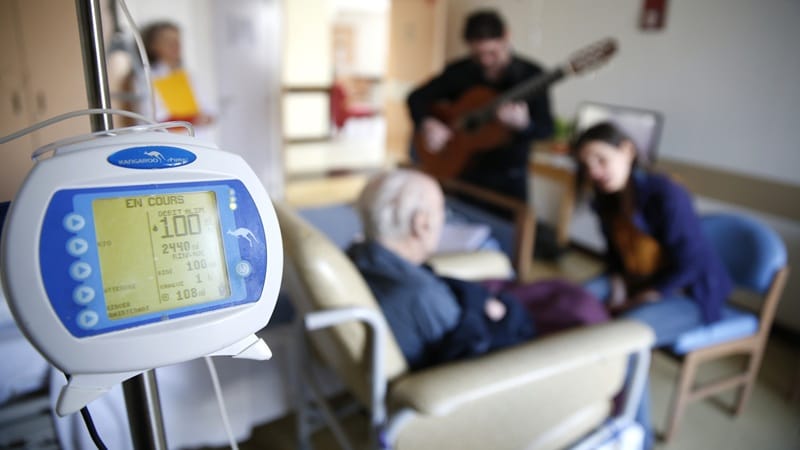
dt-260828-music-therapy-800x450.jpgPascal Deloche | DreamstimeMusic can serve a dual purpose in clinical care: It can help raise blood pressure in some settings and ease patient anxiety before procedures such as catheterization. Its effects are broad, engaging the brain’s reward circuitry, auditory cortex, hippocampus, and motor regions at the same time. That wide reach is why music therapy is being studied across a range of conditions, from Parkinson’s disease and cancer to poststroke aphasia and major depression, depending on how it is delivered, the setting, and the intended clinical goal.Music therapy has been included in Brazil’s Unified Health System, a publicly funded healthcare system that provides free, universal medical care to citizens and residents, since 2017, and it was formally recognized as a profession in 2024. Practitioners evaluate patients, take a musical history, define treatment goals, and document care much like other members of the clinical team.Even just listening to music appears to have measurable benefits. In one study of patients with anxiety undergoing surgery, about 1 in 4 who listened to perioperative music had a clinically meaningful reduction in anxiety.DT-260828-brain-shaped-800x450.jpgEmilyprofamily | DreamstimeThe MechanismMusical pleasure is not a one-time response. Anticipating a familiar passage triggers dopamine release in the caudate nucleus, while the passage itself activates dopamine release in the nucleus accumbens. These represent two distinct peaks in two separate circuits, helping explain why the buildup to a melody can be rewarding in its own right. Neuroimaging studies have linked these peaks to moments of goosebumps while listening, a measurable physiologic response that can be reproduced in the lab.Rhythm appears to work through a different mechanism. When the brain encounters a regular beat, its neural oscillations begin to sync with the external rhythm, and the body adjusts its movements without conscious effort. This process, known as entrainment, is not limited to motor function; it also reflects synchronization across broader neural networks with the rhythmic input received through the auditory system. In group sessions, music interventions have been associated with release of oxytocin and lower cortisol levels, with measurable effects on the body’s stress response.Musical memory may be the most resistant form of memory to neurodegeneration, in part because it relies on networks distributed across both hemispheres of the brain. Songs with personal meaning activate the hippocampus more strongly than songs that are merely familiar. Even subtle changes in volume and tempo during performance are processed much like prosody in speech — it is not simply what is played but how it is played. That sensitivity to expressive cues helps explain why musical responses are so individual and context dependent and why music can have clinical applications as complex as helping to retrain gait in people who have lost their internal sense of rhythm.Below, see what science reveals about the effects of music in 10 areas of medicine.DT-260828-elderly-woman-800x450.jpgOcskay Mark | DreamstimeParkinson’s DiseasePatients with Parkinson’s disease take shorter steps, lose speed, and freeze when trying to walk through a doorway, with the sensation that their feet are stuck to the floor. Medications that replenish dopamine alleviate some of the symptoms, but certain aspects of gait respond less to pharmacologic treatment.Rhythmic auditory stimulation addresses this gap. A regular auditory pulse, delivered through headphones or a wearable device, provides the timing cue that the basal ganglia have ceased to produce. As a result, the brain engages the cerebellum via a pathway that bypasses the circuits compromised by the disease, and the gait reorganizes itself around the external rhythm.A clinical trial published in 2025 in npj Parkinson’s Disease tested a system that tracked participants’ strides and made real-time adjustments to the music they listened to while walking outdoors. The study included 21 participants in the intervention group and 20 in the comparison group who walked without rhythmic cues. Those who used the device walked farther, with greater intensity and with a more regular gait. Gait regularity is clinically significant because it is associated with a lower risk for falls. The observed improvements were reversed after the device was removed.A recent meta-analysis published in Brain Sciences pooled 11 trials of wearable devices and found improvements in walking speed (standardized mean difference [SMD], 0.49) and balance (SMD, 0.40). Although the technique has been used in rehabilitation for decades, newer studies are now examining how it can be applied beyond the lab and into patients’ everyday lives.DT-260828-listening-music-800x450.jpgRido | DreamstimeStroke and AphasiaAfter a stroke, a person may lose the ability to speak yet still be able to sing. The aftereffects may prevent the patient from asking for a glass of water but allow them to follow along with the entire lyrics of an old song. The most widely accepted explanation involves the distribution of musical processing across networks in both cerebral hemispheres, which allows for the recruitment of areas spared by the lesion.This observation gave rise to melodic intonation therapy, in which the patient learns to produce phrases by intoning syllables and marking the rhythm with their hand. The melody is gradually removed until the patient regains speech. The technique has been used in speech-language pathology rehabilitation for decades and has spawned its own line of research.A systematic review published in 2025 in Annals of the New York Academy of Sciences compiled 10 randomized trials on these techniques. This approach led to improvements in word repetition and word naming, even compared with conventional speech-language pathology. However, the evidence base was limited by study quality: None of the 10 trials was rated as low risk of bias using the JBI critical appraisal tool, a standardized framework used to assess the methodological quality and potential for bias in clinical studies. Six trials were classified as having moderate risk and four as having high risk.Another caveat accompanies these results. The studies primarily evaluated controlled tasks, such as repeating words dictated by the therapist and naming objects presented on cards. Spontaneous communication, which is what restores the patient’s autonomy in daily life, was assessed in only two of the 10 trials. Precisely the outcome that matters most clinically is the one that the literature has yet to measure adequately.DT-260828-making-music-800x450.jpgArne9001 | DreamstimeDementia and SleepApathy, agitation, and depressive symptoms associated with dementia respond poorly to available medications. It was because of this gap that long-term care facilities began offering music therapy, and clinical research followed suit.Music truly helps in the context of healthy aging. A randomized clinical trial published in May in The Journals of Gerontology: Series B followed 62 older adults without cognitive impairment over 20 weeks of music therapy in three formats. All groups that underwent music therapy showed an improvement in cognitive measures and a reduction in depressive symptoms; the group without intervention showed deterioration on some of the tests. However, the study is small and has not yet been replicated.In the context of dementia, a 2025 Cochrane review pooled 30 studies including 1720 participants. Compared with conventional interventions, music therapy was associated with a reduction in depressive symptoms, with moderate certainty of evidence. The effect on agitation, however, was essentially null, with a mean difference of -0.05. Compared with other activities commonly offered in care settings, such as games and crafts, music therapy was linked to differences in social behavior, although the certainty of that evidence was low. The authors were clear that there is no evidence the benefits persist once the sessions end.Regarding sleep, a meta-analysis published in 2025 in PLoS One found, in randomized trials of music therapy, a reduction in insomnia symptoms among older adults (SMD, -0.59; 95% CI, -1.11 to -0.07), with a very low Grading of Recommendations Assessment, Development, and Evaluation (GRADE) rating and a prediction interval that crosses zero. Thus, the result is a promising sign, not a definitive conclusion.DT-260828-young-woman-800x450.jpgYessenia Granda | DreamstimeDepressive Disorder, Anxiety, and Posttraumatic Stress DisorderNot all patients with depressive disorder respond to treatment with antidepressants and psychotherapy. Music therapy is among the most studied complementary interventions in mental health.A review published in September 2025 in BJPsych Open analyzed 26 randomized trials involving patients with depressive disorder. Symptom reduction was consistent across different session formats, with an SMD of -0.97 (95% CI, -1.23 to -0.71). However, the authors themselves classify the evidence as very low quality and issue a weak recommendation, acknowledging that a benefit is evident but that the studies have serious methodological limitations.For anxiety, researchers from Australian and Dutch institutions compiled 51 clinical trials conducted exclusively by licensed music therapists and published the review in June 2025 in eClinicalMedicine. The effect on anxiety as reported by the patients themselves was of moderate magnitude, with a more solid methodological foundation than most studies in the field.For posttraumatic stress disorder, a meta-analysis published in European Journal of Psychotraumatology included nine trials with 527 patients, all of which had a high risk of bias. Compared to inactive controls, music therapy reduced symptoms with a substantial effect (SMD, -1.64). Compared to active psychotherapy, the difference was not statistically significant (SMD, -0.28; P =.330), suggesting that music therapy is comparable to established approaches but not superior to them.dt-260828-music-therapy-france-800x450.jpgPascal Deloche | DreamstimePain and Anxiety During ProceduresPatients who arrive anxious for surgery report more pain postoperatively and request more analgesics. This relationship had already been documented when researchers began testing whether music — provided before, during, and after the procedure — could break this cycle.A meta-analysis recently published in Anesthesia & Analgesiapooled 20 clinical trials involving 2242 patients and found that for every four patients who listened to music during the perioperative period, one experienced a clinically meaningful reduction in anxiety. All of the included studies used recorded music, without a music therapist present. The authors also detected evidence of publication bias with the Egger test, which may have inflated the observed benefit.A trial published in 2024 in Journal of Clinical Medicine detailed the profile of patients who are likely to benefit most from music therapy. The study included only patients with moderate anxiety as measured before surgery and provided music in the waiting room, during the procedure, and in the recovery room. This group consumed 56.7% fewer opioids than the comparison group. This finding applies specifically to patients with documented preoperative anxiety.DT-260828-child-lying-800x450.jpgVisivasnc | DreamstimePediatricsA child who arrives at the hospital with a chin injury or needs a blood draw cannot fully reason through their fear. Pain and anxiety are often intensified by the unfamiliar setting, the equipment, and frequently, the parents’ own distress. Because sedation carries risks in this age group and the procedure is often too brief for more complex pharmacologic approaches, music can help fill that gap.A meta-analysis published in 2025 in Journal of Pediatric Nursing reviewed 12 randomized trials analyzing music interventions in children aged 3-12 years who underwent hospital procedures. The effects were significant across all three measured outcomes: anxiety (SMD, -1.01), fear (SMD, -1.19), and pain (SMD, -1.08). No adverse effects were reported in any of the included studies.The emergency department has also been studied. In one trial of wound closure, music was used specifically in children aged 3-6 years. The intervention led to a significant reduction in pain, and parents’ anxiety during the procedure also declined. The finding suggests an important secondary effect: As the child becomes calmer, the emotional state of those around them may improve as well.Heterogeneity among the studies ranged from moderate to high, reflecting the diversity of formats tested, including the use of live or recorded music, with and without the child’s active participation. The effect was observed in both cases.DT-260826-ward-patient-800x450.jpgDragoscondrea | DreamstimeThe ICUThe ICU environment can intensify suffering through constant noise, sleep deprivation, pain, and the loss of control over one’s own body. In this setting, music has been studied as a low-cost, low-risk intervention.A systematic review published in May 2025 in Australian Critical Carecompiled randomized trials that analyzed sound and music interventions in the ICU. The results show a consistent reduction in pain, improved sleep, lower cortisol levels, and reduced use of sedatives compared to routine care.A clinical trial published in December 2025 in World Journal of Critical Care Medicineevaluated a 30-minute music therapy session in 136 mechanically ventilated patients. Those who received the intervention reported less pain and dyspnea and had a shorter hospital stay than those in the control group (4.97 vs 5.70 days; P =.023). However, because the study was conducted at a single center and assessed only one session, its findings may not be broadly generalizable.DT-260828-smiling-bald-woman-800x450.jpgSeventyfourimages | DreamstimeOncology and Palliative CareFatigue that does not improve with rest, recurrent nausea, and poor sleep often accompany cancer treatment and frequently go unaddressed at each medical visit. To help alleviate these problems, oncology centers have offered music therapy since the 1990s, typically during chemotherapy infusions or during hospitalization.A meta-analysis published in May 2025 in Psycho-Oncology pooled 14 trials involving 1104 patients who received music therapy and found improvements in quality of life (SMD, 1.36; GRADE: moderate), anxiety (SMD, -1.37; GRADE: moderate), and depressive symptoms (SMD, -1.86; GRADE: low) compared to routine care. One unexpected finding stood out: Interventions based solely on listening appeared to have a greater effect than those that combined listening with active participation. The authors suggest this may be because performing music requires a degree of physical stamina that patients undergoing chemotherapy do not always have.A study published in 2025 in American Journal of Hospice and Palliative Medicineprovides evidence that music therapy can reduce the burden of symptoms and improve quality of life in palliative care patients. The evidence in this context is scarcer and methodologically limited by the difficulty of conducting clinical trials in patients at the end of life.DT-260828-music-lessons-800x450.jpgOleksandr Sadovenko | DreamstimeAutism Spectrum DisorderMusic therapy is one of the most commonly used interventions for children with autism spectrum disorder, focusing on communication, social interaction, and emotional regulation. The evidence, however, is heterogeneous.A review published in March 2025 in Cureus synthesized nine clinical trials involving 1327 children aged 2-12 years with autism spectrum disorder. Results varied widely across studies, and the review did not perform a meta-analysis due to the heterogeneity of the outcomes assessed. One of the largest trials in this field, involving approximately 364 participants, found no significant effect on the primary outcome. Smaller studies tend to report benefits in communication and social interaction, but they analyzed insufficient sample sizes to draw robust conclusions.The current consensus is that the results are mixed. Music therapy may benefit some of these children in certain contexts, but the evidence does not support broad recommendations.dt-260828-music-therapy12-800x450.jpgPascal Deloche | DreamstimeCardiologyThe most common use of music in cardiology is to reduce anxiety before procedures such as catheterization. However, a recent experiment produced results that point in the opposite direction.Elaine Chew, PhD, a mathematician, pianist, and engineering professor in the Faculty of Natural, Mathematical & Engineering Sciences at King’s College London in London, England, conducts experiments in which volunteers listen to music played on an acoustic piano in the same room. In a study published in 2025 in Scientific Reportsinvolving 40 participants, blood pressure rose while listening and rose even more among people with blood pressure in the normal range. “This suggests that engagement with music while listening is stimulating rather than calming,” Chew told Medscape’s Portuguese edition.What determines this response is not the musical style, but what Chew called "expressive cues": the variations in volume and speed that differentiate two performances of the same score. At the 2025 European Society of Cardiology Congress , the research group showed that more predictable musical phrases better synchronize blood pressure.The same team investigated whether these response differences could be used to identify patients with hypertension. In a study presented in 2024 at the Congress of the European Study Group on Cardiovascular Oscillations, 70 participants listened to versions of Chopin's "Nocturne" in F-sharp minor with digitally altered tempo and volume while having their electrocardiogram, respiration, and pulse recorded simultaneously. A neural network algorithm trained with these signals identified hypertensive patients with an accuracy of 0.85 and an F1 score of 0.86. Without the musical information, the accuracy dropped to 0.75: the expressive cues of the music were essential for the classifier's performance. This line of research is recent, exploratory, and has not yet undergone independent clinical validation.This article was translated from Medscape’s Portuguese edition.
10 Ways Music Is Changing Clinical Care
Full Article
Original Source
Read the full article at Medscape →KhanList aggregates and links to publicly available news content. We do not host full articles from third-party sources. Always verify important information with original sources.