
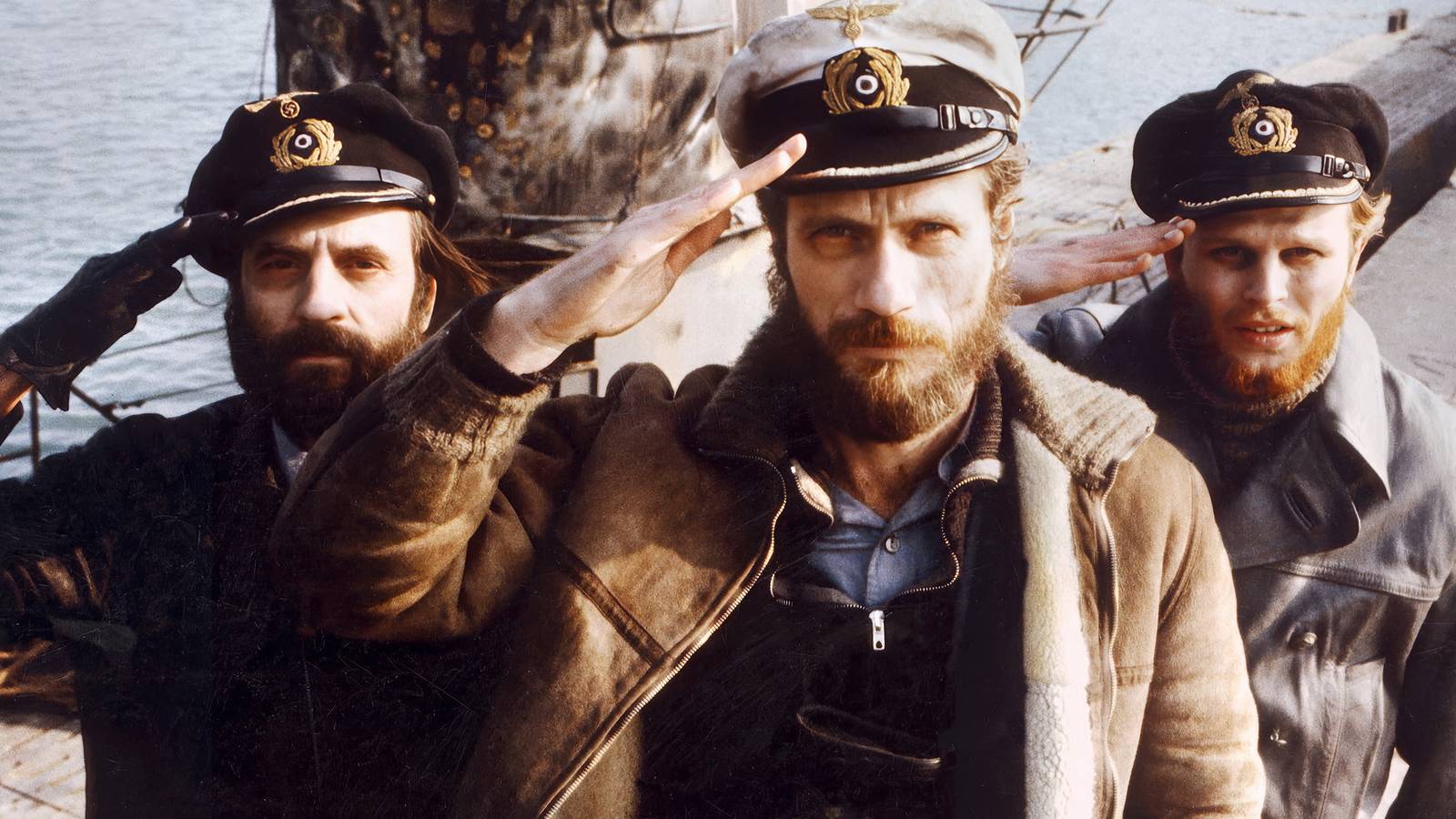
Image via Neue Constantin Film Published Sep 23, 2026, 6:05 AM EDT Ryan Heffernan is a Senior Writer at Collider. Storytelling has been one of his interests since an early age, with his appreciation for film and television becoming a particular interest of his during his teenage years. This passion saw Ryan graduate from the University of Canberra in 2020 with an Honours Degree in Film Production. In the years since, he has found freelance work as a videographer and editor in the Canberra region while also becoming entrenched in the city's film-making community. In addition to cinema and writing, Ryan's other major interest is sport, with him having a particular love for Australian Rules football, Formula 1, and cricket. He also has casual interests in reading, gaming, and history. Sign in to your Collider account War cinema demands a certain level of care and conviction to be not just compelling, but respectful and meaningful as well. Whether it’s entrenching viewers in the gritty brutality of the battlefield, casting them on emotional journeys of survival and civilian life amid times of turmoil, or examining the toll war exacts on the souls of those whose lives are impacted by it with profound insight, the genre relies on astute storytelling prowess and technical craft to acknowledge the severity of such conflicts. While the genre has produced no shortage of masterpieces over the years, the titles on this list are particularly noteworthy for their unrivaled perfection, each standing not only among the greatest entries into the genre, but as essential triumphs of cinema at large as well. Ranging from some of Hollywood’s finest achievements to gems of international cinema that excel at presenting unique though important perspectives on historical conflicts, these war movies are defined by their enduring flawlessness. 'All Quiet on the Western Front' (1930) Image via Universal Pictures An American film based on a German novel, All Quiet on the Western Front was the perfect pioneer of anti-war cinema as we know it today, and 96 years on from its release, it remains every bit as impactful and pointed as it was in 1930. Released at a time when war films were largely glorifying propaganda pieces, All Quiet on the Western Front shattered all notions of valor and heroism by following the disillusionment experienced by a group of young German soldiers whose visions of distinction are eviscerated by the brutal reality of the Western Front. Lewis Milestone’s direction eschews nationalistic bravura in favor of emphasizing the horrors faced by naïve youths and the psychological turmoil of war. Complimented by groundbreaking achievements in sound design, cinematography, and cinematic storytelling, as well as the striking depiction of violence of the pre-Hays Code days, the 1930 classic is a masterpiece of anti-war cinema. It features the greatest ending the genre has ever seen and champions a bitterly eternal message of wartime propaganda clashing against the callousness of the battlefield. 'Paths of Glory' (1957) Image via United Artists From the confronting brutality of Full Metal Jacket to the scorching satire of Dr. Strangelove, Stanley Kubrick mastered the art of evocative and pointed war cinema, but it is 1957’s Paths of Glory that stands as his finest foray into the genre. Based on Humphrey Cobb’s novel of the same name, it unfolds as Col. Dax (Kirk Douglas) defends three men being tried for cowardice after their battalions refused to persist with a futile assault against the Germans in WWI. Its breathtaking and innovative tracking shots through the trenches ground viewers in the mud-soaked ferocity French soldiers endured. This bleak reality is brilliantly contrasted against the châteaus and ballrooms where the generals discuss casualty percentages and carry out their kangaroo court trial. A story of remarkable focus and efficiency, every second of its 88-minute runtime dissects the heinous morality of war, particularly in how military prestige correlates to political opportunity. Complimented by a piercing finale of resignation and humanity, Paths of Glory is one of the most profound and perfect war movies. 'Casablanca' (1942) Image via Warner Bros. Pictures Perhaps the defining icon of Old Hollywood perfection, Casablanca casts one of cinema’s all-time greatest romances against the backdrop of the intense morality of WWII. It follows Rick Blaine (Humphrey Bogart), an apathetic nightclub owner in Casablanca whose reluctance to get involved in the conflict is challenged when a former lover arrives in the city with her husband, a prominent leader of the resistance. In possession of letters of transit, Rick finds himself torn between self-interest and moral duty. It doesn’t feature a single battle scene, and yet Casablanca thrives as a war drama by delving into the desperation and angst of WWII through the lens of ordinary people dreading the imminent brutality of the Nazis’ fascist regime and the spreading of tyranny. Complemented by the greatest dialogue ever put to screen, a litany of mesmerizing performances, and timeless themes of love, duty, and sacrifice, the 1942 classic remains a faultless masterpiece of cinema at large 84 years on from its release. Collider Exclusive · Oscar Best Picture Quiz Which Oscar Best PictureIs Your Perfect Movie? Parasite · Everything Everywhere · Oppenheimer · Birdman · No Country Five Oscar Best Picture winners. Five completely different visions of what cinema can be — and what it can do to you. One of them is the film that was made for the way your mind works. Ten questions will figure out which one. 🪜Parasite 🌀Everything Everywhere ☢️Oppenheimer 🐦Birdman 🪙No Country for Old Men FIND YOUR FILM → 01 What kind of film experience do you actually want? The best movies don't just entertain — they leave something behind. ASomething that pulls the rug out — that makes me think I'm watching one kind of film and then reveals I'm watching another entirely. BSomething overwhelming — funny, sad, absurd, and genuinely moving, all at once. CSomething grand and weighty — a film that makes me feel the full scale of what I'm watching. DSomething formally daring — a film that pushes what cinema can even do. ESomething lean and relentless — pure tension with no wasted frame. NEXT QUESTION → 02 Which idea grabs you most in a film? Great films are driven by a central obsession. What's yours? AClass, inequality, and what people are willing to do when desperation meets opportunity. BIdentity, family, and the chaos of trying to hold your life together when everything is falling apart. CGenius, moral responsibility, and the catastrophic weight of a decision you can never take back. DEgo, legacy, and the terror of becoming irrelevant while you're still alive to watch it happen. EEvil, chance, and whether moral order actually exists or if we just tell ourselves it does. NEXT QUESTION → 03 How do you like your story told? Form is content. The way a story is shaped changes what it means. AGenre-twisting — I want it to start in one lane and migrate into something completely different. BMaximalist and genre-blending — comedy, action, drama, sci-fi, all in one ride. CEpic and non-linear — cutting between timelines, building a mosaic of cause and consequence. DA single unbroken flow — I want to feel like I'm living it in real time, no cuts to safety. ESpare and precise — every scene doing exactly what it needs to do and nothing more. NEXT QUESTION → 04 What makes a truly great antagonist? The opposition defines the protagonist. What kind of opposition fascinates you? AA system — invisible, structural, and almost impossible to fight because it has no single face. BThe self — the ways we sabotage, abandon, and fail the people we love most. CHistory — the unstoppable momentum of events that no single person can stop or redirect. DThe industry — the machinery of culture that chews up talent and spits out irrelevance. EPure, implacable evil — a force so certain of itself it becomes almost philosophical. NEXT QUESTION → 05 What do you want from a film's ending? The final note is the one that lingers. What do you want it to sound like? AShock and inevitability — a conclusion that recontextualises everything that came before it. BEarned emotion — I want to cry, laugh, and feel genuinely hopeful, even if the world is a mess. CDevastation and grandeur — an ending that makes me sit in silence for a few minutes after. DAmbiguity — something that leaves enough open that I'm still thinking about it days later. EBleakness — an honest refusal to pretend the world is tidier than it actually is. NEXT QUESTION → 06 Which setting pulls you in most? Where a film takes place shapes everything — mood, stakes, what's even possible. AA gleaming modern city with a hidden underside — beauty masking rot, wealth masking desperation. BA collapsing suburban life that opens onto something infinite — the multiverse of a single ordinary person. CThe corridors of power and science at a world-historical turning point — where decisions echo for decades. DThe grimy, alive chaos of New York and Hollywood — fame as both destination and trap. EVast, indifferent landscape — desert and highway where violence arrives without warning or reason. NEXT QUESTION → 07 What cinematic craft impresses you most? Every great film has a signature — a technical or artistic element that makes it unmistakable. AProduction design and mise-en-scène — every frame composed to carry meaning beneath the surface. BEditing and tonal control — the ability to move between registers without losing the audience. CScore and sound design — music that becomes inseparable from the dread and awe of what you're watching. DCinematography as performance — the camera not recording events but participating in them. ESilence and restraint — what's left unsaid and unshown doing more work than any dialogue could. NEXT QUESTION → 08 What kind of main character do you root for? The protagonist is the lens. Who you choose to follow says something about you. ASomeone smart and resourceful who makes increasingly dangerous decisions under pressure. BSomeone overwhelmed and ordinary who turns out to be capable of something extraordinary. CA brilliant, tortured figure whose gifts and flaws are inseparable from each other. DA self-destructive artist whose ego is both their superpower and their undoing. EA quiet, principled person trying to make sense of a world that has stopped making sense. NEXT QUESTION → 09 How do you feel about a film that takes its time? Pace is a choice. Some films sprint; others let tension accumulate slowly, deliberately. AI love a slow build when I know the payoff is going to be seismic — patience for a devastating reveal. BGive me relentless momentum — I want to feel breathless and emotionally spent by the end. CEpic runtime doesn't scare me — if the material demands three hours, give me three hours. DI want it to feel propulsive even when nothing is technically happening — restless energy throughout. EDeliberate and unhurried — I want dread to accumulate in the spaces between the action. NEXT QUESTION → 10 What do you want to feel walking out of the cinema? The best films leave a mark. What kind of mark do you want? AUnsettled — like I've just seen something I can't fully explain but can't stop thinking about. BMoved and energised — like the film reminded me what actually matters and gave me something to hold onto. CHumbled — like I've been in the presence of something genuinely important and overwhelming. DExhilarated — like I've just seen cinema doing something it's never quite done before. EHaunted — like a cold, quiet dread that stays with me for days. REVEAL MY FILM → The Academy Has Decided Your Perfect Film Is…Your answers have pointed to one Oscar Best Picture winner above all others. This is the film that was made for the way your mind works. ParasiteYou are drawn to films that operate on multiple levels simultaneously — that begin in one genre and quietly, brilliantly migrate into another. Bong Joon-ho's Parasite is a film about class, desire, and the architecture of inequality that manages to be darkly funny, deeply suspenseful, and genuinely shocking across a single extraordinary running time. Your instinct is for cinema that hides its true intentions until the moment it's ready to reveal them. Parasite is exactly that — a film that rewards close attention and punishes assumptions, right up to its devastating final image. Everything Everywhere All at OnceYou want it all — and this film gives you all of it. The Daniels' Everything Everywhere All at Once is one of the most maximalist films ever made: action comedy, multiverse sci-fi, family drama, existential crisis, and a genuinely earned emotional core that sneaks up on you amid the chaos. You are someone who responds to ambition, who doesn't want cinema to choose between being entertaining and being meaningful. This film refuses that choice entirely. It is overwhelming by design, and its overwhelming nature is precisely the point — because the feeling of being crushed by infinite possibility is exactly what it's about. OppenheimerYou are drawn to cinema on a grand scale — films that understand history not as a backdrop but as a force, and that place their characters inside that force and watch what happens. Christopher Nolan's Oppenheimer is a film about the terrifying gap between what we can do and what we should do, told with the full weight of one of the most consequential moments in human history behind it. You want your films to feel important without feeling self-important — to earn their ambition through sheer craft and the gravity of their subject. Oppenheimer does exactly that. It is enormous, complicated, and refuses easy comfort. BirdmanYou are drawn to films that foreground their own construction — that make the how of the filmmaking part of the what it's about. Alejandro González Iñárritu's Birdman, shot to appear as a single continuous take, is cinema examining itself through the cracked mirror of a fading actor's ego. You respond to formal daring, to the feeling that a film is doing something that probably shouldn't be possible. Michael Keaton's performance and Emmanuel Lubezki's restless camera create something genuinely unlike anything else — a film that is simultaneously about creativity, relevance, self-destruction, and the impossibility of ever truly knowing if your work means anything at all. No Country for Old MenYou are drawn to cinema that trusts silence, that refuses to explain itself, and that treats dread as a form of meaning. The Coen Brothers' No Country for Old Men is a film about the arrival of a new kind of evil — implacable, arbitrary, and utterly indifferent to the moral frameworks we use to make sense of the world. It is one of the most formally controlled films ever made, and its controlled restraint is what makes it so terrifying. You want your films to haunt you, not comfort you. You are not interested in resolution if resolution would be dishonest. No Country for Old Men is honest in a way that most cinema never dares to be. ↻ RETAKE THE QUIZ 'The Human Condition' Trilogy (1959-1961) Image via Shochiku With each of the three movies having a runtime that surpasses three hours, The Human Condition trilogy is a true epic of war cinema that uses its expansive narrative scope to deliver a harrowing depiction of the injustice and brutality of WWII. The nine-hour saga follows Japanese conscientious objector Kaji (Tatsuya Nakadai) as social circumstances and political oppression force him to transition from a labor camp supervisor to a soldier fighting in the Pacific, and eventually to a Soviet POW, with each setting challenging his convictions and idealism. Propelled by Masaki Kobayashi’s patient and commanding direction, the trilogy is an emotionally stirring tragedy of how human decency evaporates amid wartime tensions and those who do cling to their morals face persecution, alienation, and ruthless hostility. Finding its beating heart in Kaji’s love for his wife, and its magnetic devastation in the exploration of how a soul withers through hardship, The Human Condition is a quintessential anti-war masterpiece. All three films capture the raw inhumanity of war with astonishing narrative control and some of the greatest, most evocative visuals the genre has ever seen. 'The Grand Illusion' (1937) Image via Réalisation d'Art Cinématographique Most war movies depict the emptiness of conflict through the lens of the senseless loss of life on the battlefield. The Grand Illusion finds its power in illustrating the futility of war through human relationships. It revolves around two French POWs in WWI, the working-class Lieutenant Maréchal (Jean Gabin) and the aristocratic Captain de Beöldieu (Pierre Fresnay). As they plot their escape, de Boëldieu develops a bond with the German commander of the prison camp, Captain von Rauffenstein (Erich von Stroheim), a fellow member of society’s elite. Through the two noblemen’s conversations, The Grand Illusion is able to deconstruct the notions of national barriers and opposing sides while examining the impact the Great War had on European society as it dismantled the rigidity of the region’s class divide. Anchored in a captivating tone of mutual respect that speaks to common humanity rather than wartime antagonism, The Grand Illusion delivers a profound meditation on human connection amid wartime that is more resonant today than it was in 1937. 'Grave of the Fireflies' (1988) Image via Studio Ghibli War cinema has been prolific in exploring the turmoil soldiers experience and the anguish of military leaders and politicians. The hardship endured by innocent civilians is an aspect of conflict that is much rarer in the form, though. Of the films that do depict it, Grave of the Fireflies stands tall as the most heartbreaking and harrowing. It follows a Japanese teenager and his young sister in their efforts to survive after a devastating air raid on their hometown that leaves their mother dead. Its examination of the human cost of war is brilliantly anchored in the tender bond between the two young siblings. Their journey is supported by Studio Ghibli’s awe-inspiring animated beauty, enhancing this story of fragility, innocence, and hope. Further strengthened by Isao Takahata’s deft direction and Michio Mamiya’s hauntingly beautiful score, Grave of the Fireflies has endured for almost 40 years as a stunning feat of mature animated storytelling, an emotionally overwhelming illustration of childhood, and the greatest portrayal of civilian experiences amid the scourge of war. 'Lawrence of Arabia' (1962) Image via Columbia Pictures As one of cinema’s most distinguished and defining epics, Lawrence of Arabia is renowned for its breathtaking, sweeping beauty as it illustrates both the striking imagery and relentless brutality of desert warfare. However, the majesty and depth of its storytelling are sometimes overlooked in favor of Freddie A. Young’s gorgeous cinematography. The 222-minute masterpiece also thrives as a richly compelling descent into the complicated psyche of T. E. Lawrence (Peter O’Toole) as he strives to balance his newfound loyalty to his comrades against his duty to Britain. Lawrence of Arabia wrestles with the grandeur of his military accomplishments while exploring his internal journey from a boyish though brilliant mind to a disillusioned survivor driven to the brink of insanity by combat. Also mindful of the geopolitical ramifications of the Arabs’ union with Britain, where individual idealism stands in the midst of cynical ruling powers, and issues of colonialism and trauma, David Lean’s monumental masterpiece endures as a quintessential triumph of war cinema and as one of the greatest, most flawless movies ever made. 'Saving Private Ryan' (1998) Image via DreamWorks Pictures The finest war movie Hollywood has ever produced, Saving Private Ryan excels most clearly as a grueling descent into the horrific destruction of war. From its graphic opening, which depicts the invasion of Normandy with awe-inspiring devastation, the Steven Spielberg masterpiece is anchored in a sense of palpable, unflinching realism. Indeed, it eschews Hollywood’s penchant for war glory and hero worship with piercing authenticity and a commanding understanding of the human cost of war. Its simple premise—a squad of American soldiers is tasked with locating a soldier to return home as he is the last alive of four brothers—is expertly used as a catalyst to traverse the enormous scale of the European Theater of WWII. The film explores the logistical chaos of America’s military operation across the continent and delves into its primary characters as ordinary people rather than mythicized warriors. Also bolstered by the astonishing precision of the sound design and the immersive cinematography of every brutal battle sequence, Saving Private Ryan is the best, and most confronting, illustration of WWII combat cinema has ever seen. 'Das Boot' (1981) Image via Neue Constantin Film A masterclass in grueling psychological suspense that finds a rousing anti-war strength in its ability to depict the humanity of the German U-boat crew, Das Boot is a gripping and nerve-rattling immersion in the claustrophobic hell of naval warfare in WWII. Tasked with patrolling the Atlantic Ocean, a rugged though good-hearted commander and his crew struggle to endure the long, agonizing silence of their assignment and the outbursts of vicious combat while grappling with their simmering disillusionment with the war. Realized with a full-size U-boat set and Wolfgang Petersen’s absorbing direction, Das Boot enthralls with its close-quarters intensity, creating an atmosphere of unyielding tension that makes the crew's humanity and camaraderie all the more potent. The cast’s commitment to embodying the physical brutality the characters endure is incredible, allowing the movie to progress as a visceral and painfully realistic descent into exhaustion and angst that never eases up or subsides. Complimented by a poignant ending, Das Boot is one of the all-time greatest anti-war movies, juggling terror, trauma, and the brotherhood of soldiers with aplomb. 'Come and See' (1985) Image via Sovexportfilm Viewed by many as the greatest anti-war movie ever made, Come and See is a viscerally disturbing descent into the terrors of genocide, human degradation, and the systemic evil of war. The Soviet film follows Florya (Aleksei Kravchenko), a naïve and optimistic boy whose aspirations to fight against the Germans with a resistance movement are shattered by his experiences in the proximity of an SS battalion wreaking havoc in the area. Its climactic sequence depicting the SS troops’ inhuman destruction of a small village is the movie’s most scarring and masterful sequence. However, the entirety of Come and See soars as a compelling and violently immersive journey of coming-of-age disillusionment and the terrible decimation of innocence. Director Elem Klimov powers the harrowing illustration of the vulgarity of war with a sense of realism that is utterly haunting. It is the epitome of anti-war cinema, a traumatizing and unforgettable viewing experience that decries all notions of the value of war and leaves you feeling numb and, importantly, horrifically enlightened. Come And See Release Date October 17, 1985 Cast Aleksei Kravchenko, Olga Mironova, Liubomiras Laucevicius, Vladas Bagdonas, Jüri Lumiste Runtime 142 Minutes Director Elem Klimov Writers Elem Klimov, Ales Adamovich
10 War Movies Without a Single Flaw
Full Article
Original Source
Read the full article at Collider →KhanList aggregates and links to publicly available news content. We do not host full articles from third-party sources. Always verify important information with original sources.