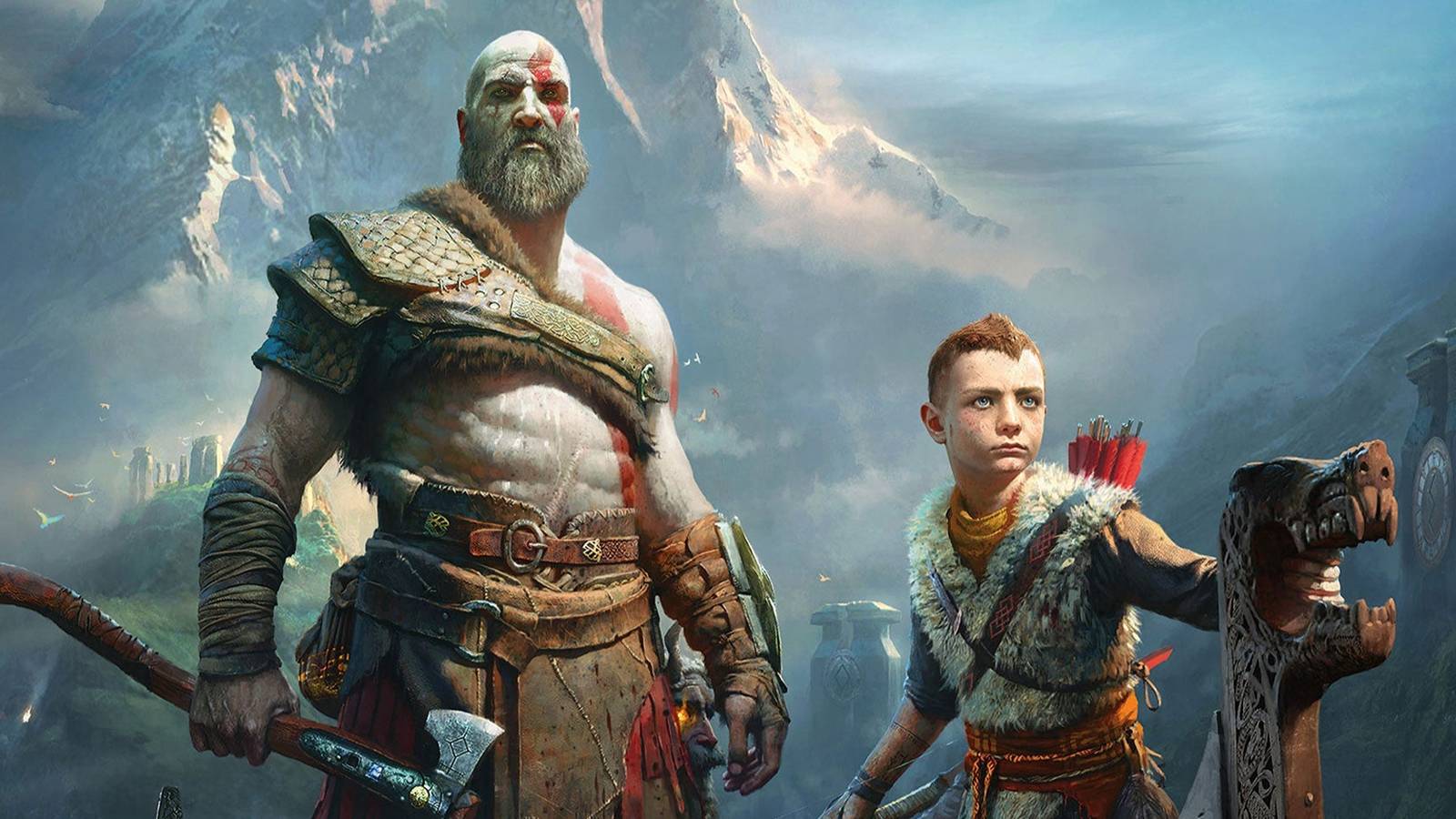
Image via Sony Interactive Entertainment Published Jul 18, 2026, 8:14 AM EDT Lucas Kloberdanz-Dyck is a writer for Collider. He grew up creating lists, stories, and worlds, which led to his love of anime and video games. He attended Sheridan College where he earned an Honours Bachelor of Game Design. Lucas and his group won 1st place for technical innovation at LevelUp Toronto 2023, and he was also an intern for the Oakville Film Festival of Arts. Sign in to your Collider account For the most part, video games are all about gameplay, with these experiences aiming to immerse players in fantastical worlds and engaging mechanics. This medium is meant to give a sense of control unlike any other, with games such as Grand Theft Auto and The Legend of Zelda achieving this. However, video games have evolved into a storytelling medium with great narrative potential. Great stories take many different forms, but one focus the fans love is character development, which is why this list will rank the ten video games with the greatest character development. Based on aspects such as writing, arcs, progression, gameplay tie-in, relevance, believability, characters, and overall quality, these ten video games do the unthinkable. 10 'Final Fantasy IX' (2000) Image via Square Enix The Final Fantasy franchise is best known for the sixth and seventh video games, but the greatest in terms of character development is arguably Final Fantasy IX. Princess Garnet wants out of her stuffy castle, so she hires a thief named Zidane to "kidnap" her. After that, the duo embark on an adventure around the world, which turns into a profound exploration of identity and the meaning of life. This may not be the first game fans think about when imagining great character development, but Final Fantasy IX puts together an incredible ensemble of characters who all individually grow. Some characters have static arcs, and others have philosophical journeys that deeply change who they are. Either way, Final Fantasy IX is an underrated character development masterclass. 9 'Assassin's Creed II' (2009) Image via Ubisoft Ubisoft has moved on to a different type of Assassin's Creed game, but the best in that series is still Assassin's Creed II in many ways. Ezio is a newcomer assassin in Italy who hunts down the Templar Order to enact his revenge after they framed his father and brothers for treason and had them executed, using whatever methods are handy to him. Assassin's Creed II is one of the best action games that boasts an incredible style of gameplay, but it is also known for having magnificent character development. Ezio Auditore transforms from a brash and eager kid into a wise and polished master assassin. The arc structure is normal, but it is still a coming-of-age story mixed with a revenge tale that is so captivating to play. 8 'Far Cry 3' (2012) Image via Ubisoft Known for its chaotic style, the Far Cry franchise is one of the craziest out there, boasting a masterclass of character development, Far Cry 3. Jason Brody and his friends are enjoying their tropical vacation when all of a sudden, ransomers kidnap them. Barely escaping, Jason dedicates himself to freeing his friends and getting off the island, although his priorities might start to change the more he is in the jungle. This game is all about Jason Brody and the madness that he experiences while trying to save his friends. Starting as a cowardly brat, the jungle slowly changes him, making him more heroic, and then eventually into an insane madman like the rest of the villains. Vaas is an excellent foil and incredible villain who further pushes his downfall arc. Not only that, but Far Cry 3 works his degradation into the mechanics, making for a more fluid and engaging change. 7 'Life is Strange' (2015) Image via Square Enix A lot of the games on this list have some sort of action or combat, but Life is Strange is solely focused on the story and character development. Max Caulfield is just a normal photography student, that is, until she gains time-warping powers. With the help of her childhood best friend, the two of them investigate the dark secrets of their small town while learning the consequences of messing with time. The time-travel mechanic does overshadow the subtlety of their growth and dynamic, but in the end, Life is Strange still has a profound view of change. By constantly undoing mistakes, Max realizes she is taking the easy way out, putting herself at risk in the future. This unique lesson double-acts as a distinct form of character development that highlights the narrative prowess of Life is Strange. 6 'God of War' (2018) Image via Sony Interactive Entertainment The original games in the franchise were all about rage, violence, and revenge, but the 2018 God of War took Kratos out of Greece and into the Norse realm of Midgard. Living a new and more peaceful life, his wife unexpectedly dies, leading him and his son Atreus to scatter her ashes at the highest peak. However, the Norse gods have their sights set on Atreus, and will stop at nothing until they get him. While fans don't get to see Kratos' change from the original games to this one, God of War 2018 still highlights his growth. This game completely recontextualized Kratos and his whole dynamic, making him a much more reserved personality who is ashamed of his past. He still isn't perfect, but God of War takes players along the cycle of how Kratos is trying to be a better man and father. 5 'The Walking Dead Series' (2012-2018) Image via Telltale Games It might be cheating to include an entire series, but The Walking Dead telltale games are all phenomenal. Split into different seasons, this game franchise is based on the comic and TV show of the same name. Lee Everrett and Clementine are two survivors of the zombie apocalypse, and these games chronicle their lives from new survivors to hardened veterans. The Walking Dead season one has one of the bleakest endings in video game history, but that only serves to act as a major moment in developing Clementine. This is a game all about choices, and each one the player makes, Clementine sees. Every decision, good and bad, changes Clementine for better or worse, making her character development entirely up to the way gamers play the game. 4 'Red Dead Redemption 2' (2018) Rockstar Games publishes some of the greatest masterpieces out there, and in terms of character development, Red Dead Redemption 2 takes the cake. Arthur Morgan is the leader of a cowboy gang set in the dying age of the Wild West. Confronted by his own mortality, he sets out on one last adventure, looking to redeem his past failures. In terms of a single character and their arc, Arthur Morgan is revered as having the best character development in video games. Beginning as a loyal outlaw, Red Dead Redemption 2 forces the players to embody his role and emotions, feeling the pain with him and learning his philosophy was a lie. Right until the end of the game, Arthur goes through one of the most compelling character arcs put on screen. 3 'The Last of Us' (2013) Image via Naughty Dog The Walking Dead was based on the TV show, but The Last of Us is the other way around, being a video game that inspired a show. Years after a zombie apocalypse pushed humanity into hiding, Joel is a veteran whose next mission is to escort a girl across the country. However, when he learns she may be humanity's last hope for a cure, he protects her with everything he's got. The character development and story were so good in this game that it is the only renowned live-action TV adaptation. The Last of Us is all about Ellie and Joel's dynamic, which has its ups and downs, but ultimately grows in this slow-burning adventure. By not shying away from the ugly truth, players learn that the relationship they have come to love takes priority over the rest of the world, culminating in a shocking twist that highlights the development of Joel, proving The Last of Us is a remarkably influential video game. Collider Exclusive · Sci-Fi Survival Quiz Which Sci-Fi World Would You Survive? The Matrix · Mad Max · Blade Runner · Dune · Star Wars Five universes. Five completely different ways the future went wrong — or sideways, or up in flames. Only one of them is the world your instincts were built for. Eight questions will figure out which dystopia, galaxy, or desert wasteland you'd actually make it out of alive. 💊The Matrix 🔥Mad Max 🌧️Blade Runner 🏜️Dune 🚀Star Wars TEST YOUR SURVIVAL → 01 You sense something is deeply wrong with the world around you. What do you do? The first instinct is often the truest one. APull on every thread until I understand the system — then figure out how to break it. BStop asking questions and start stockpiling — food, fuel, weapons. Questions don't keep you alive. CKeep my head down, observe carefully, and trust no one until I know who's pulling the strings. DStudy the patterns. Every system has a rhythm — learn it, and you learn how to survive it. EFind the people fighting back and join them. You can't fix a broken galaxy alone. NEXT QUESTION → 02 In a world of scarcity, what resource do you guard most fiercely? What we protect reveals what we believe survival actually requires. AKnowledge. If you understand the system, you don't need resources — you can generate them. BFuel. Everything else — movement, power, escape — runs on it. CTrust. In a world of fakes and informants, a truly reliable ally is rarer than any commodity. DWater. And after water, information — the two things empires are truly built on. EShips and credits. The galaxy is big — you survive it by being able to move through it freely. NEXT QUESTION → 03 What kind of threat keeps you up at night? Fear is useful data — if you're honest about what you're actually afraid of. AThat reality itself is a lie — that everything I experience has been constructed to keep me compliant. BA raid. No warning, no mercy — just the roar of engines and then nothing left. CBeing identified. Once someone with power decides you're a problem, you're already out of time. DBeing outmanoeuvred — losing a political game I didn't even know I was playing. EThe Empire tightening its grip until there's nowhere left to run. NEXT QUESTION → 04 How do you deal with authority you don't trust? Every dystopia has a power structure. Your approach to it determines everything. ASubvert it from the inside — learn its rules well enough to weaponise them against it. BIgnore it and stay out of its reach. The further from any power structure, the better. CAppear to comply while doing exactly what I need to do. Visibility is the enemy. DManoeuvre within it carefully. You can't beat a system you refuse to understand. EResist openly when I have to. Some things are worth the risk of being seen. NEXT QUESTION → 05 Which environment could you actually endure long-term? Survival isn't just tactical — it's physical, psychological, and very much about where you are. AUnderground bunkers and server rooms — cramped, artificial, but with access to everything that matters. BOpen wasteland — brutal sun, no shelter, constant movement. At least the threat is honest. CA dense, rain-soaked city where you can disappear into the crowd and nobody asks questions. DMerciless desert — extreme heat, no water, and something enormous living beneath the sand. EThe fringe — backwater planets and busy spaceports where the Empire's attention rarely reaches. NEXT QUESTION → 06 Who do you want in your corner when things fall apart? The company you keep is the clearest signal of who you actually are. AA tight crew of believers who've seen behind the curtain and have nothing left to lose. BOne or two people I'd trust with my life. Any more than that and someone talks. CNobody, ideally. Alliances are liabilities. I work alone unless I have no choice. DA community bound by shared hardship and mutual survival — people who need each other to last. EA ragtag team with wildly different skills and total commitment when it counts. NEXT QUESTION → 07 Where do you draw the line — if you draw one at all? Every survivor eventually faces a moment that tests what they're actually made of. AI won't harm the innocent — even the ones who'd report me without hesitation. BI do what I have to to protect the people I've chosen. Everything else is negotiable. CThe line shifts depending on who's asking and what's at stake. DI draw a long-term line — nothing that compromises my people's future, even if it'd help now. ESome lines, once crossed, can't be uncrossed. I know which ones they are. NEXT QUESTION → 08 What would actually make survival worth it? Staying alive is one thing. Having a reason to is another. AWaking others up — dismantling the illusion so no one else has to live inside it. BFinding somewhere — or someone — worth protecting. A reason to keep moving. CAnswers. Understanding what I am, what any of this means, before time runs out. DLegacy — shaping the future in a way that outlasts me by generations. EFreedom — for myself, for others, for every world still living under someone else's boot. REVEAL MY WORLD → Your Fate Has Been Calculated You'd Survive In…Your answers point to the world your instincts were built for. This is the universe your temperament, your survival instincts, and your particular brand of stubbornness were made for. The MatrixYou took the red pill a long time ago — probably before anyone offered it to you. You're a systems thinker who can't help but notice the seams in things. You're drawn to understanding how the system works before figuring out how to break it. You'd find the Resistance, or it would find you — your instinct for spotting constructed realities is the machines' worst nightmare. You function best when you have access to information and the freedom to act on it. The Matrix built an airtight prison. You'd be the one probing the walls for the door. Mad MaxThe wasteland doesn't reward the clever or the well-connected — it rewards those who are hard to kill and harder to break. That's you. You don't need comfort, community, or a cause larger than the next horizon. You need a vehicle, a clear threat, and enough fuel to outrun it — and you're good at all three. You are unsentimental enough to survive that world, and decent enough — just barely — to be something more than another raider. In the wasteland, that distinction is everything. Blade RunnerYou'd survive here because you know how to exist in moral grey areas without losing yourself completely. You read people accurately, keep your circle small, and ask the questions others prefer not to answer. In a city where humanity is a legal designation rather than a feeling, you hold onto something that keeps you functional. You're not a hero. But you're not lost, either. In Blade Runner's world, that distinction is everything. DuneArrakis is the most hostile environment in the known universe — and you are precisely the kind of person it rewards. Patience, discipline, and political awareness are your core strengths — and on Arrakis, they're survival tools. You understand that the long game matters more than any single victory. Others come to Dune and are consumed by it. You'd learn its logic and earn its respect. In time, you wouldn't just survive Arrakis — you'd begin to reshape it. Star WarsThe galaxy far, far away is vast, loud, and in a constant state of violent political upheaval — and you wouldn't have it any other way. You find meaning in being part of something larger than yourself — a cause, a crew, a rebellion. You'd gravitate toward the Rebellion, or the fringes, or whatever pocket of the galaxy still believes the Empire's grip can be broken. You fight — not because you have to, but because standing aside isn't something you're capable of. In Star Wars, that willingness is what makes all the difference. ↻ RETAKE THE QUIZ 2 'Mass Effect Series' (2007-2012) Image via BioWare Similar to The Walking Dead game series, this entry features an entire trilogy of games with the Mass Effect Series. Players control Commander Shepard, who must take their squadron out into the galaxy in order to defeat a machine race known as the Reapers, needing to unite multiple planets and species to aid in the fight or risk losing everyone. It may be unfair to include an entire trilogy, but each game in it is a flawless depiction of micro character development throughout a grand cast. Since the games carry save files, relationships, choices, and moments are brought to the next game, making the development personal to each specific player. Mass Effect wields its interconnected narrative web through the micro-changes of the many characters and their growth. 1 'Disco Elysium' (2019) Image Via ZA/UM Almost all the games on this list were AAA blockbusters, but the indie scene is also home to some character development sensations, including Disco Elysium. The players control an amnesiac detective who wakes up in a hotel room, now needing to use his multiple personalities to remember who he was and solve a murder that has some serious political implications. A lot of the games on this list use character development as a set story that players experience, but the reason why Disco Elysium is number one is that the players themselves develop the protagonist. The well-written themes of politics, philosophy, failure, and addiction meld into the multiple psyches of the character, with players having full freedom over which one wins. Disco Elysium is one of the greatest video games of all time because the character development is an intimate process of player agency that can be different each playthrough.
10 Video Games With the Best Character Development
Full Article
Original Source
Read the full article at Collider →KhanList aggregates and links to publicly available news content. We do not host full articles from third-party sources. Always verify important information with original sources.