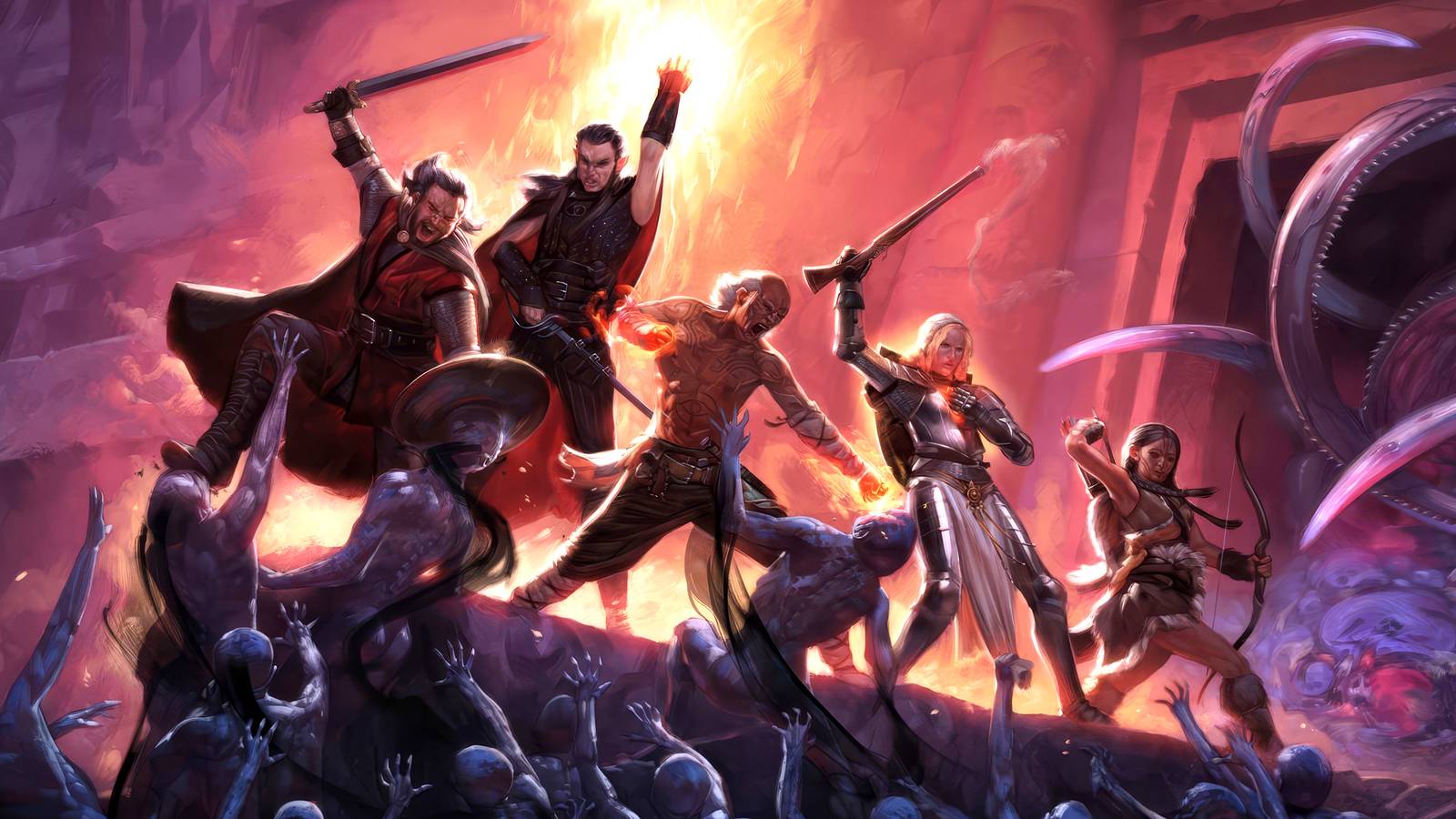
Image via Paradox Interactive Published Jul 29, 2026, 6:38 AM EDT Lucas Kloberdanz-Dyck is a writer for Collider. He grew up creating lists, stories, and worlds, which led to his love of anime and video games. He attended Sheridan College where he earned an Honours Bachelor of Game Design. Lucas and his group won 1st place for technical innovation at LevelUp Toronto 2023, and he was also an intern for the Oakville Film Festival of Arts. Sign in to your Collider account One of the special parts about video games that other mediums don't have is detailed and fully immersive worlds. Movies like The Lord of the Rings do have worlds, but not as richly detailed as video games such as God of War. These engrossing settings allow players to freely travel inside them with unparalleled agency and intimate immersion. A crucial part of their success is the worldbuilding, which takes it up from a simple landscape to a lived-in setting. Worldbuilding isn't just creating a unique setting, though; it is about crafting the history and lore and how it connects to the world that the races live in, which involves culture, politics, religion, constant change, and incredible detail. That is why this list will feature ten video game masterpieces with the greatest worldbuilding based on design, detail, narrative, setting, lore, depth, coherence, everything mentioned earlier, and overall quality. 'Metroid Prime' (2002) Image via Nintendo Nintendo games are very hit or miss with their worlds, but one of the best they have also comes in their most underappreciated franchise, Metroid, specifically Metroid Prime. Set on Tallon IV, an alien planet where Samus tracked down a group of space pirates, she explores the ancient world while also trying to stop the deadly mutagenic substance that has corrupted the planet. Linear games have to try harder to excel at worldbuilding, but Metroid Prime does it so effortlessly. Learning about the history and lore of Talon IV is ingrained into the gameplay and main narrative, with plenty of environmental cues and other moments to further build the intrigue. With plenty of regions, ancient history, and modern advancements, this world constantly feels alive and interesting. 'Baldur's Gate 3' (2023) Image via Larian Studios Baldur's Gate 3 had the benefit of already being in an established world, but the game further improved the worldbuilding and added new content to explore. The Forgotten Realms is a world within the Dungeons & Dragons universe which is home to monsters, ancient evils, magical beings, and many races all fighting for political control of the region. Baldur's Gate 3 ranks lower than most on this list because it takes from the lore of D&D rather than creating something new, but still, it expands on those concepts and fleshes them out in an expansive world. It does this by using the details of the lore and player agency and choice to manually shape the world around them, proving why Baldur's Gate 3 is considered a perfect fantasy video game. 'Horizon Zero Dawn' (2017) Image via Guerrilla Games PlayStation always delivers grand cinematic adventures with a focus on storytelling, and their best title in terms of worldbuilding is arguably Horizon Zero Dawn. This game takes place in the far future of Earth where mechanical creatures roam freely, and civilization has returned to a primal state. These tribes and animals are unaware of the ancient history and advanced civilization that came before them. Horizon Zero Dawn gives players a view into both timelines, expanding on each of them at the same time, explaining how the world fell to ruin. Having that context establishes the new world and its structure, which includes the tribal societies and the mechanical animals. The tribal cultures are well-written and fascinating to learn about, plus the mystery of the planet adds intrigue to the worldbuilding. Collider Exclusive · Sci-Fi Survival Quiz Which Sci-Fi World Would You Survive? The Matrix · Mad Max · Blade Runner · Dune · Star Wars Five universes. Five completely different ways the future went wrong — or sideways, or up in flames. Only one of them is the world your instincts were built for. Eight questions will figure out which dystopia, galaxy, or desert wasteland you'd actually make it out of alive. 💊The Matrix 🔥Mad Max 🌧️Blade Runner 🏜️Dune 🚀Star Wars TEST YOUR SURVIVAL → 01 You sense something is deeply wrong with the world around you. What do you do? The first instinct is often the truest one. APull on every thread until I understand the system — then figure out how to break it. BStop asking questions and start stockpiling — food, fuel, weapons. Questions don't keep you alive. CKeep my head down, observe carefully, and trust no one until I know who's pulling the strings. DStudy the patterns. Every system has a rhythm — learn it, and you learn how to survive it. EFind the people fighting back and join them. You can't fix a broken galaxy alone. NEXT QUESTION → 02 In a world of scarcity, what resource do you guard most fiercely? What we protect reveals what we believe survival actually requires. AKnowledge. If you understand the system, you don't need resources — you can generate them. BFuel. Everything else — movement, power, escape — runs on it. CTrust. In a world of fakes and informants, a truly reliable ally is rarer than any commodity. DWater. And after water, information — the two things empires are truly built on. EShips and credits. The galaxy is big — you survive it by being able to move through it freely. NEXT QUESTION → 03 What kind of threat keeps you up at night? Fear is useful data — if you're honest about what you're actually afraid of. AThat reality itself is a lie — that everything I experience has been constructed to keep me compliant. BA raid. No warning, no mercy — just the roar of engines and then nothing left. CBeing identified. Once someone with power decides you're a problem, you're already out of time. DBeing outmanoeuvred — losing a political game I didn't even know I was playing. EThe Empire tightening its grip until there's nowhere left to run. NEXT QUESTION → 04 How do you deal with authority you don't trust? Every dystopia has a power structure. Your approach to it determines everything. ASubvert it from the inside — learn its rules well enough to weaponise them against it. BIgnore it and stay out of its reach. The further from any power structure, the better. CAppear to comply while doing exactly what I need to do. Visibility is the enemy. DManoeuvre within it carefully. You can't beat a system you refuse to understand. EResist openly when I have to. Some things are worth the risk of being seen. NEXT QUESTION → 05 Which environment could you actually endure long-term? Survival isn't just tactical — it's physical, psychological, and very much about where you are. AUnderground bunkers and server rooms — cramped, artificial, but with access to everything that matters. BOpen wasteland — brutal sun, no shelter, constant movement. At least the threat is honest. CA dense, rain-soaked city where you can disappear into the crowd and nobody asks questions. DMerciless desert — extreme heat, no water, and something enormous living beneath the sand. EThe fringe — backwater planets and busy spaceports where the Empire's attention rarely reaches. NEXT QUESTION → 06 Who do you want in your corner when things fall apart? The company you keep is the clearest signal of who you actually are. AA tight crew of believers who've seen behind the curtain and have nothing left to lose. BOne or two people I'd trust with my life. Any more than that and someone talks. CNobody, ideally. Alliances are liabilities. I work alone unless I have no choice. DA community bound by shared hardship and mutual survival — people who need each other to last. EA ragtag team with wildly different skills and total commitment when it counts. NEXT QUESTION → 07 Where do you draw the line — if you draw one at all? Every survivor eventually faces a moment that tests what they're actually made of. AI won't harm the innocent — even the ones who'd report me without hesitation. BI do what I have to to protect the people I've chosen. Everything else is negotiable. CThe line shifts depending on who's asking and what's at stake. DI draw a long-term line — nothing that compromises my people's future, even if it'd help now. ESome lines, once crossed, can't be uncrossed. I know which ones they are. NEXT QUESTION → 08 What would actually make survival worth it? Staying alive is one thing. Having a reason to is another. AWaking others up — dismantling the illusion so no one else has to live inside it. BFinding somewhere — or someone — worth protecting. A reason to keep moving. CAnswers. Understanding what I am, what any of this means, before time runs out. DLegacy — shaping the future in a way that outlasts me by generations. EFreedom — for myself, for others, for every world still living under someone else's boot. REVEAL MY WORLD → Your Fate Has Been Calculated You'd Survive In…Your answers point to the world your instincts were built for. This is the universe your temperament, your survival instincts, and your particular brand of stubbornness were made for. The MatrixYou took the red pill a long time ago — probably before anyone offered it to you. You're a systems thinker who can't help but notice the seams in things. You're drawn to understanding how the system works before figuring out how to break it. You'd find the Resistance, or it would find you — your instinct for spotting constructed realities is the machines' worst nightmare. You function best when you have access to information and the freedom to act on it. The Matrix built an airtight prison. You'd be the one probing the walls for the door. Mad MaxThe wasteland doesn't reward the clever or the well-connected — it rewards those who are hard to kill and harder to break. That's you. You don't need comfort, community, or a cause larger than the next horizon. You need a vehicle, a clear threat, and enough fuel to outrun it — and you're good at all three. You are unsentimental enough to survive that world, and decent enough — just barely — to be something more than another raider. In the wasteland, that distinction is everything. Blade RunnerYou'd survive here because you know how to exist in moral grey areas without losing yourself completely. You read people accurately, keep your circle small, and ask the questions others prefer not to answer. In a city where humanity is a legal designation rather than a feeling, you hold onto something that keeps you functional. You're not a hero. But you're not lost, either. In Blade Runner's world, that distinction is everything. DuneArrakis is the most hostile environment in the known universe — and you are precisely the kind of person it rewards. Patience, discipline, and political awareness are your core strengths — and on Arrakis, they're survival tools. You understand that the long game matters more than any single victory. Others come to Dune and are consumed by it. You'd learn its logic and earn its respect. In time, you wouldn't just survive Arrakis — you'd begin to reshape it. Star WarsThe galaxy far, far away is vast, loud, and in a constant state of violent political upheaval — and you wouldn't have it any other way. You find meaning in being part of something larger than yourself — a cause, a crew, a rebellion. You'd gravitate toward the Rebellion, or the fringes, or whatever pocket of the galaxy still believes the Empire's grip can be broken. You fight — not because you have to, but because standing aside isn't something you're capable of. In Star Wars, that willingness is what makes all the difference. ↻ RETAKE THE QUIZ 'Pillars of Eternity' (2015) Image via Obsidian Entertainment Most of the games on this list are extremely well-known, but one of the lesser-known titles featured is Pillars of Eternity. This fantasy video game takes place in Eora, a dark world that is currently undergoing a technological renaissance, with philosophy and science integrating into the world. Not only that, but there is a soul system which makes them into quantifiable energy that fuels reincarnation. Pillars of Eternity has one of the most unique worlds in video game history; it's just a shame that it isn't more popular. Soul Science isn't just an engaging concept or mechanic, but it is used as a worldbuilding aspect, questioning the ethics of it and the different views surrounding it. With dense lore baked into the history, philosophy, science, magic system, and conflicts, Pillars of Eternity is an underrated gem. 'Cyberpunk 2077' (2020) Image via CD Projekt The cyberpunk genre has always been a critique of capitalism and the dangers of the future if it continues down that path, and the best video game that encapsulates that vibe is Cyberpunk 2077. Night City is never in shortage of criminals and punks, but that seems to be the only way to make a living in this dystopian city. V is one of those street punks just trying to make a living, but when they get a microchip with the mind of a terrorist in their brain, they need to get it out before it is too late. Cyberpunk 2077 features some of the most fascinating worldbuilding in video game history and the implications of capitalism and greed on the future and how it affects the city itself, and in turn, the people. Night City is almost like a character itself in the way the world is built and how it affects everyone inside of it. This city serves as the villain of the game, with immense detail and interesting ideas building into one coherent, yet chaotically unequal world. 'The Legend of Zelda: Breath of the Wild' (2017) Metroid Prime is an excellent game in terms of worldbuilding, but it is hard to compare to The Legend of Zelda franchise when it has such a long history with open-world games such as The Legend of Zelda: Breath of the Wild. Set in Hyrule 100 years after Ganon and Zelda were sealed away, the kingdom has been taken over by nature, monsters, and ancient mechanisms, leaving a quaint yet dangerous world. Tears of the Kingdom could have made this list, but it mostly took the worldbuilding from Breath of the Wild and added more. Part of what makes this one so good is the many easter eggs and references to old games, which it uses some narrative ties to ground them into this world. The ancient ruins are jam-packed with lore and history, which fans can interpret how they want. A simple burned village contains a story that players can create. Breath of the Wild is one of the best Zelda games because of the sheer amount of lore and the open-endedness of how it came to be. 'BioShock' (2007) Image via 2K games Columbia from BioShock: Infinite is just as captivating a world, but Rapture from the original BioShock still has it beat, even if just barely. After finding refuge from a plane crash on an isolated lighthouse, players descend into the failed utopia known as Rapture. Corrupted by failed politics, territorial mayhem, and genetically spliced humans, this world is a far cry from what it was promised to be. Rapture is arguably the best example of environmental storytelling, which it not only uses as a design tool, but also as a worldbuilding aspect. Whether it be the art on the walls, the art deco vibe, or the scattered audio logs, there is plenty of information to learn. BioShock critiques Randian objectivism, and the world encapsulates those political ideas by using the themes and design to portray why they will fail. The narrative flawlessly seeps into the design of the world, but also the history and worldbuilding. 'Fallout: New Vegas' (2010) Image via Bethesda Softworks Bethesda is the king of creating engaging worlds, yet they only have one franchise on this list, and the specific game wasn't even made by them. Fallout: New Vegas follows the player setting out into the Mojave Wasteland, a desert near Las Vegas. They get caught up in a war for control over the Hoover Dam, maneuvering among the many factions and their views. The entire Fallout franchise deserves to be on this list, but Fallout: New Vegas simply represents all of them in this entry. This franchise does an excellent job of reshaping the world with a post-apocalyptic view set in the past, using the retro-futurism and messy reconstruction of society to create a daring yet captivating world. The locations, characters, and side quests all feed into the main conflict of the game and its sociopolitical landscape, proving Fallout: New Vegas is a masterpiece of this generation. 'Disco Elysium' (2019) Image Via ZA/UM This list mostly consists of AAA blockbusters, but indie titles can also ride with the big dogs, or at least Disco Elysium proves that. The world of Elysium is slowly disintegrating, but inside of it exists a city named Revachol, which is still showing the physical and ideological scars of a failed revolution. Now a post-communist city, it reflects the mental state of the protagonist and many of its residents. Disco Elysium isn't the first game fans will think of when imagining great worldbuilding, but if they take a deeper look, they will find an ocean level of depth in it. One glorious detail that this game spent time on was wondering how one aspect would affect something else, and then what domino effect of political strife, religious beliefs, and industrial structuring would happen. The attention to detail and level of depth is astounding, with every character having some sort of attachment to specific parts of Revachol. From in-world symbolism to changing events to laws and rules based on the past to the impeccable societal and political hierarchy, Disco Elysium is a triumph of worldbuilding through meticulously crafted history and characters. 'Mass Effect Trilogy' (2007-2012) Image via BioWare It is nearly impossible to fit everything needed for excellent worldbuilding into one single video game, and that is why the Mass Effect trilogy builds the Milky Way Galaxy through three different games. Controlling Commander Shepard throughout, players must stop a race of biomechanical aliens from devouring the galaxy by uniting the colonies and planets of the galaxy. It may be cheating to include three games into one, but the Mass Effect trilogy is renowned for its interconnected political and personal narrative that ties into the worldbuilding. This game series doesn't just build a world; it builds a galaxy of intrigue through the factions, races, and their cultures, languages, struggles, controversies, and beliefs. The Milky Way is massive, but Mass Effect still manages to make it a personal and intimate world, with some of the best character development in video games, where player choices affect the ancient worldbuilding in meaningful and engaging ways. Players don't just learn about these things; the lore is embedded through dialogue, societal structure, and the main storyline.
10 Video Game Masterpieces With the Best Worldbuilding
Full Article
Original Source
Read the full article at Collider →KhanList aggregates and links to publicly available news content. We do not host full articles from third-party sources. Always verify important information with original sources.