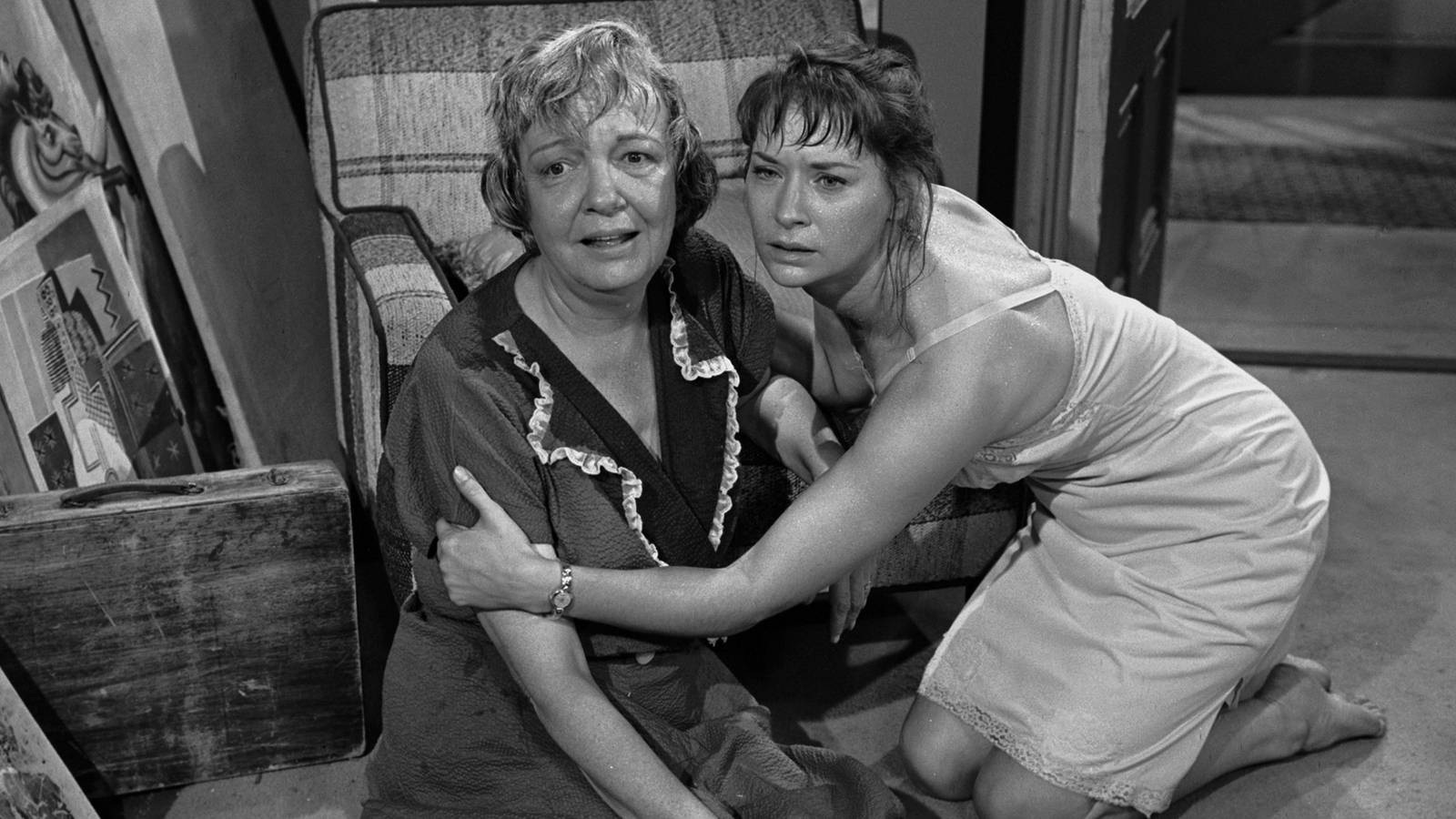
Image via MovieStillsDB Published Aug 14, 2026, 8:00 PM EDT Adrienne Tyler is a movies & TV features writer, with a focus on horror. She has written for Netflix, FanSided, & more. She was a regular guest on the Netfreaks podcast and was a YouTuber at some point. Guillermo del Toro said “hi” to her once. Sign in to your ScreenRant account The Twilight Zone still stands as one of the best sci-fi TV shows of all time, and some of its best episodes have stood the test of time. The sci-fi genre is one of the most popular on TV, being home to some of the most popular worlds, like those of Star Trek, Doctor Who, The Expanse, and Battlestar Galactica. Many of the best TV shows of all time are sci-fi ones, and most of them have a lot to thank The Twilight Zone for. Created and hosted by Rod Serling, The Twilight Zone is an anthology TV series where every episode tells a different story. Most episodes are a combination of sci-fi, horror, drama, and or/fantasy, with a twist in the story and a moral at the end. The Twilight Zone is one of the most influential TV shows of all time, and was key to shaping the sci-fi genre on TV into what it is now. Even though The Twilight Zone has had three revivals, the original show stands as the best. While The Twilight Zone definitely has some bad episodes, the show is remembered for its consistent quality across five seasons. However, not all of the best The Twilight Zone episodes can say that they have aged well, and only some have either timeless stories and themes or these have gotten better with time. What’s true for all of these is that they are as impactful as they were when they first aired, and still hold up after some rewatches. “It’s a Good Life” Season 3, Episode 8 “It’s a Good Life” is based on Jerome Bixby’s 1953 short story of the same name, and it introduces the audience to Anthony Fremont, a six-year-old kid with terrifying godlike mental powers. Among his abilities, Anthony can read minds, and if someone does or thinks something he doesn’t like, he banishes them or turns them into horrifying objects. On top of that, Anthony can create monstrous creatures to terrorize fellow town residents, and he even used his powers to isolate the town. “It’s a Good Life” has a one-of-a-kind monster whose unpredictability makes him even scarier, and like most episodes of The Twilight Zone, it has a bleak ending with an even darker implication for the characters. “It’s a Good Life” is the only Twilight Zone episode to get a sequel, but the episode is better when treated as a standalone story. “Perchance to Dream” Season 1, Episode 9 “Perchance to Dream” is one of the most underrated Twilight Zone episodes, but it has aged better than most of the most recognizable episodes. In it, Edward Hall goes to a psychiatrist for help, as every time he sleeps, he dreams in chapters and is haunted by a laughing carnival dancer named Maya “The Cat Girl.” These bizarre dreams have convinced him that he will die if he falls asleep, and soon his nightmare begins to bleed into the real world. “Perchance to Dream” is one of the most bizarre episodes of The Twilight Zone thanks to Edward’s nightmares and how they are portrayed, but it has one of the best twists in the show that still holds up to this day. “The Midnight Sun” Season 3, Episode 10 Written by Rod Serling, “The Midnight Sun” shows what would happen if the Earth suddenly changed its elliptical orbit and thus began to gradually get closer and closer to the Sun. Norma and her landlady are the last residents in their building, as the rest have either moved north to seek a cooler climate or have died. With food and water scarce and people desperate to survive, Norma and Mrs. Bronson prepare for a horrifying fate. “The Midnight Sun”’s themes are still relevant, and while the Earth isn’t changing its elliptical orbit, the world is currently facing various climate changes. On top of that, the twist in “The Midnight Sun” stands as one of the most memorable and depressing ones in The Twilight Zone. “The Dummy” Season 3, Episode 33 Sci-fi horror stories with dolls that come to life, especially ventriloquist dummies, have a lot to thank The Twilight Zone’s “The Dummy” for. It’s the story of ventriloquist Jerry Etherson and his dummy Willy, whom Jerry is convinced is alive. Jerry is haunted by Willy, with his agent and those around him worrying that he might be going insane. Of course, “The Dummy” has a twist, and it’s a terrifying one, but it has aged so well, as it appeals to a very common fear that hasn’t died down yet: fear of dolls and ventriloquist dummies. “Night Call” Season 5, Episode 19 Based on Richard Matheson’s 1953 short story “Sorry, Right Number”, “Night Call” introduces the audience to Miss Elva Keene, an elderly paraplegic woman who lives alone and is taken care of by her housekeeper during the day. One night, Elva receives a mysterious phone call where she can only hear static, but the calls continue during various nights, and the sound gets clearer and clearer until she hears a man asking, “Hello? Where are you?” Elva decides to investigate where the calls are coming from, and she makes a shocking and heartbreaking discovery. “Night Call” is one of, if not the most heartbreaking Twilight Zone episodes, and that emotional charge is what has helped it age so perfectly. “Eye of the Beholder” Season 2, Episode 6 One of the best and most famous episodes of The Twilight Zone is “Eye of the Beholder.” The episode centers on Janet Tyler, a young woman who has just undergone her 11th plastic surgery in hopes of looking normal, thus hitting the maximum number legally allowed by the State. Not much can be said about the episode’s story, as it would risk spoiling it, and that’s mostly what “Eye of the Beholder” is known for: its surprise reveal. The twist isn’t the only reason why “Eye of the Beholder” has aged so well, as its themes of beauty, societal pressure, and vanity are, unfortunately, still relevant. “The Obsolete Man” Season 2, Episode 29 Another great Twilight Zone episode written by Rod Serling is “The Obsolete Man.” Set in a totalitarian state in the far future, “The Obsolete Man” is the story of librarian Romney Wordsworth, who is deemed “obsolete” by the government (which got rid of books, among other things) and thus is sentenced to death. Romney can choose when, where, and how he will die, and he uses this opportunity to leave a message for the rest of the citizens. “The Obsolete Man” is one of the best episodes of The Twilight Zone, as well as one of the most clever episodes with the best twists, and its timeless themes have been key to its relevance and legacy. “The Monsters Are Due on Maple Street” Season 1, Episode 22 “The Monsters Are Due on Maple Street” is one of the most famous Twilight Zone episodes, and with good reason. “The Monsters Are Due on Maple Street” takes the audience into the title street, where, one summer afternoon, a shadow passes over, accompanied by a loud noise and a flash of light. The residents, in an attempt to figure out what’s going on as the power goes out (even for objects that work with batteries), begin to suspect aliens are to blame. “The Monsters Are Due on Maple Street” is a perfect example of suspense, mystery, and growing paranoia not just in The Twilight Zone but on TV in general, with one of the best twists in the entire history of the show. “The Monsters Are Due on Maple Street” is still as good as it was when it aired, and its impact doesn’t decrease upon rewatch. “Nothing in the Dark” Season 3, Episode 16 One of the most beautiful Twilight Zone episodes is “Nothing in the Dark.” The episode centers on Wanda Dunn, an elderly woman living in the basement apartment of an abandoned tenement, who has isolated herself for years in hopes of not coming across Death, who she has seen take different faces over the years. Wanda is pushed to break her own rules when an injured young police officer knocks at her door for help, and she decides to shelter him. “Nothing in the Dark” has a twist at the end, but it’s such a beautifully written and performed story that the twist is surprising yet satisfying. “Nothing in the Dark” appeals to the very common fear of death, and as a cherry on top, it has one of Robert Redford’s first TV performances. “Time Enough at Last” Season 1, Episode 8 “Time Enough at Last” follows bank teller and bookworm Henry Bemis, who is so immersed in his current reading that it interferes with his job and personal life. His boss and his wife are tired of Henry’s reading habits, so he spends his lunch breaks in the bank’s vault, eating and reading. One day, during his break, an explosion outside shakes the vault, and when Henry emerges from it, he finds that the explosion destroyed the entire city and a large part of the planet. Henry is now the last human alive, with enough food to survive and all the books he can read, as these, surprisingly, are intact. But as this is a Twilight Zone episode, Henry’s story takes one final twist that is so unexpected and heartbreaking that it’s unforgettable. “Time Enough at Last” is a timeless story, and it appeals to a fear that not many admit: the fear of being completely and absolutely alone. Release Date 1959 - 1964-00-00 Network CBS Showrunner Rod Serling Directors John Brahm, Buzz Kulik, Douglas Heyes, Lamont Johnson, Richard L. Bare, James Sheldon, Richard Donner, Don Medford, Montgomery Pittman, Abner Biberman, Alan Crosland, Jr., Alvin Ganzer, Elliot Silverstein, Jack Smight, Joseph M. Newman, Ted Post, William Claxton, Jus Addiss, Mitchell Leisen, Perry Lafferty, Robert Florey, Robert Parrish, Ron Winston, Stuart Rosenberg Writers Charles Beaumont, Richard Matheson, Earl Hamner, Jr., George Clayton Johnson, Jerry Sohl, Henry Slesar, Martin Goldsmith, Anthony Wilson, Bernard C. Schoenfeld, Bill Idelson, E. Jack Neuman, Jerome Bixby, Jerry McNeely, John Collier, John Furia, Jr., John Tomerlin, Lucille Fletcher, Ray Bradbury, Reginald Rose, Sam Rolfe, Adele T. Strassfield Creator(s) Rod Serling
10 Twilight Zone Episodes That Have Aged Like Fine Wine
Full Article
Original Source
Read the full article at Screenrant →KhanList aggregates and links to publicly available news content. We do not host full articles from third-party sources. Always verify important information with original sources.