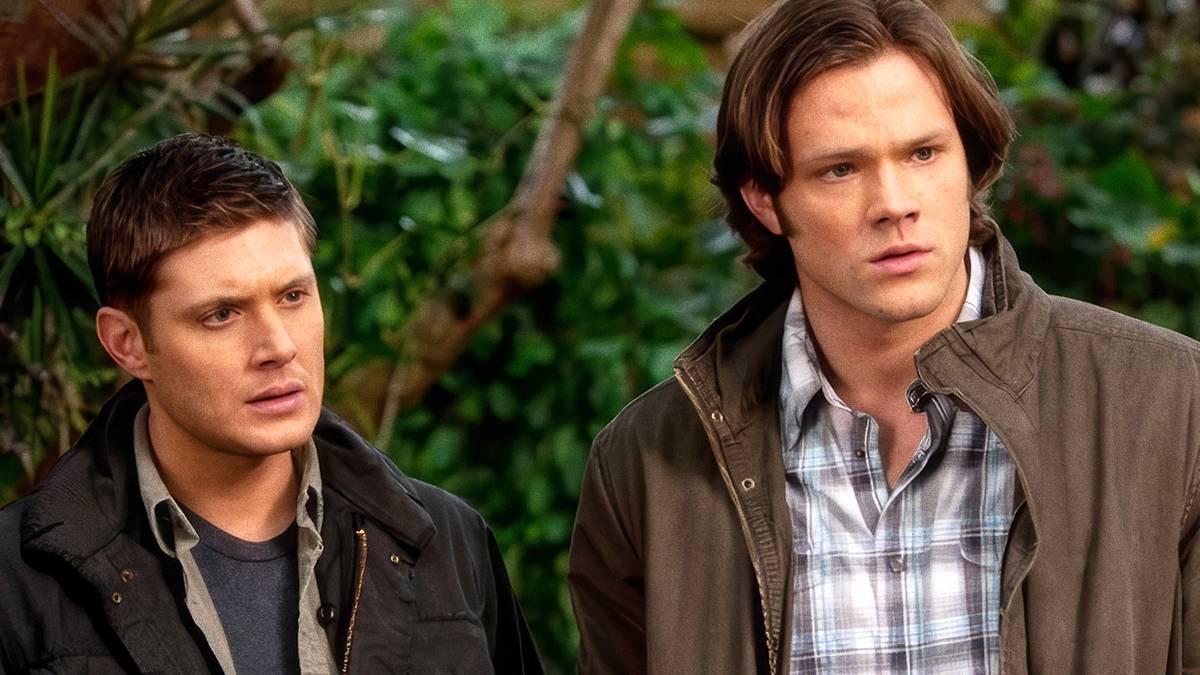
Image via The CW Published Aug 15, 2026, 4:42 PM EDT Michael John Petty is a Senior Author for Collider who spends his days writing, in fellowship with his local church, and enjoying each new day with his wife and daughters. At Collider, he writes features, reviews, recaps, and conducts interviews. In addition to writing about stories, Michael has told a few of his own. His novella, The Beast of Bear-tooth Mountain, was released in 2023. His Western short story, The Devil's Left Hand, received the Spur Award for "Best Western Short Fiction" from the Western Writers of America in 2025. Michael currently resides in North Idaho with his growing family. Sign in to your Collider account When a show runs for 15 seasons on television (and 327 episodes), there are bound to be a few curveballs thrown in the mix. When it comes to Supernatural, the show ran long beyond Eric Kripke's initial plan for Sam (Jared Padalecki) and Dean Winchester (Jensen Ackles), which meant that subsequent writers really had to pull from the show's foundation to make future stories work. Sometimes it panned out, sometimes it didn't, but one thing is for sure: there was plenty of unintentional foreshadowing involved. What do we mean by "unintentional foreshadowing"? Of course, Supernatural often foreshadowed the direction the series was going, but there were also plenty of times when small coincidences in terms used or plot points emphasized would come back later — long after their original intent. As you'll see here, there were several times throughout Supernatural's historic run that the Winchesters were confronted with one idea, only for that concept to return even up to a decade later. So, strap in, because these are the times where Supernatural unknowingly predicted its own future. 10 “The Monster At the End of This Book” Image via The CW Fans have famously been pretty split on the revelation that Chuck (Rob Benedict), the supposed "God" of the Supernatural universe, was actually the bad guy at the end. After having helped the Winchesters on numerous occasions, his sudden turn at the end of Season 14 felt, well, sudden. Ironically, the title of the very first Season 4 episode that Chuck appeared in is "The Monster At the End of This Book" — and it seems like showrunner Andrew Dabb and the other later season writers took that literally. At the time, Kripke didn't intend for Chuck to be some dubious entity ruining the brother's lives. "Swan Song" effectively ends Chuck's story on a high note, with him disappearing and allowing free will to take its course. Regardless of the theological ramifications of such a creative move, it changed Supernatural forever. By the time the character officially returned and revealed himself in Season 11, he appeared at least somewhat benevolent. Instead, the show took a hard pivot in the final hour. 9 The Demon Dean Arc Image via The CW Love it or hate it, the short-lived "Deanmon" arc from the Season 9 finale ("Do You Believe In Miracles?") through the third episode of Season 10 ("Soul Survivor") happened. Sure, it may have been a "jump the shark" moment for the show, but Supernatural quickly tried to course correct. A pivot in the "Mark of Cain" arc, the Demon Dean story was predicted all the way back during the third season, though it was originally meant to be an exploration of Dean's fears rather than a premonition concerning his future. In Season 3's “Dream a Little Dream of Me,” the Winchesters find themselves in a dreamscape where they are confronted by some of their worst fears. For Dean, this means coming face-to-face with a demon version of himself that claims that, following his trip to Hell, this is "what he's going to become." It's a frightening moment masterfully bookended by Dean's admission to Sam that he's afraid of death at the end of the episode. Instead, the writers during the Jeremy Carver era used this moment as a springboard for a future reality. 8 Scooby-Doo Appeared on ‘Supernatural’ Long Before the Crossover Image via the CW Before Season 13's "ScoobyNatural," the idea of a Supernatural crossover with Scooby-Doo, Where Are You! seemed impossible. However, the talking dog and his mystery-solving buddies had been referenced on the show as early as the third season ("The Magnificent Seven"). In the next season, Sam tells a kid that they're better than anything on Scooby-Doo ("Family Remains"), and Dean even mimics Scooby's "R'uh r'oh!" in Season 9's "Dog Dean Afternoon." Clearly, the Supernatural writers didn't anticipate a crossover. So, when writer Jeremy Adams brought the idea to showrunner Andrew Dabb at the beginning of the 12th season, there was enough time to prepare. Later that season, seeds were planted in "Regarding Dean" (where Dean watches "Hassel in the Castle") and again in Season 13's "The Rising Son" (which features "That's Snow Ghost") before the official crossover — which adapted "A Night of Fright Is No Delight" — commonsense. Who wouldn't thought? 7 The Impala’s Importance In the Universe Image via The CW For many, Season 5's “Swan Song” is still the ultimate Supernatural finale. Not only does it conclude Eric Kripke's original Apocalypse story, closing out his tenure as showrunner, but it really gives the final word on Sam and Dean Winchester. It also makes an interesting comment about the show's unofficial third character, their trademark 1967 Chevy Impala. Here, Chuck notes that the Impala is “pretty much the most important object” in the universe — a statement he had no idea would be true even after the series ended. It wasn't until the show's alternate universe spin-off The Winchesters aired that audiences got the full importance of the Winchesters' slick wheels. In the impromptu series finale, "Hey, That's No Way to Say Goodbye," Dean returns in the Impala to kill the Akrida, a monster created by Chuck to end the multiverse if he were ever defeated. Not only did "Baby" help save Sam from the Devil's grip in "Swan Song," but it saved the entire multiverse years later. 6 Dean Jokes About Killing Death Image via The CW Perhaps the biggest running gag on Supernatural is that nobody really dies. Sure, this became a crutch for Sam and Dean as the show went on (they died basically more times than we can count), but it also made things complicated when it came to villains. For instance, Death (Julian Richings) becomes a weird frenemy to the brothers, at least until Season 10's "Brother's Keeper," when Dean actually kills, well, Death. Yes, it's a bit ridiculous (especially since a new "Death" takes his place later on), but would you believe that even this was foreshadowed earlier in the series? Unintentionally, to be sure, but it's still there. In Season 1's “Faith,” for example, Dean jokes about how the brother's "can't kill Death" when hunting a reaper, and the same line is echoed by Dean again in Season 2's “In My Time of Dying.” It seems like everyone but the writers got the memo here. Collider Exclusive · Horror Survival Quiz Which Horror Villain Do You Have the Best Chance of Surviving? Jason Voorhees · Michael Myers · Freddy Krueger · Pennywise · Chucky Five killers. Five completely different ways to die — if you're not smart enough, fast enough, or self-aware enough to avoid it. Only one of them is the villain your particular set of instincts gives you a fighting chance against. Eight questions will figure out which one. 🏕️Jason 🔪Michael 💤Freddy 🎈Pennywise 🪆Chucky TEST YOUR SURVIVAL → 01 Something feels wrong. You can't explain it — you just know. What do you do? First instincts are the difference between the survivor and the first act casualty. ALeave immediately. I don't need to understand a threat to respect it. BStay quiet and observe. If I can see it, I can understand it. If I can understand it, I can avoid it. CStay awake. Whatever this is, I am not going to sleep until I feel safe again. DConfront it directly. Fear grows in the dark — I'd rather know what I'm dealing with. ECheck everything, trust nothing. The threat might be closer than I think — and smaller. NEXT QUESTION → 02 Where are you most likely to find yourself when things go wrong? Setting is everything in horror. Where you are determines which rules apply. ASomewhere remote — a cabin, a campsite, off the grid and away from people. BA quiet suburban neighbourhood where nothing ever happens. Except tonight. CIn my own head — the most dangerous place of all, depending on what's already in there. DWherever children are — because something about this place attracts the worst things. ESomewhere ordinary — a house, a toy store, a place where the last thing you'd expect is a threat. NEXT QUESTION → 03 What is your most reliable survival asset? Every survivor has a quality the villain didn't account for. What's yours? APhysical fitness — I can run, I can swim, I can outlast something that relies on brute persistence. BSpatial awareness — I always know the exits, the hiding spots, the fastest route out. CPsychological resilience — I've faced my worst fears before. They don't have the same power over me. DEmotional steadiness — I don't panic. Panic is what gets you caught. EScepticism — I don't underestimate threats because of how they look. Size is irrelevant. NEXT QUESTION → 04 What kind of fear is hardest for you to fight through? Knowing your weakness is the first step to not dying because of it. AThe unstoppable — something that will not stop, cannot be reasoned with, and is always getting closer. BThe invisible — a threat I can feel but can't locate, watching from somewhere I can't see. CThe psychological — something that uses my own mind and memories against me. DThe unknowable — something ancient, shapeless, that feeds on the fear itself. EThe mundane — a threat so ordinary-looking that no one will believe me until it's too late. NEXT QUESTION → 05 You're with a group when things start going wrong. What's your role? Horror movies are brutally clear about who survives group situations and who doesn't. AThe one who says "we need to leave" first — and means it, even when no one listens. BThe one who stays quiet, watches the others, and figures out the pattern before anyone else does. CThe one who holds the group together when panic sets in — because someone has to. DThe one who asks the questions nobody wants to ask — because ignoring them gets people killed. EThe one who takes the threat seriously when everyone else is laughing it off. NEXT QUESTION → 06 What's the horror movie mistake you're most likely to make? Honest self-assessment is a survival skill. Denial is not. AGoing back for someone — I know I shouldn't, but I can't leave them behind. BAssuming I'm safe once I've found a hiding spot. That's when it finds me. CFalling asleep when I absolutely cannot afford to. Exhaustion is its own enemy. DLetting my curiosity override my instincts — I always need to understand what I'm dealing with. EDismissing the threat because of how it looks. That's exactly what it wants. NEXT QUESTION → 07 What's your best weapon against something that can't be stopped by conventional means? Every horror villain has a weakness. The survivors are always the ones who find it. AThe environment itself — I use the terrain, the water, the geography against it. BPatience — I wait, I watch, and I strike at the one moment it doesn't expect. CLucidity — if I can stay in control of my own mind, it loses its primary weapon. DCourage — facing it directly, refusing to run, taking away the fear it feeds on. EImprovisation — I use whatever's at hand, however unconventional. Creativity over brute force. NEXT QUESTION → 08 It's the final scene. You're the last one standing. How did you make it? The final survivor always has a reason. What's yours? AI kept moving. I never stopped, never hid for too long, never let it corner me. BI figured out the pattern before anyone else did — and I used it against the thing following it. CI stayed awake, stayed lucid, and refused to give it the one thing it needed most. DI stopped being afraid of it. And the moment I did, everything changed. EI took it seriously from the start — and I never once made the mistake of underestimating it. REVEAL MY VILLAIN → Your Survival Odds Have Been Calculated Your Best Chance Is Against…Your instincts, your strengths, and your particular way of thinking under pressure point to one villain you actually have a fighting chance against. Everyone else — good luck. Jason VoorheesJason is relentless, but he is also predictable — and that is the gap you would exploit. He moves in straight lines toward his target. He doesn't strategise, doesn't adapt, doesn't outsmart. He simply pursues. Your ability to keep moving, use the environment, and resist the panic that freezes most victims gives you a genuine edge. The Crystal Lake survivors were always the ones who stopped running in circles and started thinking about terrain, water, and distance. You think like that. Which means Jason, for all his indestructibility, would face someone who simply refused to be where he expected. Michael MyersMichael watches before he moves. He is patient, methodical, and almost impossible to detect — until it's too late for anyone who isn't paying close enough attention. But you are paying attention. You notice the shape in the window, the car parked slightly wrong, the silence where there should be sound. Michael's power lies in the invisibility of ordinary suburbia — the fact that nothing ever looks wrong until it already is. Your spatial awareness and instinct to map every room, every exit, and every shadow before you need them is precisely the quality Laurie Strode had. You are not a victim waiting to happen. You are someone who already suspects something is wrong — and acts on it. Freddy KruegerFreddy wins by getting inside your head — using your own fears, your own memories, your own subconscious as weapons against you. That strategy requires a target who can be destabilised. You are harder to destabilise than most. You've faced uncomfortable truths about yourself and you haven't looked away. The survivors on Elm Street were always the ones who understood what was happening and chose to face it rather than flee from it. Freddy's greatest weakness is that his power evaporates in the presence of someone who refuses to give him the fear he feeds on. Your psychological resilience — the ability to stay grounded when reality itself becomes unreliable — is exactly the quality that keeps you alive here. PennywisePennywise is ancient, shapeshifting, and feeds on terror — but it has one critical vulnerability: it cannot function against someone who genuinely stops being afraid of it. The Losers Club didn't survive because they were braver than everyone else. They survived because they faced their fears together, and faced them honestly. You ask the questions others avoid. You look directly at what frightens you rather than turning away. That directness — the refusal to let fear fester in the dark — is Pennywise's worst nightmare. It chose the wrong target when it chose you. You are exactly the kind of person whose fear tastes like nothing at all. ChuckyChucky's greatest advantage is that nobody takes him seriously until it's already too late. He exploits the gap between how something looks and what it actually is. You don't have that gap. You take threats seriously regardless of how they present — and you never make the mistake of underestimating something because of its size or appearance. Chucky relies on surprise, on the delay between recognition and response. You close that delay faster than almost anyone. Your instinct to treat every unfamiliar thing with appropriate scepticism — rather than dismissing it because it seems absurd — is the exact quality that keeps you breathing. Against Chucky, not laughing is already winning. You are very good at not laughing. ↻ RETAKE THE QUIZ 5 Angels Watching Over Dean Image via the CW Another line that has stuck with fans from the Season 2 premiere (“In My Time of Dying”) is when a doctor tells Dean that he must "have an angel watching over him" following his sudden resurrection. Ironically, Dean returns to life because of a demon deal that his father, John Winchester (Jeffrey Dean Morgan) made with the Yellow-Eyed Demon (Fredric Lehne) rather than anything involving angels — though, Season 9 would later retcon reapers as angels, which means that Tessa (Lindsey McKeon) technically was one all along... Of course, the real irony here is that, as we learn in Season 4, Dean really does have angels looking over his shoulder. Castiel (Misha Collins), most specifically, but also the entire host of Heaven in some ways. Naturally, the writers didn't know that was the direction the story was going until after Dean was sent to Hell, but it's an interesting line that may, retroactively, offer some insight into the Winchesters' near-death experiences. 4 Cain’s Warnings About Lucifer Image via The CW Everyone knows that the Devil is the bad guy, so although Mark Pellegrino attempted to charm us (and Sam) as Lucifer, most Supernatural fans could see right through him. Of course, when the Winchesters defeated Satan at the end of Season 5, we assumed he was locked away forever. Sure, Pellegrino returned in Season 7 as a mental apparition meant to torment Sam, but that wasn't really meant to be the character's return. By the time the Devil really did make a comeback in Season 11, we should've probably seen it coming. A few years earlier in Season 9’s “First Born,” Cain (Timothy Omundson) tells Dean that his brother Abel (you know the story) thought he was hearing from God but was actually talking to the Devil the whole time. Of course, this is exactly what happens to Sam in Season 11 after he begins having visions again, visions he believes come from God. Instead, it turns out that Lucifer is behind the whole thing, though we have a hard time believing that the writers actually planned Cain's warning to be a stroke of masterful foreshadowing. 3 Sam References Castiel Before He Appears Image via The CW As we've seen, there have been plenty of times on Supernatural where small moments — be it a reference, a name-drop, or even an ironic quote or two — would later come back in some form as something more important. That was exactly what happened in Season 3's “Red Sky at Morning.” In the famous ghost ship episode, Sam reads a summoning spell that invokes the name of Castiel — a character who, by all accounts, hadn't even been dreamed up yet. Come the Season 4 premiere, "Lazarus Rising," Castiel would be introduced in earnest. Before long, he was the character with the most appearances apart from Sam and Dean themselves, having become an official third main character the following season. Without Castiel, the brothers would've been in more binds than they could've imagined, which is why it's funny to think that he was referenced in such casual passing a season before his debut. 2 Dean Knew His Fate (and Hoped For Sam’s Future) Image via The CW However you feel about the way Supernatural ended (especially since it was supposed to end differently), it's not like we couldn't see it coming. Sure, Kripke intended the show to end with "Swan Song," but it carried on for another decade before Dean was killed off on a routine vampire hunt and Sam lived to old age. Eventually, the brothers reunite in eternity. But anyone paying attention to the show knew that this was likely always their fate. In the first few seasons, there was always a tension between Sam and Dean living two separate lives. Sam always wanted to live a normal life, while Dean only knew the world of hunting. In Season 3's “Dream a Little Dream of Me,” Dean tells Sam to start living his own life once he's gone, a statement Sam later echoes to Dean in Season 5 when he knows he has to go to the Pit with Lucifer. However, over the course of the show, Dean often reinforced the idea that he would never stop hunting, whereas Sam (who never loved the life in the first place) resolved that he ultimately would. 1 The Winchesters’ Post-Series Roles Image via The CW Perhaps the strangest prediction that Supernatural ever made had nothing to do with a future plotline at all. After the series ended, Jared Padalecki and Jensen Ackles each tackled different shows and movies before reuniting (briefly) on The Boys, but did you realize that their time as the Winchesters actually predicted those roles? Believe it or not, both stars' biggest post-Supernatural parts were hinted at a decade or more before they occurred. In Season 3's "Bad Day at Black Rock," Dean jokingly refers to himself as "Batman" when he uses the lucky/cursed rabbit's foot to disarm some rogue hunters on their trail. After Supernatural, Ackles would voice the Dark Knight in several DC animated productions, including the two-part Batman: The Long Halloween and four Justice League features, with nine total appearances as the Caped Crusader. Likewise, in Season 6's "Frontierland," the brothers travel back to the Old West where Dean introduces Sam as "Walker, Texas Ranger." Several months after Supernatural ended, Padalecki starred in a CW reboot titled Walker where he played, you guessed it, a re-imagined Cordell Walker himself. The neo-Western series ran for four seasons on the network. You can't make that stuff up. Supernatural Release Date 2005 - 2020-00-00 Network The WB, The CW Cast Jensen Ackles Dean Winchester
10 Times ‘Supernatural’ Unknowingly Predicted Its Own Future
Full Article
Original Source
Read the full article at Collider →KhanList aggregates and links to publicly available news content. We do not host full articles from third-party sources. Always verify important information with original sources.