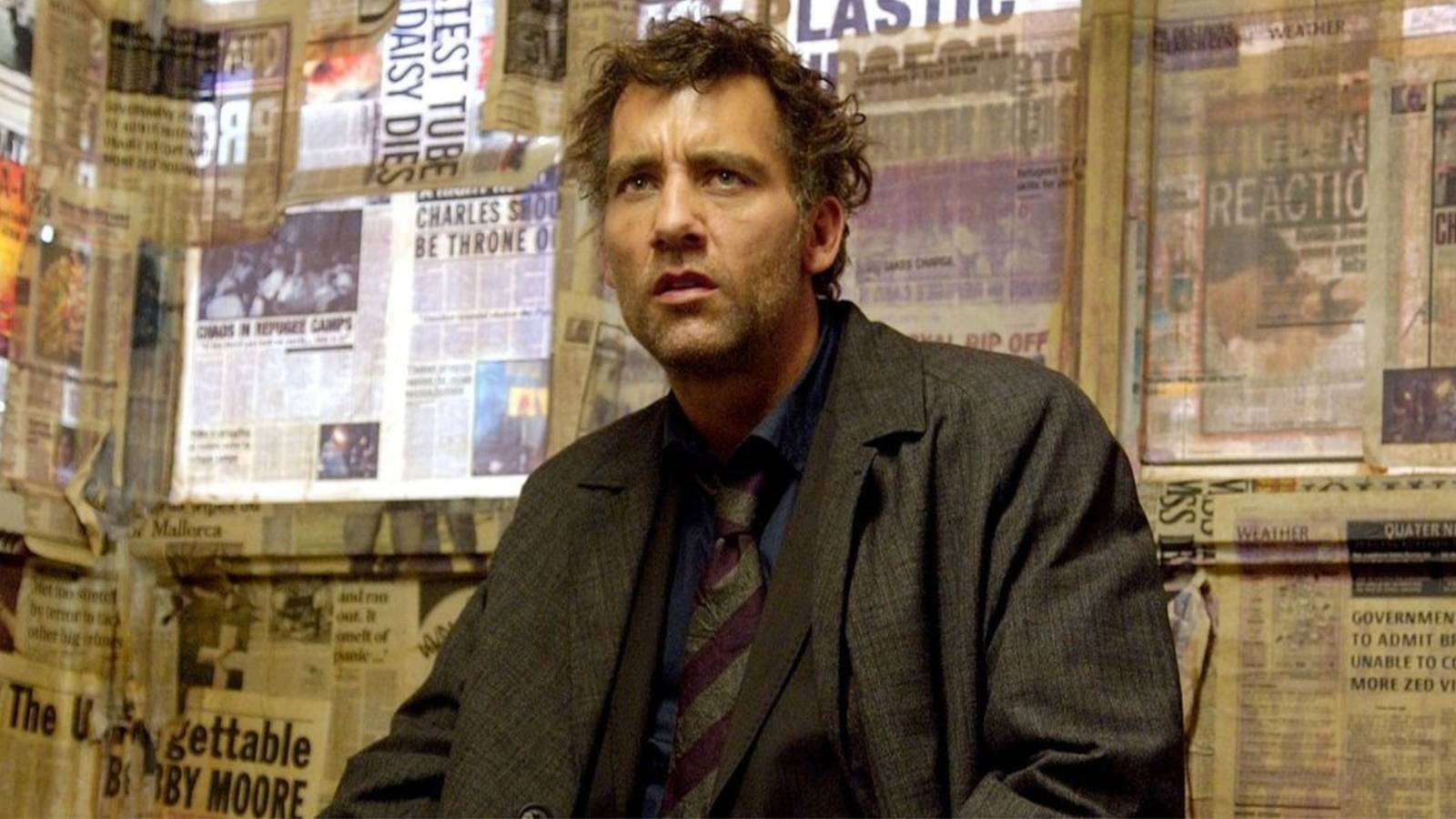
Image via Universal Pictures Published Jul 20, 2026, 7:41 AM EDT Luc Haasbroek is a writer and videographer from Durban, South Africa. He has been writing professionally about pop culture for eight years. Luc's areas of interest are broad: he's just as passionate about psychology and history as he is about movies and TV. He's especially drawn to the places where these topics overlap. Luc is also an avid producer of video essays and looks forward to expanding his writing career. When not writing, he can be found hiking, playing Dungeons & Dragons, hanging out with his cats, and doing deep dives on whatever topic happens to have captured his interest that week. Sign in to your Collider account Sci-fi and thrillers have always been a natural combination. There's something inherently uncanny and tense about ideas of futuristic technology, space travel, or unknown life forms. Indeed, the subgenre's best movies mine all these elements for maximum tension, resulting in truly shocking and anxiety-inducing masterworks. With that in mind, this list looks at some of the iconic and timeless sci-fi thrillers that are great from beginning to end. Every tension-filled scene pushes the story forward, and there's never a wrong note. The titles below are perfectly constructed and cleverly executed, sustaining the suspense the whole way through. 'Contagion' (2011) Image via Warner Bros. "There's informed discussion on the blogosphere that this is a biological weapon." One of the smartest and most realistic "plague" movies ever. In Contagion, a mysterious illness spreads with terrifying speed across the globe. We follow doctors, scientists, government officials, journalists, and ordinary citizens as they struggle to understand and contain the pandemic before it wipes out civilization. Director Steven Soderbergh (a storyteller with amazing range) builds suspense through procedural detail, focusing on the mechanics of tracing infections and developing vaccines. Obviously, it all rings uncomfortably true now in the wake of COVID, and it's a big part of why Contagion is so good. It was remarkably prescient, while remaining thrilling rather than dry. It helps that the ensemble cast is so great: Matt Damon, Kate Winslet, Laurence Fishburne, Marion Cotillard, and Jude Law all turn in great work here. 'A Scanner Darkly' (2006) Image via Warner Bros. "What does a scanner see?" Like Soderbergh, Richard Linklater has a varied filmography, including experimental dramas alongside blockbuster comedies. His strangest project, however, is this Philip K. Dick adaptation told through rotoscope animation. Set in a near-future America ravaged by addiction to the mysterious Substance D, A Scanner Darkly centers on undercover narcotics agent Bob Arctor (Keanu Reeves), who gradually loses his grip on reality while investigating the very drug to which he himself has become addicted. The movie strikes a fine balance between dark humor, outright tragedy, and sci-fi speculation, while also nailing the author's profound distrust of authority. Surprisingly, the dreamlike animation ends up suiting the subject matter perfectly. Rather than just being a gimmick, the constantly shifting visuals reflect Arctor's deteriorating mental state, making it increasingly difficult for the audience to distinguish reality from hallucination. 'Moon' (2009) Image via Sony Pictures Classics "I want to go home." Sam Rockwell leads this one as Sam Bell, a solitary worker nearing the end of a three-year assignment overseeing an automated helium-3 mining operation on the Moon. With only the station's artificial intelligence, GERTY, for company, Sam eagerly anticipates returning home to his wife and daughter. However, after a serious accident outside the base, he uncovers a truth that forces him to question everything he believes about his identity. This premise could've turned into a pulpy space thriller, but director Duncan Jones turns it into something a lot more interesting, in part thanks to his restraint. He avoids unnecessary action sequences or elaborate visual effects, instead leaning into psychological uncertainty. The genre elements never overwhelm the story's human core, and Rockwell's performance, lonely, confused, likable, and vulnerable, carries the whole thing. 'Children of Men' (2006) Image via Universal Pictures "As the sound of the playgrounds faded, the despair set in." Set in a future where humanity has become infertile, Alfonso Cuarón's Children of Men follows disillusioned bureaucrat Theo Faron (Clive Owen) as he becomes responsible for protecting the world's first pregnant woman (Clare-Hope Ashitey) in nearly two decades. Their desperate journey across a collapsing Britain places them at the center of political unrest, hunted by competing factions determined to exploit the miraculous pregnancy. It's a grim vision but an immersive one. Every detail of the world feels authentic, from overcrowded refugee camps to militarized cities slowly surrendering to hopelessness. Stylistically, Children of Men is also impressive. Cuarón's celebrated long takes place alongside Theo as chaos erupts around him, resulting in some of the most breathtaking suspense sequences of the decade. It's a masterclass in how to stage a chase scene. '12 Monkeys' (1995) Image via Universal Pictures "There's no right, there's no wrong. There's only popular opinion." This quirky gem from Terry Gilliam sees Bruce Willis pushing himself into new acting territory as James Cole, a prisoner from a future devastated by a deadly virus. He is sent back in time to gather information about the catastrophe before it occurs. Instead of finding clear answers, however, Cole becomes entangled in a labyrinth of memory, madness, and shifting timelines. The plot is dark but delightfully twisty, constantly keeping us off balance and hitting us with one shocking revelation after another. It's also ambiguous, to the point that we're often uncertain as to whether Cole really is a time traveler... or simply mad. Willis deserves props for his strong work in the lead role, supported by equally great turns from Madeleine Stowe, as well as an unforgettable, Oscar-nominated Brad Pitt. Collider Exclusive · Sci-Fi Survival Quiz Which Sci-Fi World Would You Survive? The Matrix · Mad Max · Blade Runner · Dune · Star Wars Five universes. Five completely different ways the future went wrong — or sideways, or up in flames. Only one of them is the world your instincts were built for. Eight questions will figure out which dystopia, galaxy, or desert wasteland you'd actually make it out of alive. 💊The Matrix 🔥Mad Max 🌧️Blade Runner 🏜️Dune 🚀Star Wars TEST YOUR SURVIVAL → 01 You sense something is deeply wrong with the world around you. What do you do? The first instinct is often the truest one. APull on every thread until I understand the system — then figure out how to break it. BStop asking questions and start stockpiling — food, fuel, weapons. Questions don't keep you alive. CKeep my head down, observe carefully, and trust no one until I know who's pulling the strings. DStudy the patterns. Every system has a rhythm — learn it, and you learn how to survive it. EFind the people fighting back and join them. You can't fix a broken galaxy alone. NEXT QUESTION → 02 In a world of scarcity, what resource do you guard most fiercely? What we protect reveals what we believe survival actually requires. AKnowledge. If you understand the system, you don't need resources — you can generate them. BFuel. Everything else — movement, power, escape — runs on it. CTrust. In a world of fakes and informants, a truly reliable ally is rarer than any commodity. DWater. And after water, information — the two things empires are truly built on. EShips and credits. The galaxy is big — you survive it by being able to move through it freely. NEXT QUESTION → 03 What kind of threat keeps you up at night? Fear is useful data — if you're honest about what you're actually afraid of. AThat reality itself is a lie — that everything I experience has been constructed to keep me compliant. BA raid. No warning, no mercy — just the roar of engines and then nothing left. CBeing identified. Once someone with power decides you're a problem, you're already out of time. DBeing outmanoeuvred — losing a political game I didn't even know I was playing. EThe Empire tightening its grip until there's nowhere left to run. NEXT QUESTION → 04 How do you deal with authority you don't trust? Every dystopia has a power structure. Your approach to it determines everything. ASubvert it from the inside — learn its rules well enough to weaponise them against it. BIgnore it and stay out of its reach. The further from any power structure, the better. CAppear to comply while doing exactly what I need to do. Visibility is the enemy. DManoeuvre within it carefully. You can't beat a system you refuse to understand. EResist openly when I have to. Some things are worth the risk of being seen. NEXT QUESTION → 05 Which environment could you actually endure long-term? Survival isn't just tactical — it's physical, psychological, and very much about where you are. AUnderground bunkers and server rooms — cramped, artificial, but with access to everything that matters. BOpen wasteland — brutal sun, no shelter, constant movement. At least the threat is honest. CA dense, rain-soaked city where you can disappear into the crowd and nobody asks questions. DMerciless desert — extreme heat, no water, and something enormous living beneath the sand. EThe fringe — backwater planets and busy spaceports where the Empire's attention rarely reaches. NEXT QUESTION → 06 Who do you want in your corner when things fall apart? The company you keep is the clearest signal of who you actually are. AA tight crew of believers who've seen behind the curtain and have nothing left to lose. BOne or two people I'd trust with my life. Any more than that and someone talks. CNobody, ideally. Alliances are liabilities. I work alone unless I have no choice. DA community bound by shared hardship and mutual survival — people who need each other to last. EA ragtag team with wildly different skills and total commitment when it counts. NEXT QUESTION → 07 Where do you draw the line — if you draw one at all? Every survivor eventually faces a moment that tests what they're actually made of. AI won't harm the innocent — even the ones who'd report me without hesitation. BI do what I have to to protect the people I've chosen. Everything else is negotiable. CThe line shifts depending on who's asking and what's at stake. DI draw a long-term line — nothing that compromises my people's future, even if it'd help now. ESome lines, once crossed, can't be uncrossed. I know which ones they are. NEXT QUESTION → 08 What would actually make survival worth it? Staying alive is one thing. Having a reason to is another. AWaking others up — dismantling the illusion so no one else has to live inside it. BFinding somewhere — or someone — worth protecting. A reason to keep moving. CAnswers. Understanding what I am, what any of this means, before time runs out. DLegacy — shaping the future in a way that outlasts me by generations. EFreedom — for myself, for others, for every world still living under someone else's boot. REVEAL MY WORLD → Your Fate Has Been Calculated You'd Survive In…Your answers point to the world your instincts were built for. This is the universe your temperament, your survival instincts, and your particular brand of stubbornness were made for. The MatrixYou took the red pill a long time ago — probably before anyone offered it to you. You're a systems thinker who can't help but notice the seams in things. You're drawn to understanding how the system works before figuring out how to break it. You'd find the Resistance, or it would find you — your instinct for spotting constructed realities is the machines' worst nightmare. You function best when you have access to information and the freedom to act on it. The Matrix built an airtight prison. You'd be the one probing the walls for the door. Mad MaxThe wasteland doesn't reward the clever or the well-connected — it rewards those who are hard to kill and harder to break. That's you. You don't need comfort, community, or a cause larger than the next horizon. You need a vehicle, a clear threat, and enough fuel to outrun it — and you're good at all three. You are unsentimental enough to survive that world, and decent enough — just barely — to be something more than another raider. In the wasteland, that distinction is everything. Blade RunnerYou'd survive here because you know how to exist in moral grey areas without losing yourself completely. You read people accurately, keep your circle small, and ask the questions others prefer not to answer. In a city where humanity is a legal designation rather than a feeling, you hold onto something that keeps you functional. You're not a hero. But you're not lost, either. In Blade Runner's world, that distinction is everything. DuneArrakis is the most hostile environment in the known universe — and you are precisely the kind of person it rewards. Patience, discipline, and political awareness are your core strengths — and on Arrakis, they're survival tools. You understand that the long game matters more than any single victory. Others come to Dune and are consumed by it. You'd learn its logic and earn its respect. In time, you wouldn't just survive Arrakis — you'd begin to reshape it. Star WarsThe galaxy far, far away is vast, loud, and in a constant state of violent political upheaval — and you wouldn't have it any other way. You find meaning in being part of something larger than yourself — a cause, a crew, a rebellion. You'd gravitate toward the Rebellion, or the fringes, or whatever pocket of the galaxy still believes the Empire's grip can be broken. You fight — not because you have to, but because standing aside isn't something you're capable of. In Star Wars, that willingness is what makes all the difference. ↻ RETAKE THE QUIZ 'Primer' (2004) Image via THINKFilm "The permutations were endless." Made on an extraordinarily small budget, Shane Carruth's Primer compensates for its lack of special effects and visual polish with intricate storytelling, convincing science, and a plot that rewards multiple viewings. The story follows engineers Aaron (Carruth) and Abe (David Sullivan), who accidentally invent a device capable of sending a person backward through time. Initially using the discovery for financial gain, the pair soon find themselves trapped within increasingly tangled timelines that threaten both their friendship and their understanding of reality. Unlike more crowd-pleasing time-travel stories such as Back to the Future, Primer stubbornly refuses to simplify its science or its consequences. Carruth trusts viewers to piece together the puzzle through careful observation, which is exactly what makes it great. Rather than the usual tropes of the subgenre, the film is concerned with the psychological and ethical consequences of manipulating time, and nails it. 'Ex Machina' (2015) Image via A24 "One day, the AIs are going to look back on us the same way we look at fossil skeletons on the plains of Africa." Ex Machina begins with young programmer Caleb (Domhnall Gleeson) winning a company competition to spend a week at the secluded home of brilliant technology CEO Nathan (Oscar Isaac). Once there, Caleb discovers that he has actually been recruited to evaluate Nathan's newest creation: Ava (Alicia Vikander), an android who appears to be conscious. From here, the movie draws on noir conventions but filters them through a clever sci-fi lens, raising difficult questions of intelligence, manipulation, and what it truly means to be human. The psychological tension remains high throughout, with every conversation between the characters altering our understanding of who they are and what they're aiming at. It was all fantastic back in 2015 and has only grown more relevant in light of the recent strides in AI. 'Inception' (2010) "You mustn't be afraid to dream a little bigger, darling." With Inception, Christopher Nolan combined blockbuster spectacle with an ingenious sci-fi premise (though one with shades of Paprika). The story revolves around Dom Cobb (Leonardo DiCaprio), a professional thief who specializes in infiltrating dreams to steal valuable information. Offered a chance to erase his criminal record, Cobb assembles a team to perform the seemingly impossible task of planting an idea inside someone else's mind rather than extracting one. From here, we get killer action sequences, pioneering visual effects (the revolving hallway fight has become legendary), dreams within dreams, and a brilliantly thunderous score from Hans Zimmer. Then, to top it all off, Inception gives us one of the greatest final shots in cinema history. The spinning top trembles, and a thousand fan theories are launched, but Cobb instead turns to his family. 'The Thing' (1982) Image via Universal Pictures "Nobody trusts anybody now... and we're all very tired." Although its bleakness went unappreciated back in 1982, The Thing has rightly been canonized as one of sci-fi's classics. It traps a group of American researchers in an isolated Antarctic outpost after they unknowingly encounter a shape-shifting extraterrestrial organism capable of perfectly imitating any living creature. Paranoia spreads through the station, and trust breaks down, threatening to tear the group apart. The extraordinary practical effects, courtesy of legend Rob Bottin, remain astonishing decades later, contributing to a relentless atmosphere of fear and uncertainty. Every revelation increases the danger, while Ennio Morricone's minimalist score reinforces the overwhelming sense of isolation. By the time the unforgettable ending arrives, The Thing has become far more than a creature feature: it's a meditation on survival, mistrust, and humanity's remarkable capacity for self-sabotage. 'Alien' (1979) Image via 20th Century Studios "In space no one can hear you scream." Alien is perhaps the perfect fusion of sci-fi and thriller. After responding to a mysterious distress signal, the commercial spaceship Nostromo inadvertently brings aboard a deadly organism that begins hunting the crew one by one. Cut off from help and trapped deep in space, the survivors must confront a predator unlike anything they have ever encountered. Famously, the movie is structured like a haunted house story in space, unfolding at a delectable slow-burn. Sigourney Weaver is fantastic as the lead, while H.R. Giger contributes some of the greatest monster design in movie history. The Xenomorph has a twisted life cycle, each stage more repulsive than the last, culminating in an adult form defined by an extended cranium, bladed tail, acid blood, and a mouth on its tongue. Almost 50 years later, it remains the scariest alien in the cinematic universe. Alien Release Date June 22, 1979
10 Sci-Fi Thrillers That Are Perfect From the First Scene to the Last
Full Article
Original Source
Read the full article at Collider →KhanList aggregates and links to publicly available news content. We do not host full articles from third-party sources. Always verify important information with original sources.