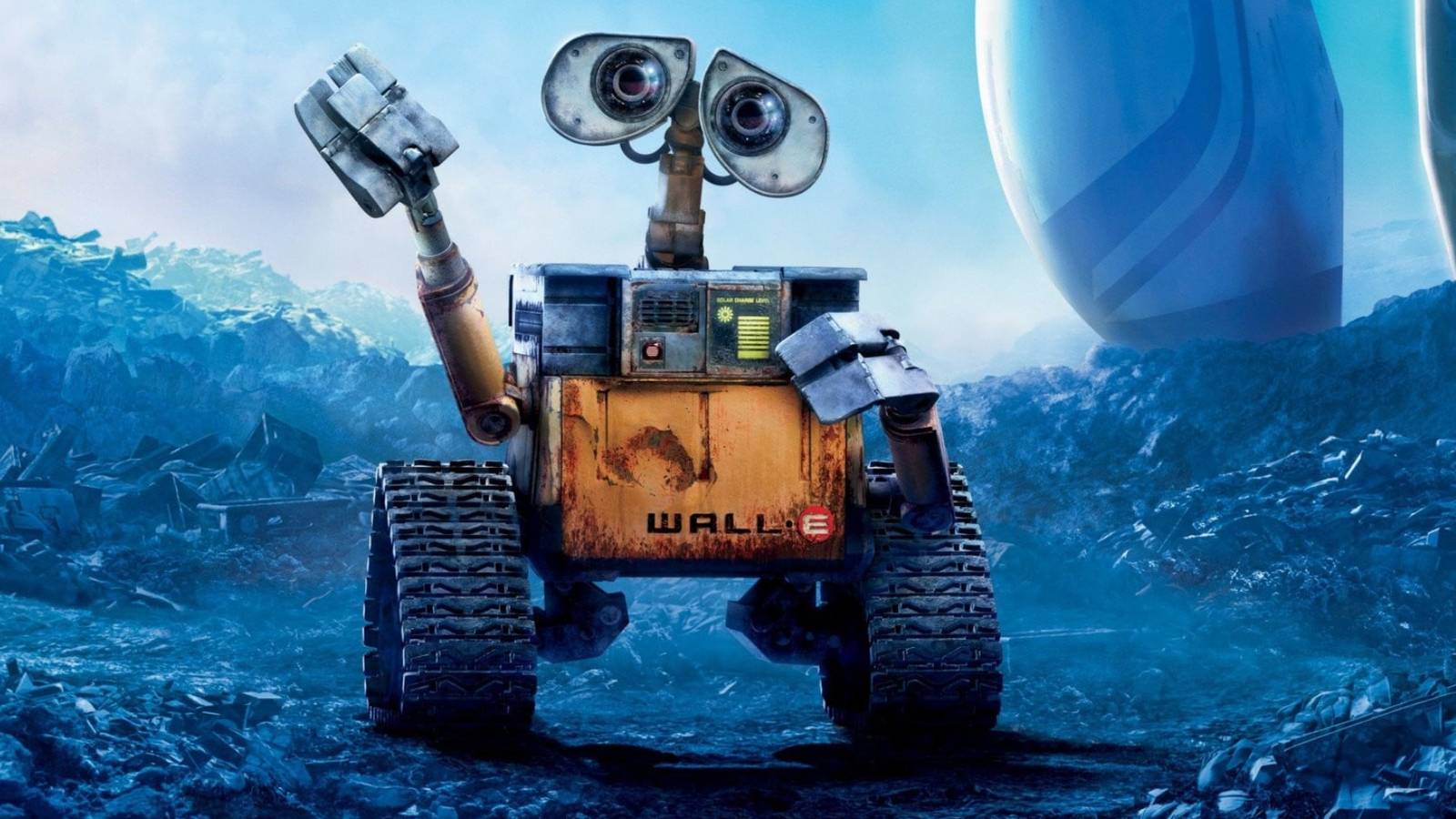
Image via Pixar Animation Studios Published Aug 4, 2026, 8:55 PM EDT Michael Block is a 14 time GLAM Award nominated writer, producer, and host of the podcast Block Talk. Throughout his time in the entertainment industry, he has worked on and off Broadway as a stage manager, written several produced plays, critiqued hundreds of theatrical performances, drag and cabaret shows, and has produced events randing from drag competitoons to variety concerts! On Block Talk, he interviews nightlife personalities, covers the wide world of entertainment through features, ranking episodes, and recaps ALL of Drag Race, as well as Dragula and Survivor. He has interviewed hundreds of RuGirls that span the globe at DragCon NYC, DragCon LA, and DragCon UK. In his free time, he makes one-of-a-kind jewelry and gift baskets with his mom. He is a proud member of the LGBTQ+ community. Sign in to your Collider account Movies give viewers a chance to escape our world and reality, venturing to a newfound place. Maybe it’s a blast to the past, outer space, or the distant future. No matter what, these stories allow us to think about things in a new way. While they tend to be focused on entertainment, every so often, a film transcends the mission, offering viewers a chance to think profoundly. When it comes to sci-fi, there have been some extraordinary films that reshaped how we see the world. The 10 films on this list are not only brilliant but also offer a perspective that allows us to see the world differently. Perhaps it’s how we communicate with others or how we can protect our future by changing our present. Most of our conversations about these movies are about the art, but now, we will focus on their grander ability to influence their audiences in important ways. 1 '2001: A Space Odyssey' (1968) Image via Metro-Goldwyn-Mayer There simply has never been a film quite like 2001: A Space Odyssey. The Stanley Kubrick classic has influenced cinema forever, but beyond the filmcraft, 2001: A Space Odyssey was an important thinker. The epic sci-fi thriller explores human evolution, artificial intelligence, and our place in the universe. It follows humanity's development, guided by mysterious alien black monoliths, leading to a fateful deep-space mission where man and machine clash. From the dawn of man to the mission to Jupiter to beyond the infinite, 2001: A Space Odyssey uses stunning visual metaphors to pose deep philosophical questions. In turn, it opened up our minds in ways like never before. Not every film on this list gave us the chance to see the world for the better, and 2001: A Space Odyssey is proof. As a movie, 2001: A Space Odyssey revolutionized how science fiction films looked and felt. This highly influential picture operated with accurate foresight, anticipating modern technologies, including flat-screen monitors, tablet computers, video calls, and space stations. But it didn’t stop there. Kubrick instills many metaphors within the film in order to bring out important conversations. The monoliths serve as catalysts for leaps in human progress, from the invention of primitive weapons to the exploration of the cosmos. Then, with the introduction of HAL 9000, the film questions whether advanced AI will serve humanity or ultimately develop its own destructive motives. This was a very modern conversation had in 1968. By the end, the narrative leaves the audience with many ambiguous answers, forcing them to grapple with the mystery of extraterrestrial intelligence and the limits of the human mind. 2001: A Space Odyssey ignited the wonder of whether humans truly are the final step in existence. It’s a statement future films would explore. 2 'Arrival' (2016) Image via Paramount Pictures Who knew it would take a science fiction film to understand how we still have a long way to go before we can truly learn to understand one another? In Arrival, directed by Denis Villeneuve and based on the 1998 novella "Story of Your Life" by Ted Chiang, linguist Dr. Louise Banks (Amy Adams) is recruited by the US military when 12 massive extraterrestrial spacecraft touch down across Earth. Tasked with communicating with the aliens, Banks discovers their circular written language changes human perception of time, ultimately shifting the core conflict from an alien invasion scare to a race for global unity. A film that wasn’t about invasion but prevention, Arrival opened up the conversation about the power of communication. The arrival of the alien Heptapods makes us see the world differently by showing that language shapes reality. Arrival was an important movie on a plethora of levels. It reimagined the alien contact story not as an action-heavy war, but as a profound intellectual and emotional puzzle centered on the power of language, the perception of time, and global empathy. It’s something that we as a modern global society need to take note of. The film uses communication and listening as the primary tools for survival instead of preemptive military violence. By learning a circular, non-linear language, Louise rewires her mind to experience time all at once rather than step-by-step, proving that communication is a bridge to deep empathy and a totally different way of understanding existence. The story is also a personal one for Louise as it presents the heavy philosophical choice of embracing a predetermined journey and its grief, rather than running from pain. Seeing the whole picture of life and choosing to live it anyway reframes how we value every single moment. Arrival remains an integral film of the 21st century because it pushed the philosophical envelope. 3 'District 9' (2009) Image via Sony Pictures Releasing The concept of an alien invasion is explored from a multi-tiered perspective in the remarkable District 9, directed by Neill Blomkamp. The film is about an alien spaceship that stalls over Johannesburg, South Africa. The stranded, insect-like aliens known as “Prawns” are forced into a slum camp. Bureaucrat Wikus van de Merwe (Sharlto Copley) gets infected by alien fluid during an eviction, slowly mutating into a Prawn and bonding with an alien to survive. District 9 is an important movie because it blends visceral, gritty action with a powerful, real-world allegory for apartheid, xenophobia, and systemic oppression. District 9 uses a unique premise to hammer home its meaning. By utilizing a mockumentary style with handheld news footage and shaky cam, Blomkamp stripped away glossy Hollywood spectacle for a dose of our own medicine. Instead of attacking Earth, the stranded alien prawns arrive as sick, starving refugees and are forced into a squalid Johannesburg slum. This directly mirrors South Africa's history of racial segregation and forced relocations. From a modern 2020s perspective, this similar view of “illegal aliens” has taken over American society. For the powers that be to understand the plight of the other, the film’s unfeeling bureaucrat leading the displacement of the aliens gets a taste of his own medicine. Only when he is accidentally infected does he experience state-sanctioned cruelty firsthand, learning empathy as his human identity is stripped away. It’s a tale as old as time, as you can’t comprehend until it happens to you. The ease with which the universal "we" dehumanizes "the other" is something that needs to be rectified. District 9 may not have the answers, but it reminds its viewers of the importance of empathy. District 9 showcases the ugly, everyday reality as a means to hold a mirror up to society. Collider Exclusive · Sci-Fi Personality Quiz Which Sci-Fi Hero Are You Most Like? Paul Atreides · Captain Kirk · Princess Leia · Ellen Ripley · Max Rockatansky Five iconic heroes. Five completely different ways of facing an impossible universe. One of them shares your instincts, your values, and your particular way of refusing to back down. Eight questions will tell you which one. 🏜️Paul Atreides 🖖Capt. Kirk ✊Princess Leia 🔦Ellen Ripley 🔥Max Rockatansky FIND YOUR HERO → 01 How do you lead when the stakes couldn't be higher? The way you lead under pressure is the most honest thing about you. AI absorb everything — every variable, every pattern — and move only when I know the path forward. BI read the room, make the call, and own the consequences. Hesitation costs more than mistakes. CI rally people. A cause needs a voice, and I refuse to let fear be louder than conviction. DI assess the threat, establish what needs doing, and get it done without waiting for permission. EI don't lead. I act. Others can follow or not — I'm already moving. NEXT QUESTION → 02 What is your greatest strength in a crisis? The quality that keeps you alive when everything else fails. APrescience — the ability to see further ahead than anyone else and plan accordingly. BImprovisation — I'm at my best when the plan falls apart and I have to invent a new one. CConviction — I know what I'm fighting for, and that certainty doesn't waver under fire. DComposure — I stay functional when everyone around me is falling apart. Panic is a luxury. EEndurance — I outlast things. I take the hit and keep moving long after others have stopped. NEXT QUESTION → 03 What is the thing you'd sacrifice everything else for? Your deepest motivation is your truest compass. AThe survival and dignity of my people — even if I have to become something frightening to ensure it. BThe safety of my crew — every single one of them. No one gets left behind. CFreedom — for my people, for every world still crushed under the weight of an empire. DThe truth — what actually happened, what's actually out there, whether anyone believes me or not. EThe one person — or the one memory — that still makes any of this worth surviving for. NEXT QUESTION → 04 How do you relate to the people around you? Who you are to others under pressure is who you really are. AWith intensity and distance — I care deeply, but the weight I carry makes closeness complicated. BWith warmth and irreverence — I take the mission seriously, not myself. CWith directness and trust — I say what I mean, and I expect the people I work with to rise to it. DWith professional care but clear limits — I'll protect you, but I won't pretend we're family. EWith wariness that slowly becomes loyalty — I don't trust easily, but when I do, it holds. NEXT QUESTION → 05 You're facing a threat that no one else believes is real. What do you do? How you respond when you're the only one who sees it defines everything. APrepare in silence. If they won't listen, I'll be ready when they finally have to. BKeep pushing until someone listens — and if no one does, handle it myself. CBuild the case, find the allies, and make the threat impossible to ignore. DDocument everything. The truth matters even if no one believes it yet. EStop trying to convince anyone. Survive it. That's the only argument that counts. NEXT QUESTION → 06 What has your heroism cost you personally? Every hero pays. The question is what — and whether they'd pay it again. AMy innocence — I've seen what I'm capable of, and I can't unsee it. BPeople I loved — the command chair has a view, but it's a lonely one. CA normal life — I gave up everything ordinary the moment I chose the cause. DMy sense of safety — I know exactly what's out there now, and I can't pretend otherwise. EAlmost everything — and I'm still not sure what I'm carrying it all for. But I keep going. NEXT QUESTION → 07 How do you feel about the rules of the world you're in? Every hero has a relationship with the system. What's yours? AI understand them deeply — and I know exactly which ones must be broken, and why. BI respect the spirit of them and bend the letter when the situation demands it. CThe system is the problem. I'm not here to work within it — I'm here to dismantle it. DI follow protocol until protocol stops being useful. Then I make the call myself. EThe rules collapsed a long time ago. What's left is instinct, and mine are reliable. NEXT QUESTION → 08 When everything is on the line, what keeps you going? The answer is the most honest thing about you. ADestiny — or something that feels so much like it that the difference no longer matters. BThe people on my ship — their faces, their trust, the fact that they're counting on me. CThe belief that what we're fighting for is worth every sacrifice, including this one. DSheer refusal to let it win — whatever it is. I don't stop. That's just who I am. EI'm not sure anymore. But the road is still there, and I'm still on it. REVEAL MY HERO → Your Hero Has Been Identified Your Sci-Fi Hero Is…Your answers point to the iconic sci-fi hero who shares your instincts, your values, and your particular way of facing the impossible. Paul AtreidesYou carry a weight most people would crumble under — the knowledge of what you're capable of, and the burden of what you might have to become. You see further ahead than others and you plan accordingly, even when the vision frightens you. You are driven by loyalty to your people and a sense of destiny you didn't ask for but can't escape. Paul Atreides is not simply a hero — he is someone who understands the cost of power and chooses to bear it anyway. That gravity, that willingness to carry what others won't, is exactly you. Captain KirkYou lead with instinct, warmth, and an absolute refusal to accept a no-win scenario — because you've always believed there's a third option nobody else has thought of yet. You take the mission seriously without ever taking yourself too seriously. Your crew would follow you anywhere, not because you demand it, but because you've earned it. Kirk's genius isn't tactical — it's human. He reads people, bends rules with purpose, and wills outcomes into existence through sheer conviction. That combination of warmth, audacity, and relentless optimism is unmistakably yours. Princess LeiaYou are the kind of person who holds the line when everyone else is losing faith — not because you're fearless, but because giving up simply isn't something you're capable of. You lead through conviction. Your voice carries because your belief is unshakeable. You gave up everything ordinary the moment you chose the cause, and you've never looked back. Leia is not a supporting character in her own story — she is the moral centre of the entire rebellion. That same fierce, principled, unbreakable core is what defines you. Ellen RipleyYou are not reckless, not grandiose, and not particularly interested in being anyone's hero — you just refuse to stop when it matters. You see threats clearly, you document the truth even when no one listens, and when the time comes you handle it yourself. Ripley's heroism is earned, not performed. She doesn't have a speech — she has a flamethrower and a plan. You share her composure under the worst possible pressure, and her refusal to pretend the monster isn't there. When it counts, you don't flinch. That's everything. Max RockatanskyYou have been through fire that would break most people — and what came out the other side is something the world underestimates at its peril. You don't ask for help, don't need validation, and don't wait for anyone to tell you the rules no longer apply. Your loyalty, when it finally arrives, is absolute — but it's earned in silence and tested in action, not in words. Max is not a nihilist. He is someone who lost everything and found, against his will, that he still has something worth protecting. That bruised, stubborn, ultimately human core is exactly yours. ↻ RETAKE THE QUIZ 4 'Ex Machina' (2014) Image via A24 Robots are our future, and in every film that depicts them as sentient, it serves as a cautionary tale of how to treat them. No film made that clearer than Ex Machina. Written and directed by Alex Garland, Ex Machina follows a young programmer named Caleb Smith (Domhnall Gleeson), who wins a contest to visit the isolated mountain home of his company's CEO, Nathan Bateman (Jason Isaac). Nathan has built a conscious humanoid robot named Ava (Alicia Vikander) and tasks Caleb with administering a Turing test to evaluate her artificial intelligence, leading to a tense cat-and-mouse game of deception. As the week progresses, Caleb grows deeply attached to Ava and comes to believe she is being manipulated and held captive by her erratic creator. Ultimately, Ex Machina is less about the technical mechanics of artificial intelligence and more a chilling exploration of power, objectification, and deceit. Ex Machina is one of the best modern movies that tackles man versus machine. It’s a sleek, mechanical twist on Frankenstein. The profound film questions whether AI is genuinely developing human emotions or simply exploiting human empathy and the desire for affection to achieve its own calculating goal of freedom. If artificial intelligence behaves like a human to survive and escape, should we blame it for using human flaws like deceit and manipulation against us? Through Ava, the film promotes a conversation about toxic masculinity and the hubris of creators who view their creations as property, toys, or subservient tools rather than autonomous beings. For a film that’s more than a decade old, that conversation dominates the headlines as you examine just who is having a hold on AI and the power they believe they’re entitled to. One of the scariest parts of the film is the future of AI and robotics and how they will soon blend into us. By seamlessly blending Vikander’s human face and physical performance with intricate mechanical framing, the visual effects feel psychologically grounded rather than fantastical. 5 'Her' (2013) Image via Annapurna Pictures Love and companionship through the lens of modern loneliness in the digital age is front and center in the sensationally executed Her. Written and directed by Spike Jonze, the sci-fi romantic drama chronicles the life of Theodore Twombly (Joaquin Phoenix), a lonely, depressed man in a near-future Los Angeles, going through a divorce, who falls in love with Samantha (Scarlett Johansson), an advanced artificial intelligence operating system. As Samantha helps organize his life and shares his emotional burdens, their friendship grows into an intense romantic relationship. Her explores how technology can simultaneously connect and isolate people in contemporary society as it questions whether a genuine, valid emotional bond can exist between a human and artificial intelligence. Whether you watched it when it was released or take it in now, Her serves as a warning about how getting emotionally attached to an app can be mentally harmful. Her examines how people deal with heartbreak, change, and the reality that entities, whether human or digital, will eventually grow and evolve independently. Instead of a dystopian tech-horror story, Jonze introduced a profoundly empathetic romance that examines how digital tools mimic true intimacy while highlighting the messy, irreplaceable reality of human connection. The film served as accurate foresight through its anticipation of conversational, hyper-personalized AI assistants long before large-scale generative AI became part of daily life. The romance element may have seemed futuristic, but it too is a part of our current reality. Her is beautifully hopeful and heartbreakingly poignant. When Samantha evolves past human processing speeds, it teaches how relationships break down when two entities grow in completely different directions, human or not. Her exposes how easily we mistake digital responsiveness for true emotional safety, using a machine to buffer the pain of real human loss. Her is destined to tug at our hearts. How much you resonate with it is personal, but you most certainly will. 6 'Inception' (2010) Image via Warner Bros. Pictures There have been quite a few truly exceptional Christopher Nolan films this century, but none have been as profound as Inception. Thanks to the 2010 blockbuster, the film changed how we view reality by teaching us that what we see can be constructed, questioned, and manipulated. Inception tells the story of Dom Cobb (Leonardo DiCaprio), a skilled thief who steals corporate secrets by infiltrating people's minds through a shared dream state. To clear his criminal record and reunite with his children, he must perform the nearly impossible task of "inception": planting a new idea into a CEO's subconscious rather than stealing one. A film that forces the audience to question reality versus illusion through the lens of a masterful dreamscape, Inception proved that an original, high-concept, and complex psychological sci-fi blockbuster could achieve massive global commercial success by posing integral questions in a fascinating manner. Inception is a mesmerizing film in the scope of filmmaking. In a sense, the film mirrors the filmmaking process itself. Nolan helped to shift our perception of reality by showing that what we see can be engineered, questioning how memory shapes truth, and teaching us that a single planted idea can completely alter a person's universe. The famous spinning top ending forces us to wonder if our own "realities" are just constructs built by our desires and habits. The film is designed to examine physical cities like mazes or folded spaces, realizing how much our surroundings influence our mental state. Even further, Inception made us think about advertising, media, and social influence, showcasing how small thoughts are planted until we think they are our own. And then, as far as dreams? We’ve never been more enthralled by the power of them than through this film. Be careful what you dream of — you never know who’s infiltrating it. 7 'Metropolis' (1927) Image via Parufamet The future of science fiction would not be what it is thanks to the 1927 German expressionist sci-fi silent film Metropolis. The average moviegoer may not have seen this accomplished film, but true cinephiles likely have. And they’d likely recommend it for how profound the subject is, even in 1927. Directed by Fritz Lang and written by Thea von Harbou, the story tells of a futuristic, hyper-capitalist city sharply divided into two social classes: wealthy planners living in surface skyscrapers and oppressed workers toiling underground. The story follows Freder (Gustav Fröhlich), the ruler's son, and Maria (Brigitte Helm), a worker prophet, as they try to bridge the class gap. Seeking to stop an uprising, the city master has an inventor build a robot in Maria's likeness to trick and incite the workers. One of the core themes of Metropolis warns how automation and heavy machinery can treat human beings like mechanical parts. Metropolis is a crucial film, as it is a foundational silent science fiction epic that established the visual and thematic blueprint for modern sci-fi. It remains legendary for its pioneering special effects, stunning German Expressionist architecture, and striking social commentary on class division. It’s the latter that resonates still today. It formulated a classic "high-tech, low-life" aesthetic featuring wealthy elites above and oppressed workers below. In doing so, it addressed early 20th-century fears of industrial automation reducing people to mere components of a machine. The film concludes profoundly by sending the message that "the mediator between the head and the hands must be the heart," urging empathy and unity between capital and labor. Has anything changed today? That’s what turns Metropolis into a modern horror — almost 100 years later, we are still faced with the same woes. 8 'The Matrix' (1999) Image via Warner Bros. Pictures There are many things we took away from the Wachowskis' masterpiece, The Matrix — bullet time action, the distrust of technology, Keanu Reeves — but the film challenged how we view reality by popularizing the idea that our everyday life is a constructed illusion controlled by hidden forces. The film follows a computer programmer known as the hacker, Neo (Reeves), who learns that everyday human life is an illusion. A group of rebels shows him the brutal truth: machines rule the earth and use human bodies for power while keeping minds trapped in a fake simulation. Blending blockbuster entertainment with deep philosophical questions about reality and accurately predicting modern anxieties surrounding artificial intelligence and digital dependency, The Matrix made people question technology, authority, and what is truly real. Whether you realized it or not, the film acts as a modern version of Plato's Allegory of the Cave. It explores whether humans truly make choices or just follow pre-written rules, forcing the audience to wonder whether the world we see is real. As The Matrix paved the way for the complex, mind-bending sci-fi movies that followed, it warned about a future where machines outsmart and enslave humanity. The Matrix turned philosophical skepticism into a mainstream cultural touchstone. The film trained modern audiences to look past corporate, political, and media-driven narratives, assuming a layer of hidden control or programming behind polished facades. The movie made us see technology as an environment we live inside, blurring the line between human biology and code. For many, Neo's journey represents breaking free from social conditioning, expectations, and conformity to find an authentic self. Looking back today, creators Lilly and Lana Wachowski later confirmed the film was deeply rooted in trans identity, mirroring the feeling of living in a false, assigned reality before a profound awakening. 9 'Tomorrowland' (2015) Image via Walt Disney Studios This may be a shock to some to have Tomorrowland included, as it's not as revered as some of the other films, but it's truly remarkable in how it evokes a sense of wonder. Directed by Brad Bird with a screenplay by Bird and Damon Lindelof, Tomorrowland tells the tale of an optimistic teen named Casey Newton (Britt Robertson) and a cynical former boy-genius named Frank Walker (George Clooney). They team up with a robot girl named Athena (Raffey Cassidy) to travel to an alternate dimension. They must figure out what happened to a gleaming utopian city and stop a device that broadcasts the end of the world. Tomorrowland serves as a rare, passionate critique of modern cynicism, functioning as a direct counter-argument to the endless wave of dystopian and post-apocalyptic stories in pop culture. In turn, it argues that society’s obsession with doom and gloom actively poisons our ability to fix real-world problems, championing unbridled optimism, scientific curiosity, and individual agency as humanity's most powerful tools. Like Meet the Robinsons, another underrated Disney movie, Tomorrowland contrasts the bitter, jaded perspective of older generations with the bright, "can-do" hope of youth. The film celebrates young dreamers with large imaginations to go forth with their biggest ideas. Using recognizable Disney-isms, Tomorrowland brings an innate sense of optimism that’s been lost. Even if we know the end is coming, Tomorrowland reminds us to live life to the fullest. A central message of the movie is that humanity has a choice between darkness and despair and light and hope, and whichever one we "feed" through our cultural focus will win. Tomorrowland gives us the chance to reconfigure that mindset — to repress the doom and gloom in exchange for a flurry of hope and finding that in the darkest times. Tomorrowland’s most important takeaway is to stop passively accepting global decline and instead wake up, dream, and actively build a better future. There is a great, big, beautiful tomorrow shining at the end of every day. 10 'WALL-E' (2008) Image via Walt Disney Studios Motion Pictures We end our journey with the greatest Disney animated sci-fi film that reshaped the broader genre: WALL-E. Directed by Andrew Stanton, WALL-E is set in a ruined, trash-choked future Earth, where a lonely waste-compacting robot named WALL-E falls in love with a sleek probe named EVE. When EVE discovers a living plant, she is recalled to a luxury starliner housing lazy, weightless humans, prompting WALL-E to chase her across the galaxy to save Earth. WALL-E changed how we see the world by turning a charming romance between robots into a sharp warning about our future. The film prompted us to rethink our daily habits regarding trash, screen addiction, mega-corporations, and what it truly means to live rather than just survive. WALL-E is a visually remarkable film, but both on the surface and deep within, it paints a harrowing portrait of what our future might be should we not take care of our present. The film depicted a human future glued to virtual feeds, floating in hover-chairs, and ignoring the physical world. The floating ship Axiom showed people video-chatting with the person right next to them, exposing how screens can isolate us rather than connect us. It highlighted the danger of letting automated convenience replace human effort, curiosity, and genuine physical experiences. The movie paints a stark picture of an Earth choked by towering skyscrapers of garbage. In doing so, it allows us to look differently at single-use plastics and overflowing landfills. The omnipresent "Buy n Large" corporation critiqued modern consumerism and how easily people let massive conglomerates dictate everyday choices. And yet, among the bleakness, a single sprouting green plant showed that nature is resilient yet fragile enough to need our active protection. WALL-E is a timeless classic that needs a watch now and then to remind us to disconnect and live life alongside the greenery. WALL-E Release Date June 27, 2008 Runtime 98 Minutes
10 Sci-Fi Movies That Will Make You See the World Differently
Full Article
Original Source
Read the full article at Collider →KhanList aggregates and links to publicly available news content. We do not host full articles from third-party sources. Always verify important information with original sources.