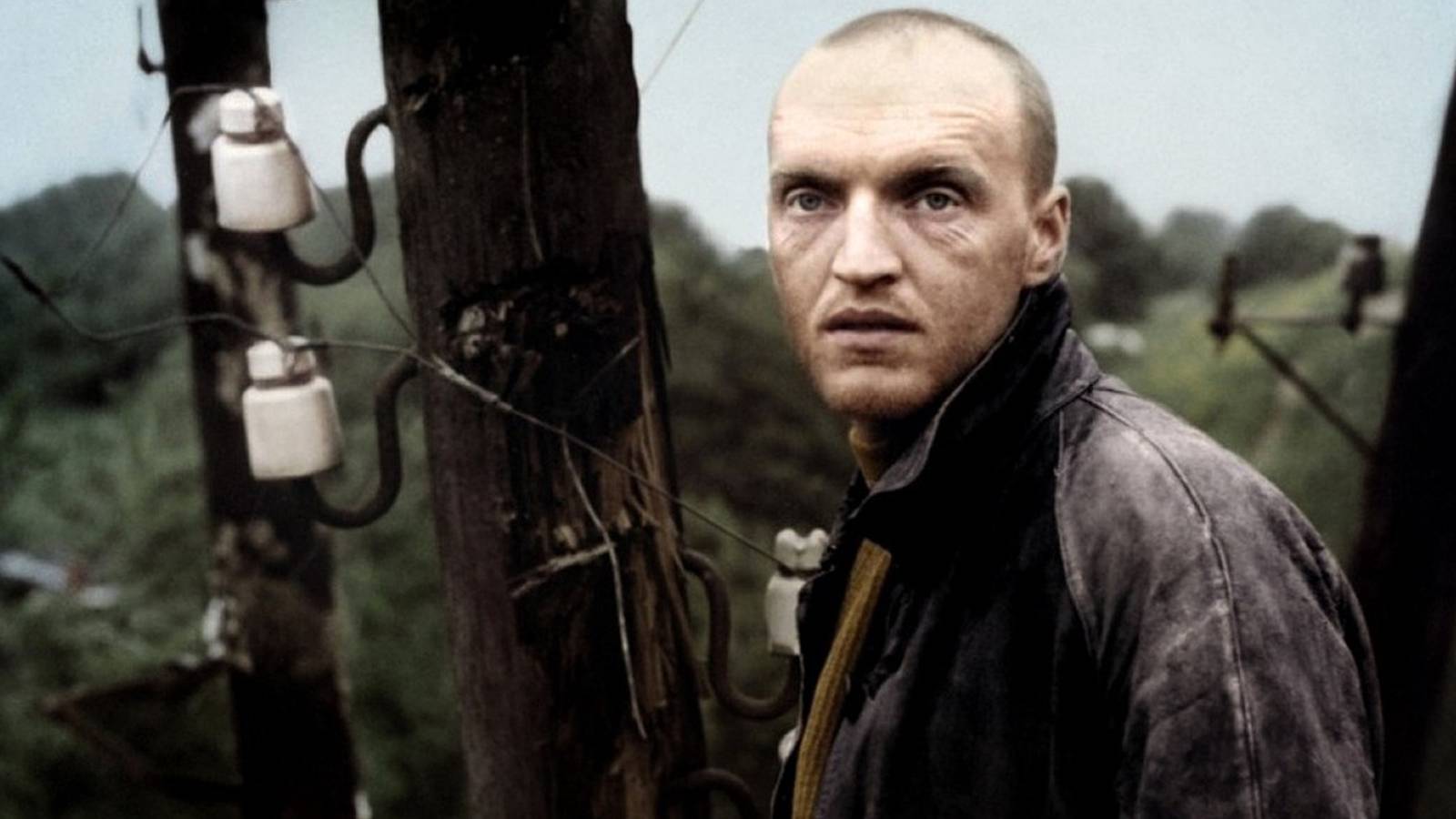
Image via Goskino Published Jul 18, 2026, 6:03 AM EDT Ryan Heffernan is a Senior Writer at Collider. Storytelling has been one of his interests since an early age, with his appreciation for film and television becoming a particular interest of his during his teenage years. This passion saw Ryan graduate from the University of Canberra in 2020 with an Honours Degree in Film Production. In the years since, he has found freelance work as a videographer and editor in the Canberra region while also becoming entrenched in the city's film-making community. In addition to cinema and writing, Ryan's other major interest is sport, with him having a particular love for Australian Rules football, Formula 1, and cricket. He also has casual interests in reading, gaming, and history. Sign in to your Collider account With its penchant for high-concept premises and intricately detailed storytelling, bold thematic journeys, and overwhelming sensory presentation, science fiction cinema marks one of the more cerebral and complex genres that the medium has to offer. A great many sci-fi flicks can be digested and enjoyed in one sitting. Others demand a second viewing to be fully appreciated, though, whether it’s to grapple with all the narrative beats or simply embrace the full breadth of what the production achieved. These science fiction masterpieces are all prime examples of this very fact. Whether they’re defining classics of the genre that can be easily admired the first time but better understood on a rewatch, or somewhat underrated gems that truly require a repeat viewing to be truly experienced, these films improve exponentially the second time around. '2001: A Space Odyssey' (1968) Image via Metro-Goldwyn-Mayer It would be easy to argue that it isn’t until a third or fourth or even tenth viewing that 2001: A Space Odyssey begins to really be appreciated by the viewer. Suffice to say, Stanley Kubrick’s seminal and genre-defining masterpiece is a complex beast from start to finish. A visual experience more so than a progressive, linear story, it opens on the first steps of human evolution, leaps forward to a research mission on an American lunar base, and then focuses on Discovery One’s voyage to Jupiter as Dr. David Bowman (Keir Dullea) finds himself at odds with the ship's AI, the malfunctioning HAL 9000 (Douglas Rain). Kubrick worked with novelist Arthur C. Clarke to build a thematic story of human evolution, the potential hazards of A.I., and humanity’s place in the universe. Portions of the movie defy logical explanation, particularly its confounding ending that depicts Bowman’s perplexing journey through time, as its final image is a gigantic fetus orbiting Earth. Its true meaning is still a source of fierce debate even nearly 60 years later. As such, 2001: A Space Odyssey can not possibly be digested in just one viewing. 'Arrival' (2016) Image via Paramount Pictures Based on Ted Chiang’s 1988 novella Story of Your Life, Arrival is designed to emulate the peculiar nature of human psychology more so than a traditional, linear narrative. Marking Denis Villeneuve’s first foray into sci-fi cinema, it follows linguist Dr. Louise Banks (Amy Adams) as she is recruited by the U.S. Army to interpret the language of one of twelve alien ships that have recently landed on Earth amid an escalating global landscape of political paranoia and military anticipation. A second viewing allows the audience to recontextualize the plotting and experience the chain of events more through Louise’s unmoored and confused perspective. Rewatching Arrival also makes its thematic core more poignant, not only as its issues of miscommunication and distrust become more pronounced, but with its somber meditation on the fragility of life’s beauty as well. It stands as one of the best sci-fi movies in recent decades, and only grows better and more powerful with each rewatch. 'Stalker' (1979) Image via Goskino Like many of Andrei Tarkovsky’s movies, Stalker demands something of an acclimatization process for many viewers, particularly those from Western countries. Its slow, methodical pacing and poetic nature can be challenging to grasp, especially as the ominous threat of “The Zone” and its invisible traps dominate portions of the picture. It isn’t until a second viewing that the full might of the sci-fi film’s allegorical and deeply contemplative outlook on the world can be digested in earnest. The 163-minute epic unfolds as a writer and a professor are guided through a post-apocalyptic wasteland to a mystical room that is said to grant the innermost desire of those who inhabit it. Complemented by its stunning visuals, striking locations — many of which were simply abandoned, post-industry ruins in Estonia — and a moody atmosphere that encourages contemplation, Stalker holds a profound and piercing depth that is far easier to appreciate and be immersed in on a second viewing. '12 Monkeys' (1995) Image via Universal Pictures Time travel sci-fi can require repeat viewings to be understood at the best of times. When such a story is also invigorated with the urgency of a world-ending mystery and Terry Gilliam’s striking directorial instincts—which are actually relatively muted in this case—it starts to insist on multiple watches. It's certainly the case for 12 Monkeys, which stars Bruce Willis as a survivor from a post-apocalyptic world sent back in time to 1995 to uncover the origin of the virus that has decimated humanity. What is impressive about 12 Monkeys is that, even if viewers don’t completely grasp the plot machinations at first, the propulsive energy and thrilling intensity remain intact. However, it is undeniable that rewatching the movie allows one to not become too immersed in the existential anxiety it emits, and to appreciate the precision of the writing and the dramatic, deterministic irony of James Cole’s (Willis) journey. 'Primer' (2004) Image via THINKFilm An indie gem from 2004 that has grown into a quintessential cult classic of 21st century science-fiction, Primer overcomes the modesty of its production with an enigmatic though exciting story of time travel, ambition, and morality. It revolves around two struggling engineers who accidentally discover time travel while working on an entrepreneurial project. Torn between caution and impulsive opportunism, the two pioneers find themselves at odds regarding how to proceed with their invention. Merciless with its experimental, non-linear storytelling and the complexity and technical detail of its dialogue, Primer is a lot to unpack in just one viewing, especially with its convoluted ideas unfolding over the course of a snappy 77-minute runtime. Not only is the film difficult to comprehend in just one watch, but entire subplots can also go unnoticed as viewers are drawn to the philosophical conflict at its core and the secluded permutations of the two men’s exploitation of their discovery. While it is a film that defies simple explanation, Primer does benefit from rewatches and stands as one of the more innovative and impressive sci-fi movies of the 21st century. 'The Fountain' (2006) Image via Warner Bros. Pictures Receiving polarizing reviews and slumping as a box office flop, The Fountain fast became a forgotten and misunderstood gem of sci-fi cinema despite its impressive cast and stunning visuals. Many of the issues people had with it stemmed from its non-linear narrative that prioritizes thematic resonance over clarity. It makes for a unique viewing experience, but a confounding and, at times, hostile one as well, as it follows three interlocking stories of love, desperation, and the pursuit of eternal life, all of which feature Hugh Jackman and Rachel Weisz. In the modern day, Dr. Tommy Creo (Jackman) searches for a cure for his wife’s terminal brain tumor. Running co-adjacently to this plot thread is Izzi’s (Weisz) manuscript of a story revolving around a Spanish conquistador’s mission to find the Tree of Life, and a 26th-century voyage in which a space traveler nurtures the dying Tree of Life while trekking towards a dying star. The lack of cohesion between the three stories can be frustrating, especially on first viewing, but The Fountain can be more easily accepted as a gorgeous visual feat and an intriguing, multipronged exploration of its themes when revisited. 'Solaris' (1972) Image via Mosfilm Another masterpiece of cerebral sci-fi from Andrei Tarkovsky, Solaris invests much of its 167-minute runtime into meditations on memory and nostalgia, the limits of human understanding, and the role guilt, remorse, and acceptance play in our lives. The elaborate, high-concept premise follows Dr. Kelvin (Donatas Banionis), a psychologist who travels to a space station orbiting the oceanic planet Solaris to investigate what has caused the crew to exhibit symptoms of insanity. When he discovers the planet has an ability to evoke repressed memories, desires, and obsessions, he begins experiencing similar mind-bending phenomena. On first viewing, the glacial pacing and complex philosophical dialogue of Solaris can be a lot to digest, especially in tandem with the central mystery and rich sci-fi premise. Finding the time to rewatch the film allows for a greater investment in its thought-provoking thematic might, not only because it allows viewers to recontextualize plot elements like “guests” as they are intended, but also because its pondering on such issues as nature vs. industrial progress and the intricacies of the human condition become more tangible. Collider Exclusive · Sci-Fi Survival Quiz Which Sci-Fi World Would You Survive? The Matrix · Mad Max · Blade Runner · Dune · Star Wars Five universes. Five completely different ways the future went wrong — or sideways, or up in flames. Only one of them is the world your instincts were built for. Eight questions will figure out which dystopia, galaxy, or desert wasteland you'd actually make it out of alive. 💊The Matrix 🔥Mad Max 🌧️Blade Runner 🏜️Dune 🚀Star Wars TEST YOUR SURVIVAL → 01 You sense something is deeply wrong with the world around you. What do you do? The first instinct is often the truest one. APull on every thread until I understand the system — then figure out how to break it. BStop asking questions and start stockpiling — food, fuel, weapons. Questions don't keep you alive. CKeep my head down, observe carefully, and trust no one until I know who's pulling the strings. DStudy the patterns. Every system has a rhythm — learn it, and you learn how to survive it. EFind the people fighting back and join them. You can't fix a broken galaxy alone. NEXT QUESTION → 02 In a world of scarcity, what resource do you guard most fiercely? What we protect reveals what we believe survival actually requires. AKnowledge. If you understand the system, you don't need resources — you can generate them. BFuel. Everything else — movement, power, escape — runs on it. CTrust. In a world of fakes and informants, a truly reliable ally is rarer than any commodity. DWater. And after water, information — the two things empires are truly built on. EShips and credits. The galaxy is big — you survive it by being able to move through it freely. NEXT QUESTION → 03 What kind of threat keeps you up at night? Fear is useful data — if you're honest about what you're actually afraid of. AThat reality itself is a lie — that everything I experience has been constructed to keep me compliant. BA raid. No warning, no mercy — just the roar of engines and then nothing left. CBeing identified. Once someone with power decides you're a problem, you're already out of time. DBeing outmanoeuvred — losing a political game I didn't even know I was playing. EThe Empire tightening its grip until there's nowhere left to run. NEXT QUESTION → 04 How do you deal with authority you don't trust? Every dystopia has a power structure. Your approach to it determines everything. ASubvert it from the inside — learn its rules well enough to weaponise them against it. BIgnore it and stay out of its reach. The further from any power structure, the better. CAppear to comply while doing exactly what I need to do. Visibility is the enemy. DManoeuvre within it carefully. You can't beat a system you refuse to understand. EResist openly when I have to. Some things are worth the risk of being seen. NEXT QUESTION → 05 Which environment could you actually endure long-term? Survival isn't just tactical — it's physical, psychological, and very much about where you are. AUnderground bunkers and server rooms — cramped, artificial, but with access to everything that matters. BOpen wasteland — brutal sun, no shelter, constant movement. At least the threat is honest. CA dense, rain-soaked city where you can disappear into the crowd and nobody asks questions. DMerciless desert — extreme heat, no water, and something enormous living beneath the sand. EThe fringe — backwater planets and busy spaceports where the Empire's attention rarely reaches. NEXT QUESTION → 06 Who do you want in your corner when things fall apart? The company you keep is the clearest signal of who you actually are. AA tight crew of believers who've seen behind the curtain and have nothing left to lose. BOne or two people I'd trust with my life. Any more than that and someone talks. CNobody, ideally. Alliances are liabilities. I work alone unless I have no choice. DA community bound by shared hardship and mutual survival — people who need each other to last. EA ragtag team with wildly different skills and total commitment when it counts. NEXT QUESTION → 07 Where do you draw the line — if you draw one at all? Every survivor eventually faces a moment that tests what they're actually made of. AI won't harm the innocent — even the ones who'd report me without hesitation. BI do what I have to to protect the people I've chosen. Everything else is negotiable. CThe line shifts depending on who's asking and what's at stake. DI draw a long-term line — nothing that compromises my people's future, even if it'd help now. ESome lines, once crossed, can't be uncrossed. I know which ones they are. NEXT QUESTION → 08 What would actually make survival worth it? Staying alive is one thing. Having a reason to is another. AWaking others up — dismantling the illusion so no one else has to live inside it. BFinding somewhere — or someone — worth protecting. A reason to keep moving. CAnswers. Understanding what I am, what any of this means, before time runs out. DLegacy — shaping the future in a way that outlasts me by generations. EFreedom — for myself, for others, for every world still living under someone else's boot. REVEAL MY WORLD → Your Fate Has Been Calculated You'd Survive In…Your answers point to the world your instincts were built for. This is the universe your temperament, your survival instincts, and your particular brand of stubbornness were made for. The MatrixYou took the red pill a long time ago — probably before anyone offered it to you. You're a systems thinker who can't help but notice the seams in things. You're drawn to understanding how the system works before figuring out how to break it. You'd find the Resistance, or it would find you — your instinct for spotting constructed realities is the machines' worst nightmare. You function best when you have access to information and the freedom to act on it. The Matrix built an airtight prison. You'd be the one probing the walls for the door. Mad MaxThe wasteland doesn't reward the clever or the well-connected — it rewards those who are hard to kill and harder to break. That's you. You don't need comfort, community, or a cause larger than the next horizon. You need a vehicle, a clear threat, and enough fuel to outrun it — and you're good at all three. You are unsentimental enough to survive that world, and decent enough — just barely — to be something more than another raider. In the wasteland, that distinction is everything. Blade RunnerYou'd survive here because you know how to exist in moral grey areas without losing yourself completely. You read people accurately, keep your circle small, and ask the questions others prefer not to answer. In a city where humanity is a legal designation rather than a feeling, you hold onto something that keeps you functional. You're not a hero. But you're not lost, either. In Blade Runner's world, that distinction is everything. DuneArrakis is the most hostile environment in the known universe — and you are precisely the kind of person it rewards. Patience, discipline, and political awareness are your core strengths — and on Arrakis, they're survival tools. You understand that the long game matters more than any single victory. Others come to Dune and are consumed by it. You'd learn its logic and earn its respect. In time, you wouldn't just survive Arrakis — you'd begin to reshape it. Star WarsThe galaxy far, far away is vast, loud, and in a constant state of violent political upheaval — and you wouldn't have it any other way. You find meaning in being part of something larger than yourself — a cause, a crew, a rebellion. You'd gravitate toward the Rebellion, or the fringes, or whatever pocket of the galaxy still believes the Empire's grip can be broken. You fight — not because you have to, but because standing aside isn't something you're capable of. In Star Wars, that willingness is what makes all the difference. ↻ RETAKE THE QUIZ 'Blade Runner 2049' (2017) Image via Warner Bros. Pictures A defining triumph of science fiction cinema in the modern age, Blade Runner 2049 serves as a masterfully conceived legacy sequel, a stunning and immersive descent into a captivating dystopian future, and an elaborate mystery movie. Another picture directed by Denis Villeneuve, it follows Officer K (Ryan Gosling), a replicant police officer investigating the possibility of a being born from the union of an android and a human. His search leads him down a confounding web of political priorities and corporate interests that only grows more complicated when he starts to believe he himself could be the child he is searching for. Rewatching the film allows it to change dynamics entirely. What, on first viewing, stands as an overwhelming mystery transforms into a powerful and tragic character study that questions the qualities of humanity through K’s curiosity, growing sense of hope, and his search for his soul. Furthermore, the astute craftsmanship only grows more astonishing when revisited, be it the hypnotic and vivacious visuals, the meticulous narrative pacing, or the booming score. 'Brazil' (1985) Image via Universal Pictures Yet another director double-up, Brazil is the second movie from Terry Gilliam to be included on this list, and it might just be the most criminally underrated as well as the most resonant. Released over 40 years ago, its thematic focus on the mind-numbing monotony of bureaucracy, the crushing weight of industry conformity on individualism, and festering anxieties of mass surveillance and systematic pressures in a ruthless capitalist society are even more poignant and relevant today than they were in 1985. While its messaging is certainly strong, it is easy for audiences to be more struck by the movie’s playful tone and unique aesthetic, with the picture incorporating a 1940s-esque feel to its retro-futuristic setting. This eye-catching sense of style works in concert with the frantic plotting of Sam Lowry’s (Jonathan Pryce) pursuit of love and identity in a corporate world, not necessarily distracting from Brazil’s central ideas, but certainly throwing an overwhelming amount of elements in the viewer’s face. On rewatch, Brazil doesn’t just become clearer; it becomes truly cathartic. 'Children of Men' (2006) Image via Universal Pictures Going from one criminally underrated sci-fi cult classic to another, Children of Men stands tall among the most underappreciated movies of the 21st century thus far, and it only grows in the viewer’s estimation with each subsequent rewatch. Loosely based on P. D. James’s novel of the same name, it unfolds in a hopeless dystopian world where humanity has lost the ability to procreate. Amid a crumbling society, a political activist turns to Theo (Clive Owen), her former partner and accomplice, to help escort the first pregnant woman in 18 years to a safe harbor at sea. Its thematic heft and narrative precision only become more evident on a second viewing, but what makes Children of Men such a pleasure to revisit is the unrivaled technical craft of the filmmaking. With such a frenetic and arresting story, it is easy for the cinematography and the production department’s commitment to detailed worldbuilding to be overlooked. Revisiting the movie allows the full breadth of the triumph of Alfonso Cuarón and his team’s dedication and precision to be relished in earnest. Children of Men Release Date January 5, 2007 Cast Clive Owen, Clare-Hope Ashitey, Chiwetel Ejiofor, Julianne Moore, Michael Caine, Pam Ferris, Charlie Hunnam, Danny Huston, Peter Mullan, Oana Pellea, Jacek Koman, Phaldut Sharma, Juan Gabriel Yacuzzi, Mishal Husain, Rob Curling, Maria McErlane, Michael Haughey, Miriam Karlin, Philippa Urquhart, Tehmina Sunny, Jody Halse, Ilario Bisi-Pedro, Michael Klesic, Martina Messing, Simon Poland Runtime 109 minutes Director Alfonso Cuarón Writers Alfonso Cuarón, David Arata, Timothy J. Sexton, Hawk Ostby, Mark Fergus, P. D. James
10 Sci-Fi Movies That Are Better the Second Time Around
Full Article
Original Source
Read the full article at Collider →KhanList aggregates and links to publicly available news content. We do not host full articles from third-party sources. Always verify important information with original sources.