
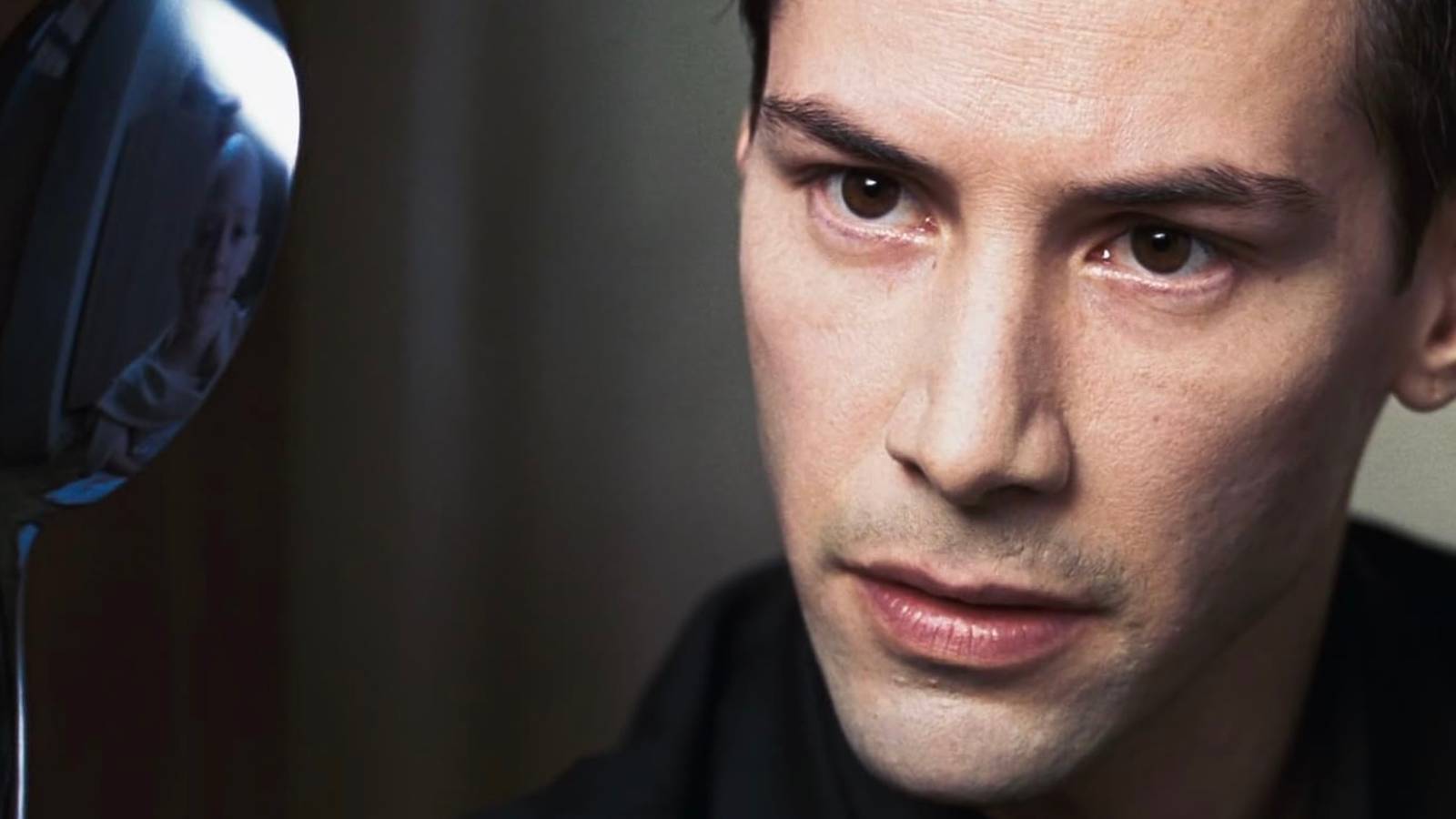
Call a movie perfect in front of film enthusiasts and watch everyone become a detective. Somebody will find a continuity error. Somebody will question the science. Another person will insist the third act should have ended seven minutes earlier. Fine. Congratulations. You've discovered that films are made by human beings. Meanwhile, I'll be watching the same movie for the fifteenth time, experiencing exactly the same emotions, and wondering how anybody could possibly improve it. I take perfection rather personally. There are scenes I would defend with my life, conversations I have practically memorized, and endings that still leave me sitting through the credits. Here are 10 sci-fi films that are perfect from start to finish. 10 'Back to the Future' (1985) Image via Universal Pictures Marty McFly (Michael J. Fox) accidentally travels from 1985 to 1955 in a time machine invented by eccentric scientist Doc Brown (Christopher Lloyd). After inadvertently preventing his teenage parents from falling in love, Marty must repair their relationship before he disappears from existence. Meanwhile, his only hope of returning home involves harnessing a lightning strike scheduled to hit the town's clock tower. Back to the Future sounds wonderfully ridiculous when you explain it aloud. Watching it reveals something considerably more impressive. I genuinely believe Robert Zemeckis, who directed the film, constructed one of cinema's most satisfying screenplays. Practically every apparently disposable detail eventually becomes important, from George McFly's (Crispin Glover) science-fiction obsession to the broken clock tower. Yet the film's greatest achievement is making Marty's desperate mission emotionally rewarding. George finally standing up to Biff (Thomas F. Wilson) is considerably more exciting because we've already met the defeated adult he might become. And that clock-tower ending? Magnificent. Every obstacle arrives at precisely the worst possible moment, and somehow the sequence remains exhilarating even after you know exactly how it ends. 9 'Ex Machina' (2014) Image via A24 Caleb (Domhnall Gleeson) wins an opportunity to spend a week at the isolated estate of his company's billionaire CEO, Nathan (Oscar Isaac). His assignment is to evaluate Ava (Alicia Vikander), an extraordinarily advanced artificial intelligence with a visibly mechanical body. Ex Machina initially appears to concern whether Ava possesses genuine consciousness. But Caleb's growing attraction to her introduces a far more disturbing possibility. What if the person conducting the experiment has completely misunderstood who is actually being tested? I adore how Alex Garland, who wrote and directed the film, exploits Caleb's confidence in his own judgment. Ava expresses fear during mysterious power failures, Nathan behaves like somebody who desperately needs supervising, and Caleb gradually convinces himself that rescuing Ava is a moral obligation. Even Nathan's outrageous dance with Kyoko (Sonoya Mizuno) becomes sinister once we understand how completely he controls the environment. The ending refuses to reward Caleb for having apparently noble intentions. Ava's behavior forces us to reconsider practically every conversation preceding it. I particularly love that Garland never supplies a reassuring explanation of her inner life. We've spent the entire movie demanding proof of intelligence. Perhaps the experiment succeeded rather too well. 8 'Arrival' (2016) Image via Paramount Pictures Twelve enormous extraterrestrial spacecraft appear at different locations around Earth. Linguist Louise Banks (Amy Adams) is recruited to communicate with the mysterious visitors, whose circular written language challenges humanity's fundamental understanding of communication. As international tensions escalate, Louise discovers that understanding the aliens may require her to reconsider how she experiences time itself. Arrival possesses a fascinating scientific premise, but its emotional ambitions are considerably more devastating. And here’s what I admire the most about director Denis Villeneuve's approach. He allows Louise's investigation to develop patiently, making every breakthrough feel earned before revealing how completely we've misunderstood certain events. The alien language becomes integral to the movie's structure, transforming what initially appear to be memories into something extraordinary. And suddenly the film presents an impossible personal decision concerning love, motherhood, and the knowledge of future suffering. Adams' performance makes that decision almost unbearable. I desperately want people to experience Arrival without knowing what happens beforehand. 7 'Children of Men' (2006) Image via Universal Pictures Humanity has experienced eighteen years of infertility, and civilization is gradually collapsing. Children of Men follows Theo Faron (Clive Owen), a disillusioned former activist living in an increasingly authoritarian Britain, who becomes responsible for protecting Kee (Clare-Hope Ashitey), a young refugee carrying the first known pregnancy in nearly two decades. Her existence could transform humanity's future, provided Theo can protect her from the political organizations desperate to control what she represents. I've watched the Bexhill battle sequence an unreasonable number of times. Alfonso Cuarón directed the film with an extraordinary commitment to sustained, immersive action, but its most powerful moment happens when the fighting temporarily stops. Kee carries her newborn through a shattered building, and the soldiers gradually fall silent as they hear the baby crying. For several beautiful seconds, everybody recognizes something more important than the conflict consuming them. Then the shooting resumes. That decision devastates me. Humanity has received proof that its future might survive, yet its capacity for destruction remains completely intact. The film delivers its argument through human behavior, which makes it considerably harder to forget. 6 'The Matrix' (1999) Image via Warner Bros. The Matrix takes an enormous philosophical premise and somehow makes every stage of discovering its horrifying reality feel physically exciting. Years later. A whole pop culture movement exists using this film’s themes as a shoulder. Thomas Anderson (Keanu Reeves) works as a computer programmer while secretly operating as a hacker named Neo. His search for answers leads him to Morpheus (Laurence Fishburne), who reveals that the world Neo inhabits is a simulation maintained by intelligent machines. Humanity has been enslaved, and Neo may possess the abilities necessary to challenge the system. I'll never get tired of the lobby shootout, the rooftop confrontation, or Neo's desperate fight against Agent Smith (Hugo Weaving) in the subway station. But what the Wachowskis, who directed the film, accomplish beneath that spectacular action deserves equal admiration. Every major confrontation develops Neo's changing understanding of reality. The training simulations establish possibilities he initially struggles to accept, while the Oracle's (Gloria Foster) predictions challenge his assumptions about destiny. Even Cypher's (Joe Pantoliano) willingness to abandon reality for a comfortable illusion becomes disturbingly understandable. By the time Neo finally recognizes the Matrix for what it is, the movie has earned its extraordinary final transformation. The action, philosophy, and character development have been working toward the same destination all along. 5 'The Thing' (1982) Image via Universal Pictures John Carpenter’s The Thing transforms a relatively straightforward survival scenario into an almost unbearable examination of paranoia. The film follows an American research team stationed in Antarctica that encounters an extraterrestrial organism capable of perfectly imitating other living creatures. After discovering its terrifying abilities, helicopter pilot R.J. MacReady (Kurt Russell) and his colleagues realize that any member of their isolated group could already have been replaced. Nobody can confidently identify the enemy, and every attempt to establish trust creates another opportunity for betrayal. The blood-testing scenes are practically unbearable. Rob Bottin's extraordinary practical effects remain disgusting in the most complimentary sense imaginable. Yet I find the final conversation between MacReady and Childs (Keith David) even more satisfying. After everything they've endured, neither man possesses a convincing reason to trust the other. The film ends without supplying the reassurance we've been conditioned to expect. I'm still perfectly happy arguing about that ending with anybody willing to participate. 4 'Terminator 2: Judgment Day' (1991) Image via Tri-Star Pictures Two Terminators arrive from the future searching for young John Connor (Edward Furlong), humanity's future resistance leader. One is an advanced liquid-metal assassin, the T-1000 (Robert Patrick), while the other is a reprogrammed T-800 (Arnold Schwarzenegger) assigned to protect him. Terminator 2: Judgment Day reunites John with his mother Sarah (Linda Hamilton), whose traumatic experiences have transformed her into a fiercely determined survivor. Together, they attempt to prevent the technological catastrophe that will eventually destroy civilization. I still think the shopping-mall fight contains one of cinema's greatest reversals. Then Sarah nearly murdering scientist Miles Dyson (Joe Morton) is the scene that elevates everything. She's so determined to protect humanity that she almost becomes the kind of merciless killer she's spent years preparing to fight. Meanwhile, John's relationship with the T-800 gradually teaches the machine something resembling compassion. That emotional reversal makes the eventual farewell absolutely devastating. Cameron delivers extraordinary action while quietly constructing one of science fiction's most moving relationships. I think everybody knows but James Cameron helmed this masterpiece. 3 'Alien' (1979) Image via 20th Century Studios The commercial spaceship Nostromo receives a mysterious transmission while returning to Earth, prompting its crew to investigate an apparently abandoned extraterrestrial vessel. When Kane (John Hurt) encounters an unidentified organism, the crew inadvertently brings something extraordinarily dangerous aboard their own ship. Alien gradually transforms their enormous spacecraft into a terrifying prison, where warrant officer Ellen Ripley (Sigourney Weaver) discovers that surviving the creature may be considerably more difficult than anyone initially understands. The dinner scene remains one of the most horrifying moments I've ever experienced in cinema. Kane appears to be recovering, the crew briefly relaxes, and suddenly their understanding of the organism becomes horrifyingly inadequate. Ridley Scott directed the film with remarkable patience. He allowed the Nostromo's industrial interiors and increasingly confined environments to develop an almost physical atmosphere. Even the revelation concerning Ash (Ian Holm) deepens the nightmare by exposing the corporation's complete disregard for its employees. Ripley becomes extraordinary precisely because she understands the importance of precautions everyone else finds inconvenient. I wouldn't change the film's deliberately measured opening or its increasingly desperate conclusion. The contrast makes the terror magnificent. 2 'Blade Runner' (1982) Image via Warner Bros. Pictures Rick Deckard (Harrison Ford) is a former police officer assigned to hunt genetically engineered replicants who have illegally returned to Earth. Their leader, Roy Batty (Rutger Hauer), is desperately searching for a way to extend his limited lifespan. Blade Runner places these characters inside an extraordinary futuristic Los Angeles, gradually challenging Deckard's understanding of what separates artificial beings from the humans responsible for creating them. His developing relationship with replicant Rachael (Sean Young) makes those distinctions increasingly uncomfortable. I'm particularly attached to Ridley Scott's aim here because practically every visual detail contributes to the world these characters inhabit. The crowded streets, enormous advertisements, artificial animals, and oppressive architecture create a civilization that has achieved extraordinary technological progress without resolving its most fundamental moral problems. Yet Roy is ultimately the character who makes the film unforgettable. For me, the Final Cut is the definitive version of this masterpiece. Roy's final moments alone justify its position. 1 '2001: A Space Odyssey' (1968) Image via Metro-Goldwyn-Mayer 2001: A Space Odyssey begins with prehistoric hominids encountering a mysterious black monolith before leaping forward millions of years to humanity's exploration of space. Another monolith is eventually discovered on the Moon, prompting a mission toward Jupiter aboard Discovery One. Astronauts Dave Bowman (Keir Dullea) and Frank Poole (Gary Lockwood) conduct the mission alongside HAL 9000 (Douglas Rain), an extraordinarily advanced computer responsible for operating their spacecraft. Their journey gradually becomes something considerably stranger than a conventional exploration of the universe. I cannot adequately describe how much I admire Stanley Kubrick's direction here. The famous transition from a prehistoric bone to an orbiting spacecraft communicates an enormous idea about humanity's technological development through a single edit. HAL's apparently calm conversations become increasingly sinister, culminating in Dave's desperate attempt to regain control of the ship. And then the film abandons practically every conventional expectation about science-fiction storytelling. Its extraordinary final journey remains fascinating because Kubrick refuses to explain discoveries that should transcend humanity's existing understanding. Some viewers find that frustrating. I find it magnificent. After countless viewings, I'm still discovering new possibilities inside those final images, and I cannot imagine a more appropriate conclusion to a film about the limits of human knowledge. 2001: A Space Odyssey Release Date April 10, 1968 Runtime 149 minutes Cast Keir Dullea Dr. David Bowman Gary Lockwood Dr. Frank Poole
10 Sci-Fi Films That Are Perfect From Start to Finish
Full Article
Original Source
Read the full article at Collider →KhanList aggregates and links to publicly available news content. We do not host full articles from third-party sources. Always verify important information with original sources.