
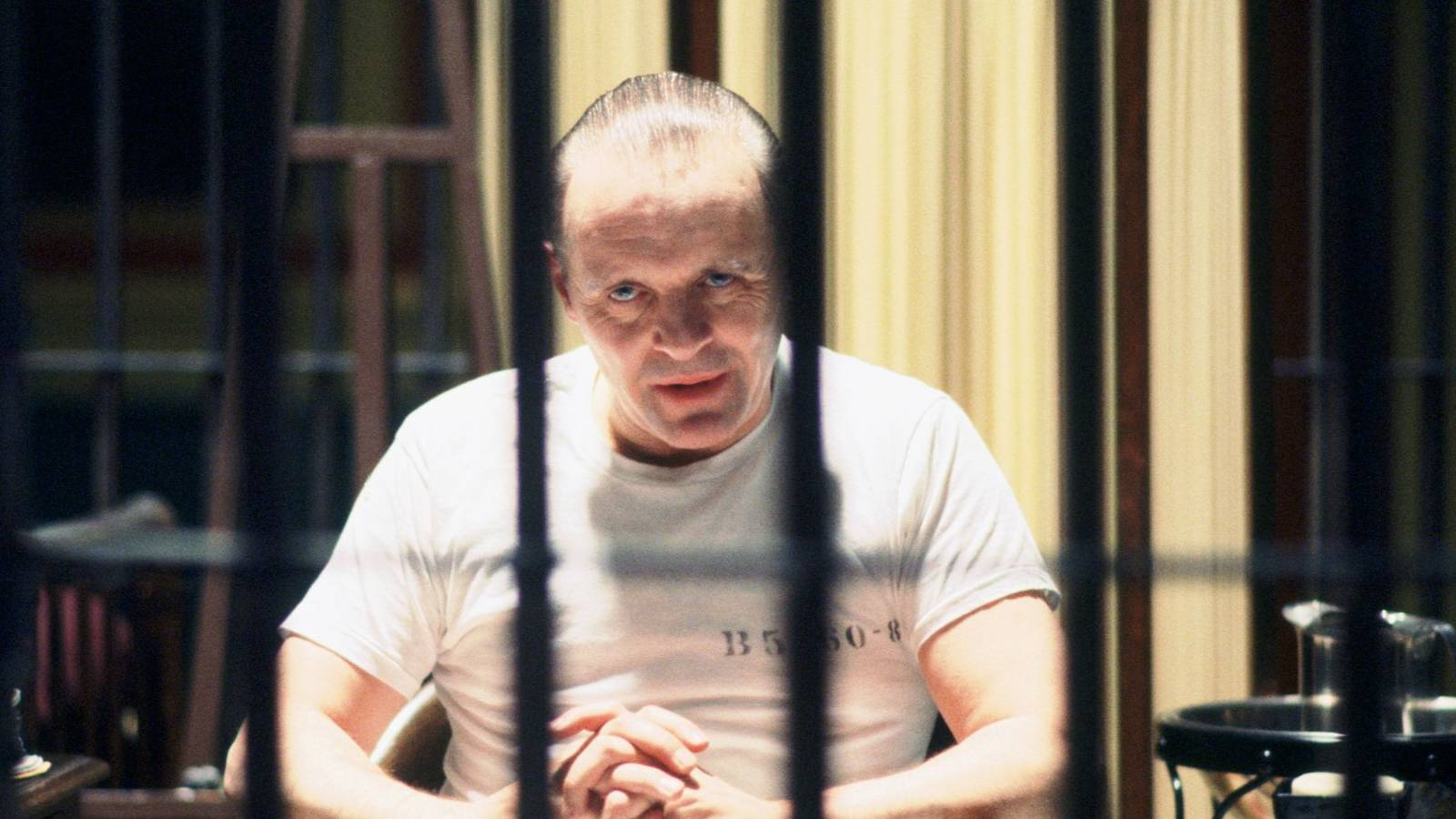
Image via Orion Pictures Published Aug 6, 2026, 1:09 PM EDT Sign in to your Collider account Psychological thrillers love making viewers question what they saw, but that confusion alone is cheap. It’s half-baked. Any next door content creator can do that. The greatest thrillers, therefore, have scale and perfection in execution. They leave enough evidence to build several convincing readings, then connect the mystery to something painfully human and authentic. Every film in this list survives once its secret is known. A second viewing reveals decisions, glances, objects, and lines that were hiding in plain sight. The tension changes, yet the experience remains just as strong because these movies have more to offer than twists. They understand the mind as a place where people protect themselves, punish themselves, and sometimes build an entire reality to escape one unbearable truth. 10 'Enemy' (2013) Image via A24 Enemy is about Adam Bell (Jake Gyllenhaal), a withdrawn Toronto history professor who discovers an actor named Anthony Claire (Jake Gyllenhaal) with exactly the same face. Curiosity quickly becomes obsession. Adam follows Anthony’s career, tracks down his address, and eventually contacts him. The two men share Jake Gyllenhaal’s face, yet Adam’s nervous posture and Anthony’s casual entitlement keep them distinct long before their lives begin crossing into each other’s relationships. If I say more than that, the movie will be ruined but let’s just say there are Predestination vibes here. José Saramago’s novel The Double sits beneath this strange, compact film, though the spiders, yellow haze, and sexual anxiety push the story into its own disturbing space. Adam lectures about dictators repeating control through distraction, while his private life appears trapped in another repeating cycle. Anthony treats women as experiences he can enter and leave. Adam appears gentler, but his choices reveal the same appetite hiding under fear. The giant spider waiting in the bedroom turns the whole film inside out once again. Heads up: the spider is not real, it’s a fear, an escape. 9 'The Machinist' (2004) Image via Paramount Classics In The Machinist, Trevor Reznik (Christian Bale) works in a machine shop and has gone nearly a year without sleeping. His body has wasted away, his co-workers fear him, and handwritten notes begin appearing inside his flat. A new employee called Ivan (John Sharian) seems determined to disrupt his life, yet nobody else admits knowing him. The story follows Trevor as exhaustion destroys his sense of time and turns every accident into possible evidence of a conspiracy. Christian Bale reduced himself to around 120 pounds for the role, creating an image that became almost as famous as the film. The physical transformation has purpose beyond shock. Trevor has made himself disappear because guilt has become easier to endure through punishment than admission. Ivan, the hit-and-run photographs, the stopped clock, and the missing memory all lead back to a child Trevor killed and left behind. His mind has spent a year inventing enemies rather than facing that moment. Once he confesses, the noise finally stops. 8 'Shutter Island' (2010) Image via Paramount Pictures In Shutter Island, a federal marshal enters Ashecliffe Hospital in 1954 to investigate the disappearance of Rachel Solando (Emily Mortimer), a patient who apparently vanished from a locked room. Teddy Daniels (Leonardo DiCaprio) suspects the doctors are hiding illegal experiments, and a violent storm traps him on the island before he can test his theory. His investigation also connects to Andrew Laeddis (Leonardo DiCaprio), the man Teddy blames for the fire that killed his wife. Dennis Lehane’s novel gave Martin Scorsese and screenwriter Laeta Kalogridis a mystery built around grief. Teddy’s suspicions sound reasonable because every detail has been arranged to support them. In reality, the hospital has created an elaborate role-play for Andrew, a patient unable to accept that his wife drowned their children and that he killed her afterward. The truth has reached him before, and he has repeatedly escaped into Teddy. His last conversation suggests awareness may have returned. The decision that follows may be deliberate. Living as Andrew means carrying the full memory of his family, while disappearing as Teddy lets him preserve one final idea of himself. It’s a crazy film but deeply rewarding. 7 'Prisoners' (2013) Image via Warner Bros. Two young girls disappear during Thanksgiving in Prisoners, leaving their families with one weak lead and no useful answers. Detective Loki (Jake Gyllenhaal) begins searching, while Keller Dover (Hugh Jackman) focuses on Alex Jones (Paul Dano), the driver of a suspicious RV who has the mental capacity of a child. When the police release Alex, Keller abducts him and begins a private interrogation built around confinement, beatings, and the belief that a father can justify anything if his daughter might still be alive. Hugh Jackman, Jake Gyllenhaal, Viola Davis, Maria Bello, and Terrence Howard are surrounded by choices that keep getting worse. Keller’s certainty becomes frightening because the audience also wants Alex to know something. That shared desperation forces viewers into the ugliest part of the argument. Loki follows physical evidence, old cases, damaged suspects, and the maze imagery connecting several lives, while Keller keeps replacing proof with pain. Holly Jones (Melissa Leo) eventually reveals a campaign against faith that began after losing her own child. The search ends with Loki hearing a faint whistle beneath the ground. Keller may be found, though nothing he did can be taken back. 6 'Black Swan' (2010) Image via Searchlight Pictures Black Swan follows Nina Sayers (Natalie Portman), a technically brilliant ballerina chosen to dance both leads in a production of Swan Lake. The White Swan fits the control she has spent her life developing. The Black Swan demands sensuality, danger, and freedom. Nina begins losing her grip as rehearsals intensify, her mother tightens control at home, and fellow dancer Lily (Mila Kunis) appears to embody everything Nina has been told she lacks. Natalie Portman’s Academy Award came from this film. This was a role built around discipline turning inward until it becomes violence. Nina scratches her skin, imagines changes in her body, and reads every woman nearby as a threat or warning. Beth MacIntyre (Winona Ryder) represents the career she fears losing. Lily represents the ease she cannot manufacture. Her mother Erica Sayers (Barbara Hershey) has organised their home around Nina’s dependence, preserving childhood while demanding professional perfection. The ballet becomes a complete psychological breakdown staged as artistic achievement. Nina reaches the standard she wanted, but the cost is her body and any identity outside the role. Perfection gives her one triumphant night and no future beyond it. Collider Exclusive · Oscar Best Picture Quiz Which Oscar Best PictureIs Your Perfect Movie? Parasite · Everything Everywhere · Oppenheimer · Birdman · No Country Five Oscar Best Picture winners. Five completely different visions of what cinema can be — and what it can do to you. One of them is the film that was made for the way your mind works. Ten questions will figure out which one. 🪜Parasite 🌀Everything Everywhere ☢️Oppenheimer 🐦Birdman 🪙No Country for Old Men FIND YOUR FILM → 01 What kind of film experience do you actually want? The best movies don't just entertain — they leave something behind. ASomething that pulls the rug out — that makes me think I'm watching one kind of film and then reveals I'm watching another entirely. BSomething overwhelming — funny, sad, absurd, and genuinely moving, all at once. CSomething grand and weighty — a film that makes me feel the full scale of what I'm watching. DSomething formally daring — a film that pushes what cinema can even do. ESomething lean and relentless — pure tension with no wasted frame. NEXT QUESTION → 02 Which idea grabs you most in a film? Great films are driven by a central obsession. What's yours? AClass, inequality, and what people are willing to do when desperation meets opportunity. BIdentity, family, and the chaos of trying to hold your life together when everything is falling apart. CGenius, moral responsibility, and the catastrophic weight of a decision you can never take back. DEgo, legacy, and the terror of becoming irrelevant while you're still alive to watch it happen. EEvil, chance, and whether moral order actually exists or if we just tell ourselves it does. NEXT QUESTION → 03 How do you like your story told? Form is content. The way a story is shaped changes what it means. AGenre-twisting — I want it to start in one lane and migrate into something completely different. BMaximalist and genre-blending — comedy, action, drama, sci-fi, all in one ride. CEpic and non-linear — cutting between timelines, building a mosaic of cause and consequence. DA single unbroken flow — I want to feel like I'm living it in real time, no cuts to safety. ESpare and precise — every scene doing exactly what it needs to do and nothing more. NEXT QUESTION → 04 What makes a truly great antagonist? The opposition defines the protagonist. What kind of opposition fascinates you? AA system — invisible, structural, and almost impossible to fight because it has no single face. BThe self — the ways we sabotage, abandon, and fail the people we love most. CHistory — the unstoppable momentum of events that no single person can stop or redirect. DThe industry — the machinery of culture that chews up talent and spits out irrelevance. EPure, implacable evil — a force so certain of itself it becomes almost philosophical. NEXT QUESTION → 05 What do you want from a film's ending? The final note is the one that lingers. What do you want it to sound like? AShock and inevitability — a conclusion that recontextualises everything that came before it. BEarned emotion — I want to cry, laugh, and feel genuinely hopeful, even if the world is a mess. CDevastation and grandeur — an ending that makes me sit in silence for a few minutes after. DAmbiguity — something that leaves enough open that I'm still thinking about it days later. EBleakness — an honest refusal to pretend the world is tidier than it actually is. NEXT QUESTION → 06 Which setting pulls you in most? Where a film takes place shapes everything — mood, stakes, what's even possible. AA gleaming modern city with a hidden underside — beauty masking rot, wealth masking desperation. BA collapsing suburban life that opens onto something infinite — the multiverse of a single ordinary person. CThe corridors of power and science at a world-historical turning point — where decisions echo for decades. DThe grimy, alive chaos of New York and Hollywood — fame as both destination and trap. EVast, indifferent landscape — desert and highway where violence arrives without warning or reason. NEXT QUESTION → 07 What cinematic craft impresses you most? Every great film has a signature — a technical or artistic element that makes it unmistakable. AProduction design and mise-en-scène — every frame composed to carry meaning beneath the surface. BEditing and tonal control — the ability to move between registers without losing the audience. CScore and sound design — music that becomes inseparable from the dread and awe of what you're watching. DCinematography as performance — the camera not recording events but participating in them. ESilence and restraint — what's left unsaid and unshown doing more work than any dialogue could. NEXT QUESTION → 08 What kind of main character do you root for? The protagonist is the lens. Who you choose to follow says something about you. ASomeone smart and resourceful who makes increasingly dangerous decisions under pressure. BSomeone overwhelmed and ordinary who turns out to be capable of something extraordinary. CA brilliant, tortured figure whose gifts and flaws are inseparable from each other. DA self-destructive artist whose ego is both their superpower and their undoing. EA quiet, principled person trying to make sense of a world that has stopped making sense. NEXT QUESTION → 09 How do you feel about a film that takes its time? Pace is a choice. Some films sprint; others let tension accumulate slowly, deliberately. AI love a slow build when I know the payoff is going to be seismic — patience for a devastating reveal. BGive me relentless momentum — I want to feel breathless and emotionally spent by the end. CEpic runtime doesn't scare me — if the material demands three hours, give me three hours. DI want it to feel propulsive even when nothing is technically happening — restless energy throughout. EDeliberate and unhurried — I want dread to accumulate in the spaces between the action. NEXT QUESTION → 10 What do you want to feel walking out of the cinema? The best films leave a mark. What kind of mark do you want? AUnsettled — like I've just seen something I can't fully explain but can't stop thinking about. BMoved and energised — like the film reminded me what actually matters and gave me something to hold onto. CHumbled — like I've been in the presence of something genuinely important and overwhelming. DExhilarated — like I've just seen cinema doing something it's never quite done before. EHaunted — like a cold, quiet dread that stays with me for days. REVEAL MY FILM → The Academy Has Decided Your Perfect Film Is…Your answers have pointed to one Oscar Best Picture winner above all others. This is the film that was made for the way your mind works. ParasiteYou are drawn to films that operate on multiple levels simultaneously — that begin in one genre and quietly, brilliantly migrate into another. Bong Joon-ho's Parasite is a film about class, desire, and the architecture of inequality that manages to be darkly funny, deeply suspenseful, and genuinely shocking across a single extraordinary running time. Your instinct is for cinema that hides its true intentions until the moment it's ready to reveal them. Parasite is exactly that — a film that rewards close attention and punishes assumptions, right up to its devastating final image. Everything Everywhere All at OnceYou want it all — and this film gives you all of it. The Daniels' Everything Everywhere All at Once is one of the most maximalist films ever made: action comedy, multiverse sci-fi, family drama, existential crisis, and a genuinely earned emotional core that sneaks up on you amid the chaos. You are someone who responds to ambition, who doesn't want cinema to choose between being entertaining and being meaningful. This film refuses that choice entirely. It is overwhelming by design, and its overwhelming nature is precisely the point — because the feeling of being crushed by infinite possibility is exactly what it's about. OppenheimerYou are drawn to cinema on a grand scale — films that understand history not as a backdrop but as a force, and that place their characters inside that force and watch what happens. Christopher Nolan's Oppenheimer is a film about the terrifying gap between what we can do and what we should do, told with the full weight of one of the most consequential moments in human history behind it. You want your films to feel important without feeling self-important — to earn their ambition through sheer craft and the gravity of their subject. Oppenheimer does exactly that. It is enormous, complicated, and refuses easy comfort. BirdmanYou are drawn to films that foreground their own construction — that make the how of the filmmaking part of the what it's about. Alejandro González Iñárritu's Birdman, shot to appear as a single continuous take, is cinema examining itself through the cracked mirror of a fading actor's ego. You respond to formal daring, to the feeling that a film is doing something that probably shouldn't be possible. Michael Keaton's performance and Emmanuel Lubezki's restless camera create something genuinely unlike anything else — a film that is simultaneously about creativity, relevance, self-destruction, and the impossibility of ever truly knowing if your work means anything at all. No Country for Old MenYou are drawn to cinema that trusts silence, that refuses to explain itself, and that treats dread as a form of meaning. The Coen Brothers' No Country for Old Men is a film about the arrival of a new kind of evil — implacable, arbitrary, and utterly indifferent to the moral frameworks we use to make sense of the world. It is one of the most formally controlled films ever made, and its controlled restraint is what makes it so terrifying. You want your films to haunt you, not comfort you. You are not interested in resolution if resolution would be dishonest. No Country for Old Men is honest in a way that most cinema never dares to be. ↻ RETAKE THE QUIZ 5 'Mulholland Drive' (2001) Image via Universal Pictures Hollywood looks full of possibility when Betty Elms (Naomi Watts) reaches Los Angeles, eager to become an actor. She soon meets an amnesiac woman hiding in her aunt’s flat, and the pair search for clues about her identity. Auditions, studio threats, strange dreams, a blue key, and an encounter behind Winkie’s gradually turn the mystery into something far less stable than a missing-person investigation. Mulholland Drive began as a television pilot before David Lynch reshaped it into a feature film, which helps explain its strange changes in rhythm and identity. Betty’s confidence, talent, and growing intimacy with Rita (Laura Harring) belong to a dream assembled from Diane Selwyn (Naomi Watts)’s regret. In waking life, Diane is a struggling actor devastated by Camilla Rhodes (Laura Harring)’s success and rejection. The fantasy gives her talent, romance, and the power to solve Camilla’s problems. Club Silencio destroys that comfort by announcing that the performance continues even when the singer collapses. The blue box opens, the dream can no longer protect Diane, and Hollywood becomes the place where desire wrote a better life before guilt tore it apart. 4 'Memento' (2000) Image via Newmarket Films Christopher Nolan adapted the central idea from a story by his brother Jonathan Nolan and turned memory loss into a thriller about chosen belief in Memento. Leonard Shelby (Guy Pearce) cannot create new long-term memories after an attack that also killed his wife. He uses photographs, handwritten notes, and tattoos to continue hunting a man he calls John G. The film presents much of his investigation in reverse order, placing the viewer inside Leonard’s condition. We enter each scene without knowing what happened immediately before it, then watch certainty from information that may already be compromised. Leonard treats his system as objective, but every note begins with a human decision. Natalie (Carrie-Anne Moss) manipulates him. Teddy (Joe Pantoliano) lies to him. Leonard also edits his own evidence when the truth threatens the purpose keeping him alive. Teddy claims Leonard already found and killed the attacker, and that the Sammy Jankis (Stephen Tobolowsky) story contains pieces of Leonard’s own past. Leonard responds by setting Teddy up as his next target. He chooses a lie that will give tomorrow’s version of himself another reason to keep going. Classic Nolan psychological stimulant but not for everyone. 3 'Gone Girl' (2014) Image via 20th Century Studios Gone Girl is about a woman disappearing on her fifth wedding anniversary, and her husband quickly becomes the favourite suspect of the police, television hosts, and millions of strangers. Nick Dunne (Ben Affleck) has lied about his marriage, hidden an affair, and developed the exact public manner that makes innocent behaviour look guilty. Amy Dunne (Rosamund Pike)’s diary appears to describe a wife growing afraid of him, turning their private collapse into a story the whole country can consume. Gillian Flynn adapted her own novel (she wrote the screenplay) for David Fincher’s film, preserving the cruelest part of the marriage. Nick and Amy originally fell in love while performing ideal versions of themselves. He wanted the Cool Girl who enjoyed everything he enjoyed. She wanted the clever, attentive man who made her feel exceptional. Amy’s disappearance becomes revenge against the husband who stopped maintaining that fantasy. Her plan is brilliant, vicious, and shaped by a sharp understanding of how gender affects public sympathy. Nick eventually learns how to perform for her again. Amy returns, creates a pregnancy from his stored sample, and secures the marriage as a permanent stage. They know the truth and remain together anyway. 2 'Se7en' (1995) Image via New Line Cinema Se7en’s premise follows two detectives who hunt a serial killer who builds murders around the seven deadly sins. William Somerset (Morgan Freeman) is days away from retirement and has spent years absorbing the worst parts of an unnamed city. David Mills (Brad Pitt) has recently transferred there with his wife, Tracy Mills (Gwyneth Paltrow), and still believes effort and anger can push back against evil. Their investigation moves through crime scenes designed as punishments rather than simple killings. Andrew Kevin Walker’s screenplay gives John Doe (Kevin Spacey) a philosophy grand enough to impress himself and hollow enough to require innocent bodies as proof. Somerset understands the danger of giving that philosophy attention, while Mills cannot separate justice from emotion. Doe later turns that life into the completion of his design. It’s one of the best Brad Pitt films. 1 'The Silence of the Lambs' (1991) Image via Orion Pictures The Silence of the Lambs follows an FBI trainee, sent to interview an imprisoned psychiatrist who may understand another serial killer. That’s Clarice Starling (Jodie Foster). And she needs Hannibal Lecter (Anthony Hopkins)’s insight to help find Buffalo Bill, who has abducted Catherine Martin (Brooke Smith) and is preparing to kill her. Lecter agrees to trade clues for personal memories, turning every conversation into an exchange where Clarice must reveal herself without losing control of the investigation. Jonathan Demme keeps the film close to Clarice’s experience, especially when men stare directly into the camera and force the viewer into her position. Her working-class background, West Virginia accent, ambition, and memories of the lambs become material Lecter can use. She continues because Catherine is running out of time. Jodie Foster and Anthony Hopkins received Academy Awards, yet the film’s power reaches beyond their conversations. Clarice studies evidence, notices details, and enters Jame Gumb (Ted Levine)’s house without knowing she has found him. The basement places her in darkness while he watches through night-vision goggles. She survives through training and instinct in a world of men, then graduates into a profession that has underestimated her from the opening minutes.
10 R-Rated Psychological Thriller Movies That Can Be Called Masterpieces
Full Article
Original Source
Read the full article at Collider →KhanList aggregates and links to publicly available news content. We do not host full articles from third-party sources. Always verify important information with original sources.