
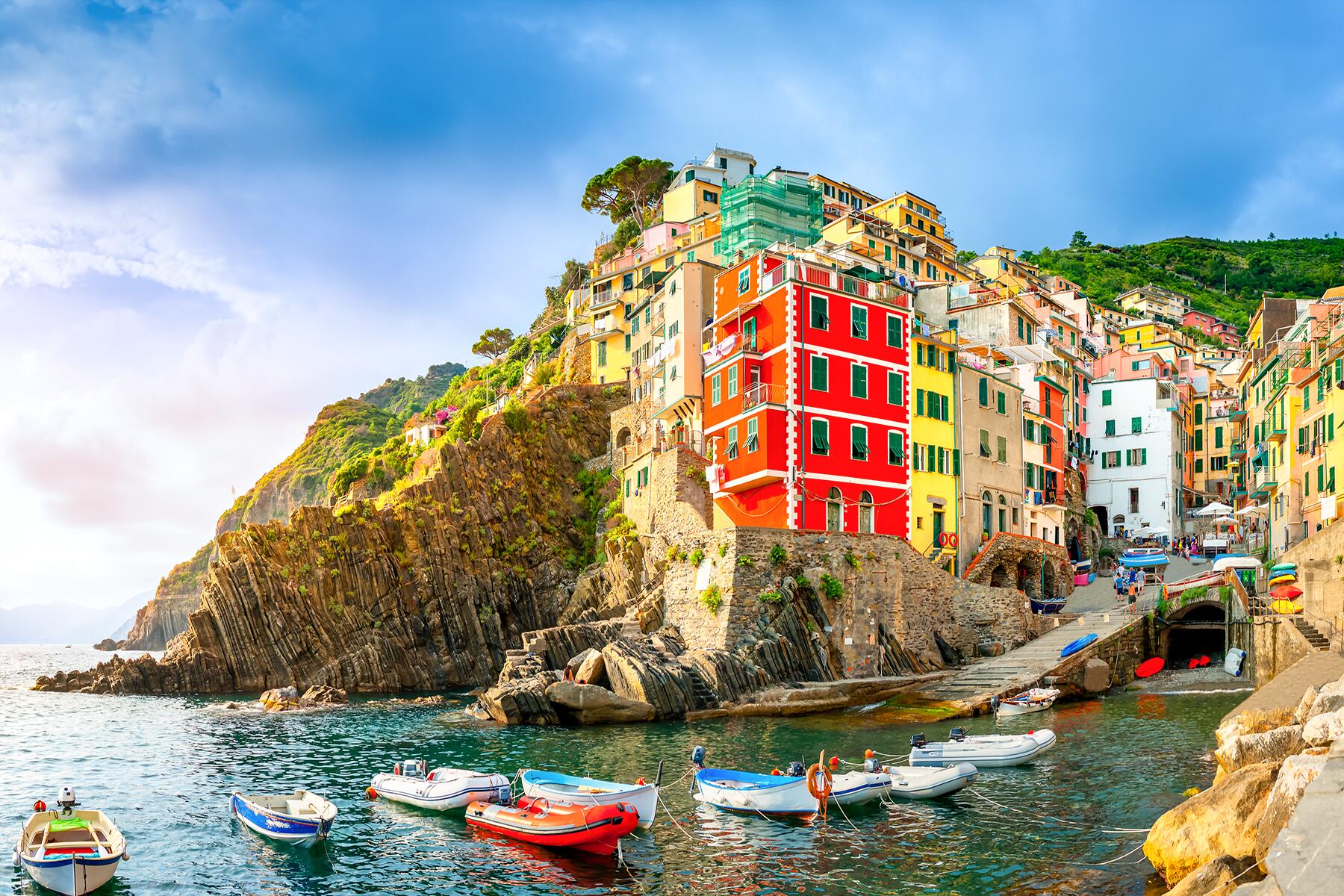
Leave your swimsuit at home when you visit these European water attractions...Every summer without fail, someone decides that a 700-year-old fountain, a working canal, or a UNESCO-protected harbor looks exactly like a great place to cool off. It doesn’t take long for the footage to end up online, and it certainly doesn’t take long for the fine to arrive either. Europe’s most photographed bodies of water are, almost without exception, off limits to swimmers – whether that’s down to boat traffic, bacteria, heritage law or simply a city that has had enough of tourists treating its monuments like a lido. While they might look beautifully refreshing (especially during the heatwaves the continent is currently suffering through), they’re unfortunately off-limits for dipping a toe – or more. If you’re feeling unsure, here are ten spots where wading in will cost you considerably more than a dry-cleaning bill. 1 OF 10 The Trevi Fountain WHERE: Rome, Italy It’s the fountain every visitor to Rome wants a piece of, and every summer at least one of them decides a coin toss isn’t enough and climbs in for a proper soak.This past year alone has brought a New Zealander diving in fully clothed to a chorus of boos, and a woman blaming a 30-degree heatwave for her impromptu paddle–both walked away with €500 fines.Rome’s police patrol the Trevi constantly, and even the smaller stuff gets punished: wading, sitting on the basin edge, or touching the sculptures all carry fines starting at €450, with repeat offenders facing a lifetime ban from the site.Since February 2026, there’s also a small entry fee just to reach the water’s edge: part of the city’s push to protect the monument from crowds. The water isn’t drinkable, isn’t clean, and isn’t going to make anyone’s holiday photos worth the paperwork that follows. 2 OF 10 The Grand Canal WHERE: Venice, Italy Venice’s canals look impossibly inviting on a hot afternoon, and impossibly full of vaporetti, gondolas, and water taxis the moment you’re actually in them.Swimming here is banned outright, and the city enforces it with real conviction: a British man and his girlfriend were fined €450 each and sent home within hours of arriving, after gondoliers spotted their dip near the Accademia bridge and called it in.That’s far from an isolated case – Venice issues well over a thousand expulsion orders a year for bad tourist behavior, with canal swimming a regular offender among them, alongside stunts like diving off the Rialto Bridge or surfing down the Grand Canal on an electric board (yep, really).Beyond the fines, there’s the water itself to consider: with no modern sewage system in the old city, a swim here means sharing the canal with centuries of waste. Just admire it from a vaporetto instead. 3 OF 10 Amsterdam's Canals WHERE: Netherlands Amsterdam’s canal ring is one of the loveliest urban landscapes in Europe, and one of the least safe places to swim in it.On paper, the canals are classified as shipping lanes, packed with tour boats, water taxis, and private vessels that have no realistic way of spotting a swimmer’s head bobbing near the surface.Police issue fines of €140-170 for anyone caught taking a dip, particularly near bridges, locks, and busy commercial routes, and they’ve taken to reminding people bluntly on social media each summer.It isn’t only about the fine either: around 18 people drown in Amsterdam’s canals every year, and heavy rain can send the sewage system overflowing straight into the water for days afterwards.The city dreams of one day making its canals swimmable, but until then, head to Sloterplas or one of Amsterdam’s proper urban beaches for a legal, considerably safer dip. 4 OF 10 Piazza Santo Spirito Fountain WHERE: Florence, Italy Florence’s fountains have a habit of ending up on the news for the wrong reasons–most memorably when a tourist stripped off for a moonlit swim in the 15th-century fountain at Piazza Santo Spirito, laughing with friends and inviting bystanders to “come in” while locals looked on in disgust.Under Italy’s cultural heritage laws, misusing or damaging a protected monument can mean a criminal charge as well as a fine that stretches into the thousands, and the city’s other great showpiece, the 16th-century Fountain of Neptune in Piazza della Signoria, has the receipts to prove it.One tourist climbed it for a selfie and broke off a piece of marble, causing around €5,000 in damage; another, on a pre-wedding dare, clambered over the fence to touch the statue and left with a potential fine of tens of thousands of euros. The fountains are for looking, not for climbing, and certainly not for swimming. 5 OF 10 Trafalgar Square Fountains WHERE: London, England London’s football fans have been jumping into the Trafalgar Square fountains to celebrate big wins for the best part of a century, ever since the two grand tulip-shaped basins replaced Sir Charles Barry’s originals in 1939.But Westminster Council would very much like everyone else to stop copying them. It isn’t a criminal offence in quite the way that swimming in a Venetian canal is, but it’s firmly discouraged, signposted against on site, and can land you a fine under local by-laws if a warden or officer takes a dim view of your splashing about.The fountains sit unguarded in one of the most photographed squares in the city, right beneath Nelson’s Column, which is exactly why the temptation proves too strong for so many on a warm afternoon or after one too many pints. The water is unfiltered, cools nobody down as well as it looks like it should, and is shared with a great many pigeons. 6 OF 10 The Trocadéro Fountains (and the Seine, Off-Piste) WHERE: Paris, France During Paris heatwaves, the pools beneath the Eiffel Tower-facing Trocadéro terraces turn into the city’s unofficial swimming hole, packed with locals and tourists alike, phones out, cooling off with that view as a backdrop.Officially, bathing in any Parisian fountain, pond, stream, or ornamental water feature is strictly forbidden. Regulations apply even during a heatwave, and endangering yourself in a waterway can bring a fine of up to €3,750. In practice, police have been known to look the other way when temperatures hit 100°F, though that’s a mood rather than any guarantee.The Seine itself finally reopened to swimmers in 2025 after a century-long ban, with wooden bathing decks near the Eiffel Tower and Notre-Dame, lifeguards, and mandatory buoyancy aids for newcomers.Step outside those marked, supervised zones, though, and the old rules, and the old fines, still very much apply–the river remains deep, fast-moving, and full of boat traffic beyond them. 7 OF 10 The Roman Baths WHERE: Bath, England The steaming, mineral-green water at the heart of this Roman spa town looks made for bathing, which is precisely why it’s been closed to swimmers since 1978, after a young visitor died from a rare, waterborne form of meningitis linked to an amoeba in the pool.Until then, swimmers had bathed in the Great Bath once a year during the Bath Festival, a tradition that ended overnight.The ban hasn’t stopped the occasional attention-seeker from hopping in anyway–a YouTuber livestreamed his dip to a modest audience in 2019, becoming the second person in a single week to be caught doing it, and was branded irresponsible by local councilors for good measure.The water is untreated, unfiltered, and known to carry disease-causing organisms alongside toxic metals, so the risk runs more into a one-way hospital stay than a telling-off. For a legal soak in the same thermal spring water, the Thermae Bath Spa (literally next door) does the job properly. 8 OF 10 Riomaggiore Harbor WHERE: Cinque Terre, Italy The postcard view of Riomaggiore’s fishing boats bobbing in their tiny stone harbor tempts almost everyone who sees it, and plenty of visitors do slip in for a swim regardless.The marina is a working boat lane rather than a beach, though, with vessels coming and going all day, and swimming there sits outside the rules for exactly that reason – it’s a different matter from the sanctioned swimming coves at Manarola or the small pebble beaches tucked beside Vernazza and Monterosso, which are there precisely for a dip.The wider national park takes its rules seriously across the board: rangers have cracked down hard on hikers tackling the cliffside Sentiero Azzurro in flip-flops or sandals after one too many rescues, with fines reaching €2,500 for the wrong footwear alone.Between the boat traffic in the harbors and the steep, unforgiving trails above them, Cinque Terre rewards a bit of planning before you pack. 9 OF 10 Palma's Ornamental Fountains WHERE: Mallorca, Spain Mallorca’s capital is full of handsome fountains built for looking at, not lounging in, and Palma’s city council has made that distinction a legal one.Under the city’s Ordinance for the Promotion of Civic Coexistence, washing or bathing in any fountain, pond, or similar ornamental water feature is explicitly classed as a minor offence, carrying a fine of up to €750 for anyone caught treating a public square like their private pool during a heatwave.The rule exists because these features simply aren’t built for bodies: they’re shallow, often unfiltered, and easily damaged, and officials are quick to point tourists toward the alternatives that actually exist for cooling off, from municipal pools to the island’s spectacular beaches.With Balearic summers regularly climbing past 80 degrees, the temptation is real, but so is the four-figure fine waiting on the other side of that fountain’s edge. 10 OF 10 The River Spree WHERE: Berlin, Germany Berlin’s river winds right past Museum Island and the TV Tower, looking every bit the spot for a summer dip, except swimming here has been illegal since May 1925, when industrial pollution made it a real health hazard.The ban never lifted, even as the water quality improved dramatically over the past decade, and campaigners from the group Flussbad Berlin have spent years staging registered “swim protests” to make their point – one such demonstration in 2025 drew around 200 people into the water at once.It hasn’t always gone smoothly: a smaller, unregistered dip by the same campaigners once ended with the water police pulling everyone out, checking IDs, and citing violations of Berlin’s Wassergesetz and national inland waterways rules.City officials in the central Mitte district have talked about trialing legal swimming zones, but for now, the century-old ban stands, and unauthorized swimmers risk more than a soggy towel.
10 Places NOT to Go Swimming in Europe
Full Article
Original Source
Read the full article at Fodors →KhanList aggregates and links to publicly available news content. We do not host full articles from third-party sources. Always verify important information with original sources.