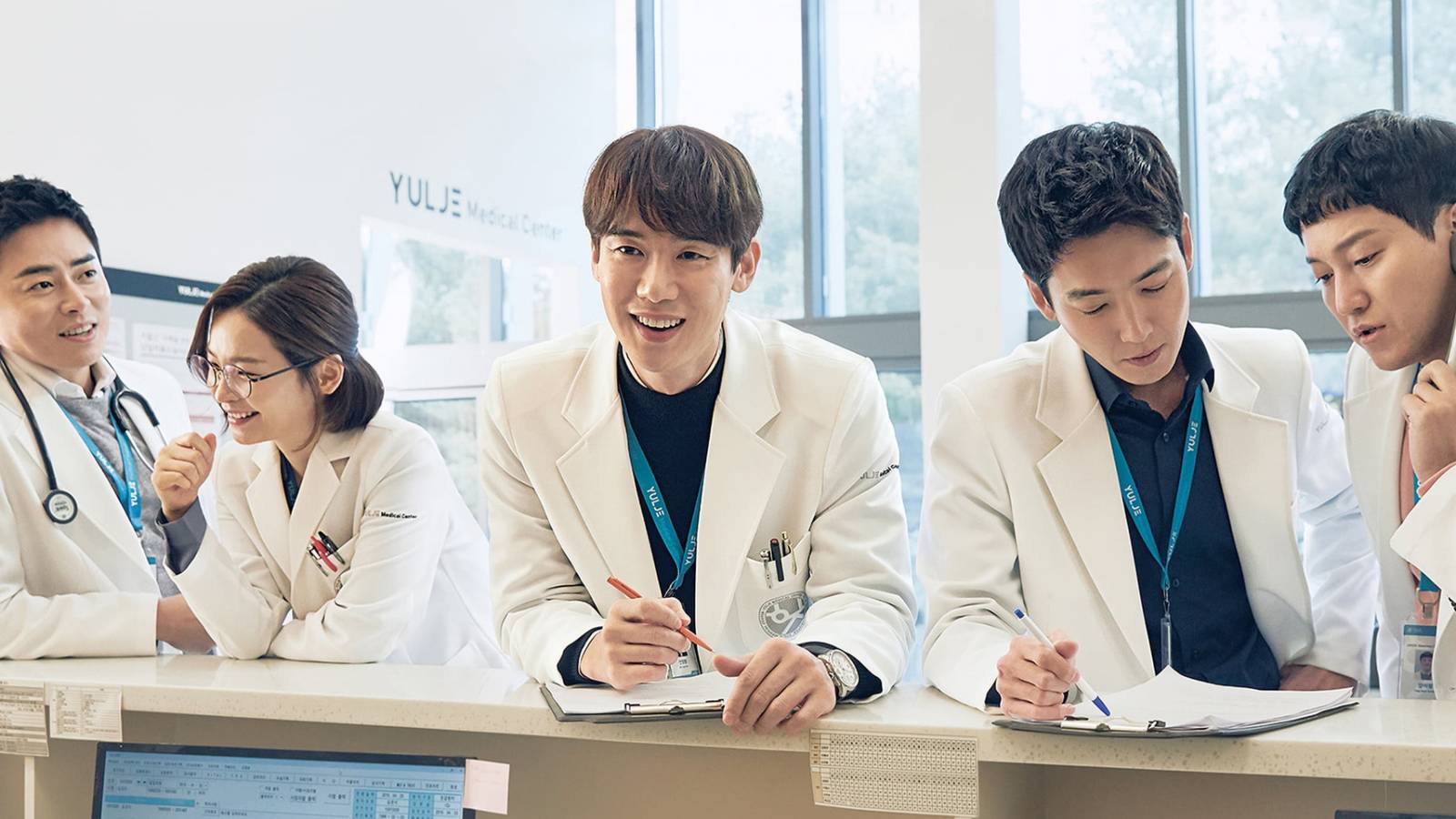
Image via Netflix Published Aug 7, 2026, 7:22 AM EDT Anja Djuricic was born in Belgrade, Serbia, in 1992. Her first interest in film started very early, as she learned to speak English by watching Disney animated movies (and many, many reruns). Anja soon became inspired to learn more foreign languages to understand more movies, so she entered the Japanese language and literature Bachelor Studies at the University of Belgrade. Anja is also one of the founders of the DJ duo Vazda Garant, specializing in underground electronic music influenced by various electronic genres. Anja loves to do puzzles in her spare time, pet cats wherever she meets them, and play The Sims. Anja's Letterboxd four includes Memories of Murder, Parasite, Nope, and The Road to El Dorado. Sign in to your Collider account When it comes to ranking Korean dramas by season count, almost none of them have more than one, so the feat is borderline impossible. Most Korean shows are designed around a self-contained 16-to-20-episode run, which is why it rarely produces the quality drop-off that Western audiences expect in Season 2. Another oddity is that, even if some shows do have more than one season, some of them can't be claimed as totally perfect—so the intersection is limited. But, rather than fighting it, let's embrace the oddity; these entries range from one or two perfect seasons to others that became rare franchises that managed to go back more than once without diluting what made them so successful the first time. In any case, every drama here nails the landing, whether it happens after 6 episodes or 48. Here are the ten perfect K-dramas with five seasons or fewer. 10 'Weak Hero' (2022–Present) Image via Prime Video Based on the same-named Naver webtoon, Weak Hero follows Yeon Si-eun (Park Ji-hoon), a physically frail but academically brilliant student who becomes a target for his school's bullies and fights back with strategy, psychology, and whatever is within arm's reach rather than raw strength. Season 1 concludes with Si-eun transferring to another school; Season 2 begins with him navigating a new campus, forming a new circle of allies, and running headfirst into an even more dangerous, organized gang known as the Union, led by the ruthless Na Baek-jin (Bae Na-ra). Season 1, which premiered on Wavve in 2022 before reaching a much larger audience on Netflix, was widely regarded as near-perfect, with critical acclaim for Park's performance. Season 2, which premiered in 2025, debuted at No. 1 on Netflix's non-English chart in 32 countries and reunited the majority of the original creative team, but a few longtime fans found it a notch below the original's tightness, despite praising the new supporting cast. Still, Weak Hero Season 2 was action-packed and up to standard, and fans keep hoping that Season 3 might be in the cards. 9 'Taxi Driver' (2021–2026) Image via SBS TV Taxi Driver follows Kim Do-gi (Lee Je-hoon), a former special-forces operative who uses his job as a cab driver to cover for Rainbow Taxi, a vigilante group that brings justice to crime victims who have been denied it by Korea's legal system. Each season's (and episode's) central cases are drawn from real-life, often infuriating headlines, ranging from corporate cover-ups to violent scams, with Do-gi and his team working just outside the law to compensate victims in ways that the courts could not. Adapted from the webtoon The Deluxe Taxi, Taxi Driver has grown more popular with each installment. Season 2 actually beat Season 1's ratings, and Season 3 was greenlit within a day of Season 2's finale airing. Some viewers found the storylines in Season 2 a bit more over-the-top compared to before, but the chemistry between the Rainbow Taxi crew and Lee's committed lead performance kept the formula of Taxi Driver working across all three rounds. It's the kind of K-drama that could easily be a Hollywood blockbuster. 8 'Sweet Home' (2020–2024) Image via Netflix Sweet Home, based on Kim Carnby and Hwang Young-chan's webtoon, follows Cha Hyun-su (Song Kang), a depressed teenager who moves into the run-down Green Home apartment complex after his family's death, only to discover that its residents are transforming into monsters shaped by their darkest desires. Season 1 traps Hyun-su and his neighbors inside the building as they fight for survival; Season 2 expands the scope to a military bunker and a much larger cast of new characters; and Season 3, the final chapter, concludes Hyun-su's arc. Season 1 of Sweet Home was a genuine phenomenon, one of the first Korean dramas to crack Netflix's global Top Ten. Season 2, which premiered three years later in December 2023, was the show's most divisive period, with many fans believing the expanded focus drew attention away from the original cast. Season 3, which premiered in mid-2024, was widely regarded as a return to form, concluding the story with a genuine emotional payoff. Sweet Home is a truly binge-worthy series with great twists. 7 'Stranger' (2017–2020) Image via Signal Entertainment Group Lee Soo-yeon's Stranger, tvN's first true multi-season crime drama, stars Cho Seung-woo as Hwang Si-mok, a brilliant but nearly emotionless prosecutor whose empathy was surgically dulled as a child, and Bae Doona as Han Yeo-jin, a sharp, just police detective who becomes his reluctant partner when a corruption case turns into a murder investigation. Season 1 is a tight, exciting whodunit that also serves as an indictment of the prosecutor's office's corruption, while the second, set two years later, broadens the lens to the structural turf war between police and prosecutors over investigative authority. The deliberately restrained chemistry between its two leads, who bond through a similar understanding of the world, is what holds both seasons together. Stranger won the Grand Prize for Television at the Baeksang Arts Awards and remains one of the best examples of a K-drama sequel that expands its world while maintaining its central partnership. The shift between seasons made it more difficult to follow for some viewers than Season 1's cleaner mystery, but it's still a sharp and tense crime series. Stranger also got a spin-off starring Lee Joon-hyuk, who is the drama's most morally gray character. 6 'Voice' (2017–2021) Image via CJ ENM Global Few K-drama franchises have gotten more mileage out of a single concept than Voice, which spent four seasons exploring new ways to use sound as the engine of a crime thriller. Lee Ha-na stars in all four seasons of the show as Kang Kwon-joo, a 112 emergency call center operator whose extraordinary hearing allows her to extract details from panicked calls that no one else can hear. She teams up first with grief-stricken detective Moo Jin-hyuk (Jang Hyuk) after her father and his wife are both murdered by the same serial killer. Each new season of Voice introduces a new male lead and a new central threat, ranging from an international dark-web crime syndicate to a killer with hearing abilities comparable to Kwon-joo's, while maintaining her consistent presence and the show's signature 112-dispatch structure. It's an unusual model for a K-drama, more akin to an anthology built around one recurring character than a straightforward continuing story, but it's precisely why the show was able to keep raising the stakes over eight years without feeling like it was repeating itself. Collider Exclusive · TV Medicine Quiz Which Fictional Hospital Would You Work Best In? The Pitt · ER · Grey's Anatomy · House · Scrubs Five hospitals. Five completely different ways medicine goes sideways on television — brutal, chaotic, romantic, brilliant, and ridiculous. Only one of them is the ward your instincts were built for. Eight questions will figure out exactly where you belong. 🚨The Pitt 🏥ER 💉Grey's 🔬House 🩺Scrubs FIND YOUR HOSPITAL → 01 A critical patient comes through the door. What's your first instinct? Medicine under pressure reveals who you actually are. AStay completely present — block everything else out and work through it step by step, right now. BTriage fast and delegate — get the right people on the right problems immediately. CTrust my gut and move — I work best when I stop overthinking and just act. DAsk the question everyone else is ignoring — what's the thing that doesn't fit? ETake a breath, make a joke to cut the tension, and then get to work — panic helps no one. NEXT QUESTION → 02 Why did you go into medicine in the first place? The honest answer says more about you than the one you'd give in an interview. ABecause I wanted to be where it matters most — right at the edge, when someone's life is actually on the line. BBecause I wanted to help people — genuinely, one patient at a time, in a system that makes it hard. CBecause I was drawn to the intensity of it — the stakes, the drama, the feeling of being fully alive. DBecause medicine is the most interesting puzzle there is — and I needed a problem worth solving. EBecause I wanted to make a difference — and also, honestly, I didn't know what else to do with my life. NEXT QUESTION → 03 What do you actually want from the people you work with? Who you want beside you under pressure is who you are. ACompetence and calm — I need people who don't fall apart when things get bad. BTrust and reliability — I want to know that when I pass something off, it's handled. CConnection — I want colleagues who become family, even if that gets complicated. DIntelligence and the willingness to be challenged — I have no interest in people who just agree with me. EFriendship — people I actually like spending twelve hours a day with, because those hours are going to happen either way. NEXT QUESTION → 04 You lose a patient you fought hard to save. How do you carry it? Every doctor who's worked a long shift has had to answer this question. AI carry it. All of it. I don't look for ways to put it down — that weight is part of doing this work honestly. BI process it and move — you have to, or the next patient suffers for the one you just lost. CI feel it deeply and lean on the people around me — I don't think you're supposed to handle that alone. DI go back over every decision — not to punish myself, but because I need to understand what I missed. EI grieve it genuinely, find some way to laugh about something unrelated, and try to be kind to myself — imperfectly. NEXT QUESTION → 05 How would your colleagues describe the way you work? Your reputation on the floor is usually more accurate than your self-image. AIntense and completely present — no small talk during a shift, but exactly who you want there. BSteady and dependable — not the flashiest in the room but never the one who drops something. CPassionate and occasionally chaotic — brilliant on the hard cases, prone to drama everywhere else. DBrilliant and difficult — right more often than anyone else, and everyone knows it, including me. EWarm and self-deprecating — not the most intimidating presence, but genuinely good at this and easy to like. NEXT QUESTION → 06 How do you feel about hospital protocol and procedure? Every institution has rules. What you do with them is a choice. AProtocol is the floor, not the ceiling — I follow it until the patient needs something it can't provide. BI respect it — the system is broken in places, but the structure is there for a reason and I work within it. CI follow it until my instincts tell me not to — and my instincts are usually right, even when they cause problems. DRules are for people who haven't thought hard enough about when to break them. EI try to follow it and mostly do — with a few memorable exceptions that still come up in meetings. NEXT QUESTION → 07 What does this job cost you personally? Nobody works in medicine without paying a price. What's yours? AEverything outside these walls — I've given this job my full attention and the rest of my life has gone around it. BMy idealism, mostly — I came in believing the system could be fixed and I've made a complicated peace with that. CStability — my personal life has been as chaotic as the OR, and that's not entirely a coincidence. DMy relationships — I am not easy to know, and the people who've tried to would probably agree. EMy sense of gravity — I use humour as a coping mechanism, which not everyone appreciates in a hospital. NEXT QUESTION → 08 At the end of a long shift, what keeps you coming back? The answer to this question is the most honest thing about you. AThe fact that it's real — that nothing else I could be doing would matter this much, right now, today. BThe patients — individual human beings who needed something and got it because I was there. CThe people I work with — I have walked through impossible things with these people and I'd do it again. DThe next unsolved case — there's always another puzzle, and I'm not done yet. EBecause despite everything — the exhaustion, the loss, the absurdity — I actually love this job. REVEAL MY HOSPITAL → Your Assignment Has Been Made You Belong In…Your answers have pointed to one fictional hospital above all others. This is the ward your instincts, your temperament, and your particular brand of dysfunction were built for. The PittYou are built for the most unsparing version of emergency medicine television has ever shown — one that puts you inside a single fifteen-hour shift and doesn't let you look away. You need your work to be real, not romanticised — meaning over drama, honesty over aesthetics. You find purpose inside the work itself, not in the chaos surrounding it. You've made peace with the fact that this job takes from you constantly, and gives back in ways that are harder to name. Pittsburgh Trauma Medical Center demands exactly that kind of person — and you would not want to be anywhere else. ERYou are the person who keeps the whole floor running — not the most brilliant in the room, but possibly the most essential. You show up, do the work, absorb the losses, and come back the next day without needing the job to be anything other than what it is. You care about patients as individual human beings, not as cases to solve or dramas to live through. You believe in the system even when it fails you — and you understand that emergency medicine is about holding the line just long enough. ER is television about endurance. You have it. Grey's AnatomyYou came to medicine with your whole self — your ambition, your emotions, your relationships, your history — and you have never quite managed to leave any of it at the door. You feel things fully and form deep attachments to the people you work with. Your personal and professional lives are permanently, chaotically entangled — and that entanglement drives both your greatest disasters and your most remarkable saves. You understand that extraordinary medicine often happens at the intersection of clinical skill and profound human connection. It's messy at Grey Sloan. You would not have it any other way. HouseYou are drawn to the problem above everything else — the symptom that doesn't fit, the diagnosis hiding underneath the obvious one. You're not primarily motivated by the patient as a person — though you are capable of caring, even if you'd deny it. You work best when the stakes are highest and the standard answer is wrong. Princeton-Plainsboro exists to house one extraordinary, impossible mind — and everyone around that mind is there because they're smart enough to keep up. The only way forward here is to think harder than everyone else in the room. That is exactly what you do. ScrubsYou understand that medicine is tragic and absurd in almost equal measure — and that the only sane response is to hold both of those things at the same time. You are warm, self-aware, and funnier than most people in your field. You use humour to get through terrible moments — and at Sacred Heart, that's not a flaw, it's a survival strategy. You lean on the people around you and let them lean back. The laughter and the grief are genuinely inseparable here. Scrubs is a show about learning to become someone worthy of the job. You are still very much in the middle of that process — which is exactly right. ↻ RETAKE THE QUIZ 5 'Dr. Romantic' (2016–2023) Image via SBS TV Han Suk-kyu's Kim Sa-bu, also known as "Master Kim," has anchored one of Korean television's most consistently acclaimed medical dramas, Dr. Romantic, for three seasons spanning seven years. The show, also known as Romantic Doctor Teacher Kim, follows a brilliant, triple-board-certified surgeon who abandons a prestigious Seoul career due to personal trauma. He now trains young doctors at a small, underfunded rural hospital, teaching them to put patients first over hospital politics and profit. With each new season, Dr. Romantic introduces new trainees and crises while leaving the previous season intact. Han's performance has received widespread praise over the years, as he plays both a gruff mentor and a quiet idealist; portraying the show's consistent emotional core throughout, Han won the Grand Prize at the 2016 SBS Drama Awards. It's unusual for a franchise to go through three seasons with significant gaps, and despite the fact that it spans nearly a decade, there's no discernible decline. Dr. Romantic is the kind of show that has managed to stay relevant by patiently developing its story rather than rushing into a continuation. 4 'Bloodhounds' (2023–) Woo Do-hwan and Lee Sang-yi star in Bloodhounds as Kim Gun-woo and Hong Woo-jin (respectively), two young boxers who start as rivals but form a friendship while taking down a loan shark syndicate that preys on citizens impacted by COVID. The storyline ends there, but the pair returns in Season 2, showing Gun-woo pursuing a legitimate boxing title and Woo-jin as his coach, only for the pair to be drawn into a brutal underground fighting league run by a menacing new antagonist played by the icon Rain. Season 1 debuted on Netflix as a lean, high-energy hit, praised for truly excellent fight choreography and the sincerity of its central friendship, which reportedly translated into real-life camaraderie between its leads. Season 2, which premiered in spring of 2026, doubled down on the action, with both actors visibly working harder to sell every hit; the continuation also got an expansion in the form of a new supporting cast to match the previous season's ensemble. The central Gun-woo-jin friendship, which has always served as the show's driving force, remains intact, and while the show is still on ice, Season 2 ends with an open storyline, and hopes are high that Netflix will give them another chance. 3 'Kingdom' (2019–2020) Image via Netflix Kingdom, a zombie-meets-political thriller from writer Kim Eun-hee, took the overstuffed zombie genre and found real, unexplored territory in it by setting the outbreak during the Joseon Dynasty. Crown Prince Lee Chang (Ju Ji-hoon) investigates rumors that his father, the king, has died, only to discover that he has been secretly transformed into the source of a mysterious plague spreading across the kingdom. While he tries to stop the contagion, a ruthless noble family plots to seize the throne and remove Lee Chang from court before the truth is revealed. Season two of Kingdom picks up right where the first left off, escalating the political stakes and the horror in equal measure without either crowding out the other; later, a feature-length prequel called Ashin of the North filled in the plague's origins in the same elegant manner. Across two six-episode seasons and a prequel film, Kingdom never loses its grip on either its scares or its court intrigue. It's a rare balancing act for the genre, and it also made significant strides for Netflix as their first-ever original Korean drama. 2 'Hospital Playlist' (2020–2021) Image via Netflix Few Korean dramas are as beloved for their gentleness as Hospital Playlist, which follows five friends and doctors in their forties who share a college band and a close, longterm friendship as they navigate their careers, families, and patients at the same Seoul hospital. The show, created by Shin Won-ho, the director behind the Reply anthology of series, foregoes big medical-drama theatrics in favor of slice-of-life comfort food, focusing as much on the group's late-night band practices and shared meals as it does in the operating room. Both seasons of Hospital Playlist maintain the same tone, humor, and emotional generosity, refusing to create conflict for the sake of it between its five leads, even when the format calls for it. The creators reportedly always intended to make a third season, but they chose not to risk the show's rare, uninterrupted consistency; instead, in 2025, a spin-off series was released, titled Resident Playbook, and it follows a group of young obstetrics and gynecology residents. 1 'Squid Game' (2021–2025) Image via Netflix Hwang Dong-hyuk always intended Squid Game to be a one-season story with a clear beginning, middle, and end; however, as Season 1 became a global success, his ideas expanded, with mentions of five seasons as well. Finally, Squid Game became a trilogy, and while this was not the original plan, it is a rare example of a global phenomenon that landed successfully. It is also the first Korean drama to win international awards, including Emmys and Golden Globes, as well as Screen Actors Guild recognition for its cast. The premise is well-known: hundreds of desperate, debt-ridden people are recruited into a series of deadly childhood games in exchange for a massive cash prize, with Seong Gi-hun (Lee Jung-jae) appearing in all three seasons, first as a desperate contestant, then as a man determined to destroy the games from within. Season 3 brought the story to a bleak conclusion that some viewers found difficult to accept, but it still made a powerful statement about sacrifice and hope. Throughout the three seasons, the show never lost its nerve or its central thesis about capitalism and desperation, concluding the story in a way that still resonates. Squid Game Release Date 2021 - 2025 Network Netflix Cast Wi Ha-jun Detective Hwang Jun-ho Showrunner Hwang Dong-hyuk
10 Perfect K-Dramas With 5 Seasons or Less
Full Article
Original Source
Read the full article at Collider →KhanList aggregates and links to publicly available news content. We do not host full articles from third-party sources. Always verify important information with original sources.