
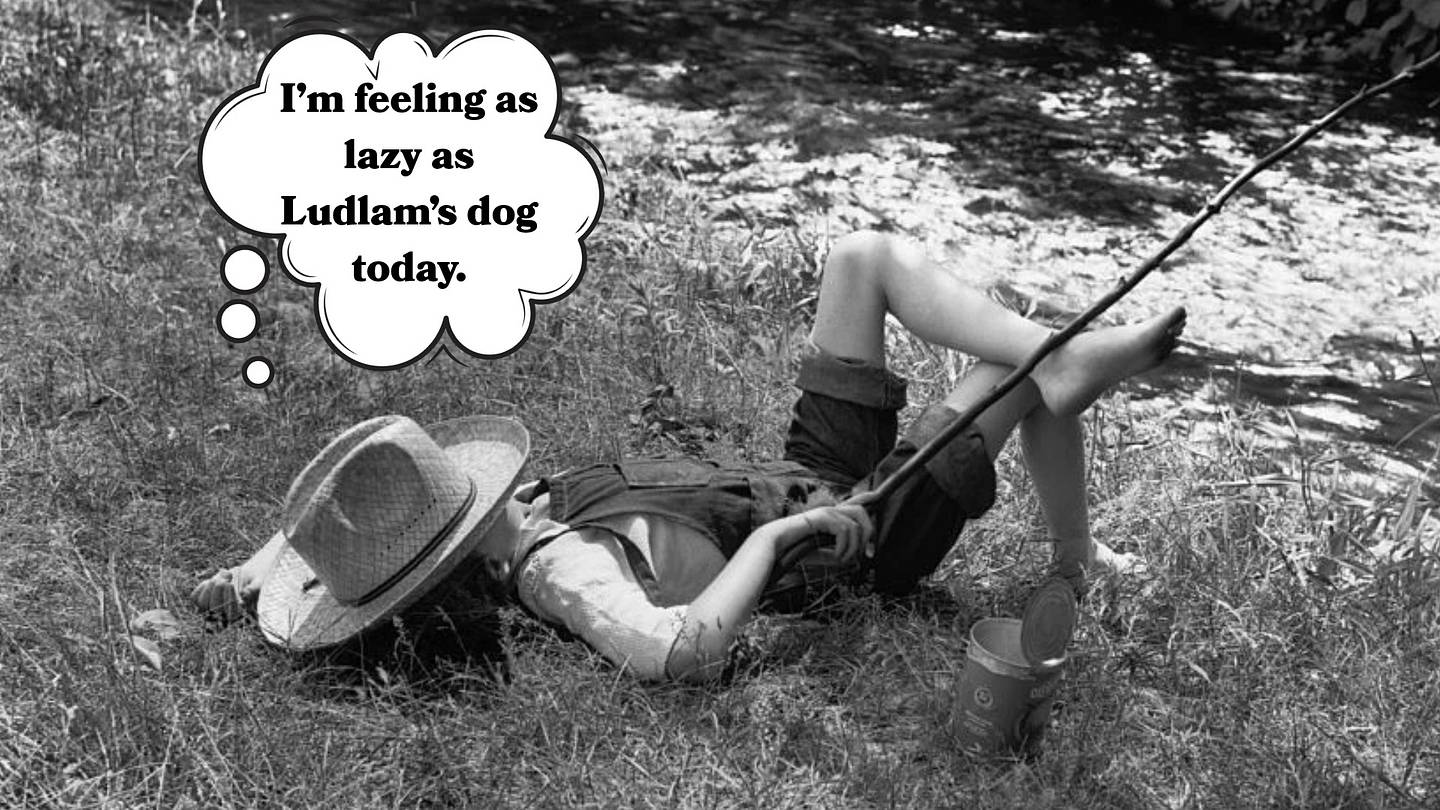
In 16th-century English, at the height of the English Reformation, an abbey-lubber was a derogatory term for a monk or clergyman who lived a life of blissful idleness and self-indulgence. The first part of the word understandably refers to a place of worship, but lubber—the same tag you’ll hear in a landlubber—is an old English word for a silly, clumsy person. Based on an abbey-lubber, though, in the later 1500s describing someone as “abbey-lubber-like” meant that they were habitually lazy according to the Oxford English Dictionary. Nor is that the only obscure and old-fashioned word for being lazy that’s long fallen by the linguistic wayside. CAW-MAGGING CLUMPST DRAW-LATCHING GERT AND DAISY ILLABORIOUS KIPPER-KAPER LAZY AS LUDLAM’S DOG SCOWBANKING SICK OF THE IDLES SLOTTERY CAW-MAGGING Man taking a quick nap on the couch | txking/GettyImagesTo caw is to gawp or to stare foolishly or empty-headed, while to mag is to chatter incessantly or pointlessly. Put the two together, and you’ve the adjective caw-magging, according to the English Dialect Dictionary, which is to be habitually idle or lazy. CLUMPST If you’re clumpsed, then you’re numb with cold—or, more figuratively, slow-witted, dumbfounded, or somehow rendered unable to move or speak. Derived from that, to be clumpst is to be lazy in 19th century Yorkshire dialect. DRAW-LATCHING In medieval times, a draw-latch was a thief who would let himself into people’s homes by “drawing” up the “latch” of their door by some kind of nefarious means. Confusion with the old verb latch, which once meant to slacken a horse’s reins—and therefore to dawdle or walk slowly—ultimately led to the word being reinterpreted in the 1500s as a nickname for someone who lags behind. And that makes the adjective draw-latching another word meaning idling, acting lazily, or falling behind the others. GERT AND DAISY Gert And Daisy | Keystone/GettyImagesGert and Daisy were characters played on British radio in the early 1900s by comic actresses and sisters Elsie and Doris Waters. The duo’s popularity led to their names falling into use in English rhyming slang: Gert and Daisy is a 1960s way of saying someone is lazy. ILLABORIOUS Just as illogical is the opposite of logical and illegal the opposite of legal, illaborious is a seldom-used and long-obsolete opposite of laborious—or, in other words, an early 17th century word meaning workshy or sluggish. KIPPER-KAPER Kipper-kaper is a Scots adjective meaning lazy or sluggish, recorded in the early 1900s, which is intended to sound like the clomping of a horse’s hooves. The connection between the two is, according to the Dictionary of the Scots Language, that kipper-kaper describes someone who is “easy-going, as of a tired or lazy horse.” LAZY AS LUDLAM’S DOG Print Collector/GettyImagesIn English folklore, Ludlam was the name of a supposed witch who dwelt in a cave near the town of Farnham in Surrey, around 30 miles south of London. A host of bizarre and often quite quirky stories emerged around her, including a joke that her familiar, a large dog, was so lazy that it would lean against the cave wall to bark—but if anyone approached the cave, it was so lazy that it wouldn’t even bark at all. “As lazy as Ludlam’s dog,” ultimately, became a popular simile for laziness in 18th century English.SCOWBANKING Scowbanker is an 18th-century word for a loafer, while the related adjective scowbanking has been recorded in both Scots and northern English since the early 1800s to mean lazy, oafish, or idling. Quite where the word comes from is a complete mystery, but given that a scow is a large flat-bottomed boat, this may be one of a number of bizarre English words that come from maritime slang. SICK OF THE IDLES First recorded as far back as 1639, if you were “sick of the idles” in 17th and 18th century parlance then you were “exceedingly lazy” or “idle without the will to work,” according to one definition. You could also be “sick of the Lombard fever,” if you were habitually lazy (a play on the old dialect word lomber, meaning to idle around or drag something heavy), or in an even more extended version, “sick of the idle crick and the belly-work in the heel”—a made-up medical complaint used as a jokey excuse for acting lazy in 17th-century English. SLOTTERY South_agency/GettyImagesTo slotter is to spill or slop something messily, or to make something foul or dirty. From there, perhaps in allusion to someone wearing soiled clothing or not making an effort in their appearance, the same word came to be used to mean to be slothful or indolent—and derived from there, the adjective slottery means lazy. Read More:
10 Old-Fashioned Words for Being Lazy
Full Article
Original Source
Read the full article at Mentalfloss →KhanList aggregates and links to publicly available news content. We do not host full articles from third-party sources. Always verify important information with original sources.