
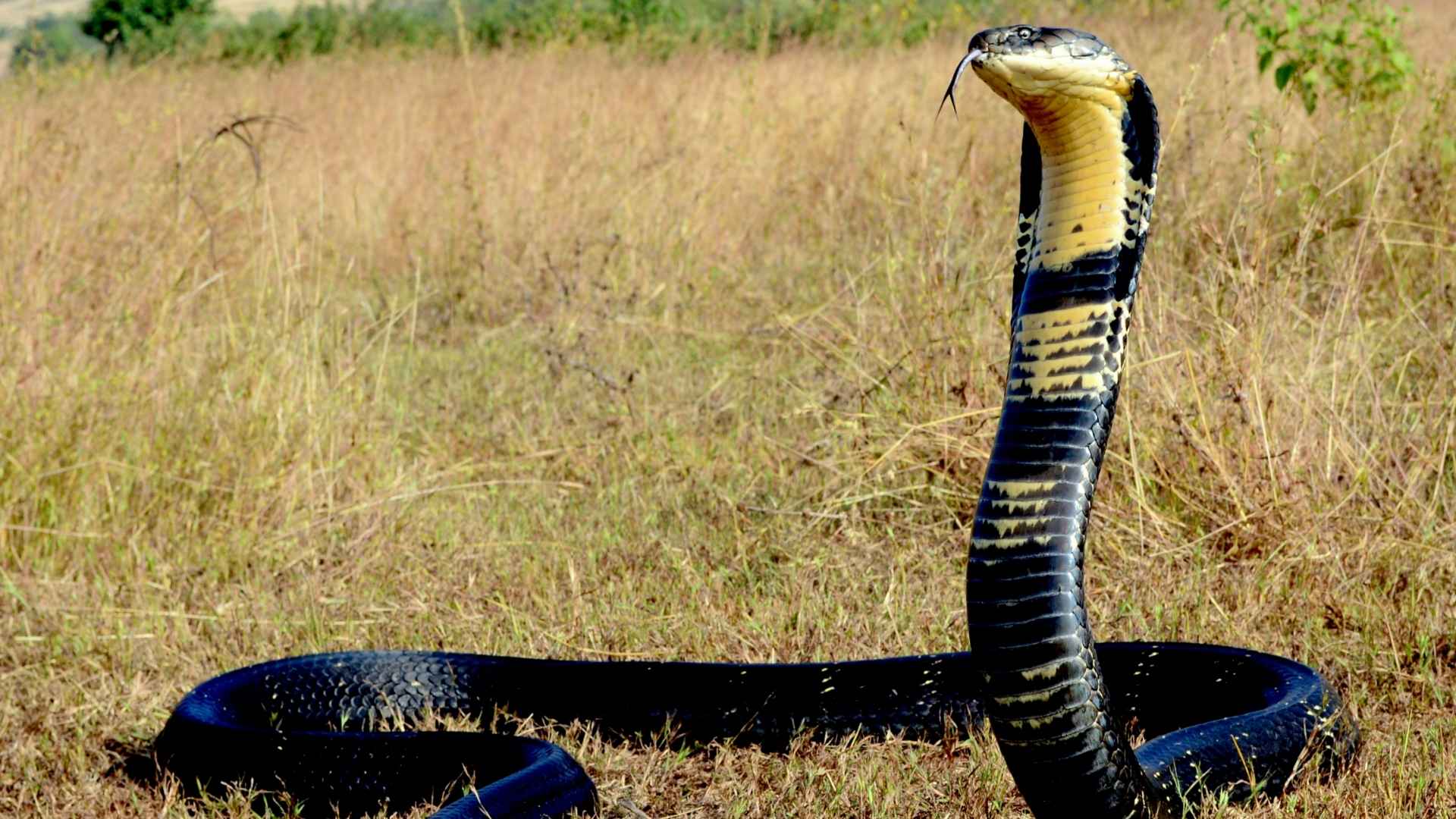
Around 5.4 million people are bitten by snakes every year, with as many as 2.7 million developing clinical illness from envenoming. According to the World Health Organization, these encounters result in approximately 81,000 to 138,000 deaths annually. However, identifying the world’s deadliest snake is not as simple as comparing venom strength. Bite frequency, venom yield, proximity to humans, access to antivenom, and the speed at which symptoms develop can make a frequently encountered species more dangerous than one with exceptionally potent venom. Here’s a list of the 10 most venomous snakes that exist in the world today. 1. Saw-scaled viper Wikimedia Commons Small, aggressive, and widely distributed, saw-scaled vipers are among the world’s most consequential snakes. Species belonging to the Echis genus inhabit parts of Africa, the Middle East, and South Asia, frequently bringing them close to farming communities. Their venom disrupts blood clotting and can cause uncontrolled bleeding, shock, kidney damage, and organ failure. Their prevalence and tendency to bite make them potentially deadlier to humans than snakes carrying stronger venom. 2. Russell’s viper Wikimedia Commons Russell’s viper is responsible for thousands of serious snakebites across South and Southeast Asia. It is frequently encountered in agricultural areas, where its camouflage makes it difficult for farmers to detect. Its venom can trigger internal bleeding, neurological problems, acute kidney injury, and strokes. Alongside the Indian cobra, common krait, and saw-scaled viper, it forms part of India’s notorious “Big Four” medically important snakes. 3. Common krait Wikimedia Commons Found across the Indian subcontinent, the common krait possesses powerful neurotoxic venom that interferes with communication between nerves and muscles. Victims can progressively lose their ability to move, swallow, and breathe. Kraits often enter homes at night and may bite sleeping people. Because the bite can initially feel painless and leave little swelling, victims may not realize they have been envenomed until paralysis begins. Wikimedia Commons The Indian cobra is one of South Asia’s most recognizable and medically significant snakes. Although it generally avoids confrontation, it can bite when surprised, cornered, or accidentally stepped on. Its venom primarily attacks the nervous system, potentially producing muscle weakness, respiratory paralysis, and death. Encounters are relatively common because the species survives in farmland, villages, and other human-dominated environments. 5. Black mamba Wikimedia Commons Africa’s black mamba combines potent venom with exceptional speed and the ability to deliver repeated bites. Despite its name, the snake is generally brown or olive; the “black” refers to the dark interior of its mouth. Its neurotoxic venom can cause paralysis, cardiovascular collapse, and respiratory failure. Untreated severe envenoming carries a high risk of fatality, although the snake usually attempts to escape rather than confront people. 6. Coastal taipan Wikimedia Commons Native to northern and eastern Australia and New Guinea, the coastal taipan is considered one of Australia’s most dangerous snakes. It is alert, fast-moving, and capable of injecting a substantial quantity of highly toxic venom. A bite can disrupt blood clotting, damage muscles, and produce progressive paralysis. Without rapid antivenom treatment and respiratory support, severe envenoming can become fatal. 7. Eastern brown snake Wikimedia Commons The eastern brown snake is responsible for more snakebite deaths in Australia than any other species. Its range overlaps extensively with populated and agricultural regions across the country’s eastern and central areas. The venom contains toxins that accelerate clotting, disturb the nervous system, and can cause sudden cardiovascular collapse. Its defensive bites may deliver little venom, but serious envenoming constitutes a life-threatening emergency. 8. Inland taipan Wikimedia Commons Often described as the world’s most venomous snake based on laboratory toxicity tests, the inland taipan possesses venom capable of attacking the nervous system, muscles, and blood. Nevertheless, it lives in remote parts of inland Australia and rarely encounters humans. No verified human deaths are widely documented, demonstrating why venom potency alone cannot determine real-world deadliness. 9. Fer-de-lance Wikimedia Commons Fer-de-lance is a common name applied to highly dangerous pit vipers in the Bothrops genus, particularly in Central and South America. These snakes often inhabit plantations, forests, and land near settlements. Their venom causes intense pain, swelling, bleeding, tissue destruction, and potentially fatal systemic complications. Survivors may face permanent disability or amputation, especially when treatment is delayed. 10. Boomslang Wikimedia Commons The boomslang is a tree-dwelling African snake with highly potent haemotoxic venom. It is generally shy, and bites are uncommon, but envenoming can have devastating consequences. Symptoms may be delayed for several hours, creating a dangerous impression that the bite was harmless. The venom interferes with clotting and can cause widespread internal and external bleeding, making urgent medical assessment essential. Conclusion The world’s deadliest snakes use different biological weapons to incapacitate their victims. Some venoms paralyze respiratory muscles, while others destroy tissue, disrupt blood clotting, damage kidneys, or trigger cardiovascular collapse. Yet snakes rarely attack humans without provocation, and many deaths can be prevented through education, protective footwear, accessible antivenom, and faster medical treatment. Ultimately, the snakes posing the greatest danger are often not those with the strongest venom, but those most likely to encounter people far from adequate healthcare. Recommended Articles
10 of the world’s deadliest venomous snakes and what makes them so dangerous
Full Article
Original Source
Read the full article at Interestingengineering →KhanList aggregates and links to publicly available news content. We do not host full articles from third-party sources. Always verify important information with original sources.