
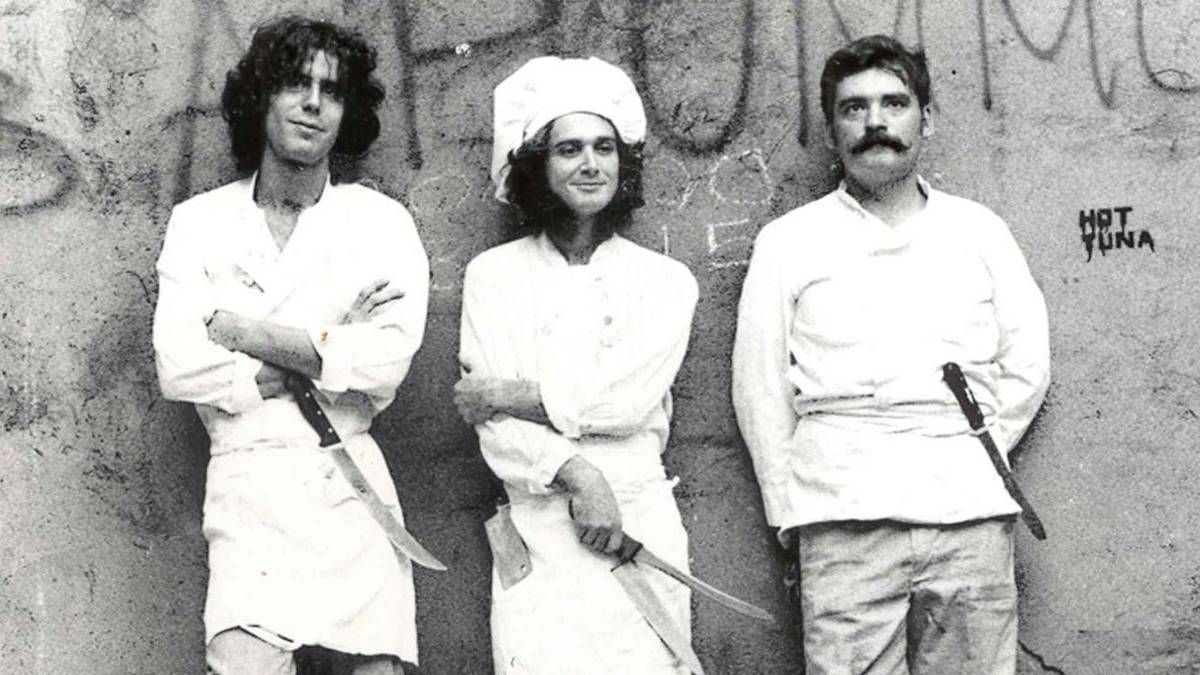
Image via UPPA Published Aug 10, 2026, 6:32 AM EDT Diego Pineda has been a devout storyteller his whole life. He has self-published a fantasy novel and a book of short stories, and is actively working on publishing his second novel. A lifelong fan of watching movies and talking about them endlessly, he writes reviews and analyses on his Instagram page dedicated to cinema, and occasionally on his blog. His favorite filmmakers are Andrei Tarkovsky and Charlie Chaplin. He loves modern Mexican cinema and thinks it's tragically underappreciated. Other interests of Diego's include reading, gaming, roller coasters, writing reviews on his Letterboxd account (username: DPP_reviews), and going down rabbit holes of whatever topic he's interested in at any given point. Sign in to your Collider account There's an almost infinite number of exceptional fiction books that are very much worth reading in 2026, but there's one literary genre that tends to be awfully underrated in casual reading culture, and that's non-fiction. It's a genre that has produced not just a few, but a myriad of the greatest books ever written, and many of those books should be considered essential reading in 2026. Maybe they deal with awfully timely subject matter, like AI or politics, or there's a movie from the past few years that was based on them, or simply because they're so exceptional that they're always worth reading. No matter the reason, the best time to read these non-fiction masterpieces is now. For non-fiction veterans and the uninitiated alike, they should prove to be a delight to read. 'H is for Hawk' (2014) Image via Grove Press Starring Claire Foy and Brendan Gleeson, Philippa Lowthorpe's H is for Hawk saw its wide release earlier this year. As solid as the movie is, though, it doesn't even come close to the level of quality of the memoir that it was based on. The book tells the story of Helen Macdonald, and the year she spent training a Eurasian goshawk following her father's death. The book was a critical and commercial success immediately upon publication, and it isn't hard to see why. It's a beautifully honest and vulnerable meditation on grief and healing, Macdonald never shying away from the darkest parts of her story. But far from just being morose, H is for Hawk also throws in plenty of gorgeous nature writing and even a biography-within-a-memoir of English writer TH White. 'Killers of the Flower Moon' (2017) Image via Vintage It has been three years since Martin Scorsese demonstrated with Killers of the Flower Moon, one of the heaviest crime movies of all time, that he's still perfectly capable of making cinematic masterpieces. But even though it has been that long, both the film and the David Grann book Killers of the Flower Moon: The Osage Murders and the Birth of the FBI, chronicling the history of the Osage murders, still feel terrifyingly relevant. It's an absolutely riveting yet undeniably soul-crushing work, a tale of murder and betrayal that's just as much about its characters as it is about the American frontier itself. Thanks to Grann's combination of meticulous research with the pacing and structure of a gripping detective thriller, Killers of the Flower Moon ends up being thought-provoking and a page-turner in equal measure. 'The Last Kings of Hollywood: Coppola, Lucas, Spielberg—and the Battle for the Soul of American Cinema' (2026) Image via Faber & Faber Every year, countless books about countless different topics related to the film industry are published. However, it's not every year that we get one as insightful, enjoyable, or impeccably written as Paul Fischer's The Last Kings of Hollywood. Over just a little under 500 pages, the book follows the many ways in which Francis Ford Coppola, George Lucas, and Steven Spielberg revolutionized Hollywood and cinema as a whole. The 1970s were perhaps the most transformative decade in the history of the Seventh Art, and these three filmmakers were such important players in that transformation that they've become quasi-deities to cinephiles around the world. With its intricately researched behind-the-scenes stories, The Last Kings of Hollywood manages to both deeply humanize these three auteurs and further enshrine their myths at the same time. Collider Exclusive · Oscar Best Picture Quiz Which Oscar Best PictureIs Your Perfect Movie? Parasite · Everything Everywhere · Oppenheimer · Birdman · No Country Five Oscar Best Picture winners. Five completely different visions of what cinema can be — and what it can do to you. One of them is the film that was made for the way your mind works. Ten questions will figure out which one. 🪜Parasite 🌀Everything Everywhere ☢️Oppenheimer 🐦Birdman 🪙No Country for Old Men FIND YOUR FILM → 01 What kind of film experience do you actually want? The best movies don't just entertain — they leave something behind. ASomething that pulls the rug out — that makes me think I'm watching one kind of film and then reveals I'm watching another entirely. BSomething overwhelming — funny, sad, absurd, and genuinely moving, all at once. CSomething grand and weighty — a film that makes me feel the full scale of what I'm watching. DSomething formally daring — a film that pushes what cinema can even do. ESomething lean and relentless — pure tension with no wasted frame. NEXT QUESTION → 02 Which idea grabs you most in a film? Great films are driven by a central obsession. What's yours? AClass, inequality, and what people are willing to do when desperation meets opportunity. BIdentity, family, and the chaos of trying to hold your life together when everything is falling apart. CGenius, moral responsibility, and the catastrophic weight of a decision you can never take back. DEgo, legacy, and the terror of becoming irrelevant while you're still alive to watch it happen. EEvil, chance, and whether moral order actually exists or if we just tell ourselves it does. NEXT QUESTION → 03 How do you like your story told? Form is content. The way a story is shaped changes what it means. AGenre-twisting — I want it to start in one lane and migrate into something completely different. BMaximalist and genre-blending — comedy, action, drama, sci-fi, all in one ride. CEpic and non-linear — cutting between timelines, building a mosaic of cause and consequence. DA single unbroken flow — I want to feel like I'm living it in real time, no cuts to safety. ESpare and precise — every scene doing exactly what it needs to do and nothing more. NEXT QUESTION → 04 What makes a truly great antagonist? The opposition defines the protagonist. What kind of opposition fascinates you? AA system — invisible, structural, and almost impossible to fight because it has no single face. BThe self — the ways we sabotage, abandon, and fail the people we love most. CHistory — the unstoppable momentum of events that no single person can stop or redirect. DThe industry — the machinery of culture that chews up talent and spits out irrelevance. EPure, implacable evil — a force so certain of itself it becomes almost philosophical. NEXT QUESTION → 05 What do you want from a film's ending? The final note is the one that lingers. What do you want it to sound like? AShock and inevitability — a conclusion that recontextualises everything that came before it. BEarned emotion — I want to cry, laugh, and feel genuinely hopeful, even if the world is a mess. CDevastation and grandeur — an ending that makes me sit in silence for a few minutes after. DAmbiguity — something that leaves enough open that I'm still thinking about it days later. EBleakness — an honest refusal to pretend the world is tidier than it actually is. NEXT QUESTION → 06 Which setting pulls you in most? Where a film takes place shapes everything — mood, stakes, what's even possible. AA gleaming modern city with a hidden underside — beauty masking rot, wealth masking desperation. BA collapsing suburban life that opens onto something infinite — the multiverse of a single ordinary person. CThe corridors of power and science at a world-historical turning point — where decisions echo for decades. DThe grimy, alive chaos of New York and Hollywood — fame as both destination and trap. EVast, indifferent landscape — desert and highway where violence arrives without warning or reason. NEXT QUESTION → 07 What cinematic craft impresses you most? Every great film has a signature — a technical or artistic element that makes it unmistakable. AProduction design and mise-en-scène — every frame composed to carry meaning beneath the surface. BEditing and tonal control — the ability to move between registers without losing the audience. CScore and sound design — music that becomes inseparable from the dread and awe of what you're watching. DCinematography as performance — the camera not recording events but participating in them. ESilence and restraint — what's left unsaid and unshown doing more work than any dialogue could. NEXT QUESTION → 08 What kind of main character do you root for? The protagonist is the lens. Who you choose to follow says something about you. ASomeone smart and resourceful who makes increasingly dangerous decisions under pressure. BSomeone overwhelmed and ordinary who turns out to be capable of something extraordinary. CA brilliant, tortured figure whose gifts and flaws are inseparable from each other. DA self-destructive artist whose ego is both their superpower and their undoing. EA quiet, principled person trying to make sense of a world that has stopped making sense. NEXT QUESTION → 09 How do you feel about a film that takes its time? Pace is a choice. Some films sprint; others let tension accumulate slowly, deliberately. AI love a slow build when I know the payoff is going to be seismic — patience for a devastating reveal. BGive me relentless momentum — I want to feel breathless and emotionally spent by the end. CEpic runtime doesn't scare me — if the material demands three hours, give me three hours. DI want it to feel propulsive even when nothing is technically happening — restless energy throughout. EDeliberate and unhurried — I want dread to accumulate in the spaces between the action. NEXT QUESTION → 10 What do you want to feel walking out of the cinema? The best films leave a mark. What kind of mark do you want? AUnsettled — like I've just seen something I can't fully explain but can't stop thinking about. BMoved and energised — like the film reminded me what actually matters and gave me something to hold onto. CHumbled — like I've been in the presence of something genuinely important and overwhelming. DExhilarated — like I've just seen cinema doing something it's never quite done before. EHaunted — like a cold, quiet dread that stays with me for days. REVEAL MY FILM → The Academy Has Decided Your Perfect Film Is…Your answers have pointed to one Oscar Best Picture winner above all others. This is the film that was made for the way your mind works. ParasiteYou are drawn to films that operate on multiple levels simultaneously — that begin in one genre and quietly, brilliantly migrate into another. Bong Joon-ho's Parasite is a film about class, desire, and the architecture of inequality that manages to be darkly funny, deeply suspenseful, and genuinely shocking across a single extraordinary running time. Your instinct is for cinema that hides its true intentions until the moment it's ready to reveal them. Parasite is exactly that — a film that rewards close attention and punishes assumptions, right up to its devastating final image. Everything Everywhere All at OnceYou want it all — and this film gives you all of it. The Daniels' Everything Everywhere All at Once is one of the most maximalist films ever made: action comedy, multiverse sci-fi, family drama, existential crisis, and a genuinely earned emotional core that sneaks up on you amid the chaos. You are someone who responds to ambition, who doesn't want cinema to choose between being entertaining and being meaningful. This film refuses that choice entirely. It is overwhelming by design, and its overwhelming nature is precisely the point — because the feeling of being crushed by infinite possibility is exactly what it's about. OppenheimerYou are drawn to cinema on a grand scale — films that understand history not as a backdrop but as a force, and that place their characters inside that force and watch what happens. Christopher Nolan's Oppenheimer is a film about the terrifying gap between what we can do and what we should do, told with the full weight of one of the most consequential moments in human history behind it. You want your films to feel important without feeling self-important — to earn their ambition through sheer craft and the gravity of their subject. Oppenheimer does exactly that. It is enormous, complicated, and refuses easy comfort. BirdmanYou are drawn to films that foreground their own construction — that make the how of the filmmaking part of the what it's about. Alejandro González Iñárritu's Birdman, shot to appear as a single continuous take, is cinema examining itself through the cracked mirror of a fading actor's ego. You respond to formal daring, to the feeling that a film is doing something that probably shouldn't be possible. Michael Keaton's performance and Emmanuel Lubezki's restless camera create something genuinely unlike anything else — a film that is simultaneously about creativity, relevance, self-destruction, and the impossibility of ever truly knowing if your work means anything at all. No Country for Old MenYou are drawn to cinema that trusts silence, that refuses to explain itself, and that treats dread as a form of meaning. The Coen Brothers' No Country for Old Men is a film about the arrival of a new kind of evil — implacable, arbitrary, and utterly indifferent to the moral frameworks we use to make sense of the world. It is one of the most formally controlled films ever made, and its controlled restraint is what makes it so terrifying. You want your films to haunt you, not comfort you. You are not interested in resolution if resolution would be dishonest. No Country for Old Men is honest in a way that most cinema never dares to be. ↻ RETAKE THE QUIZ 'Kitchen Confidential: Adventures in the Culinary Underbelly' (2000) Image via Bloomsbury Paperbacks Rarely has the world been treated to human beings quite as fascinating as American chef, writer, and travel documentarian Anthony Bourdain. Before Matt Johnson's Tony inevitably becomes one of A24's best coming-of-age movies, even those who have never even heard of Bourdain ought to check out Kitchen Confidential, part memoir and part unfiltered look at life in high-end restaurant kitchens. Bolstered by Bourdain's raw honesty, delightful wit, and highly conversational style, Kitchen Confidential is more than just a fascinating look behind the scenes at the chaos, mayhem, and lack of luxury of upscale kitchens. It's a love letter to passion itself, a funny, astute, and fast-paced account that anyone who's ever worked under high pressure should be able to relate to. 'The Four Agreements' (1997) Image via Penguin Publishing Group The self-help genre is often looked down on even by those who love non-fiction, and it's not difficult to understand why. After all, it's a space full of superficiality and emotional exploitation. However, there are more than a handful of self-help book masterpieces out there that are always worth reading, and The Four Agreements is one of them. Written by Mexican author Miguel Ruiz, it's a sort of code of conduct based on Toltec teachings to improve one's life. The reason why The Four Agreements is a must-read in 2026 is that it's the sort of beautifully simple and immensely powerful self-help book that's always relevant and beneficial. "Be impeccable with your word," "don't take anything personally," "don't make assumptions," and "always do your best" are the four titular lessons that Ruiz teaches. They may seem simple, but that's precisely what makes them so helpful. 'On Tyranny' (2017) Image via Ten Speed Graphic Timothy Snyder is an American historian of 20th-century Europe, specializing in Central and Eastern Europe and the Holocaust. On Tyranny: Twenty Lessons from the Twentieth Century is the culmination of a life's work of deep research. Focusing on the titular concept of tyranny in the context of modern-day United States, Snyder examines the country's gradual turn toward authoritarianism. It has only gotten more and more terrifyingly timely and relevant as time has gone on, regardless of where the reader is from. The book was written almost a decade ago, and somehow, it has only gotten more and more terrifyingly timely and relevant as time has gone on, regardless of where the reader is from. Comparing American politics to how democracies transformed into dictatorships in 20th-century Europe, On Tyranny offers an incredibly short yet potently thought-provoking instruction manual on how to fight the rise of tyranny. 'If Anyone Builds It, Everyone Dies' (2025) Image via Little, Brown And Company Plenty of topics have become particularly relevant in 2026, and Artificial Intelligence may very well be at the very top of that list. Many fascinating books on the topic have been written throughout the 21st century, but those written over the last couple of years have become particularly relevant—and the best of the bunch is Eliezer Yudkowsky and Nate Soares' If Anyone Builds It, Everyone Dies: Why Superhuman AI Will Kill Us All. In it, Yudkowsky and Soares detail an intricately researched account of the potential threats of the ever-growing artificial superintelligence. It's definitely not a perfect book, but it's one that feels awfully necessary to read in 2026. It's as scary as it is intelligent and easy to read, and only time will tell whether its conclusions will age as prophetic or completely out of touch. For now, they are at least worth entertaining. 'The Sixth Extinction: An Unnatural History' (2014) Image via Henry Holt and Co. In The Sixth Extinction: An Unnatural History, American author and The New Yorker journalist Elizabeth Kolbert argues that Earth is currently undergoing a human-provoked sixth extinction, comparing it to mass extinction events from the past. As far as non-fiction goes, it's arguably one of the best books of all time, an absolutely fascinating and perfectly researched masterpiece that earned Kolbert the Pulitzer Prize for General Nonfiction in 2015. What's best about The Sixth Extinction is that Kolbert is a master of distilling even the most complicated scientific concepts down to perfectly understandable prose, making it the sort of book that anyone old enough to understand should read at least once. Over a decade later, the book's core scientific framework and historical analysis don't feel dated in the slightest. 'Angela's Ashes' (1996) Image via Scribner Irish-American author Frank McCourt's Angela's Ashes is one of the best books of the '90s, a masterfully written memoir that travels through his early childhood in Brooklyn, his life in Ireland, his family's struggles with poverty, and his father's alcoholism. Winner of the 1997 Pulitzer Prize for Biography or Autobiography, it truly is one of the best-written memoirs in history. Angela's Ashes turns 30 years old this year, and that should give anyone—whether they're non-fiction fans or not—the perfect excuse to give it a read in case they never have. Told with prose that blends heartfelt tragedy with an unexpected sense of humor tremendously well, the book is an absolute masterclass in memoir-writing which has aged like fine wine. 'In Cold Blood' (1966) Image via Vintage The fact that Truman Capote's In Cold Blood turns 60 years old this year is but one of a myriad of reasons why it's a masterpiece still worth reading not just in 2026, but any year. The book details the 1959 Clutter family murders, Capote having traveled to Kansas to write about the crime before the killers were even captured, accompanied by fellow author and friend Harper Lee. In Cold Blood was an instant critical and commercial success and is still one of the best books of the 1960s. Widely regarded as the grandfather of the true crime genre and revolutionary for non-fiction as a whole, In Cold Blood is one of the most important literary works of the 20th century. Capote was reportedly disappointed that the book failed to earn him the Pulitzer Prize, but the court of public opinion is ultimately what matters most, and the verdict is that In Cold Blood is one of the best-written books of all time.
10 Non-Fiction Books You Must Read in 2026
Full Article
Original Source
Read the full article at Collider →KhanList aggregates and links to publicly available news content. We do not host full articles from third-party sources. Always verify important information with original sources.