
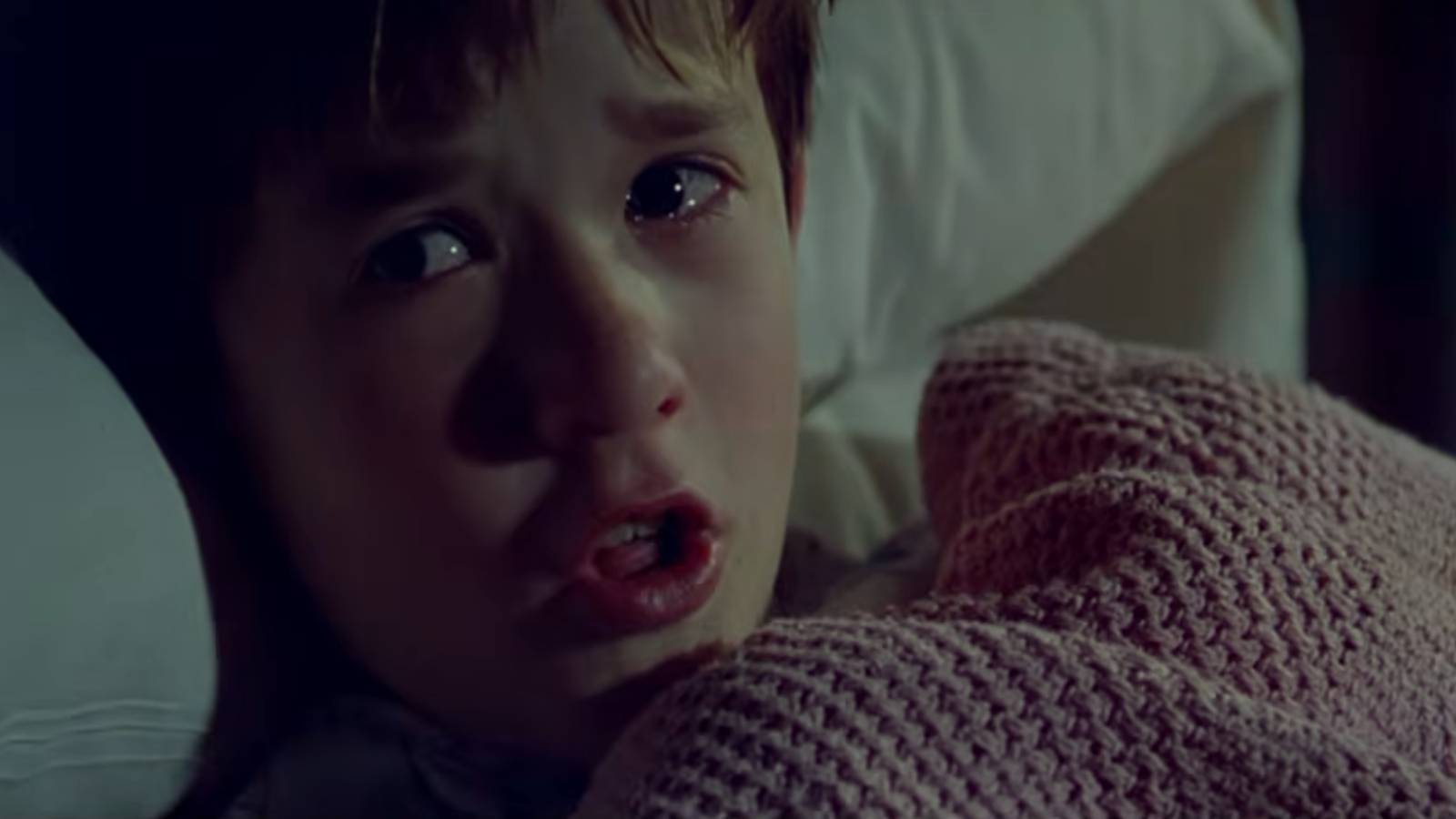
Published Sep 21, 2026, 10:08 AM EDT Senior Music Editor at Screen Rant, Sarah's love of sound and story drive the beat. A globetrotting brand whisperer and award-winning journalist, she’s built cross-cultural narratives around the world—but music has always been her true north. She launched DJ Mag North America, successfully introducing the iconic UK brand to the U.S. market. Previously, she carved a space for EDM inside the pages of VIBE, blending electronic and hip-hop culture long before it was trendy. Summary ’90s thrillers control information and build dread, making conversations feel as dangerous as chases. Confident, patient storytelling and unshowy twists let tension breathe and rewards rewatching. Star turns and moral ambiguity ground jaw-tight plots, from serial killers to crooked cops. The 1990s were spectacularly good at making adults nervous. Before mid-budget thrillers largely migrated away from theaters, studios were still handing major stars tense, self-contained stories built around murder investigations, conspiracies, dangerous strangers, and people realizing far too late that they had trusted the wrong person. The decade produced enough great thrillers that even some of its biggest hits would struggle to make a definitive top 10. What makes the best of them hold up is not simply nostalgia. These movies still know how to control information and make a conversation feel as dangerous as a chase scene. Some eventually became famous for their twists, while others barely need a surprise at all because the tension comes from watching the walls steadily close in. There is also a confidence to many of these films that feels increasingly rare. They assume audiences can keep up without explaining every motive twice, and they are willing to let uncomfortable scenes breathe. Even the decade’s slickest thrillers usually have enough personality to avoid feeling interchangeable. From serial killers and fugitive doctors to crooked cops and obsessive stalkers, these 10 near-perfect ’90s thrillers remain essential viewing today. The Silence Of The Lambs (1991) The Silence of the Lambs works because Hannibal Lecter is not even the killer Clarice Starling is trying to catch. He is the person she has to understand in order to reach someone worse, which makes every conversation between Anthony Hopkins and Jodie Foster feel like its own psychological duel. Jonathan Demme never lets the procedural side overwhelm the characters. Clarice’s vulnerability, ambition, and intelligence keep the movie grounded even as Buffalo Bill’s crimes become more disturbing. Plenty of serial-killer thrillers have tried to recreate that balance since, but very few have matched it. The Fugitive (1993) Richard Kimble spends The Fugitive running from the law while trying to solve the murder that put him there in the first place. Harrison Ford brings just enough desperation to make the chase feel personal, while Tommy Lee Jones turns U.S. Marshal Samuel Gerard into something far more interesting than a conventional pursuer. The movie barely wastes a scene. The train wreck still looks spectacular, the hospital sequence remains tense, and the investigation keeps moving without burying the audience in exposition. What really gives the film staying power is that Kimble and Gerard gradually begin to understand one another even while they remain on opposite sides of the chase. The Game (1997) Michael Douglas spends most of The Game trying to figure out whether his life has actually been destroyed or whether everything around him is part of an impossibly elaborate performance. David Fincher keeps shifting that line until Nicholas Van Orton no longer knows what to believe. The premise is ridiculous if examined too literally, but the movie understands that paranoia only needs to feel convincing while it is happening. Every new clue creates another possibility, and the audience becomes almost as suspicious as Nicholas. It remains one of the most entertaining examples of how a thriller can completely change once its ending is revealed. Misery (1990) Few thriller villains are more frightening than Annie Wilkes because she initially seems so helpful. Kathy Bates turns a devoted fan into a nightmare one small mood swing at a time, trapping novelist Paul Sheldon in a house where gratitude quickly becomes captivity. The confined setting does most of the work. Paul cannot simply overpower Annie or wait for an obvious rescue, so every attempt to escape depends on patience and timing. Bates won an Oscar for the performance, but the movie still belongs just as much to James Caan’s increasingly desperate restraint. More than 35 years later, the hobbling scene has lost none of its power. Heat (1995) Heat is much bigger than many of the movies on this list, but Michael Mann never lets scale replace tension. Neil McCauley and Vincent Hanna are both extraordinarily good at what they do, which makes their pursuit feel less like hero versus villain than two professionals slowly realizing how much they resemble one another. Al Pacino and Robert De Niro finally sharing a scene was the headline attraction, but the movie surrounding them is just as strong. The downtown shootout remains one of the greatest action sequences ever filmed, while quieter scenes give the eventual confrontation real weight. Heat proved a crime thriller could be enormous without losing its patience. Primal Fear (1996) Richard Gere’s Martin Vail enters Primal Fear convinced that defending Aaron Stampler will be good for his career. Edward Norton’s terrified altar boy appears almost incapable of committing the brutal murder he is accused of, and the discovery of a violent alternate personality seems to explain everything. Then Aaron drops the stutter. The final reveal is still one of the nastiest endings in a ’90s thriller because it exposes how completely Vail has been manipulated. Norton’s performance works even better on rewatch, when every nervous pause begins to look calculated. Few courtroom thrillers have managed to make winning the case feel so much like losing. The Sixth Sense (1999) The Sixth Sense became famous for its ending, but the movie would not have lasted if the twist were all it had. Haley Joel Osment gives Cole Sear a sadness that makes his fear feel genuine, while Bruce Willis plays Malcolm Crowe with unusual restraint. M. Night Shyamalan also plants enough clues that a second viewing becomes almost a different movie. Scenes that initially seem to be about a damaged marriage suddenly carry another meaning, and Cole’s confession about seeing dead people turns out to be more literal than Malcolm understands. The twist became iconic because the emotional story underneath it already worked. L.A. Confidential (1997) L.A. Confidential begins like a stylish period crime movie and gradually reveals something much nastier underneath the surface. Three very different police officers approach corruption from competing angles, forcing the audience to keep recalibrating who can actually be trusted. Russell Crowe, Guy Pearce, and Kevin Spacey give the movie three distinct centers without making it feel scattered. The plotting is dense but remarkably clear, and the old-Hollywood setting never becomes decoration. Every polished surface hides something rotten, which gives the film a darker edge than its glamorous Los Angeles backdrop initially suggests. Cape Fear (1991) Robert De Niro’s Max Cady does not need to hide what he wants. He tells attorney Sam Bowden exactly why he is angry, then spends the rest of Cape Fear proving how little the law can do to stop him. Martin Scorsese turns that inevitability into the movie’s greatest source of tension. Cady keeps finding ways to enter the Bowdens’ lives without giving Sam enough evidence to remove him, making every encounter feel like a warning. De Niro pushes the performance close to theatrical excess, but the intimidation works because Nick Nolte’s Sam becomes increasingly willing to compromise his own morality to fight back. Se7en (1995) Release Date September 22, 1995 Runtime 127 minutes Director David Fincher Writers Andrew Kevin Walker Producers Arnold Kopelson, Phyllis Carlyle Se7en makes its city feel diseased long before detectives Somerset and Mills understand the pattern connecting its murders. David Fincher keeps the weather miserable, the interiors oppressive, and the killer largely unseen, allowing the investigation itself to create the dread. Kevin Spacey’s John Doe eventually appears with enough time left to make everything worse. The final drive into the desert strips away the usual detective-thriller machinery until only Doe’s plan remains. Plenty of movies have chased the shock of that ending since, but the reason Se7en still works is everything leading up to it. By the time the box arrives, the movie has already convinced the audience that nothing good is coming.
10 Near-Perfect ’90s Thrillers That Remain Essential Viewing Today
Full Article
Original Source
Read the full article at Screenrant →KhanList aggregates and links to publicly available news content. We do not host full articles from third-party sources. Always verify important information with original sources.