
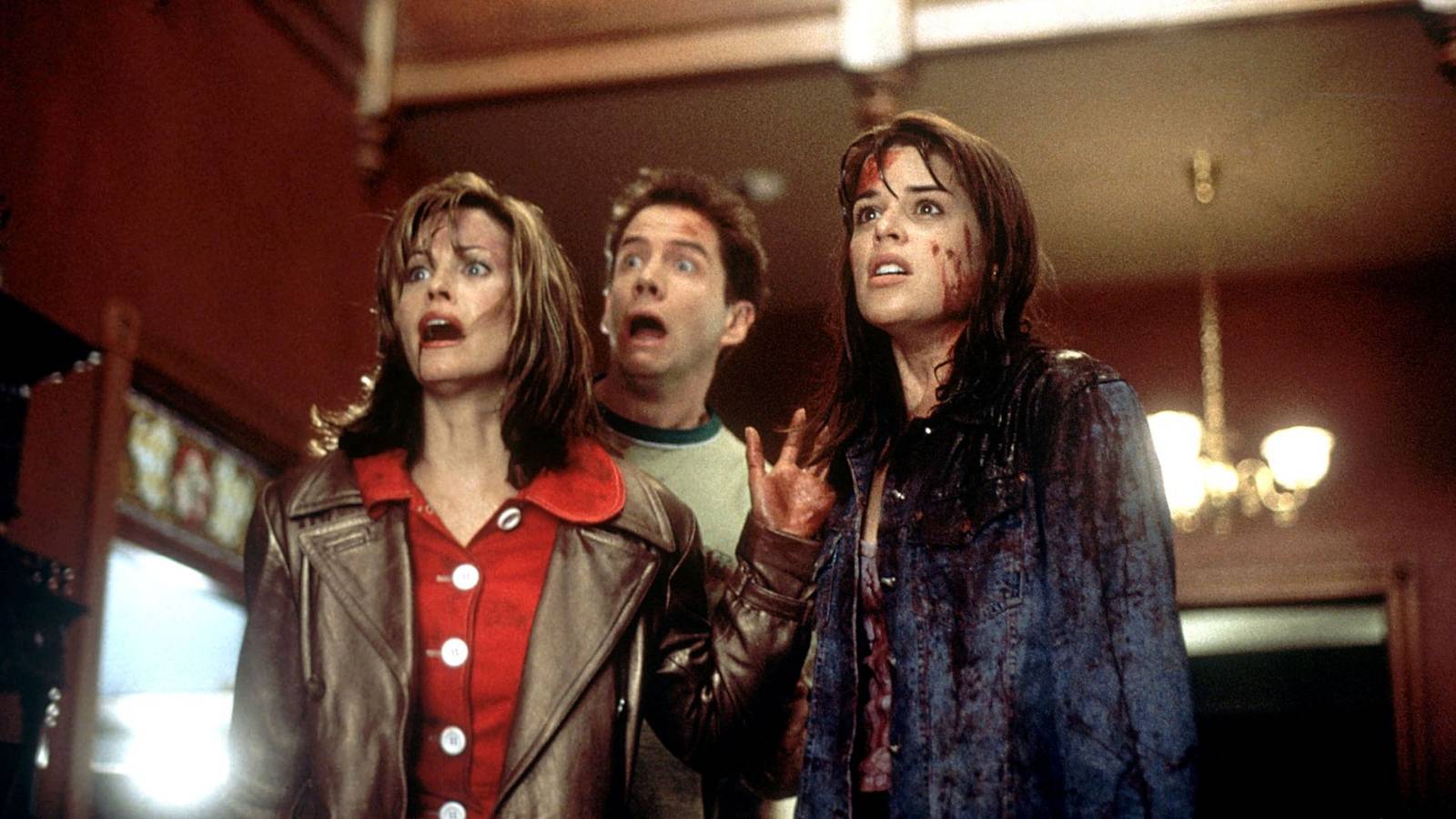
Published Oct 10, 2026, 10:23 AM EDT Senior Music Editor at Screen Rant, Sarah's love of sound and story drive the beat. A globetrotting brand whisperer and award-winning journalist, she’s built cross-cultural narratives around the world—but music has always been her true north. She launched DJ Mag North America, successfully introducing the iconic UK brand to the U.S. market. Previously, she carved a space for EDM inside the pages of VIBE, blending electronic and hip-hop culture long before it was trendy. The 1990s were too weird for horror to have a single identity. The decade gave us the urban nightmare of Candyman, the reality-bending horror of Jacob’s Ladder, the gothic excess of Interview with the Vampire, and, three terrified filmmakers wandering through the woods with a cheap camera. The same decade produced near-perfect ’90s thrillers that remain essential viewing, yet horror was busy becoming something much harder to pin down. By the time Scream arrived in 1996 and supposedly revived horror, filmmakers had already spent years pushing the genre in wildly different directions. That unpredictability was hardly limited to horror, either; the best ’90s adventure movies had a similar anything-goes quality. That variety is what makes ’90s horror so much fun to revisit. Slashers came back with a wink, vampires got glamorous again, science fiction went somewhere deeply unpleasant, and filmmakers kept finding new ways to make ordinary places feel unsafe. “Near-perfect” does not mean every movie below was universally adored when it opened. A few decidedly were not. It means they still deliver exactly what they set out to do with remarkably little that needs excusing decades later. Some changed horror immediately, while others took years to find the audience that understood them. All 10 remain essential viewing for Halloween 2026. Jacob’s Ladder (1990) Jacob’s Ladder starts with a Vietnam veteran trying to live an ordinary life in New York and gradually makes reality itself feel unreliable. Tim Robbins plays Jacob Singer, whose increasingly grotesque visions could be trauma, hallucination, something supernatural, or some combination of all 3. Adrian Lyne rarely gives the audience enough stability to decide. The imagery remains startling because so much of it feels slightly wrong rather than elaborately designed to scare. Its influence can be seen throughout later psychological horror, while the movie itself has proven remarkably difficult to imitate. The substantial differences between the original Jacob’s Ladder and its 2019 remake only make the strange alchemy of the 1990 version easier to appreciate. The People Under The Stairs (1991) Wes Craven could make a horror movie about almost anything, including terrible landlords. The People Under the Stairs traps a young boy named Fool inside the home of the people exploiting his family, where he discovers that their enormous house is hiding much worse than stolen wealth. Craven piles horror, satire, cruelty, and an almost fairy-tale sense of adventure into the same movie without losing control of it. Everett McGill and Wendy Robie are wonderfully deranged as Mommy and Daddy, while Brandon Adams gives the movie someone worth rooting for. More than 30 years later, much of The People Under the Stairs has aged remarkably well, including the anger underneath all that madness. Candyman (1992) Few horror villains arrive with the presence Tony Todd brought to Candyman. His voice alone could have carried an inferior movie, but Bernard Rose surrounds him with something much richer: an urban legend that becomes increasingly frightening the deeper Helen Lyle digs into its history. Virginia Madsen keeps the movie grounded even as Helen’s certainty begins collapsing around her. The Chicago setting matters, the romance is deeply unsettling, and Philip Glass’ score makes the whole thing feel almost mournful. Candyman eventually became a franchise, but the 1992 original still has a texture none of the movies that followed could completely reproduce. Wes Craven’s New Nightmare (1994) Two years before Scream, Wes Craven was already taking horror apart to see how it worked. Wes Craven’s New Nightmare brings Heather Langenkamp, Robert Englund, and Craven himself into the story as fictionalized versions of themselves, while Freddy Krueger begins escaping the boundaries of the movies that supposedly contained him. It was a wonderfully strange gamble for a franchise that had spent years turning Freddy into an increasingly comic pop-culture celebrity. Craven makes him frightening again by treating the character as something older and more dangerous than the wisecracking killer audiences thought they knew. Even the movie’s origins are appropriately strange, with one idea for New Nightmare growing out of a dream Craven had years earlier. Interview With The Vampire (1994) Image via Warner Bros. Interview with the Vampire looks spectacular, and that is hardly incidental to why it works. Neil Jordan gives Anne Rice’s vampires candlelight, velvet, enormous rooms, beautiful clothes, and centuries in which to become completely miserable. Brad Pitt plays Louis as a man burdened by immortality, while Tom Cruise’s Lestat is having considerably more fun with it. Cruise was controversial casting at the time, which now seems almost quaint considering how completely he commits to Lestat’s vanity and appetite. Kirsten Dunst is even more remarkable as Claudia, a child physically frozen at the age she was turned. Few vampire movies have ever made eternal life look so glamorous and so exhausting at exactly the same time. If You Haven’t Watched AMC’s Interview With The Vampire Yet, Start Now The 1994 movie is still essential, but AMC’s Interview with the Vampire has become something wonderfully strange of its own. Sam Reid’s Lestat is magnificent, Jacob Anderson gives Louis far more room to unravel, and Season 2 takes everything the first season built and pushes it somewhere much darker, stranger, and more theatrical. Do start with Season 1 rather than jumping ahead. The relationships matter too much to skip the setup, and the payoff only gets better from there. The story has now shifted into The Vampire Lestat for Season 3, putting Reid’s gloriously excessive vampire front and center as a modern-day rock star. If you thought Lestat was a lot before, apparently he was only warming up. In The Mouth Of Madness (1994) John Carpenter turns reading into an apocalyptic event in In the Mouth of Madness. Sam Neill plays insurance investigator John Trent, who is sent looking for missing horror novelist Sutter Cane and discovers a town that supposedly exists only inside Cane’s books. From there, the distinction between fiction and reality becomes increasingly useless. The movie has only become more interesting in an era obsessed with fandom, alternate realities, and the strange power people can give an idea simply by believing in it hard enough. Carpenter fills the edges with monsters and practical effects without letting them overwhelm the central concept. In the Mouth of Madness was never one of his biggest hits, but it now feels like one of his most rewarding movies to rediscover. Scream (1996) The opening of Scream is so famous that it can be easy to forget how audacious it was. Drew Barrymore was the biggest name in the cast, audiences had every reason to expect her to lead the movie, and Wes Craven killed her before the title even appeared. Everything that follows is just as confident. Kevin Williamson’s characters know horror movies, understand the rules, and still make terrible decisions once Ghostface starts killing their friends. The jokes never cancel out the danger, which is where countless imitators went wrong. There is a reason the original still sits near the top whenever the Scream movies are ranked against one another, even after the franchise has spent decades reinventing itself. I Know What You Did Last Summer (1997) I Know What You Did Last Summer does not have Scream’s wit, but it has almost everything else required of a great late-’90s slasher: an absurdly attractive cast, a coastal town full of secrets, a killer with an instantly recognizable weapon, and teenagers making decisions that will ruin the rest of their lives. Jennifer Love Hewitt gives Julie enough genuine anxiety to keep the movie from becoming pure glossy fun, while Sarah Michelle Gellar very nearly steals it as Helen Shivers. The Fisherman never became Ghostface-level iconic, but the original has proven difficult for its own franchise to beat, something that becomes obvious when the I Know What You Did Last Summer movies are ranked together. Event Horizon (1997) Event Horizon asks a beautifully simple question: what if humans finally learned how to travel faster than light and the place they reached was somewhere they should never have gone? Laurence Fishburne leads the rescue crew sent to investigate a spaceship that mysteriously reappears after disappearing years earlier, with Sam Neill playing the scientist who designed it. The movie was savaged by plenty of critics when it opened, but time has been far kinder. Its production design still looks incredible, the flashes of whatever happened aboard the ship remain upsetting, and the collision of science fiction with supernatural horror has inspired decades of arguments over exactly what the Event Horizon encountered. Cult status suits it. The Blair Witch Project (1999) By 1999, horror had already spent the decade reinventing itself several times. Then The Blair Witch Project arrived looking like something three film students might genuinely have left behind in the woods. That roughness was the entire trick. Heather Donahue, Michael C. Williams, and Joshua Leonard feel less like actors than increasingly frightened people who have realized they may never find their way home. The movie barely shows its monster because it never needs to. Its extraordinary marketing campaign became almost as influential as the movie itself, but the reason The Blair Witch Project survives is simpler: once darkness falls, a tent in the middle of the woods still feels like a terrible place to be. Release Date July 30, 1999 Runtime 81 minutes Director Eduardo Sánchez, Daniel Myrick
10 Near-Perfect ’90s Horror Movies That Remain Essential Viewing
Full Article
Original Source
Read the full article at Screenrant →KhanList aggregates and links to publicly available news content. We do not host full articles from third-party sources. Always verify important information with original sources.