
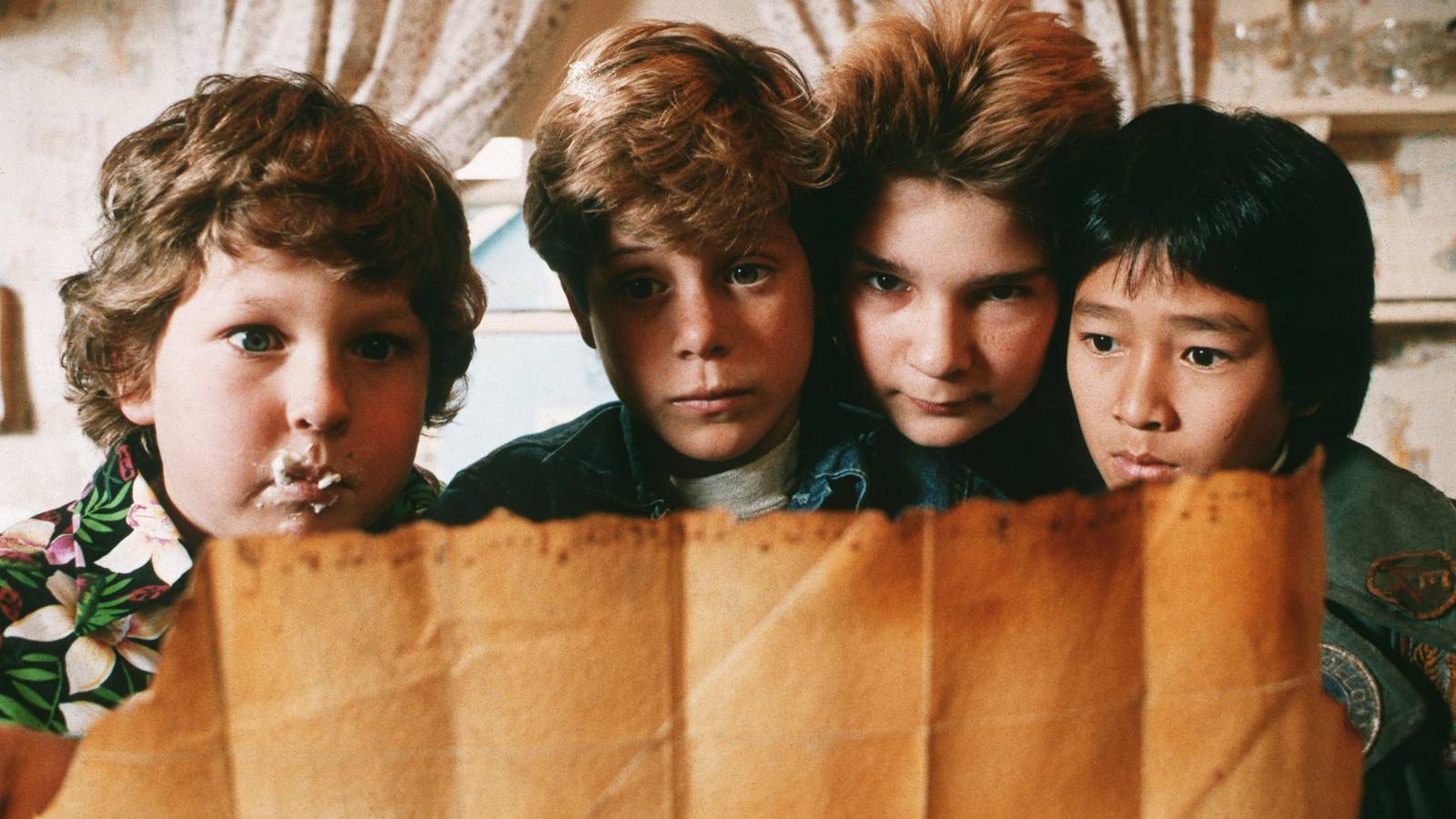
Published Sep 13, 2026, 12:20 PM EDT Richard Craig is a Senior Author at Screen Rant covering film and TV. Richard has also written extensively about horror and film soundtracks, contributing a chapter to the first major academic collection on the folk horror genre, The Routledge Companion to Folk Horror. Richard is also a performing musician and holds an MA in Music and Sound Art. The 1980s produced an extraordinary collection of children's movies. The decade produced movies willing to frighten young audiences, break their hearts, introduce genuinely complicated villains and send child protagonists into situations where the consequences felt surprisingly real. Decades later, those qualities have helped many of these movies escape the limitations of nostalgia. The 1980s were particularly fertile ground for children's fantasy, adventure, science fiction and coming-of-age stories. Practical effects gave fantastical worlds a tangible quality, while filmmakers such as Steven Spielberg, George Lucas, Jim Henson and Richard Donner approached young protagonists with the same seriousness afforded to adult heroes. Even movies built around comedy or adventure could introduce themes of grief, loneliness, identity, friendship and growing up without sacrificing their entertainment value. The decade's strongest kids movies are especially impressive for how well their central ideas have survived changing technology and audience expectations. They're still visually striking because of their elaborate practical effects, or endure because their characters and emotional conflicts are fundamentally timeless. A few were even considered unusual or risky when they first arrived in cinemas. Yet the best examples have continued to attract new generations of viewers, proving that great children's movies do not have an expiration date. Willow (1988) Willow is one of the 1980s' most ambitious attempts to create an original fantasy adventure. Produced by George Lucas, it depicts Willow Ufgood (Warwick Davis), a reluctant Nelwyn farmer who becomes responsible for protecting the infant Elora Danan, a baby prophesied to bring about the downfall of evil Queen Bavmorda (Jean Marsh). Willow's most impressive asset is its scale. The two-headed dragon, Bavmorda's transformation and the climactic confrontation at Nockmaar Castle demonstrate precisely how much spectacle the film attempted to pack into a children's fantasy. Willow was not universally acclaimed upon release, with its contemporary reception often criticizing the generic story and slow pacing. Yet its practical effects, elaborate fantasy environments and memorable creatures give it a physical quality that is undeniably distinctive and helped foster a dedicated cult following. Gremlins (1984) Gremlins is perhaps the clearest example of why the phrase "kids movie" meant something rather different in the 1980s. Billy Peltzer (Zach Galligan) receives an adorable pet Mogwai named Gizmo, accompanied by three rules: keep him away from bright light, never get him wet and never feed him after midnight. Billy inevitably breaks the rules, turning an idyllic Christmas story into a miniature creature-feature massacre. This tonal collision is what makes Gremlins so effective. Gizmo belongs in a cuddly family movie, while the Gremlins themselves behave like malicious cartoon anarchists. Combining slapstick violence and horror-movie imagery, it is simultaneously funny and disturbing. Gremlins also contains an intriguing satirical edge than its toy-friendly premise suggests, particularly in its treatment of consumerism and Christmas shopping. The NeverEnding Story (1984) The NeverEnding Story offers some of the most memorable fantasy scenes in children's movie history. It centers on Bastian Bux, a bullied boy who discovers a mysterious book and reads about Fantasia, a magical world being consumed by an entity known simply as the Nothing. The most remarkable achievement is the way it connects Bastian's real-world insecurity to Fantasia's existential crisis. Atreyu's quest initially appears separate from Bastian, but the story gradually reveals that the boy reading the book is part of the adventure itself. It suggests that a child’s imagination has the power to create living worlds filled with memorable creatures. The NeverEnding Story also refuses to protect children from sadness. Artax's death in the Swamps of Sadness has become engrained in the public conscious as perhaps the most upsetting in any genre. Labyrinth (1986) Jim Henson's Labyrinth is one of the strangest children's fantasy films ever released by a major studio. Jennifer Connelly plays Sarah, a teenager who wishes for the Goblin King, Jareth (David Bowie), to take away her baby brother. When the wish unexpectedly comes true, Sarah has hours to navigate Jareth's labyrinth and rescue him. Henson fills that labyrinth with distinctive and characteristic creatures. Their practical puppetry gives the fantasy world an eccentricity the CGI simply cannot replicate. Bowie's presence, meanwhile, is endlessly beguiling. His musical numbers, particularly "Magic Dance," make Jareth feel like a rock star who has wandered into a fairy tale – very on brand for the iconic performer. Yet Labyrinth remains focused primarily on Sarah's maturation. Her assumptions about how stories are supposed to work are repeatedly challenged, forcing her to recognize that neither she, nor the audience, cannot expect familiar fairy-tale rules. The Land Before Time (1988) The Land Before Time is proof that an animated children's movie does not need constant jokes or a sprawling mythology to leave an enormous impression. Littlefoot is a young Apatosaurus separated from his family after his mother is killed by the carnivorous Sharptooth. Her final instruction is for him to reach the Great Valley, where he will supposedly find other plant-eating dinosaurs. That setup gives The Land Before Time an unusually focused emotional structure. Littlefoot's journey is a physical trek and a story about grief. Along the way, he forms charming friendships with Cera, Ducky, Petrie and Spik, forged through conflict and comradery. The characters are cute, but The Land Before Time never lets viewers forget that they inhabit an ecosystem where Sharptooth can appear without warning. Nevertheless, The Land Before Time is endlessly charming and still packs a true emotional punch. The Karate Kid (1984) The Karate Kid works because it is not really about learning karate. It is about Daniel LaRusso (Ralph Macchio) finding stability after moving from New Jersey to California and becoming the target of Cobra Kai students led by Johnny Lawrence (William Zabka). Pat Morita's Mr. Miyagi provides a truly memorable emotional core. His training initially appears ridiculous because Daniel is seemingly instructed to perform mundane household tasks, before ultimately understanding Miyagi's hidden wisdom. The relationship this fosters between the two gives the tournament its weight, with Daniel surmounting both his rivals and his inner turmoil. Daniel's final crane kick brings all of this together in a rousing emotional climax, rather than turning the competition into spectacle alone. The continuing Karate Kid franchise, including Cobra Kai, has only reinforced how effectively the original established its characters and moral conflicts. Steven Spielberg's E.T. the Extra-Terrestrial is arguably the purest expression of childhood wonder in the decade. Elliott (Henry Thomas) discovers an alien abandoned on Earth and hides him in his suburban California home, eventually introducing him to his siblings Michael and Gertie. Vitally, E.T.'s friendship with Elliott is treated as more important than the science-fiction mechanics surrounding it. Elliott is lonely because his father has left the family, while E.T. is separated from his own people. Their bond therefore works as an emotional mirror: each has lost someone and neither fully understands how to cope. Spielberg also builds the story around increasingly recognizable childhood experiences. The climactic bicycle sequence, Elliott's farewell to E.T. and John Williams' score have become fundamental pieces of popular cinema precisely because Spielberg always treats the characters' emotions as the narrative priority. The Brave Little Toaster (1987) The Brave Little Toaster brought anthropomorphized everyday items to life decades before Pixar. A toaster, blanket, radio, lamp and vacuum cleaner named Kirby live together in an abandoned cabin while waiting for their owner, Rob, to return. The premise sounds like a gentle comedy, but Jerry Rees' film is anything but. The appliances encounter a range of genuinely unsettling situations during their journey, including an electrical storm, a terrifying junkyard sequence and the infamous air conditioner scene. Interestingly, much of the emotion comes from the appliances' fear of becoming obsolete. The Brave Little Toaster therefore explores themes of defunct consumer technology, replacement and the fear of being discarded. These hit even harder in an era of rapidly changing electronics. Its hand-drawn animation and surprisingly bleak ideas help distinguish The Brave Little Toaster from the safer animated features that surrounded it. The Goonies (1985) The Goonies turns a group of Oregon children into miniature adventure heroes. When Mikey Walsh (Sean Astin) and his friends discover a treasure map belonging to the pirate One-Eyed Willy, they follow it into an underground network of tunnels while attempting to save their homes from foreclosure. The rag-tag troupe of boys are quickly transformed into tiny Indaia Jones-style heroes, each bringing their own specialisms to the group dynamic. Chris Columbus' screenplay, Richard Donner's energetic direction and Steven Spielberg's story combine to create a film that feels deliberately like a childhood fantasy of what an adventure should be. Crucially, The Goonies allows its children to solve problems themselves rather than turning adults into convenient superheroes. Consequently, it's frequently cited as the ultimate children's movie of all time. The Princess Bride (1987) Rob Reiner's The Princess Bride may be the most effortlessly rewatchable film on this list because it works simultaneously as a fairy tale, romantic adventure, comedy and parody of all three. Adapted by William Goldman from his own novel, the movie frames the story as a grandfather reading to his sick grandson. That framing device gives Goldman permission to play with fairy-tale conventions and its many genres. The sword fight between Westley (Cary Elwes) and Inigo (Mandy Patinkin) is particularly gripping because it treats comedy and genuine action with equal seriousness. Unlike several other films on this list, The Princess Bride was greeted warmly by critics and has become even more acclaimed over time. It’s a postmodern fairy tale that successfully combines swashbuckling, romance and comedy into the perfect children's movie. Release Date September 25, 1987 Runtime 99 minutes Director Rob Reiner Cast Robin Wright The Princess Bride Writers William Goldman Producers Andrew Scheinman, Rob Reiner
10 Near-Perfect 80s Kids Movies That Remain Essential Viewing Today
Full Article
Original Source
Read the full article at Screenrant →KhanList aggregates and links to publicly available news content. We do not host full articles from third-party sources. Always verify important information with original sources.