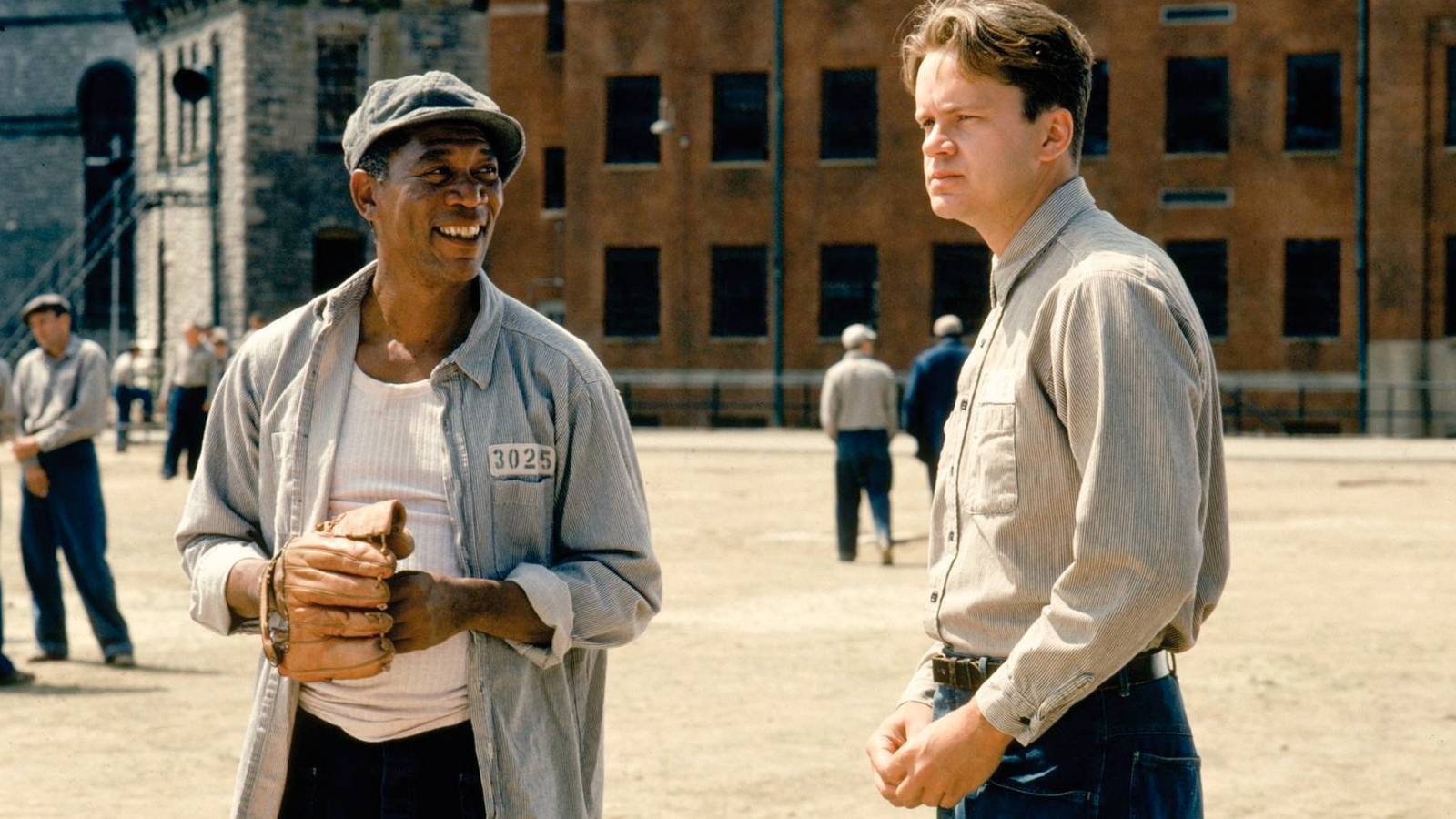
For those who loved The Shawshank Redemption, there are some more classic movies that would make ideal follow-ups. Few films have earned the lasting reputation of The Shawshank Redemption. Frank Darabont's 1994 adaptation of Stephen King's novella was only a modest box-office success upon release, yet it gradually became one of the most beloved movies ever made. Audiences continue to return to its story of hope, friendship, perseverance, and resilience in the face of seemingly impossible circumstances. Part of The Shawshank Redemption’s enduring appeal comes from how many genres it successfully combines. It is a prison drama, but it is also a character study, a mystery, a coming-of-age story, and an uplifting tale about refusing to surrender to despair. Tim Robbins and Morgan Freeman's performances remain central to its success, while Darabont's measured pacing allows viewers to become deeply invested in Andy Dufresne's decades-long journey. Fortunately, The Shawshank Redemption is not the only film capable of delivering that blend of emotional storytelling and unforgettable characters. Whether through prison escapes, wrongful convictions, unlikely friendships, or Stephen King connections, these movies capture many of the qualities that have made Shawshank such an enduring classic. The Green Mile (1999) If any film comes closest to recreating the feeling of The Shawshank Redemption, it is The Green Mile. Like Shawshank, it was directed by Frank Darabont and adapted from a Stephen King story, immediately giving both films a similar storytelling style and emotional tone. Set on Death Row during the Great Depression, The Green Mile follows prison guard Paul Edgecomb, played by Tom Hanks, as he encounters the mysterious John Coffey, played perfectly by Michael Clarke Duncan. Rather than focusing on escape, the story explores justice, compassion, and the flaws of institutional systems. Darabont again takes his time developing relationships between characters, allowing viewers to become emotionally invested in every triumph and tragedy. Much like Red and Andy's friendship, the bond between Paul and John forms the heart of the film. Both movies also balance heartbreaking drama with moments of warmth, humour, and humanity. One Flew Over The Cuckoo's Nest (1975) While it takes place in a psychiatric hospital rather than a prison, One Flew Over the Cuckoo's Nest shares many of the same themes that make The Shawshank Redemption so compelling. Both stories focus on institutions designed to strip people of their individuality and the rebels who challenge them, climaxing into a highly compelling escape scene. Jack Nicholson's Randle McMurphy arrives at the hospital and immediately clashes with Nurse Ratched, creating a conflict similar to Andy Dufresne's battle against Warden Norton. Both protagonists inspire those around them to reclaim some sense of freedom and dignity. One Flew Over the Cuckoo's Nest also shares Shawshank's focus on friendship and personal transformation. Many supporting characters begin as broken individuals before gradually finding confidence through McMurphy's influence. Like Andy, he becomes a symbol of hope in an environment built around control and submission. Midnight Express (1978) Midnight Express offers a far harsher and more brutal prison experience than The Shawshank Redemption, but viewers drawn to stories of survival against impossible odds will find plenty to appreciate. Based on a true story, Midnight Express follows Billy Hayes after he is imprisoned in Turkey for attempting to smuggle drugs out of the country. Unlike Andy's measured and calculated approach to imprisonment, Billy's journey is chaotic, desperate, and frequently terrifying. The gritty realism and intense atmosphere create a very different viewing experience, yet both movies centre on individuals refusing to surrender hope despite overwhelming circumstances. Escape also plays a crucial role in both narratives, though Midnight Express approaches the idea with considerably more urgency. Alan Parker's direction and Giorgio Moroder's electronic score help create a tense, claustrophobic atmosphere that remains remarkably effective decades later. Escape From Alcatraz (1979) Clint Eastwood's Escape From Alcatraz may be the most obvious companion piece to The Shawshank Redemption. Both films revolve around intelligent prisoners quietly planning elaborate escapes from supposedly inescapable prisons. Eastwood plays Frank Morris, a real-life inmate who orchestrated the infamous Alcatraz breakout. Like Andy Dufresne, Frank relies on patience, observation, and meticulous preparation rather than brute force. Watching both men slowly gather resources and outsmart prison authorities is one of the great pleasures of each film. The films even share a similar attention to procedural detail. Every stage of the escape is carefully explained, making the eventual payoff especially satisfying. While Escape From Alcatraz lacks Shawshank's broader emotional themes, it captures the same fascination with ingenuity, perseverance, and the dream of freedom. Cool Hand Luke (1967) Paul Newman's Luke Jackson from Cool Hand Luke has much in common with Andy Dufresne. Both men arrive in prison as outsiders and gradually become legends among their fellow inmates. Unlike Andy, Luke openly challenges authority rather than quietly working around it. His refusal to conform transforms him into a symbol of resistance for the prisoners around him. Whether he is winning poker games, enduring punishment, or attempting escape after escape, Luke inspires others simply by refusing to break. Cool Hand Luke's blend of humor, tragedy, and rebellion feels surprisingly modern. It also shares Shawshank's fascination with hope and resilience in oppressive environments. Several sequences, including the famous egg-eating contest, have become cinematic landmarks. Like Andy's rooftop beer scene, they explore how small victories can become acts of freedom. An Innocent Man (1989) Wrongful imprisonment lies at the heart of The Shawshank Redemption, making An Innocent Man a natural recommendation. Tom Selleck stars as James Rainwood, an ordinary citizen framed by corrupt police officers and sentenced to prison for a crime he did not commit. Like Andy, Rainwood enters prison completely unprepared for the harsh reality awaiting him. Both characters must adapt quickly while trying to maintain their integrity in a hostile environment. An Innocent Man explores institutional corruption, abuse of power, and the psychological toll of incarceration. While it leans more heavily into thriller territory than Shawshank, the central emotional journey is remarkably similar. Viewers who enjoyed watching Andy navigate prison politics, form alliances, and refuse to let injustice define him will find many of the same qualities in Rainwood's story. In The Name Of The Father (1993) Released just one year before The Shawshank Redemption, In The Name Of The Father tells another powerful story of wrongful conviction. Daniel Day-Lewis stars as Gerry Conlon, one of the Guildford Four, who were falsely imprisoned for IRA bombings they did not commit. Both films explore the devastating consequences of flawed justice systems and the resilience required to survive years behind bars. Gerry's determination to clear his name echoes Andy's refusal to surrender hope despite seemingly impossible odds. The emotional relationship between Gerry and his imprisoned father provides the same kind of character-driven storytelling that made Shawshank so effective. Day-Lewis delivers one of his finest performances, while director Jim Sheridan delivers anger, heartbreak, and occasional humour with remarkable skill. In The Name Of The Father is a more overtly political film than Shawshank, but equally moving. The Majestic (2001) Like The Shawshank Redemption, The Majestic was directed by Frank Darabont and focuses on an ordinary man rebuilding his life after devastating circumstances. Jim Carrey stars as a Hollywood screenwriter who loses his memory following a car accident and is mistaken for a missing war hero. Although it contains no prison setting, The Majestic shares Darabont's fondness for hopeful storytelling and emotionally rich character arcs. Both protagonists are men searching for identity while trying to find meaning in difficult situations. Darabont also employs the same patient pacing and emphasis on community that made Shawshank memorable. The small-town setting becomes almost a character in its own right, much like Shawshank Prison itself. For viewers who love the uplifting side of The Shawshank Redemption, The Majestic offers a similarly heartfelt experience. Animal Factory (2000) Directed by Steve Buscemi and based on Edward Bunker's novel, Animal Factory presents a more grounded and realistic prison story than many Hollywood productions. Edward Furlong stars as a young inmate who forms an unlikely friendship with a veteran prisoner played by Willem Dafoe. That relationship inevitably recalls the dynamic between Andy and Red, though the tone is considerably darker and more cynical. Animal Factory focuses heavily on prison hierarchies, survival strategies, and the bonds that develop between inmates. Unlike Shawshank, there is little sentimentality, but both understand how meaningful friendship can become in environments designed to isolate people. Dafoe's understated performance gives Animal Factory much of its emotional weight, creating a character whose wisdom and experience will feel familiar to fans of Morgan Freeman's Red. Stand By Me (1986) Image via MovieStillsDB At first glance, Stand by Me seems like an unusual choice. It is not a prison drama and has no daring escape plots. However, it may be the film that shares the deepest creative DNA with The Shawshank Redemption. Both movies are based on Stephen King novellas based firmly in the drama genre rather than horror. More importantly, both stories are narrated reflections on friendship, memory, and the people who shape our lives. Stand by Me is a coming-of-age drama about four young boys who set out on a mission to find the body of a missing boy. The bond between Gordie, Chris, Teddy, and Vern carries the same emotional authenticity that makes Andy and Red's friendship so memorable. At their core, they are stories about hope and personal growth – qualities that continue to make The Shawshank Redemption resonate with audiences decades later. Release Date September 23, 1994 Runtime 142 minutes Director Frank Darabont Cast Tim Robbins Andy Dufresne
10 Movies To Watch If You Love The Shawshank Redemption
Full Article
Original Source
Read the full article at Screenrant →KhanList aggregates and links to publicly available news content. We do not host full articles from third-party sources. Always verify important information with original sources.