
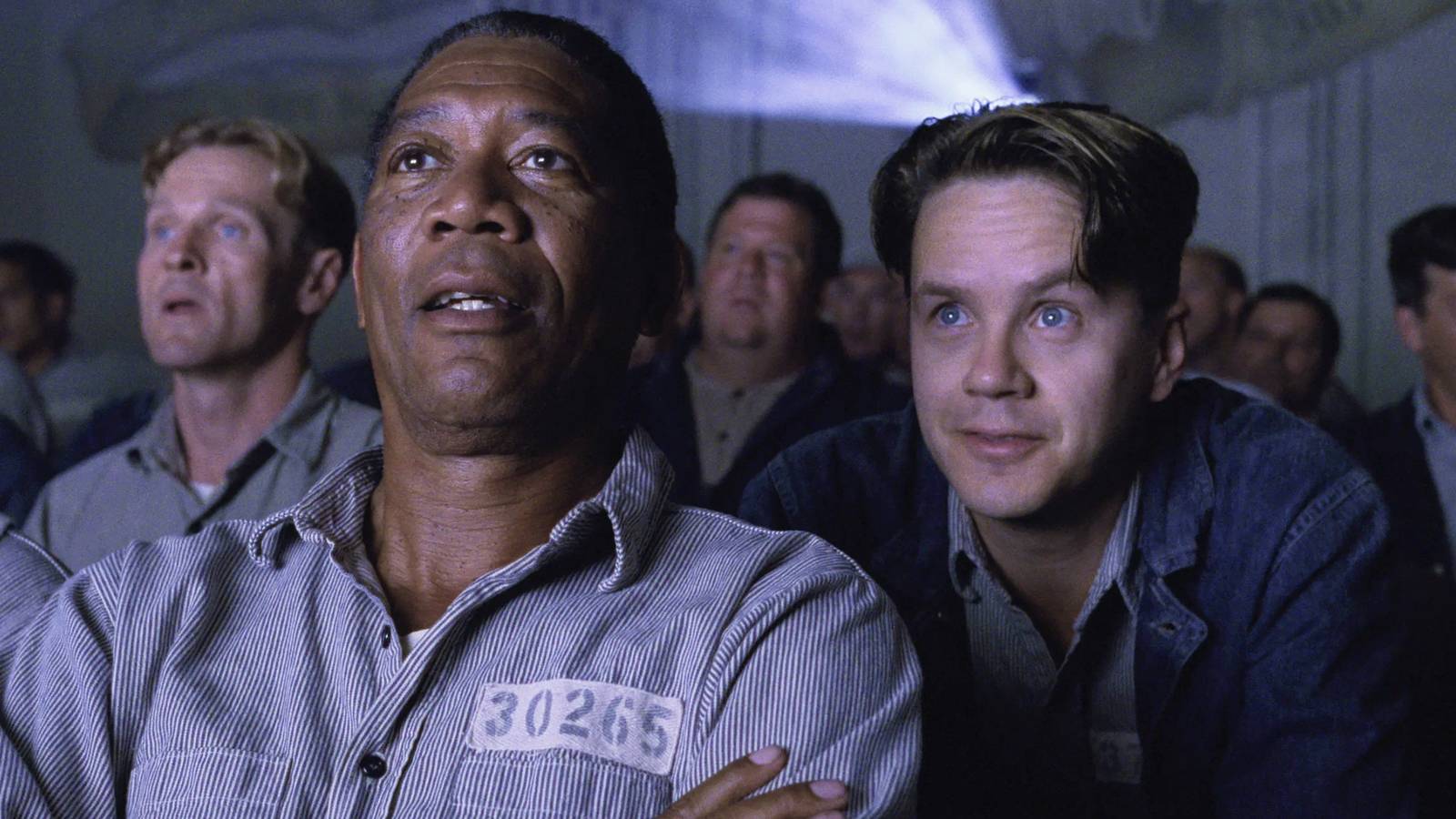
Published Sep 1, 2026, 5:23 PM EDT Jeremy has more than 2700 published articles on Collider to his name, and has been writing for the site since February 2022. He's an omnivore when it comes to his movie-watching diet, so will gladly watch and write about almost anything, from old Godzilla films to gangster flicks to samurai movies to classic musicals to the French New Wave to the MCU... well, maybe not the Disney+ shows. His favorite directors include Martin Scorsese, Sergio Leone, Akira Kurosawa, Quentin Tarantino, Werner Herzog, John Woo, Bob Fosse, Fritz Lang, Guillermo del Toro, and Yoji Yamada. He's also very proud of the fact that he's seen every single Nicolas Cage movie released before 2022, even though doing so often felt like a tremendous waste of time. He's plagued by the question of whether or not The Room is genuinely terrible or some kind of accidental masterpiece, and has been for more than 12 years (and a similar number of viewings). When he's not writing lists - and the occasional feature article - for Collider, he also likes to upload film reviews to his Letterboxd profile (username: Jeremy Urquhart) and Instagram account. He has achieved his 2025 goal of reading all 13,467 novels written by Stephen King, and plans to spend the next year or two getting through the author's 82,756 short stories and 105,433 novellas. If you’ve seen enough movies, you’ve probably had at least one shape some aspect of your life, or at least your way of looking at something in the world. You might not even necessarily have seen that many before coming across something profound. It’s not like it happens all the time, and plenty of movies aren’t trying to be life-changing, but a few really can be, as corny as it might sound to state that so plainly. The following all feel like they hit particularly hard in one way or another. Some are life-changing in a positive way, while others inspire negative emotions and might well make you feel less hopeful or optimistic about certain things. They're movies that stand a good chance at changing your life, and just as life can be messy and all over the place emotionally, there’s going to be a range of movies that could change your life in a bunch of different potential ways. 10 'Threads' (1984) Image via BBC To start off with something miserable, here’s Threads. This is about as miserable and downbeat as movies get, honestly. It’s about the build-up to a nuclear war, and then the nuclear war happens very fast and does what you'd expect it to do, with the rest of Threads then being about a few people who survive the global devastation trying to soldier on. It all unfolds so slowly but surely, and the brutality and intensity on offer here really makes something like the ending to Oppenheimer look family-friendly in comparison. Soldiering on when everything’s destroyed, it turns out, is not easy. And like, it’s not easy in most post-apocalyptic movies, sure, but Threads goes further in showing how progressively more doomed each generation would be, proving more sobering than most thematically/narratively comparable movies. It all unfolds so slowly but surely, and the brutality and intensity on offer here really makes something like the ending to Oppenheimer look family-friendly in comparison (which sounds hyperbolic, but no; Threads is that full-on). 9 'Magnolia' (1999) Image via New Line Cinema It’d be easy to fall into pretentiousness when trying to talk about Magnolia, what it means, and what it offers emotionally. It’s about people dealing with a variety of intense personal issues, even if lots of those “issues” would be too straightforward to stretch out to a feature-length runtime. So, those various threads are all given time throughout this movie’s epic length, and occasionally, things/people cross over. You could boil it down to “This movie really makes you appreciate how everyone has their own problems in life,” though again, that could be pretentious. And it could be simplifying things. There’s more to Magnolia, and it does feel profound in ways that are difficult to articulate. It goes right up to the line of trying too hard to be profound without crossing it (at least in this writer’s eyes), so as an empathetic and boldly emotional melodrama of sorts, it’s honestly pretty close to perfect. 8 '2001: A Space Odyssey' (1968) Image via Metro-Goldwyn-Mayer Once you get past the prologue, Magnolia was really just about a single day, but showed that single day as it was experienced by a large group of characters. 2001: A Space Odyssey is comparable in that it has a prologue that takes place a great deal of time before the rest of the film, though the prologue goes back reeeaaaally far in time. And then the rest of the movie certainly doesn’t stay focused on the one day. 2001: A Space Odyssey wants to be about all of humanity, and a little bit more beyond that. Evolution is the main thing it explores, and it does that by starting far back in time, and then imagining a point beyond the present in 1968, and the present nowadays, too (it’s not just about that titular year). Like a fair few iconic concept albums, it seems to be about many things, and close to all the things, all at once. 7 'Requiem for a Dream' (2000) Image via Artisan Entertainment You can get lost trying to talk about Magnolia and 2001: A Space Odyssey, and the ways in which they might reshape one’s outlook on the world, yet things are a good deal simpler with Requiem for a Dream. Truth be told, this is one of the least subtle movies of all time, and by design, because it wants to look at some of the worst things that addiction could do to a person’s life. There are four main characters here, and each have their lives worsened – and gradually destroyed – by some kind of dependence, or having their lives tied to one kind of substance or another. It’s over-the-top how nightmarish it gets, but if you watch Requiem for a Dream when you're sufficiently young and impressionable, it can definitely leave a mark and disincentivize (to put it mildly) certain lifestyle choices. 6 'Eyes Wide Shut' (1999) Image via Warner Bros. This isn't as despairing as Requiem for a Dream, and not as heavy as Threads, but there is something very paranoia-inducing about Eyes Wide Shut, and it honestly feels more uneasy with every rewatch. You can be impacted by this without disappearing down a rabbit hole, yet there is a rabbit hole there, if you want to subscribe to some wild ideas about what Stanley Kubrick might've been wanting to expose with certain scenes here. Again, you don’t have to go that far. Eyes Wide Shut is anxiety-inducing without drowning in the deep end, since you can drown fairly easily in the shallow end when it comes to this one, too. It’s a movie about someone who wants answers to a few things, and then he’s really bad at finding answers, and so he gets more and more confused. Calling Eyes Wide Shut relatable in the conventional sense might not make sense, but there is an exploration of the feeling of “not knowing” here that’s particularly head-spinning and stomach-churning. You'll be feeling off-balance in all the ways. 5 'The Thin Red Line' (1998) Image via 20th Century Studios Of all the epics made about World War II, The Thin Red Line… eh, may as well include it over any of the others, even if controversial. It does something different tonally and thematically to a good many war movies, to the point where labeling it as anti-war would be a bit too easy. It might not even be super accurate to call The Thin Red Line a war movie. It takes place during the Second World War, and there are scenes of combat, but it’s Terrence Malick doing a war movie, so things drift away from where you'd expect, a bit like how Badlands wandered away from being only about a couple on the run, and Days of Heaven did more than just focus on a love triangle. And that’s to say nothing of Malick’s post-The Thin Red Line movies, which get even more arthouse in nature. Something about The Thin Red Line feels particularly striking and emotional, though. 4 'Aftersun' (2022) Image via A24 Aftersun is a film where not much seems to happen for much of its runtime. It’s not that everything happens at the end, but more that at the end, you realize what the whole thing was about. The revelation isn't really a twist or anything, if it’s even a revelation in the first place, though it does make the idea of revisiting Aftersun feel like it’d be almost too much to handle. Just the one time, it’s about as affecting as a drama can be, which makes it feel like a pretty sure thing that Aftersun will stand the test of time and be considered a classic one day, once enough time has passed. It’s a movie about a young girl and her father going on vacation, until something flips, near the end, and it all becomes a lot more profound (not to mention heavy). 3 'It's Such a Beautiful Day' (2012) Image via Bitter Films Probably the most obscure movie here, It’s Such a Beautiful Day is also the shortest, since it clocks in at a little over an hour, yet the stuff it does in just one hour is remarkable to think about. Premise-wise, it doesn’t sound too out there or complicated, admittedly, because it’s about an unassuming man named Bill who’s gradually losing parts of his mind, with everyday life getting harder and memories becoming more indistinct. And some other things. It’s all that while being darkly funny at certain points, though the soul-crushing parts of It’s Such a Beautiful Day do feel like they outweigh the comedic moments, at least by the end. The whole odyssey here, with its short runtime, minimalist animation, and lack of dialogue (outside some narration) makes It’s Such a Beautiful Day another movie that’s hard to do justice with 145 words or so. 2 'The Shawshank Redemption' (1994) Jumping from the most obscure movie here to what’s perhaps the most well-known, The Shawshank Redemption is simply too quintessential a “changed my life” sort of film to leave off, for present purposes. Call it cliché to include it, much like how including The Godfather when you're talking about all-time great gangster movies is sort of obligatory, but also, come on… it’s The Shawshank Redemption. It’s about two men trying to get by in prison, with both having different outlooks on life yet still developing a meaningful friendship over time, and against some pretty overwhelming odds, even if the antagonists here don’t have supernatural powers the way various Stephen King villains do. And yes, The Shawshank Redemption was based on a novella by Stephen King. Stand by Me, which is almost as powerful and is also based on a non-horror novella by King, probably deserves an honorable mention here, too. 1 'Ikiru' (1952) Image via Toho The title of Ikiru translates to “To Live,” and it’s a movie about a man who learns that he doesn’t have much life left to live, owing to a grim diagnosis from his doctor. He works as a bureaucrat, and has always gone through the motions in that job, feeling unfulfilled, but coming to terms with his mortality quite viscerally and suddenly changes him completely, and he rebels against certain parts of the system to do something meaningful before he passes away. Like with all the movies here, there’s a bit more to it, but that’s the gist of Ikiru, and it’s hopefully not too hard to see how a film like that (and a film like that which is done well, of course) could change one’s outlook on their own life. Ikiru is about doing things before it’s too late, and it handles that message without ever feeling preachy or obvious, with there being a good deal of honesty here (and things might be a little more bittersweet than you'd anticipate). Ikiru Release Date March 25, 1956 Runtime 143 Minutes
10 Movies That Will Change Your Life
Full Article
Original Source
Read the full article at Collider →KhanList aggregates and links to publicly available news content. We do not host full articles from third-party sources. Always verify important information with original sources.