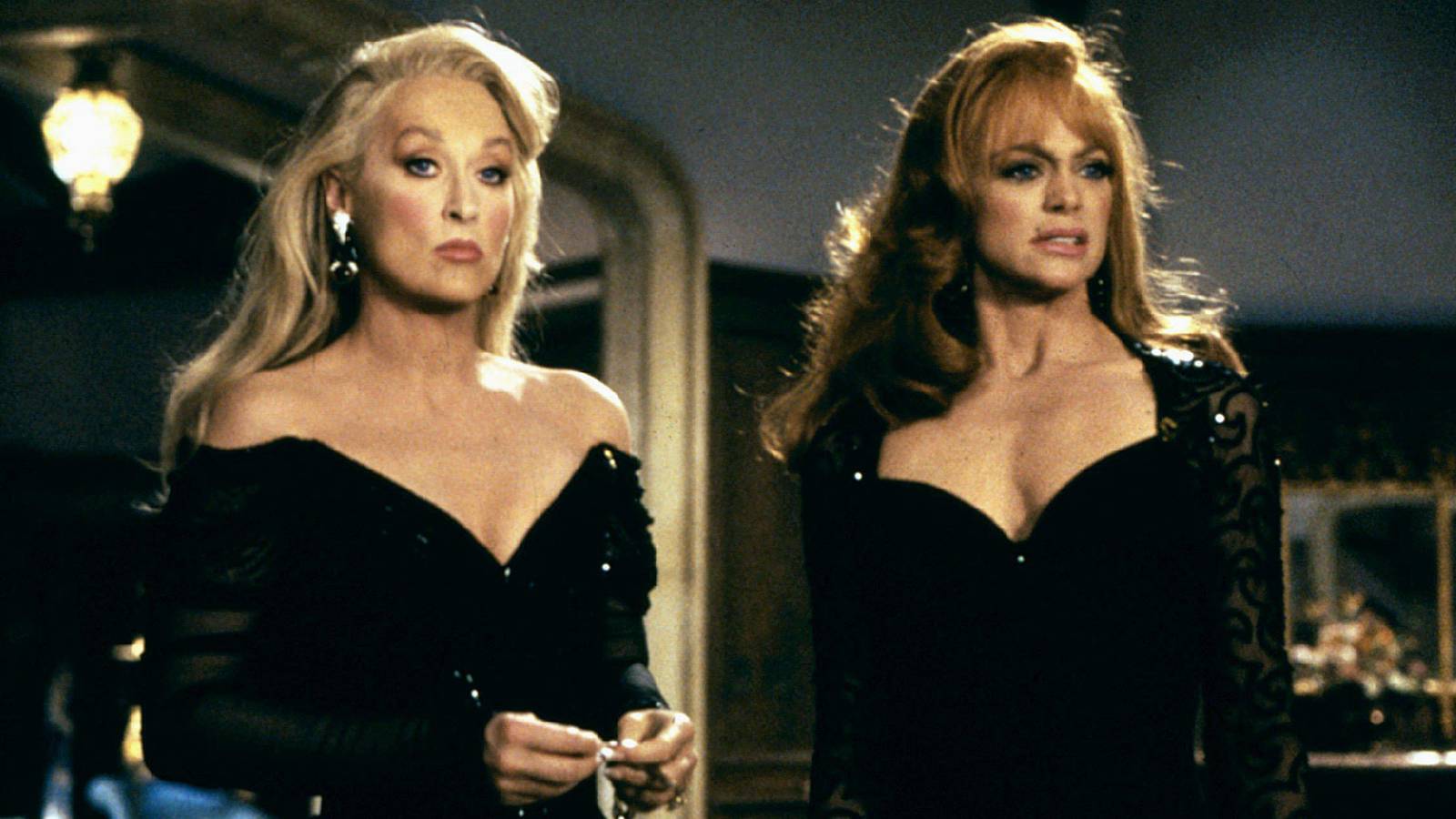
Image via Universal Pictures Published Jul 30, 2026, 6:42 AM EDT William likes taking edibles, watching movies with his dogs, and then writing about those movies. He doesn't have social media so if you want more of his unhinged opinions or another place to comment hurtful things, you can check out his Letterboxd. Sign in to your Collider account Some movies have proven to be incredibly prescient, predicting certain cultural trends, technology or social or political conflicts. Other movies broke barriers and tackled taboo subject matter. And then there are those movies that simply take some time for us all to appreciate them. Whichever it is, they all qualify as movies that were ahead of their time. The reality is that filmmakers don't have access to a crystal ball. For those who predict technology or trends, they usually get just as many things wrong as they do right, like throwing darts at a board in the dark. Movies that seem thematically relevant to current events are more indicative of our cyclical history, where we seem doomed to repeat our past mistakes. It could all be coincidence, but it doesn’t change how impactful these movies have been, and it’s no indicator of quality either. Thankfully, these ten movies that were ahead of their time are all masterpieces. 'Citizen Kane' (1941) Image via Warner Bros. Entertainment It's as natural a place to start with a film that essentially invented modern film language. The visuals and storytelling techniques of Orson Welles' Citizen Kane might look simple or even old-fashioned to viewers today, but put it up against any other 1941 film, and the stark difference becomes clear. Welles didn't actually pioneer any of the techniques or styles on display in Citizen Kane; he simply synthesized them all in one revolutionary movie. Deep focus, nonlinear narratives, montages and flashbacks — classic techniques that, combined, created a masterpiece that has become a template for modern movies. Told in flashback after the death of print magnate Charles Foster Kane (Welles), the story is structured around the mystery of Kane's last word. It tracks from his youth forward to his time as a sensational young editor of a newspaper and subsequent aborted political career and tumultuous marriages. It's a fairly conventional arc but told in a compelling way that treats the soul of a man as a mystery to be solved. Citizen Kane is revered for a reason, and even if Welles was standing on the shoulders of many other filmmakers, and it doesn't look as revelatory through a modern lens, its place in film history is cemented. 'Outrage' (1950) Image via Warner Bros. Pictures This crime classic by Ida Lupino was ahead of its time, not just for its subject matter, but for its entire approach. Sexual assault is obviously a sensitive subject, and depictions have ranged from merely implied to incredibly exploitative. While there were films that did depict it before Outrage, it's how Lupino treats it — with nuance and from an entirely female perspective — that makes it such a groundbreaking film. For a '50s film noir, it represents a far more progressive attitude, more concerned with the psychological fallout of a violent event than it is with the sordid details of it. Ann (Mala Powers) is a young woman who has recently become engaged and is looking towards a happy future. Her life is thrown into turmoil after she's assaulted by a man stalking her. She becomes despondent and disconnected, while her fiancée's attempts to normalize their life only further her feelings of loss of autonomy. Lupino uses the visual language of noir to expertly portray Ann's isolation and psychological trauma, which also makes it register on a more emotional level. Outrage is an important film that addressed a true societal ill at a time that it could hardly be spoken of publicly. 'Psycho' (1960) Image via Paramount Pictures If Outrage was dealing with taboo subjects in the Hays Code era, Alfred Hitchcock's Psycho was flaunting them. The code began to seriously erode through the '60s before coming to an official end near the close of the decade, and Hitchcock's proto-slasher horror film helped expedite its demise, with sexual and violent content and a flushing toilet (shudder). Norman Bates stalked his motel, so Michael Myers could stalk the suburbs, and horror has never been the same. Secretary Marion Crane (Janet Leigh) steals an envelope of cash from her employer in order to run away to a new life with her boyfriend, but things take a bad turn when she goes into the roadside Bates Motel. Norman Bates (Anthony Perkins) is a horror icon. There's an undercurrent of sexuality to the character, which has become retroactively more pronounced with revelations of Perkins' own sexuality. Psycho pushed the boundaries that were already bending of what films could and couldn't show or talk about. '2001: A Space Odyssey' (1968) Image via MGM Science fiction is the genre most associated with films being ahead of their time. Technology depicted years before being invented simply demonstrates that scientists and inventors are often trying to live up to ideals set by fantasists. That's a pretentious way to say that sci-fi predicts a lot of things, but only the best ideas come true. From Metropolis to Minority Report, sci-fi movies have been breaking ground and predicting the future, but the best is still 2001: A Space Odyssey. Stanley Kubrick's sci-fi masterpiece follows a space expedition to Jupiter to investigate an alien monolith which has reoccurred throughout human history and affected evolutionary change. In addition to predicting certain technologies and aspects of space exploration in the year before we had even landed on the moon, the film was also a foundational hard sci-fi effort. Far from the escapism and fantasy elements that had dominated the majority of sci-fi films made before it, 2001 based its technology on real science. It's a fantastical reversal of the influence that led to many more films that made real attempts to remain faithful to reality. 'Network' (1976) Image via United Artists Network, the Paddy Chayefsky-scripted, Sidney Lumet-directed satire of the media, may have looked slightly exaggerated in the '70s, but with every passing decade it seemed to closer resemble reality, until reality went ahead and passed it by. The antics of the film's central character, a newscaster whose mental breakdown precipitates renewed success through sensationalized reporting, can be used as a guideline through the eras of tabloid journalists, shock jocks, grifting podcasters, and political influencers. Howard Beale (Peter Finch) is a veteran anchor for a broadcasting corporation who, after discovering his program is being canceled, announces he will commit suicide on air. His rants cause Howard's popularity to grow, leading the corporation to commoditize and exploit his unhinged rage under the guidance of two diametrically opposed producers. The disintegration of grounded journalism for the currency of outrage, ratings, and corporate interests is still so damn pointed it makes Network feel outright prophetic. Howard Beale was a representation of a symptom, and the disease has since swept through our culture. Collider Exclusive · Oscar Best Picture Quiz Which Oscar Best PictureIs Your Perfect Movie? Parasite · Everything Everywhere · Oppenheimer · Birdman · No Country Five Oscar Best Picture winners. Five completely different visions of what cinema can be — and what it can do to you. One of them is the film that was made for the way your mind works. Ten questions will figure out which one. 🪜Parasite 🌀Everything Everywhere ☢️Oppenheimer 🐦Birdman 🪙No Country for Old Men FIND YOUR FILM → 01 What kind of film experience do you actually want? The best movies don't just entertain — they leave something behind. ASomething that pulls the rug out — that makes me think I'm watching one kind of film and then reveals I'm watching another entirely. BSomething overwhelming — funny, sad, absurd, and genuinely moving, all at once. CSomething grand and weighty — a film that makes me feel the full scale of what I'm watching. DSomething formally daring — a film that pushes what cinema can even do. ESomething lean and relentless — pure tension with no wasted frame. NEXT QUESTION → 02 Which idea grabs you most in a film? Great films are driven by a central obsession. What's yours? AClass, inequality, and what people are willing to do when desperation meets opportunity. BIdentity, family, and the chaos of trying to hold your life together when everything is falling apart. CGenius, moral responsibility, and the catastrophic weight of a decision you can never take back. DEgo, legacy, and the terror of becoming irrelevant while you're still alive to watch it happen. EEvil, chance, and whether moral order actually exists or if we just tell ourselves it does. NEXT QUESTION → 03 How do you like your story told? Form is content. The way a story is shaped changes what it means. AGenre-twisting — I want it to start in one lane and migrate into something completely different. BMaximalist and genre-blending — comedy, action, drama, sci-fi, all in one ride. CEpic and non-linear — cutting between timelines, building a mosaic of cause and consequence. DA single unbroken flow — I want to feel like I'm living it in real time, no cuts to safety. ESpare and precise — every scene doing exactly what it needs to do and nothing more. NEXT QUESTION → 04 What makes a truly great antagonist? The opposition defines the protagonist. What kind of opposition fascinates you? AA system — invisible, structural, and almost impossible to fight because it has no single face. BThe self — the ways we sabotage, abandon, and fail the people we love most. CHistory — the unstoppable momentum of events that no single person can stop or redirect. DThe industry — the machinery of culture that chews up talent and spits out irrelevance. EPure, implacable evil — a force so certain of itself it becomes almost philosophical. NEXT QUESTION → 05 What do you want from a film's ending? The final note is the one that lingers. What do you want it to sound like? AShock and inevitability — a conclusion that recontextualises everything that came before it. BEarned emotion — I want to cry, laugh, and feel genuinely hopeful, even if the world is a mess. CDevastation and grandeur — an ending that makes me sit in silence for a few minutes after. DAmbiguity — something that leaves enough open that I'm still thinking about it days later. EBleakness — an honest refusal to pretend the world is tidier than it actually is. NEXT QUESTION → 06 Which setting pulls you in most? Where a film takes place shapes everything — mood, stakes, what's even possible. AA gleaming modern city with a hidden underside — beauty masking rot, wealth masking desperation. BA collapsing suburban life that opens onto something infinite — the multiverse of a single ordinary person. CThe corridors of power and science at a world-historical turning point — where decisions echo for decades. DThe grimy, alive chaos of New York and Hollywood — fame as both destination and trap. EVast, indifferent landscape — desert and highway where violence arrives without warning or reason. NEXT QUESTION → 07 What cinematic craft impresses you most? Every great film has a signature — a technical or artistic element that makes it unmistakable. AProduction design and mise-en-scène — every frame composed to carry meaning beneath the surface. BEditing and tonal control — the ability to move between registers without losing the audience. CScore and sound design — music that becomes inseparable from the dread and awe of what you're watching. DCinematography as performance — the camera not recording events but participating in them. ESilence and restraint — what's left unsaid and unshown doing more work than any dialogue could. NEXT QUESTION → 08 What kind of main character do you root for? The protagonist is the lens. Who you choose to follow says something about you. ASomeone smart and resourceful who makes increasingly dangerous decisions under pressure. BSomeone overwhelmed and ordinary who turns out to be capable of something extraordinary. CA brilliant, tortured figure whose gifts and flaws are inseparable from each other. DA self-destructive artist whose ego is both their superpower and their undoing. EA quiet, principled person trying to make sense of a world that has stopped making sense. NEXT QUESTION → 09 How do you feel about a film that takes its time? Pace is a choice. Some films sprint; others let tension accumulate slowly, deliberately. AI love a slow build when I know the payoff is going to be seismic — patience for a devastating reveal. BGive me relentless momentum — I want to feel breathless and emotionally spent by the end. CEpic runtime doesn't scare me — if the material demands three hours, give me three hours. DI want it to feel propulsive even when nothing is technically happening — restless energy throughout. EDeliberate and unhurried — I want dread to accumulate in the spaces between the action. NEXT QUESTION → 10 What do you want to feel walking out of the cinema? The best films leave a mark. What kind of mark do you want? AUnsettled — like I've just seen something I can't fully explain but can't stop thinking about. BMoved and energised — like the film reminded me what actually matters and gave me something to hold onto. CHumbled — like I've been in the presence of something genuinely important and overwhelming. DExhilarated — like I've just seen cinema doing something it's never quite done before. EHaunted — like a cold, quiet dread that stays with me for days. REVEAL MY FILM → The Academy Has Decided Your Perfect Film Is…Your answers have pointed to one Oscar Best Picture winner above all others. This is the film that was made for the way your mind works. ParasiteYou are drawn to films that operate on multiple levels simultaneously — that begin in one genre and quietly, brilliantly migrate into another. Bong Joon-ho's Parasite is a film about class, desire, and the architecture of inequality that manages to be darkly funny, deeply suspenseful, and genuinely shocking across a single extraordinary running time. Your instinct is for cinema that hides its true intentions until the moment it's ready to reveal them. Parasite is exactly that — a film that rewards close attention and punishes assumptions, right up to its devastating final image. Everything Everywhere All at OnceYou want it all — and this film gives you all of it. The Daniels' Everything Everywhere All at Once is one of the most maximalist films ever made: action comedy, multiverse sci-fi, family drama, existential crisis, and a genuinely earned emotional core that sneaks up on you amid the chaos. You are someone who responds to ambition, who doesn't want cinema to choose between being entertaining and being meaningful. This film refuses that choice entirely. It is overwhelming by design, and its overwhelming nature is precisely the point — because the feeling of being crushed by infinite possibility is exactly what it's about. OppenheimerYou are drawn to cinema on a grand scale — films that understand history not as a backdrop but as a force, and that place their characters inside that force and watch what happens. Christopher Nolan's Oppenheimer is a film about the terrifying gap between what we can do and what we should do, told with the full weight of one of the most consequential moments in human history behind it. You want your films to feel important without feeling self-important — to earn their ambition through sheer craft and the gravity of their subject. Oppenheimer does exactly that. It is enormous, complicated, and refuses easy comfort. BirdmanYou are drawn to films that foreground their own construction — that make the how of the filmmaking part of the what it's about. Alejandro González Iñárritu's Birdman, shot to appear as a single continuous take, is cinema examining itself through the cracked mirror of a fading actor's ego. You respond to formal daring, to the feeling that a film is doing something that probably shouldn't be possible. Michael Keaton's performance and Emmanuel Lubezki's restless camera create something genuinely unlike anything else — a film that is simultaneously about creativity, relevance, self-destruction, and the impossibility of ever truly knowing if your work means anything at all. No Country for Old MenYou are drawn to cinema that trusts silence, that refuses to explain itself, and that treats dread as a form of meaning. The Coen Brothers' No Country for Old Men is a film about the arrival of a new kind of evil — implacable, arbitrary, and utterly indifferent to the moral frameworks we use to make sense of the world. It is one of the most formally controlled films ever made, and its controlled restraint is what makes it so terrifying. You want your films to haunt you, not comfort you. You are not interested in resolution if resolution would be dishonest. No Country for Old Men is honest in a way that most cinema never dares to be. ↻ RETAKE THE QUIZ 'The Thing' (1982) Image via Universal Pictures Less than two decades after Psycho, John Carpenter would revolutionize the horror genre again with the success of Halloween. Pulling from Hitchcock, Black Christmas, and some other sources, Carpenter personified the boogeyman and scared audiences to death. A few years later, he'd push them even further with his sci-fi horror remake The Thing, but they weren't ready for it. Unfortunately, the nihilistic horror film came too late in a decade where aliens were now friendly, and audiences wanted more escapism. Based on Who Goes There? by John W. Campbell Jr., which also served as the basis for the classic The Thing From Another World, Carpenter's film introduces a shapeshifting alien into an Antarctic outpost of researchers. Bodies quickly pile up, and creature effects designer Rob Bottin unleashes all kinds of rubbery, gory monstrosities. The practical effects of The Thing were a landmark, and maintain incredible artistry even when they've been surpassed on a pure technological level. Even though critics and audiences had trouble seeing the paranoid brilliance through the gore, everyone has since had their vision clarified. 'Death Becomes Her' (1992) Image via Universal Pictures Robert Zemeckis' camp cult classic Death Becomes Her was considered too broad and shallow by critics when it was first released. However, its satire of Beverly Hills vanity has only grown razor sharp in this era of extreme body modification, looksmaxxing, and GLP-1 fever. More than that, the film has also been embraced by the LGBTQ+ community, building a cult following worthy of The Rocky Horror Picture Show that has also seen it make the jump to Broadway. Madeline (Meryl Streep) and Helen (Goldie Hawn) have engaged in a professional and personal rivalry for years, with milquetoast surgeon Ernest (Bruce Willis) caught in the crossfire. Their pursuit of eternal youth turns them towards a kind of Hollywood sorceress who offers them a potion of immortality. From there, their feud escalates into increasingly violent and madcap confrontations. It's dark, hilarious, and the three central actors give pitch-perfect performances. Movies like The Substance owe an obvious debt to Zemeckis' wicked comic classic, and its ever-expanding influence and embrace will ensure it lives on forever. 'Zodiac' (2007) Image via Paramount Pictures David Fincher had already made a game-changing serial killer thriller with Seven in 1995, but while that film elicited a massive response and had major success, Zodiac was released to a much more muted fanfare. That fanfare has grown to a deafening roar in the years since, as people began to embrace Fincher's minutiae-obsessed investigative thriller, especially as the culture caught up to it with the rise of the true crime obsession. Hundreds of podcasts, documentaries and streaming series have been devoted to the dissection of every serial killer, crime story, and mystery of our modern culture. While many of them skirt or outright destroy the line of good taste, Fincher's exhaustively researched film focuses not on the Zodiac Killer, but the men who were obsessed with him. Cartoonist Robert Graysmith (Jake Gyllenhaal), reporter Paul Avery (Robert Downey Jr.) and detective Dave Toschi (Mark Ruffalo) are the film's focal triptych. Zodiac tries to understand why we're all so obsessed with these monsters. That the Zodiac was never caught only adds another haunting layer to this perfect film. 'WALL-E' (2008) Image via Walt Disney Studios Motion Pictures WALL-E is Pixar and director Andrew Stanton's finest hour. It's a gorgeously animated, heartfelt love story about the world's loneliest robot and his desire to have someone to hold metallic hands with. It also, by mere happenstance, proved to be an incredibly keen predictor of our future. While the setting in the first act of the film, where robot WALL-E dutifully compacts trash on an abandoned Earth, is one we are still steadily trying to head towards, it's the setting in the second half of the movie that really feels prophetic now. After WALL-E meets the advanced robot EVE, who collects a plant sample on Earth, he follows her back to her ship, where humanity has evolved into helpless giant babies with their faces glued to their screens. It might seem like a fairly obvious observation by Stanton in the same way the film satirizes Walmart with its Buy-N-Large corporation, except that the movie was released less than a year after the debut of the iPhone, and well before everyone had a smartphone to obsess over. WALL-E was trying to warn us; we were just paying attention to the wrong part. 'Her' (2013) Image via Annapurna Pictures Speaking of our obsession with technology. Spike Jonze's sci-fi romance Her was definitely made in an era of smartphones. AI had been explored before, but the specificity of the relationship between human and bot is altogether unnerving in its accuracy. While the film is a far more optimistic depiction of our future with A.I., it still feels more accurate to how we engage with the technology than many other more apocalyptic scenarios. Theodore (Joaquin Phoenix) is a lonely man made lonelier by his divorce, who finds comfort and solace in an A.I. operating system, Samantha (Scarlett Johansson). However much truth there may be to the male loneliness epidemic, and how much of it is amplified by certain toxic corners of the internet that are lonely for a reason, there's something about how Her captures a human more comfortable in the artifice of a human interaction than a genuine one. The speed at which Her became so relevant is a testament to how quickly technology advances now. So much so that in another decade, Her might look antiquated and ridiculous instead of ahead of its time. Her Release Date December 18, 2013
10 Movie Masterpieces That Were Ahead of Their Time
Full Article
Original Source
Read the full article at Collider →KhanList aggregates and links to publicly available news content. We do not host full articles from third-party sources. Always verify important information with original sources.