
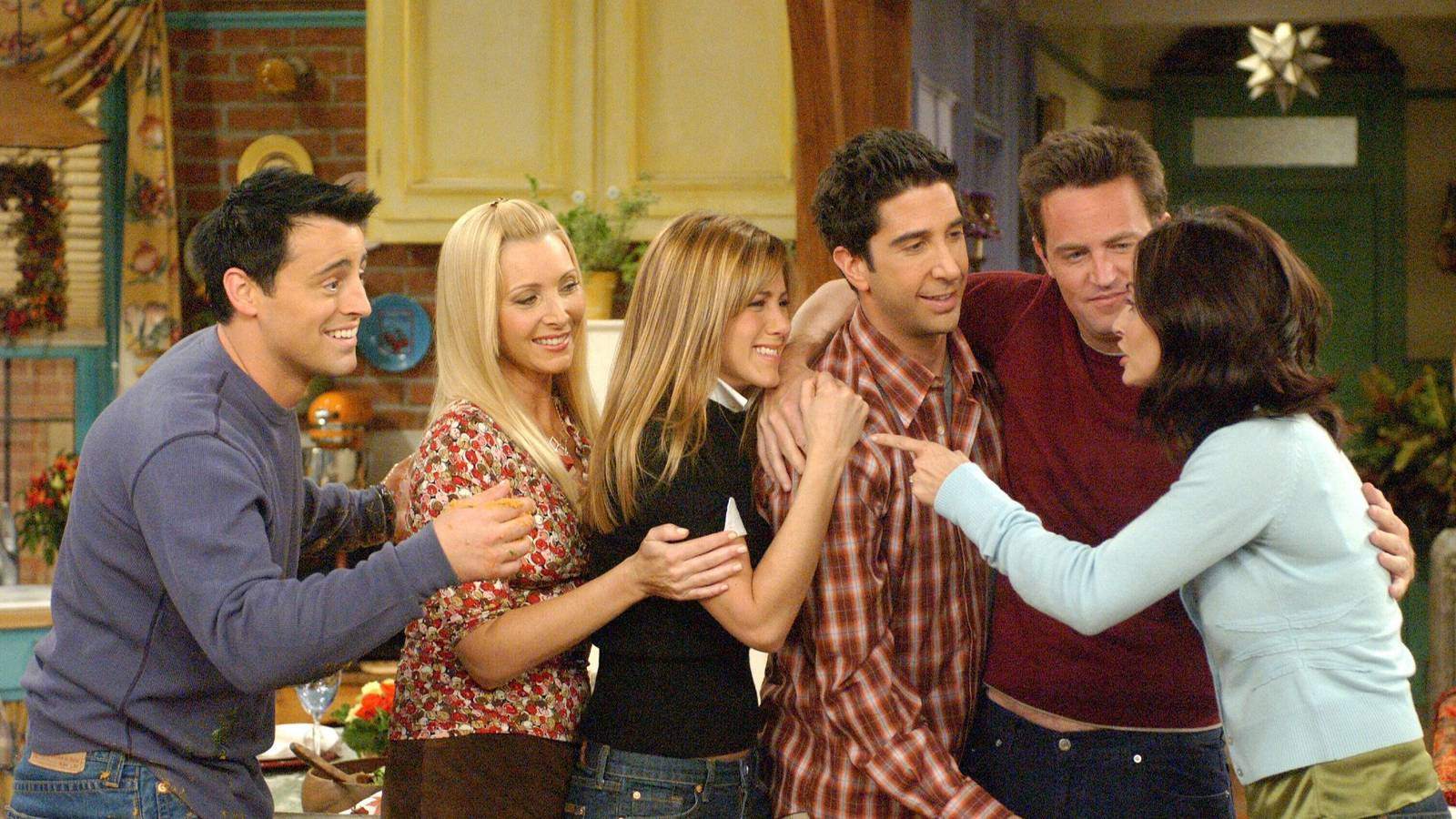
Television finales have a unique responsibility to deliver satisfying final scenes to shows audiences have followed for years. Whether bringing an emotional family drama to its conclusion or finally answering a mystery that has kept viewers guessing, the most memorable finales can become events that extend far beyond their show's usual audiences, impacting TV history and pop culture at large. Before streaming and on-demand viewing transformed how television was consumed, major TV series finales could bring tens of millions of Americans together for a single broadcast. Shows like Friends and Seinfeld turned their final episodes into national events, while earlier productions established records that have remained almost impossible to surpass. According to Nielsen's historical television ratings, several of the most-watched finales attracted audiences comparable to major sporting events. Historic miniseries like The Winds of War and Holocaust also reached more than 100 million Americans across their respective runs, although comparable audience figures for their individual finales are not readily available. The following 10 productions represent some of the biggest farewell broadcasts in American television history. 10 Family Ties (1989) 36.3 Million Viewers Everett Collection Family Ties became a defining sitcom of the 1980s by exploring the ideological differences between liberal parents Steven and Elyse Keaton and their conservative son, Alex P. Keaton (Michael J. Fox). Over seven seasons, the series combined generational conflicts with heartfelt family storytelling, establishing Fox as one of television's biggest stars. The series concluded on May 14, 1989, with "Alex Doesn't Live Here Anymore," as Alex accepted a Wall Street job that required him to leave his family and move to New York. His departure offered a fitting conclusion for a character whose ambitions frequently clashed with his parents' values. An estimated 36.3 million viewers watched the farewell, demonstrating the sitcom's enduring popularity. Rather than manufacturing a dramatic crisis, Family Ties found its emotional conclusion in the relatable experience of watching a family member leave home. 9 All In The Family (1979) 40.2 Million Viewers The fact that Norman Lear's All in the Family remains relevant today is testament to how much it revolutionized American sitcoms, by addressing racism, politics, sexism, and other controversial subjects through the outspoken Archie Bunker (Carroll O'Connor). Its willingness to confront uncomfortable social issues helped transform what network comedies could accomplish. The April 8, 1979, finale, "Too Good Edith," attracted approximately 40.2 million viewers. The episode centers on Edith (Jean Stapleton), who conceals a painful medical condition while attempting to help Archie prepare for a celebration at his bar. When Archie discovers how seriously she has been suffering, his concern reveals the tenderness beneath his frequently abrasive personality. Although Archie continued appearing in the spinoff Archie Bunker's Place, the finale provided an emotional conclusion to the original sitcom. Its impressive audience reflected the enormous cultural influence All in the Family had accumulated over nine seasons. 8 The Cosby Show (1992) 44.4 Million Viewers The Cosby Show dominated American television throughout much of the 1980s, becoming one of the era's defining family sitcoms. Following Cliff and Clair Huxtable as they raised their children, the NBC comedy spent five consecutive seasons atop the annual Nielsen ratings. Its April 30, 1992, finale brought in approximately 44.4 million viewers, concluding eight seasons with a celebration of Theo's college graduation. The episode also revisited familiar family relationships, including Denise's announcement that she was expecting a child. The finale offered audiences an optimistic conclusion centered on family milestones rather than major revelations. Although subsequent sexual assault allegations, criminal cases and lawsuits brought against Bill Cosby have profoundly complicated the show's legacy, its original ratings success remains a significant part of American television history. 7 Magnum, P.I. (1988) 50.7 Million Viewers MovieStillsDB Tom Selleck's portrayal of Thomas Magnum made Magnum, P.I. one of CBS' best-loved TV shows throughout the 1980s. The Hawaii-set detective series combined investigations with humor, friendship, and a protagonist whose military background contributed to more personal storylines. The two-part finale, "Resolutions," brought the eight-season series to its conclusion, attracting approximately 50.7 million viewers. Magnum's final adventure confronted questions surrounding his daughter Lily's survival, his future career, and his relationship with longtime companion Jonathan Higgins. Ultimately, Magnum reunited with Lily and decided to return to the Navy, bringing his personal journey full circle. The finale's audience demonstrated that an action-oriented detective series could generate the same kind of nationwide farewell excitement as television's biggest sitcoms. 6 Friends (2004) 52.5 Million Viewers After 10 seasons following six friends navigating careers, relationships, and adulthood in New York City, Friends concluded on May 6, 2004. Its finale, "The Last One," became one of the defining television events of the early 2000s. Approximately 52.5 million Americans tuned in to an episode widely regarded as one of Friends' best, as Ross and Rachel finally reunited, Monica and Chandler welcomed their adopted twins, and the group prepared to leave the apartment that had served as the show's emotional center. The finale succeeded by giving its central characters satisfying conclusions without abandoning the humor and relationships audiences loved. Its enormous audience was especially remarkable during an era when cable television had already significantly expanded viewing options. Friends remains the most recent scripted television finale represented among these historic audiences, reinforcing how dramatically television consumption has changed since the height of traditional network broadcasting. 5 Seinfeld (1998) 76.3 Million Viewers Seinfeld spent nine seasons redefining television comedy by finding humor in the selfish behavior and everyday frustrations of Jerry, George, Elaine, and Kramer. By the time its finale aired on May 14, 1998, the NBC sitcom had become a cultural phenomenon. An extraordinary 76.3 million viewers watched "The Finale," which reunited numerous supporting characters when the central quartet faced trial for violating a Good Samaritan law. Their past behavior became evidence against them, ultimately resulting in imprisonment. The divisive ending challenged expectations that the characters would experience meaningful personal growth. Instead, Seinfeld embraced the idea that its protagonists remained fundamentally unchanged. Regardless of the finale's mixed reception, its audience demonstrated the show's extraordinary reach. Its viewership remains among the largest ever recorded for an American scripted television broadcast. 4 The Fugitive (1967) Approximately 78 Million Viewers The Fugitive helped establish the serialized television thriller through the story of Dr. Richard Kimble (David Janssen), a man falsely convicted of murdering his wife. Across four seasons, Kimble pursued the mysterious one-armed man responsible while attempting to avoid capture. The August 29, 1967, finale, "The Judgment: Part 2," finally resolved the central mystery. Kimble confronted his wife's killer, Fred Johnson, and secured the opportunity to clear his name after years as a fugitive. Approximately 78 million viewers are commonly estimated to have watched the conclusion, although Nielsen's original measurement recorded a 45.9 household rating rather than a directly comparable modern audience count. Its success helped demonstrate the value of providing audiences with a definitive ending to a long-running television mystery, establishing a precedent that countless serialized dramas would follow. 3 Cheers (1993) 80.4 Million Viewers For eleven seasons, Cheers invited viewers into a Boston bar populated by memorable characters who gradually became a surrogate family. Led by Ted Danson's Sam Malone, this all-time great NBC sitcom balanced romantic complications, workplace humor, and enduring friendships. The May 20, 1993, finale, "One for the Road," attracted an average of 80.4 million viewers, according to Nielsen. Its central storyline brought Diane Chambers (Shelley Long) back into Sam's life, reopening one of the show's most famous romantic relationships. Rather than having Sam abandon everything to pursue Diane, the finale ultimately reaffirmed his connection to the bar and the people who had become his family. His final moments inside Cheers emphasized that the establishment itself was his greatest enduring relationship. The emotional farewell celebrated everything that made the sitcom successful, while its staggering audience reinforced the extraordinary attachment viewers had developed to its characters. Although Cheers had already cemented its place in television history, its finale provided one of the clearest demonstrations of its cultural reach. 2 Roots (1977) 87.7 Million Viewers ABC's groundbreaking miniseries Roots brought Alex Haley's Pulitzer Prize finalist, a multi-generational story of slavery and survival, to American television in January 1977. Beginning with Kunta Kinte's capture in Africa, the eight-part production followed generations of his descendants through some of the darkest chapters of American history. The final installment aired on January 30, 1977, attracting an average of 87.7 million viewers according to Nielsen's historical figures. That enormous audience places Roots ahead of Cheers, making it the second-most-watched finale among the productions on this list. Across its entire run, Roots reached approximately 130 million to 140 million Americans, an unprecedented achievement that demonstrated television's power to bring difficult historical subjects into millions of homes. Beyond its ratings, Roots encouraged national conversations about slavery, ancestry, and the enduring consequences of American history. Its finale was not simply a conclusion to a popular story but the culmination of a cultural event that changed television's understanding of what a miniseries could achieve. 1 M*A*S*H (1983) 105.9 Million Viewers M*A*S*H concluded its remarkable eleven-season run on February 28, 1983, with "Goodbye, Farewell and Amen," a feature-length finale that remains one of television's most significant broadcasting achievements. The CBS comedy-drama followed the personnel of the 4077th Mobile Army Surgical Hospital during the Korean War, balancing irreverent humor with devastating examinations of conflict, trauma, and humanity. Its conclusion delivered emotional resolutions for Hawkeye Pierce (Alan Alda) and the other beloved characters as the war finally ended. More than four decades later, M*A*S*H still has the most-viewed TV finale of all time, which remains the definitive example of a show's last episode becoming a national cultural event. Its unparalleled audience demonstrates the remarkable influence broadcast television once held over American popular culture. According to Nielsen, this TV finale attracted an astonishing 105.9 million viewers, establishing a record that no subsequent scripted television episode has surpassed. Its audience was so enormous that it remained the most-watched American television broadcast of any kind for nearly three decades.
10 Most Watched TV Finales Of All Time, Ranked
Full Article
Original Source
Read the full article at Screenrant →KhanList aggregates and links to publicly available news content. We do not host full articles from third-party sources. Always verify important information with original sources.