
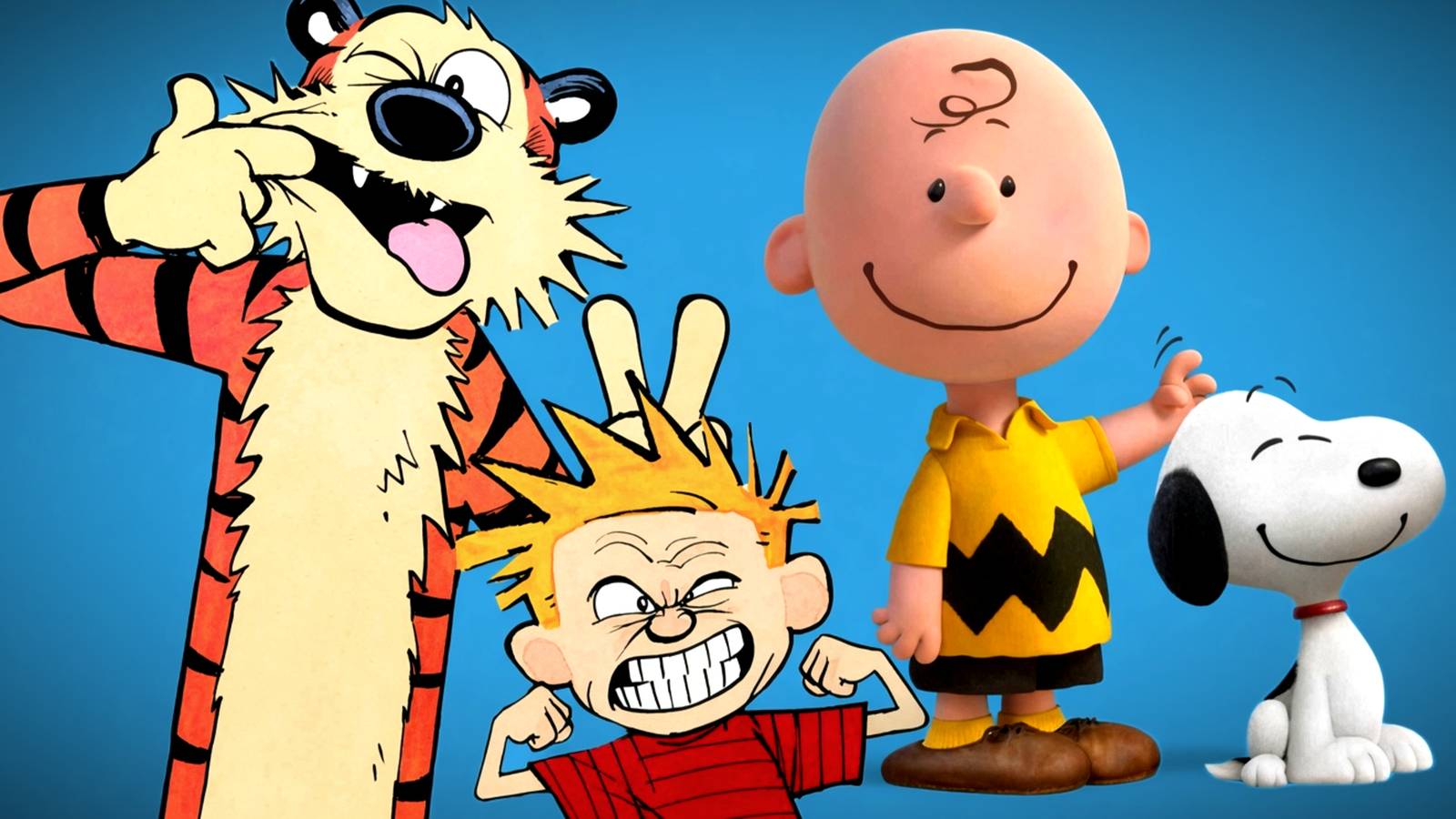
Published Nov 14, 2026, 9:00 AM EST Nicolas Ayala is a Senior Writer for the Comics team at ScreenRant, with over five years of experience writing about Superhero media, action movies, and TV shows. Sign in to your ScreenRant account Ten incredibly popular comic strips have earned massive success, rivaling movie, television, and comic book juggernauts. Newspaper comic strips have held an unmatched place at the heart of global pop culture for over a century, usually as a key part of daily morning rituals that unite millions of readers over coffee and breakfast tables. Legendary creations like Little Nemo in Slumberland, Doonesbury and Popeye have introduced household catchphrases and biting social satire into everyday life. Notably, the Sunday funnies directly paved the way for the birth of comic books in the 1930s. Early publishers initially bound reprinted newspaper strips into magazine-style booklets, giving "comic books" their name. Even though print newspapers have declined in relevance and digital entertainment has changed modern attention spans, classic comic strips are still cherished cultural treasures that continue to have significant commercial success. Beloved franchises pull in hundreds of millions of dollars through global licensing, clothing collaborations, theme park attractions, and collectible merchandise. Major movie and television adaptations keep timeless characters thriving in front of new audiences, and collected editions of classic comic strips deliver the original panels to new generations. To this day, several comic strips have become untouchable in terms of revenue and popularity, with multiple decades of history and a loyal following. 10 Beetle Bailey Surpassed 75 Years Of Continuous Daily Syndication Created by cartoonist Mort Walker in 1950, Beetle Bailey has surpassed 75 years of continuous daily syndication and more than 27,000 individual strips. Remarkably, Beetle Bailey almost didn't survive its first year, having appeared in only 12 newspapers before King Features Syndicate nearly canceled it. Popularity exploded in 1954 when the U.S. military’s Stars and Stripes newspaper banned the strip in Tokyo over fears it encouraged disrespect toward commanding officers, which generated massive publicity. At its peak, Beetle Bailey ran in roughly 1,800 newspapers worldwide and earned Walker the prestigious Reuben Award in 1953 and even the U.S. Army’s Decoration for Distinguished Civilian Service. Mort Walker personally worked on the strip for 68 years until his passing at age 94 in 2018, setting the record for the longest continuous run on a comic strip by its original creator, a legacy his sons continue today. Besides, Beetle’s sister Lois actually launched Walker's equally successful spin-off strip, Hi and Lois, in 1954. The franchise’s global reach spawned a 1963 animated television series, over fifty paperback book collections, biweekly comic magazines in Sweden and Norway, a bronze statue at Walker’s alma mater the University of Missouri, and enough licensing wealth to help Walker found the International Museum of Cartoon Art in 1974. 9 Hägar The Horrible Roughly 1,900 newspapers Across 58 countries Exceeding 80 million Daily Readers When he launched Hägar the Horrible in 1973, veteran cartoonist Dik Browne was already famous for illustrating Hi and Lois alongside Mort Walker. Unlike Walker's Beetle Bailey, Browne's Hägar the Horrible broke syndication records right out of the gate to become the fastest-growing comic strip in newspaper history. Debuting in 136 newspapers under King Features Syndicate, the scruffy red-bearded Viking rapidly crossed the 1,000-paper mark and eventually reached roughly 1,900 newspapers across 56 to 58 countries, translated into 12 to 13 languages for an audience exceeding 80 million daily readers. Following Browne's retirement in 1988, his son took the helm until his passing in 2023. Hägar the Horrible spawned over 50 paperback collections, branded merchandise, and corporate ad campaigns for brands like Mug Root Beer. His relatable humor regarding taxes, work, and daily life also made him an international icon with dedicated Scandinavian magazines. Beyond print, Hägar starred in a 1989 Hanna-Barbera television special, fronted TV commercials for Mug Root Beer and Skol Lager, became a fixture at Universal's Islands of Adventure theme park, and even lent a framed 1984 panel ("Why me?" / "Why not?") to the office desk of former U.S. President Joe Biden. 8 Dennis The Menace Appeared In Over 1,000 newspapers Across 48 Countries Launched by Hank Ketcham in 1951, Dennis the Menace grew from an initial syndication in 16 newspapers into one of the most recognizable comic panels in history. By the end of its very first year, the single-panel weekday gag and full Sunday comic had already appeared in over a hundred papers, eventually expanding through King Features Syndicate to more than a thousand newspapers across forty-eight countries and nineteen languages. Inspired directly by Ketcham's own energetic four-year-old son Dennis, the perpetual five-and-a-half-year-old troublemaker now surpasses 75 years of continuous publication, with tens of thousands of installments. Dennis the Menace has also achieved colossal multimedia success across television, movies, and comic books. Dennis starred in a hit CBS live-action sitcom from 1959 to 1963 starring Jay North, multiple animated series including DIC Entertainment's 1980s cartoon featuring Phil Hartman as Mr. Wilson, and the 1993 live-action movie starring Walter Matthau. In print, Dennis headlined a massive 166-issue comic book run alongside digests published by Standard, Fawcett, and even Marvel Comics in the early 1980s, while paperback collections sold hundreds of thousands of copies within months of release. He also became a beloved mascot for A&W Restaurants in the 1960s and Dairy Queen from 1971 until 2001. 7 Dilbert Appeared Daily In 2,000 Newspapers Across 65 Countries Scott Adams turned Dilbert into a global workplace satire phenomenon that captured the frustrations of white-collar office life even though the comic initially languished for its first five years following its 1989 debut. At its peak, Dilbert appeared daily in 2,000 newspapers across 65 countries and 25 languages, reaching an estimated 150 million readers and earning Adams the prestigious Reuben Award in 1997. A pioneer of the digital age, it was also one of the first syndicated newspaper strips published online for free, drawing over 1.4 million monthly visitors to Dilbert.com and even inspiring a series of custom Google homepage doodles in 2002 before newspapers dropped the strip in 2023. Dilbert built a commercial empire centered on adult professionals, spawning dozens of books, hundreds of themed merchandise items and a primetime UPN animated television series featuring a theme song composed by Danny Elfman. Book collections and business satires like The Dilbert Principle, Dilbert Future, and The Joy of Work regularly topped New York Times bestseller lists. The Dilbert brand thrived inside actual workplaces with wall calendars, cubicle toys, screen savers, and the popular CD-ROM title Dilbert's Desktop Games, while Adams even launched the short-lived vegan "Dilberito" burrito line. 6 The Family Circus More Than 70 Book Collections With Over 13 million Copies Globally After a modest 1960 debut in 19 newspapers, Bil Keane's The Family Circus became the most widely syndicated single-panel cartoon in the world. Distributed to roughly 1,500 newspapers with a daily audience of around 100 million readers, the gentle domestic strip has published more than 70 book collections that have sold between 13 and 15 million copies globally. Bil Keane’s warm observations of suburban family life earned him the prestigious Reuben Award in 1982 and a nine-foot bronze statue in Arizona. Following Bil’s passing in 2011, his son Jeff Keane took over full creative duties, guiding the strip well past its 65th anniversary. The Family Circus spawned three primetime ABC animated specials between 1978 and 1982, inspired the infamous 1990s web parody Dysfunctional Family Circus, and even earned a playful meta-crossover in 1994 when Bil Keane guest-drew his characters inside the surreal comic strip Zippy the Pinhead. The strip has also been spoofed on shows like The Simpsons and Family Guy and established beloved recurring visual gags like Billy's wandering dotted-line paths across the neighborhood and the invisible household gremlins "Not Me" and "Ida Know." 5 Blondie Reached An Estimated 280 Million Daily Readers Across 2,000+ Newspapers Blondie is one of the longest-running and most commercially successful comic strips in history, having surpassed 95 years of continuous daily publication. Originally conceived in 1930 as a Jazz Age comedy about a carefree flapper named Blondie Boopadoop, Blondie struggled during the Great Depression until Young reinvented it on February 17, 1933, by having Blondie marry her wealthy suitor Dagwood Bumstead, who was promptly disinherited by his billionaire father. The pivot turned Blondie into a global juggernaut distributed by King Features Syndicate to more than 2,000 newspapers across 47 countries and 35 languages, reaching an estimated 280 million daily readers. Blondie built an astonishing multimedia empire that permeated mid-20th-century pop culture and left a lasting mark on the English language. Between 1938 and 1950, Columbia Pictures produced 28 feature-length Blondie movies starring Penny Singleton and Arthur Lake (one of the longest-running live-action movie series in Hollywood history), alongside a popular CBS radio program that ran from 1939 to 1950, two television sitcoms, and two animated specials. Dagwood’s absurd, mile-high late-night creations officially added the word "Dagwood" (or "Dagwood sandwich") to the Webster's New World Dictionary and inspired real-world restaurant chains, including a themed sandwich shop at Universal's Islands of Adventure. 4 The Far Side Sold More Than 41 Million Book Copies Across 23 Volumes Created by cartoonist Gary Larson and syndicated from 1980 until his retirement in 1995, The Far Side achieved remarkable commercial and critical dominance despite deliberately avoiding recurring characters and ongoing storylines. Over its 15-year run, Larson produced 4,337 single-panel cartoons that eventually appeared in more than 1,900 daily newspapers across 17 languages. Its book collections became publishing juggernauts, selling more than 41 million copies across 23 volumes, 22 of which landed on the New York Times Best Seller list, alongside over 79 million calendars. In January 1985, four Far Side books held simultaneous spots on the New York Times bestseller list. Later, Gary Larson's two-volume, 18-pound anthology The Complete Far Side became the most expensive book to reach that same bestseller chart, while Larson himself earned multiple National Cartoonists Society Reuben Awards. In addition to sales records, The Far Side left an extraordinary mark on pop culture and actual scientific nomenclature. Paleontologists officially adopted the term "thagomizer" for the distinctive tail spikes on a Stegosaurus directly from a 1982 caveman cartoon, and biologists honored Larson's love of nature by naming three real-world insects after him. Larson launched his official digital archive in 2019, where he began sharing brand-new cartoons drawn on a digital tablet. 3 Calvin And Hobbes Sold Over 45 Million Copies Across 18 Book Collections Calvin and Hobbes achieved stratospheric critical and commercial success in just ten years of publication. Across its decade-long run from 1985 until Bill Watterson's retirement in 1995, Calvin and Hobbes produced 3,160 strips and grew to appear in more than 2,400 newspapers worldwide. Even without a single piece of official merchandise, the 18 book collections have sold over 45 million copies globally. Named after 16th-century theologian John Calvin and 17th-century philosopher Thomas Hobbes, Watterson's iconic strip has universal acclaim as one of the finest comic strips ever drawn. Remarkably, Bill Watterson turned down hundreds of millions of dollars in potential revenue from plush toys, T-shirts, and animated movies and fought a famous battle with Universal Press Syndicate to protect the artistic integrity of his characters, insisting that a stuffed Hobbes doll sold in stores would ruin the ambiguity of whether the tiger was real or imaginary. Watterson's stance only heightened Calvin and Hobbes' cultural mystique, inspiring generations of cartoonists, the acclaimed 2013 documentary Dear Mr. Watterson, and a 2023 return by Watterson for his adult graphic fable The Mysteries. Despite the total ban on official products, unauthorized "peeing Calvin" window decals became an inescapable bootleg phenomenon across the globe. 2 Garfield Generates Between $750 Million And $1 Billion Annually In Retail Merchandise After its 1978 debut, Jim Davis' Garfield evolved from an initial syndication in 41 U.S. newspapers into the undisputed heavyweight champion of newspaper comics. At its peak, Garfield ran in roughly 2,580 newspapers and journals across 80 countries with an estimated daily audience exceeding 260 million readers, earning the official Guinness World Record for the world's most widely syndicated comic strip. Davis engineered the lasagna-loving tabby for universal appeal after his previous comic strip, Gnorm Gnat, failed to find traction. In 1982, Garfield set a publishing record, with seven different book collections simultaneously on the New York Times Best Seller list, with cumulative book sales eventually surpassing 135 million copies worldwide. Naturally, Garfield became one of the most lucrative licensing juggernauts in entertainment history, generating between $750 million and $1 billion annually in global retail merchandise sales. Garfield starred in 12 primetime CBS animated specials that won four Emmy Awards, the beloved Saturday morning series Garfield and Friends, and three theatrical movies. In 1987, plush "Stuck-on-You!" suction-cup Garfield window dolls became a massive craze that sold over $50 million worth of merchandise. Garfield has also starred in 3D-animated series like The Garfield Show, dozens of video games, and a thriving second life across internet meme culture and surreal fan art. 1 Peanuts Has Sold More Than 300 Million Book Collections Worldwide Over seventy-five years after its 1950 debut, Charles M. Schulz’s Peanuts is definitely the most influential and culturally revered comic strip in history. Schulz wrote, drew, and lettered 17,897 individual strips completely on his own without a single assistant, setting the record for the longest story ever told by one human being. At its height, Peanuts reached more than 2,600 newspapers across 75 countries and 21 languages, captivating an estimated daily audience of 355 million readers and selling over 300 million book collections worldwide. Schulz earned two prestigious Reuben Awards, a star on the Hollywood Walk of Fame, and a posthumous Congressional Gold Medal. In addition to its unmatched print legacy, Peanuts became a multi-billion-dollar global empire that reshaped television animation and pop culture. Classic holiday specials like A Charlie Brown Christmas and It's the Great Pumpkin, Charlie Brown became timeless annual traditions that still draw millions of viewers on Apple TV+. The Peanuts franchise also spawned five movies, the hit Broadway musical You're a Good Man, Charlie Brown, and a massive global licensing business generating over $1 billion in annual retail sales, highlighted by Snoopy’s decades-long role as a corporate ambassador for MetLife and the official safety mascot for NASA since the 1968 Apollo missions.
10 Most Successful Comic Strips Of All Time
Full Article
Original Source
Read the full article at Screenrant →KhanList aggregates and links to publicly available news content. We do not host full articles from third-party sources. Always verify important information with original sources.